

The complete guide
How to Choose a Camp Fry Pan Set That You Will Actually Pack
The problem with most camp cooking gear
Ask anyone who camps regularly about their cookware and you will hear one of two stories.
The first is the giant plastic tub. Pots, pans, a kettle, lids, a frying pan with a handle that sticks out like an oar. It all works beautifully at home in the kitchen, and it is a nightmare in a car trunk. People start leaving it behind, and camp dinners quietly turn into servo pies and two-minute noodles.
The second story is the cheap set that did not last. Thin aluminum that warped the first time it sat over a real flame. Non-stick that looked fine for three trips and then started shedding gray flakes into the eggs. Handles that worked loose and never tightened again.
What you want sits between those two. Enough pieces to cook a proper meal, built from something that will survive being thrown in a vehicle, and packed small enough that bringing it is never a decision you have to make. That is the gap this kind of camp fry pan set fills.
How a nesting cook set works
The idea is simple. Instead of separate items that take up their own space, every piece is sized to sit inside the next one. Nine pieces end up occupying roughly the volume of one.
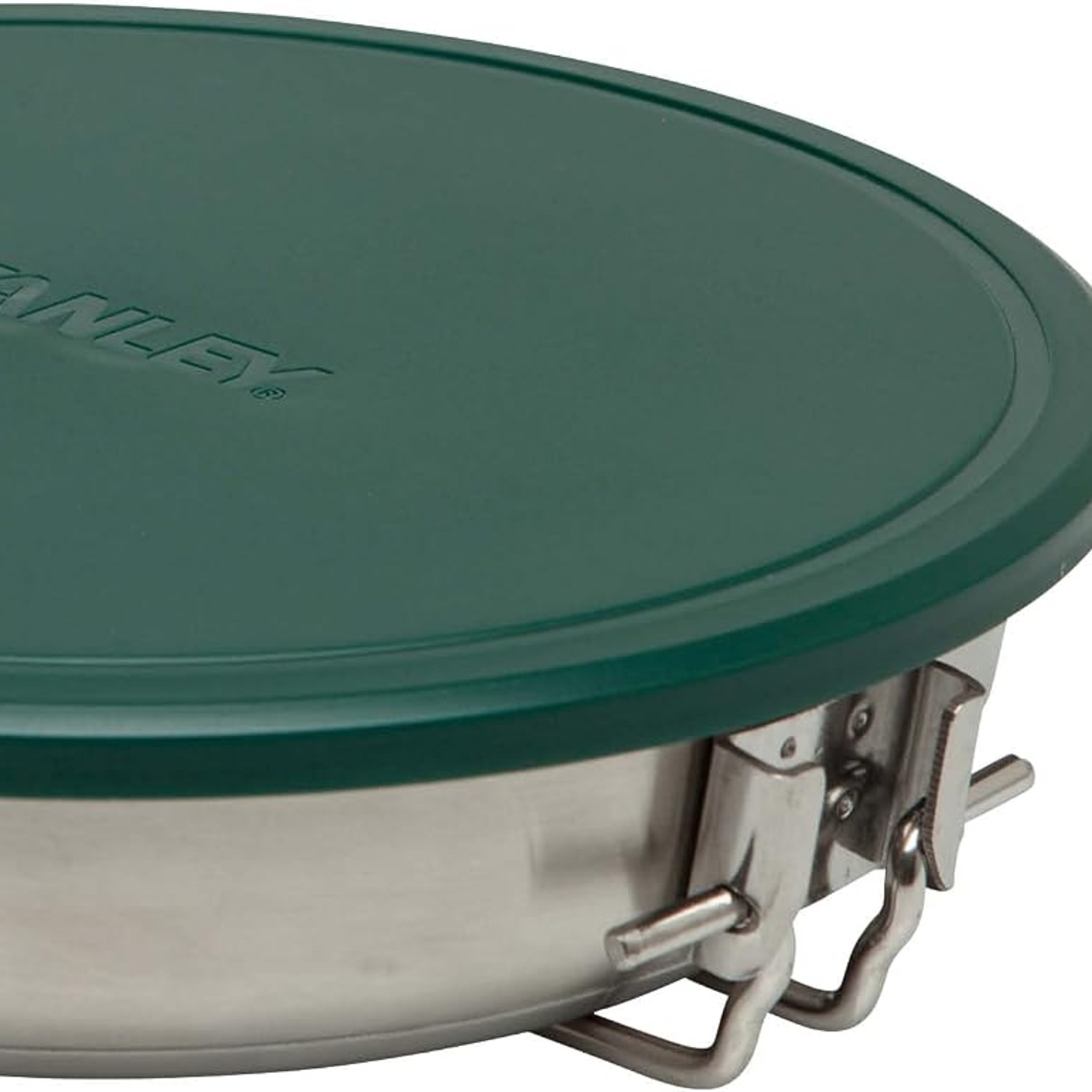
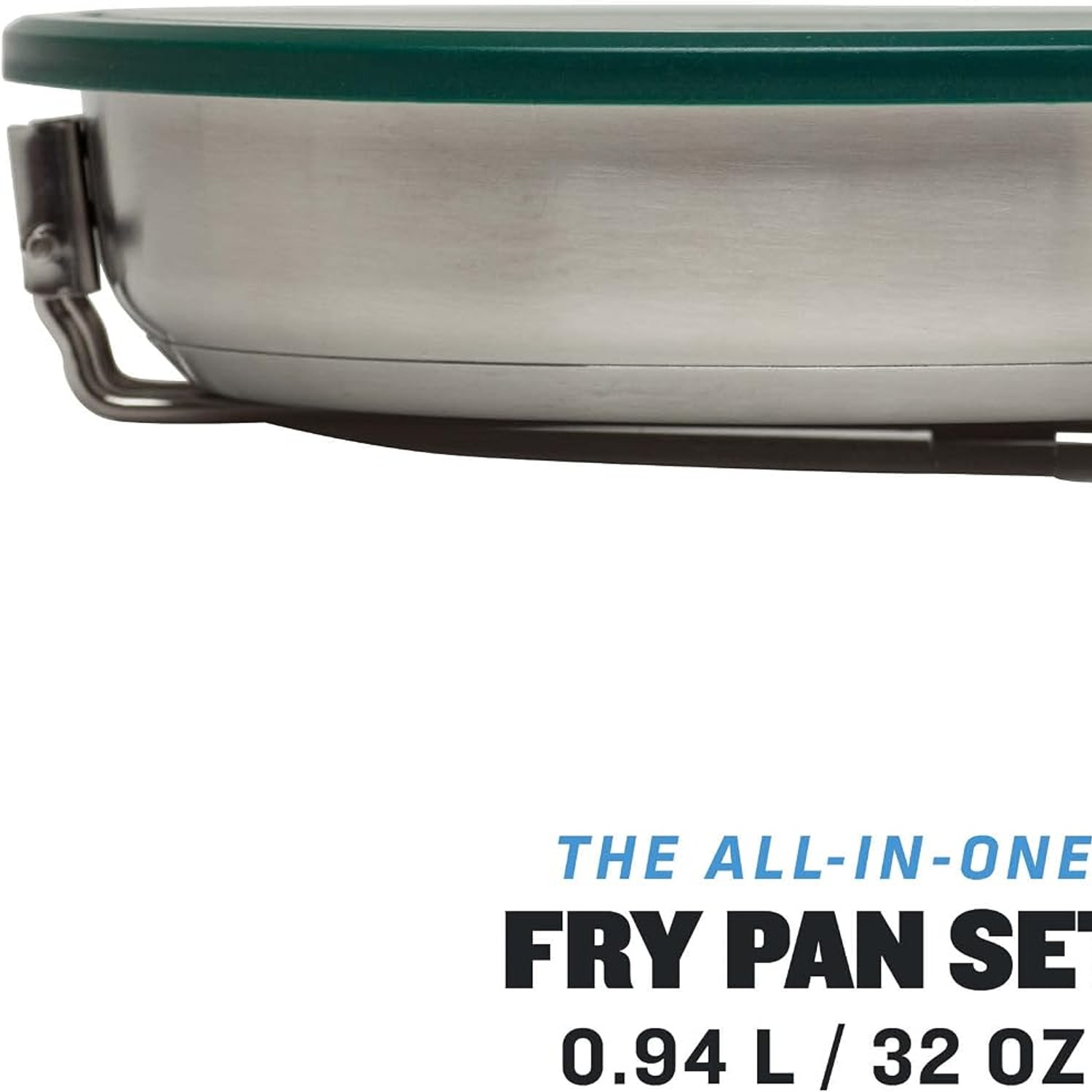
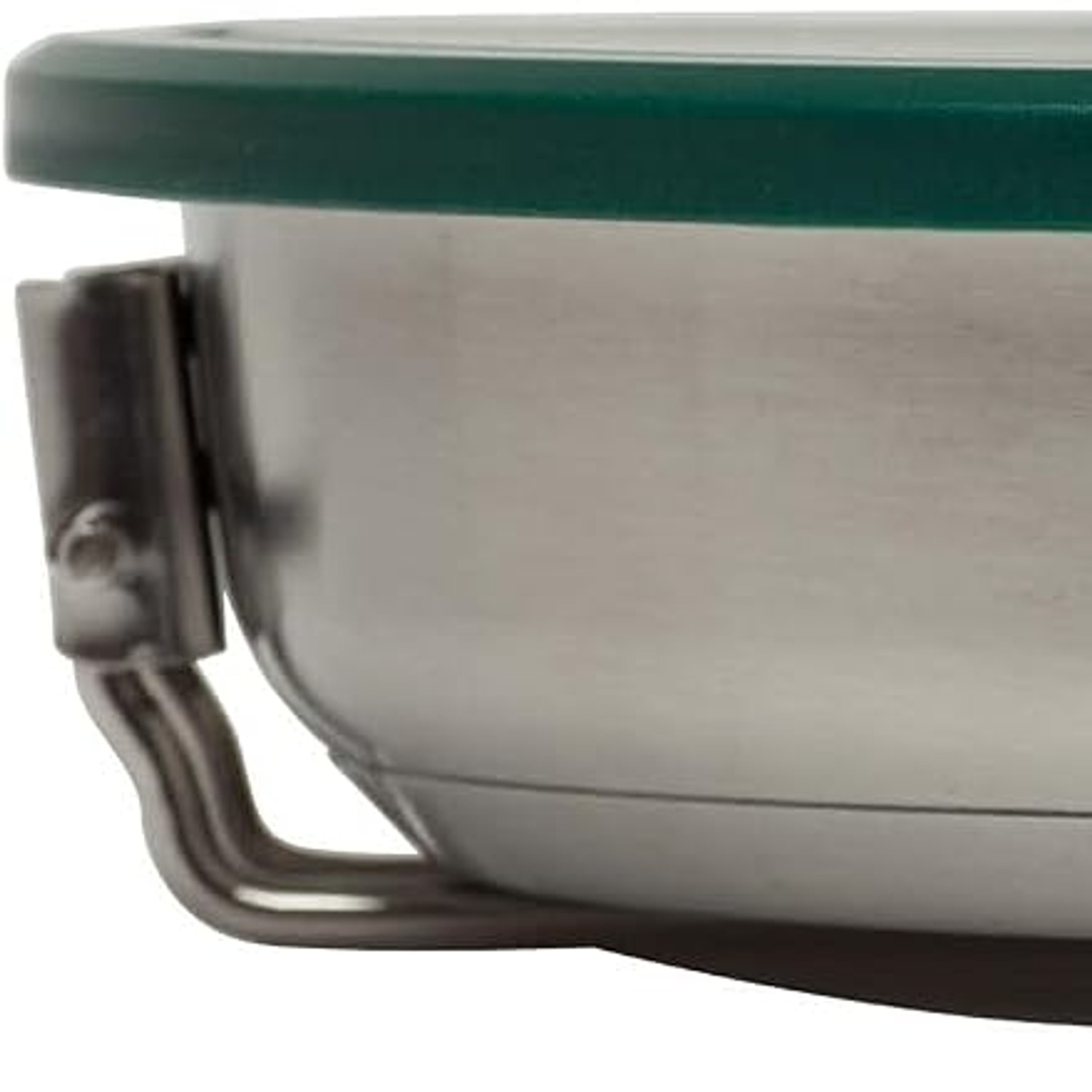
This Stanley set adds a second trick on top of that. The handle locks out when you want to cook, giving you a proper grip that holds the pan steady on a burner. Then, when the pan has cooled, the handle folds over the lid. That fold does two jobs at once. It removes the longest part of the pan from your pack, and it clamps the nested stack together so the whole set travels as a single bundle rather than a bag of loose metal.
That last part matters more than it sounds. Loose cookware rattles, shifts, and ends up scattered through your gear. A set that holds itself shut stays put, stays clean, and stays easy to find in the dark.
The material is 18-8 food-grade stainless steel. The numbers refer to the chromium and nickel content, which is what gives the steel its corrosion resistance. In practice it means you can pack it away slightly damp after a wet morning and it will not come out spotted with rust. It also means no coating to scratch, no seasoning to maintain, and no flavour carry-over from one meal to the next.
Who this suits
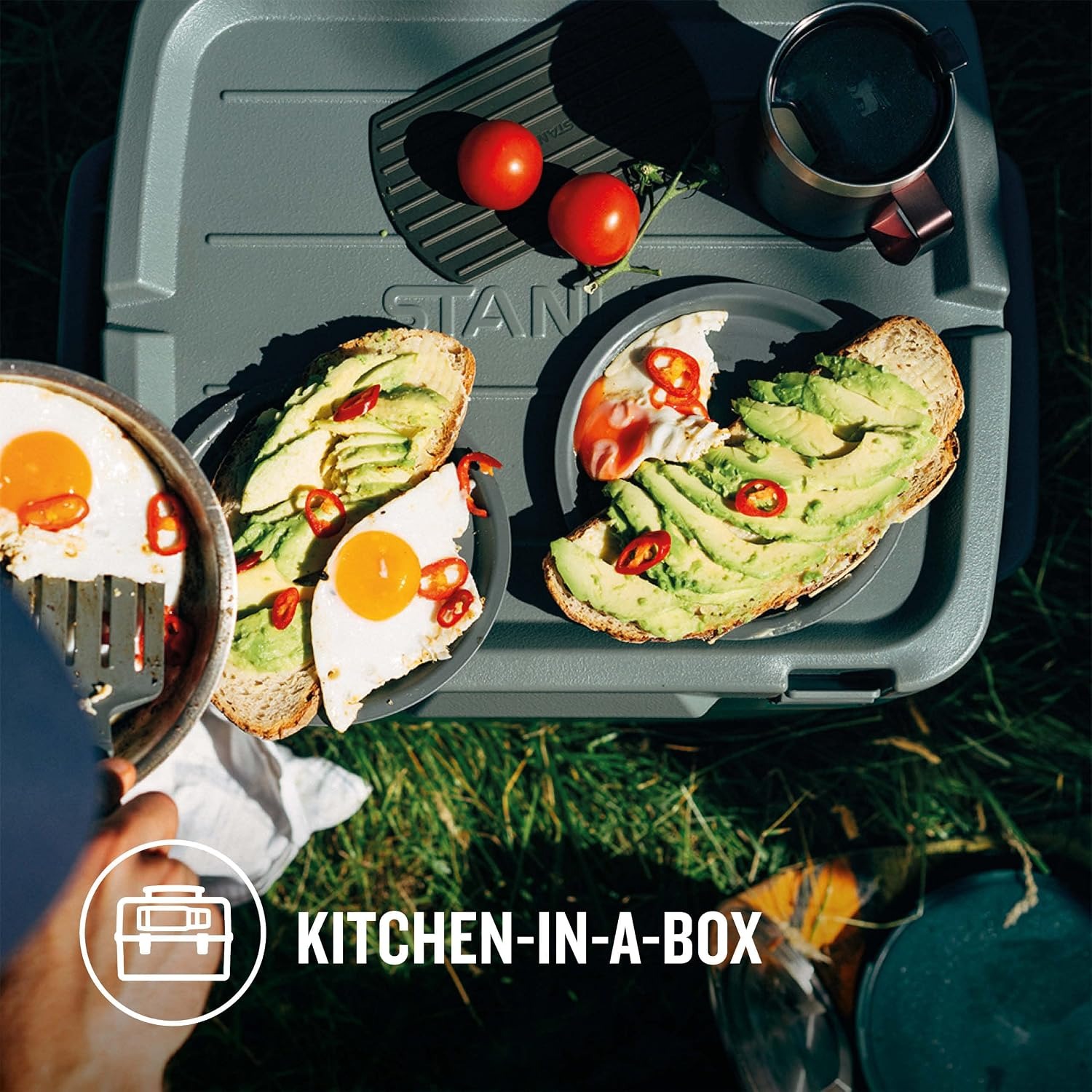
Car campers get the most obvious benefit. You have the space to bring more, but the pieces that stay in rotation are the ones that pack neatly and clean up fast. A 0.95 kg set that drops into a camp box fits that bill.
Van and four wheel drive travellers are in a similar spot. Storage is the constraint, not weight, and anything that collapses into one shape is worth its place.
Kayakers, motorcycle campers and people doing short overnight hikes will find the weight reasonable. It is not the lightest thing on the market, but you are getting steel durability rather than paper-thin aluminum, and for a weekend trip that trade usually makes sense. If you are hunting for the best lightweight camp cook set for genuine long-distance hiking, titanium will beat it on grams, though you will give up pan size and pay considerably more.
It also works well as a first proper cook set. If someone is moving from disposable foil trays to actually cooking at camp, a stainless set with a lifetime warranty against manufacturing defects is a sensible place to start.
How to choose between cook sets
A few questions sort most of it out.
How many are you feeding? A compact fry pan set is comfortable for one or two people. Three or four is doable if you cook in stages, which is fine for things like bacon and eggs but annoying for a one-pot stew. Larger groups are better served by a big pot plus a separate pan.
What are you cooking on? Canister stoves and small camp burners pair well with a pan of this size. If you are mostly cooking over a fire, expect soot on the outside and keep the pan clear of the hottest flames. If your setup is induction, check compatibility first, because that detail is not specified in this product record.
How do you travel? If you carry gear on your back, every fold and nest counts. If it lives in a vehicle, you have more freedom, but you will still appreciate a set that does not sprawl.
What are you willing to maintain? This is the real divider. Non-stick is forgiving on eggs and unforgiving about longevity. Cast iron is wonderful and heavy and needs looking after. Stainless steel asks for a small amount of technique, preheat gently, add a little fat, let food release before you move it, and in return it basically never wears out. Most people who go looking for the best rust proof camping pan end up on stainless for exactly that reason.
Cooking on stainless without the sticking
Stainless gets an unfair reputation here, and it is almost always a heat problem rather than a pan problem.
Start by warming the pan over a moderate flame for thirty seconds or so before you add anything. Then add your oil or butter and let it move freely across the surface. Put your food in and leave it alone. Protein in particular will grip the metal at first and then release on its own once a crust forms. If you poke at it after ten seconds, it tears. If you wait, it lifts cleanly.
Camp stoves tend to run hotter in the center than a home hob, so move the pan around a little or back the flame off rather than cranking it. A gentle, even heat does more for your dinner than a roaring burner ever will.
Cleaning and care
Stainless steel is forgiving, which is half the appeal.
At camp, let the pan cool, then use warm water, a drop of dish soap and a sponge or nylon brush. Burnt-on food comes off easily if you soak it for twenty minutes first, or bring a shallow pan of water to a simmer and let it lift the residue for you.
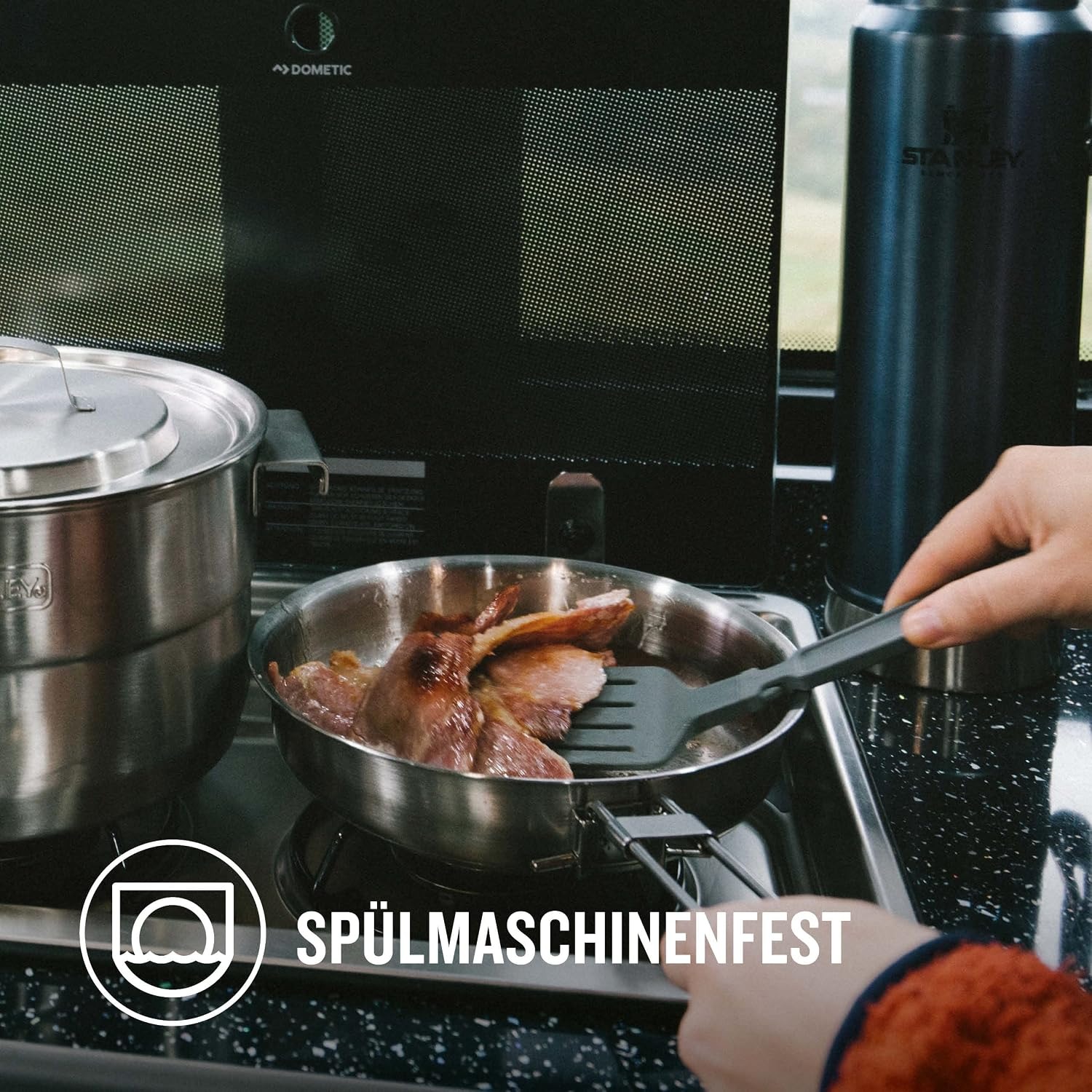
At home, every piece is dishwasher safe on the top rack. Keep it off the bottom rack, where the heat and spray are strongest.
A few things to avoid. Steel wool and gritty scourers will scratch the finish. Leaving salty or acidic food sitting in the pan overnight is not ideal, even on corrosion-resistant steel. And always dry the pieces before you nest them, because water trapped between stacked items leaves marks even when it cannot cause rust.
Over time you may notice faint rainbow or brown heat tints on the inside of the pan. That is normal with stainless and purely cosmetic. A little white vinegar on a cloth usually takes the edge off it.
Before you pack, check the folding handle is clean and moving freely. Grit in a hinge is the one thing that will shorten the life of an otherwise indestructible piece of gear.
About the brand
Stanley has been making outdoor gear since 1913, when William Stanley Jr. combined vacuum insulation with a steel body and created the all-steel vacuum bottle. The company has built its reputation on gear that survives decades of use rather than seasons, and the Built for Life promise carries through here as a lifetime warranty against manufacturing defects.
Worth noting what that warranty does and does not cover. It applies to faults in how the product was made. Normal wear, misuse and accidents are not included, which is standard across the industry.
The short version
This is a nine piece stainless steel camp cook set built around a fry pan, weighing 0.95 kg, made from 18-8 food-grade stainless steel with BPA-free materials. The handle locks out for cooking and folds over the lid so the whole thing nests into one bundle. Every piece is dishwasher safe on the top rack, and Stanley backs it with a lifetime warranty against manufacturing defects.
It suits one or two people, it suits car camping and van trips best, and it suits anyone tired of replacing flaked non-stick pans every couple of seasons.
Some details, including exact piece dimensions, packed size and country of origin, are not specified in this product record. If those matter for your setup, get in touch before you order and we will find out for you.