

The complete guide
Choosing a Head Lamp That Actually Earns Its Place in Your Pack
The problem with holding a flashlight
Anyone who has set up a tent after dark knows the routine. You have a peg in one hand, a mallet in the other, and a flashlight clamped in your teeth that keeps pointing at the wrong thing. Or you put the flashlight on the ground, and now you are working in a shadow cast by your own body.
A head lamp solves that in the simplest way possible. The light sits on your forehead, so it follows your eyes. Where you look is where it shines. It sounds obvious, and it is, which is why a headlamp is one of those bits of kit people buy for one trip and then never travel without.
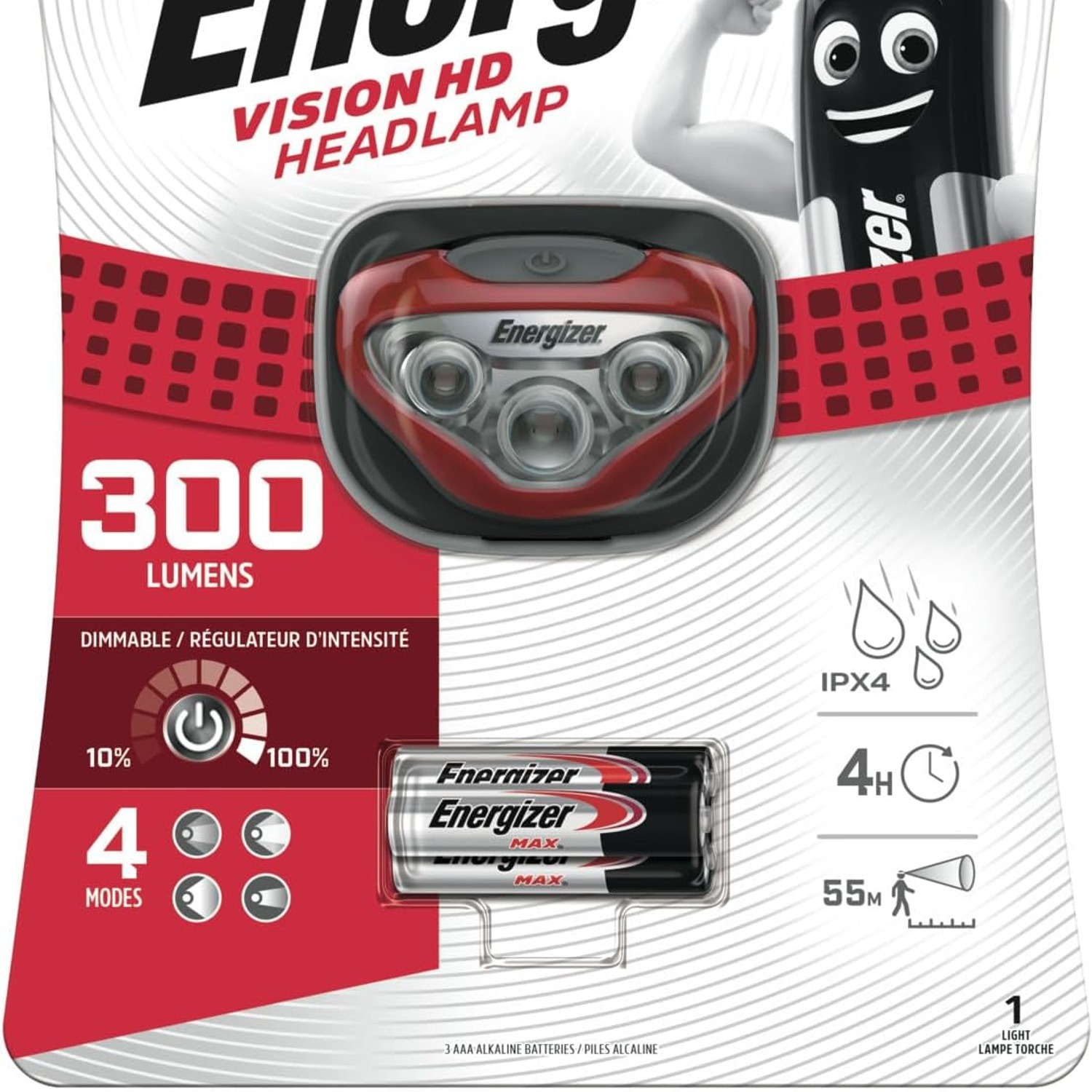
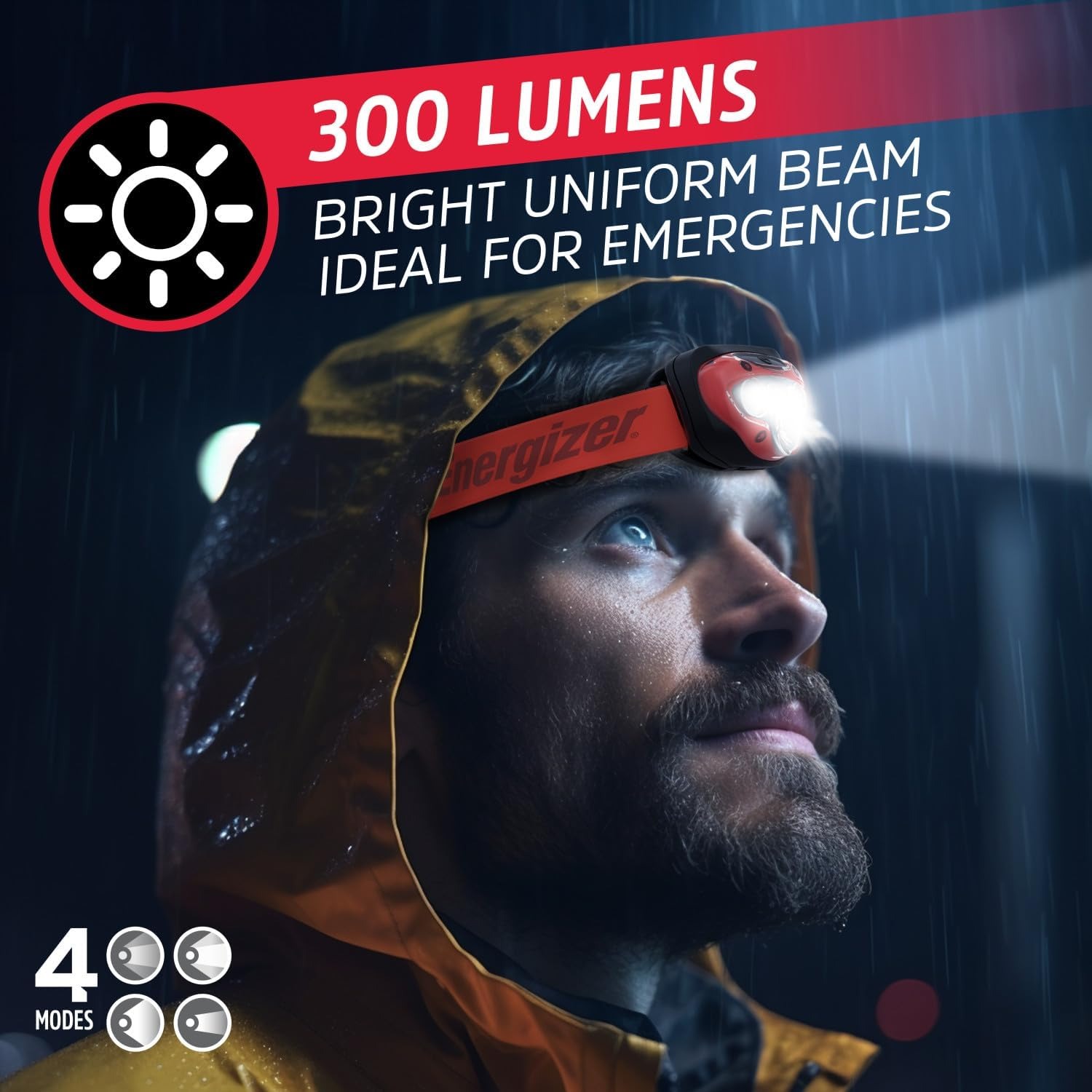
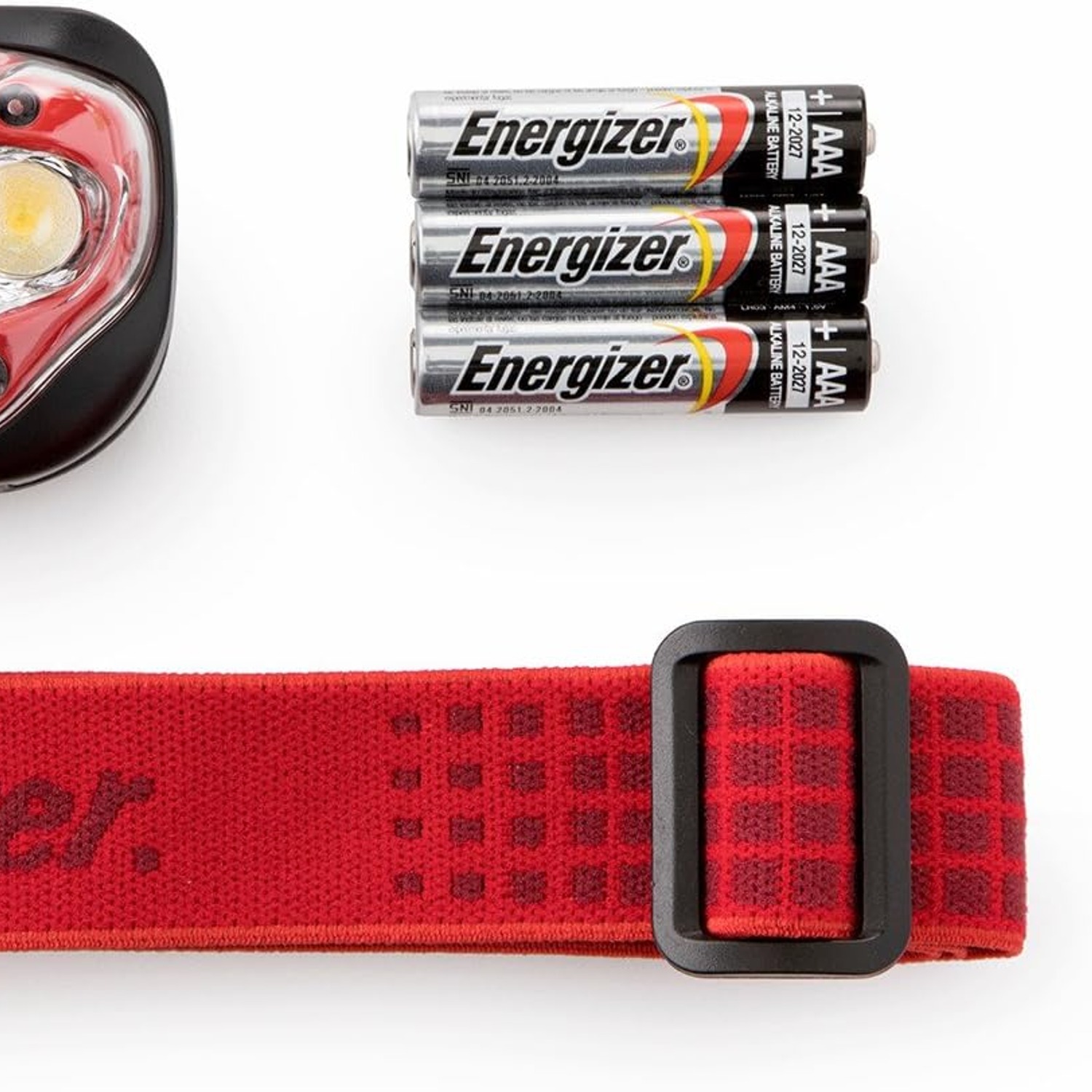
The Energizer Vision HD LED headlamp is a straightforward version of that idea. It puts out 150 lumens from four LED light sources, reaches about 18 meters, weighs 60 grams and runs on three AAA alkaline batteries that come in the box.
How a head lamp works
Inside the housing sits a small circuit board, one or more LEDs, and a battery compartment. The LEDs convert battery power into light far more efficiently than the old incandescent bulbs did, which is why a modern lamp this small can run for hours on three AAA cells.
The two numbers worth understanding are lumens and beam distance. Lumens measure total light output. Beam distance measures how far that light usefully reaches. This lamp lists 150 lumens and an 18 meter light path. Those two figures go together. A lamp could push the same 150 lumens into a tight spot and throw it further, or spread it wide and throw it less far. Spreading the output across four LED sources, as this one does, leans toward a broader pool of light close in.
That trade off is worth thinking about before you buy. For campsite jobs, cooking, reading, getting to the toilet block and finding things in a pack, a wider pool beats a narrow beam every time. For picking out a trail marker a long way off, you want reach instead.
Who this one suits
Energizer lists camping, hiking, running, biking, indoor activities and emergencies as the suggested uses, and that is a fair reflection of a mid output lamp.
It suits the camper who wants a light for around the tent and the walk to the car. It suits the home owner who wants something in the kitchen drawer for the next blackout, because alkaline batteries sit in storage for a long time without going flat. It suits anyone who works on cars, bikes or plumbing, where both hands are busy and the thing you are looking at is in shadow.
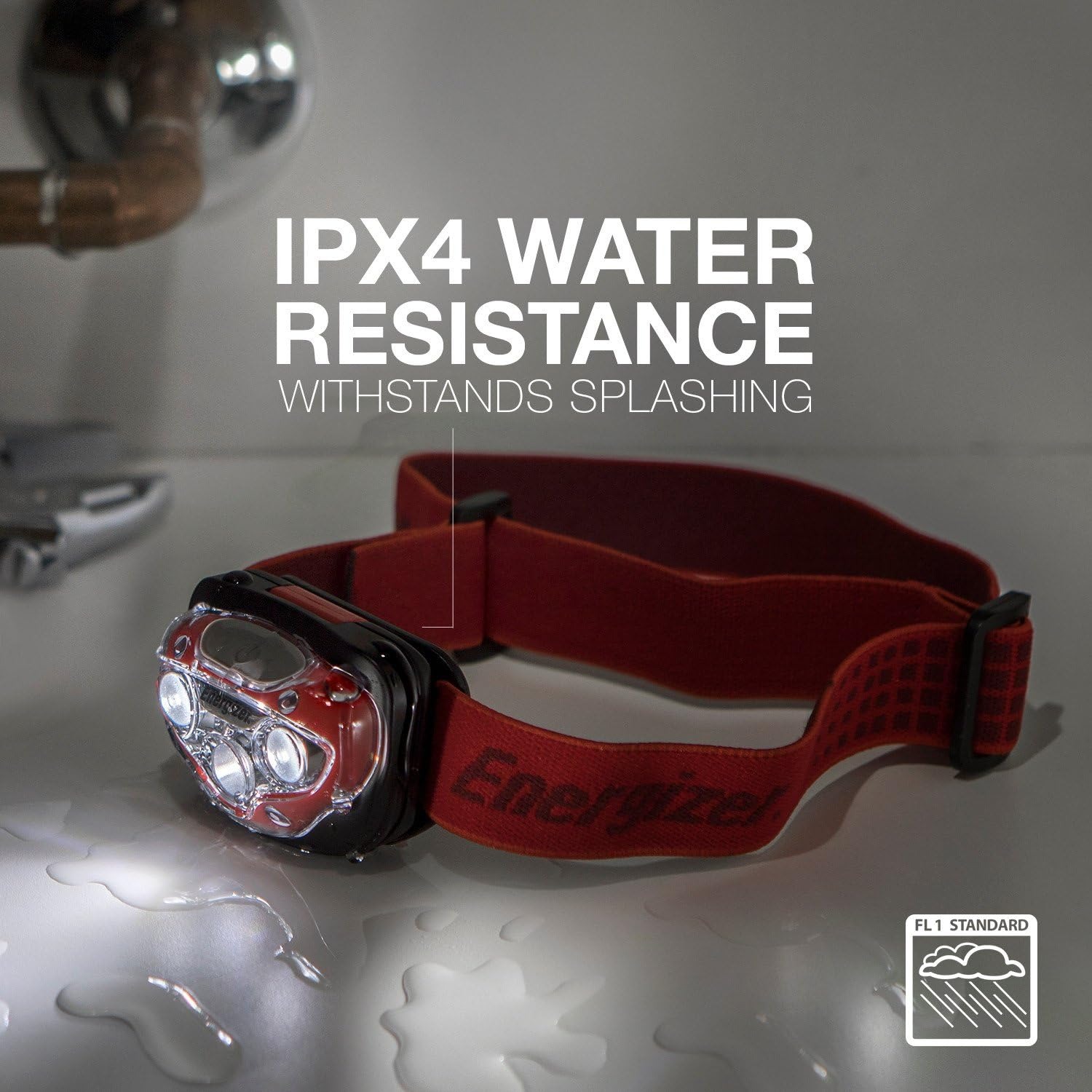
It is less suited to serious night navigation at speed, or to anything that involves standing out in weather. The supplier specifications for this unit list the water resistance level as not water resistant, so it belongs in dry conditions and indoor use. If your nights out involve steady rain, look for a lamp with a published IP rating instead.
How to choose a headlamp
Start with the honest use case. Most people over buy brightness and under think comfort. A 1000 lumen lamp is impressive in a shop and tiring to wear on a long walk, and it eats batteries.
Brightness. For camp chores, dog walking, home repairs and emergencies, somewhere in the 100 to 200 lumen range is comfortable and efficient. That is where this lamp sits. For running down unlit trails or caving, you want more.
Weight. Anything under about 100 grams disappears on your head. At 60 grams this one is firmly in that bracket. Heavier lamps tend to bounce when you move and need the strap pulled tighter, which is where headaches come from.
Power type. Replaceable batteries and rechargeable batteries each have a case. Alkaline AAA cells like these are sold everywhere, they do not need a cable, and they hold charge for months in a drawer. That makes them the better pick for emergency kits and for trips away from power. Rechargeables cost less to run if you use the light most days.
Beam shape. Multiple LEDs generally mean a broader, more even spread. One large emitter generally means a tighter beam with more throw. Neither is better in the abstract. Match it to what you actually do after dark.
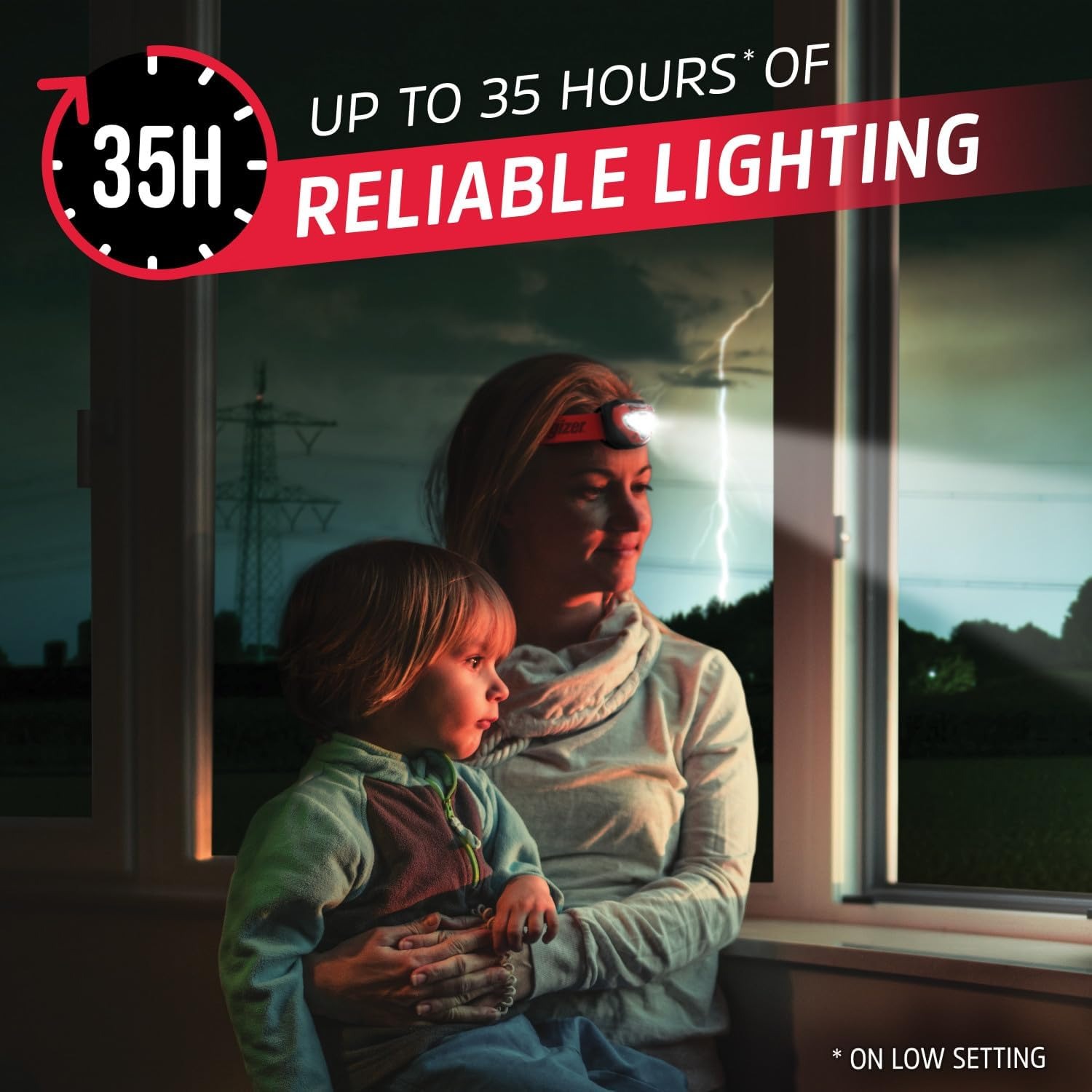
Runtime. Four hours, as quoted here, covers an evening comfortably. On a multi day trip, carry a spare set of cells. They weigh almost nothing and cost very little.
Getting the fit right
Put the lamp on before you tighten anything. Loosen the strap fully, sit it on your forehead where it feels natural, then pull the adjustment in until it is snug and no further. A strap that is too tight is the single most common reason people say they do not like wearing a headlamp.
Tilt the housing so the brightest part of the pool lands a step or two in front of your feet when you are walking, or straight on the work when you are standing still. Set it before you need it, not while you are holding a hot pan.
One more courtesy. When you turn to talk to someone, drop your chin or angle the lamp down. Being lit straight in the face by 150 lumens at conversational distance is unpleasant, and in a dark camp it ruins everyone's night vision for a minute or two.
Looking after it
Head lamps live hard lives, but they ask for very little.
Wipe the housing and lens with a soft cloth when they get dusty. Avoid solvents, which can cloud a plastic lens. If the strap picks up sweat or mud, hand wash it in cool water and let it air dry.
The one habit worth building is battery discipline. If the lamp is going into storage for months, take the cells out. A leaking alkaline battery will corrode the contacts and quietly kill an otherwise fine flashlight. Before each trip, open the compartment, look for white powder or green staining, and clean the contacts if you see any.
Keep a spare set of AAA cells with the lamp, not somewhere else in the house. The whole point of an emergency light is that it works when you reach for it.
Common mistakes worth avoiding
Buying on lumens alone. The highest number is rarely the most useful light. A broad, even beam at moderate output is better for most real tasks than a narrow hot spot.
Assuming every lamp is weatherproof. Water resistance is a published spec, and it varies by model. This particular unit is listed as not water resistant, so plan around that.
Leaving it switched on in a pack. A lamp that gets bumped on inside a bag can burn through a set of batteries before you notice. Some people flip one battery around for storage so the circuit cannot complete.
Only owning one. A head lamp per person in a tent removes a lot of low level friction. They are cheap enough that there is no real reason to share.
The short version
If you need light and both hands at the same time, a head lamp is the answer, and you do not need a huge one. The Energizer Vision HD gives you 150 lumens across four LED sources, an 18 meter beam, four hours of runtime and a 60 gram body, with three AAA alkaline batteries supplied so it works the moment you unpack it.
Treat it as a dry conditions light, keep spare cells with it, and pull the strap only as tight as it needs to be. For camp chores, night walks, garage jobs and the next time the power goes out, that combination covers the job without fuss.