


The complete guide
How To Choose A Camping Air Mattress You Will Actually Sleep On
The real reason you sleep badly in a tent
Ask most people why they slept poorly camping and they blame the sleeping bag, the noise, or the early sunrise. Usually it is the ground. Soil, grass and gravel are harder and colder than they look, and they pull heat out of you all night. A thin foam mat softens the lumps a little but does very little about the cold, and by 3am you are awake and shifting your hip off a stone you did not notice when you pitched the tent.
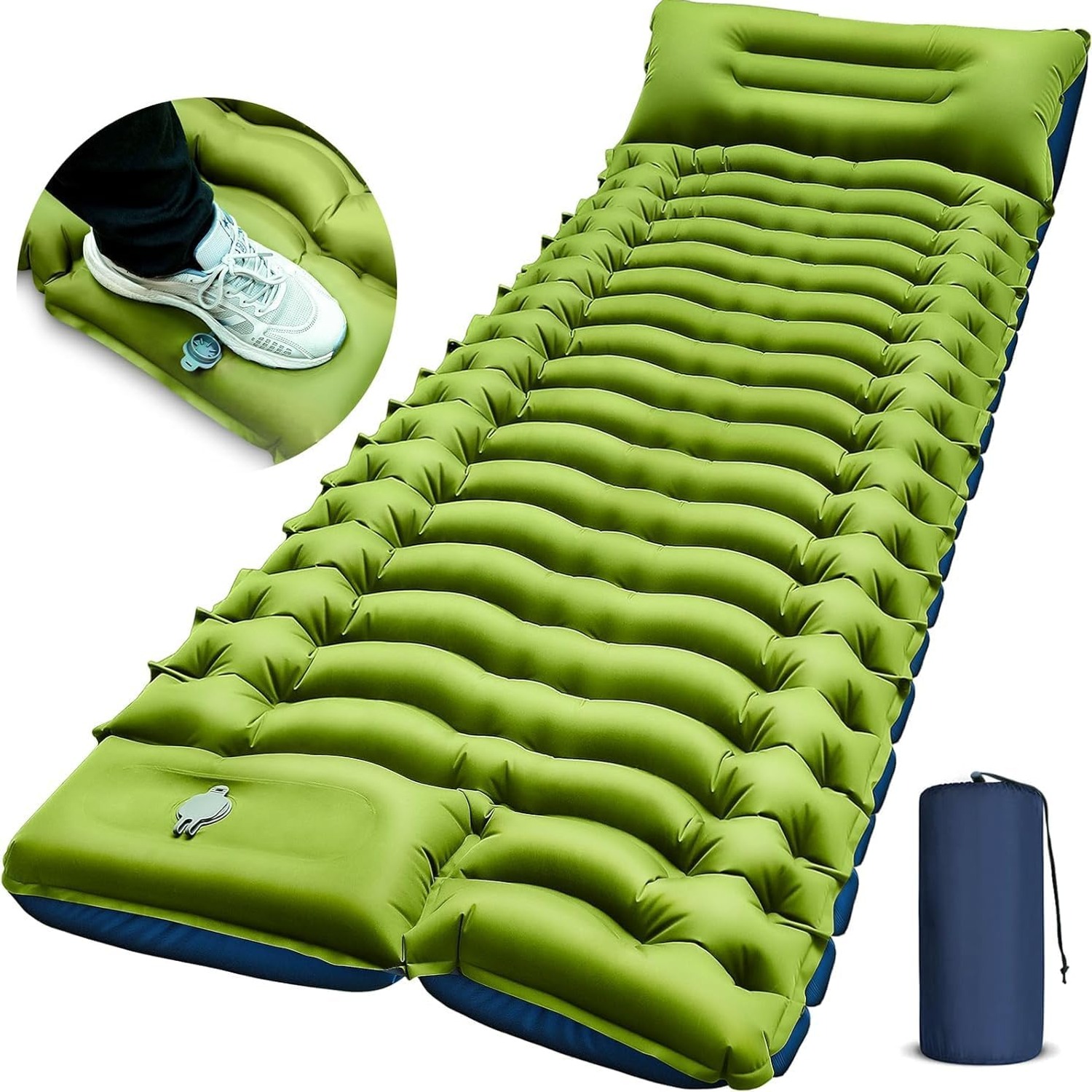
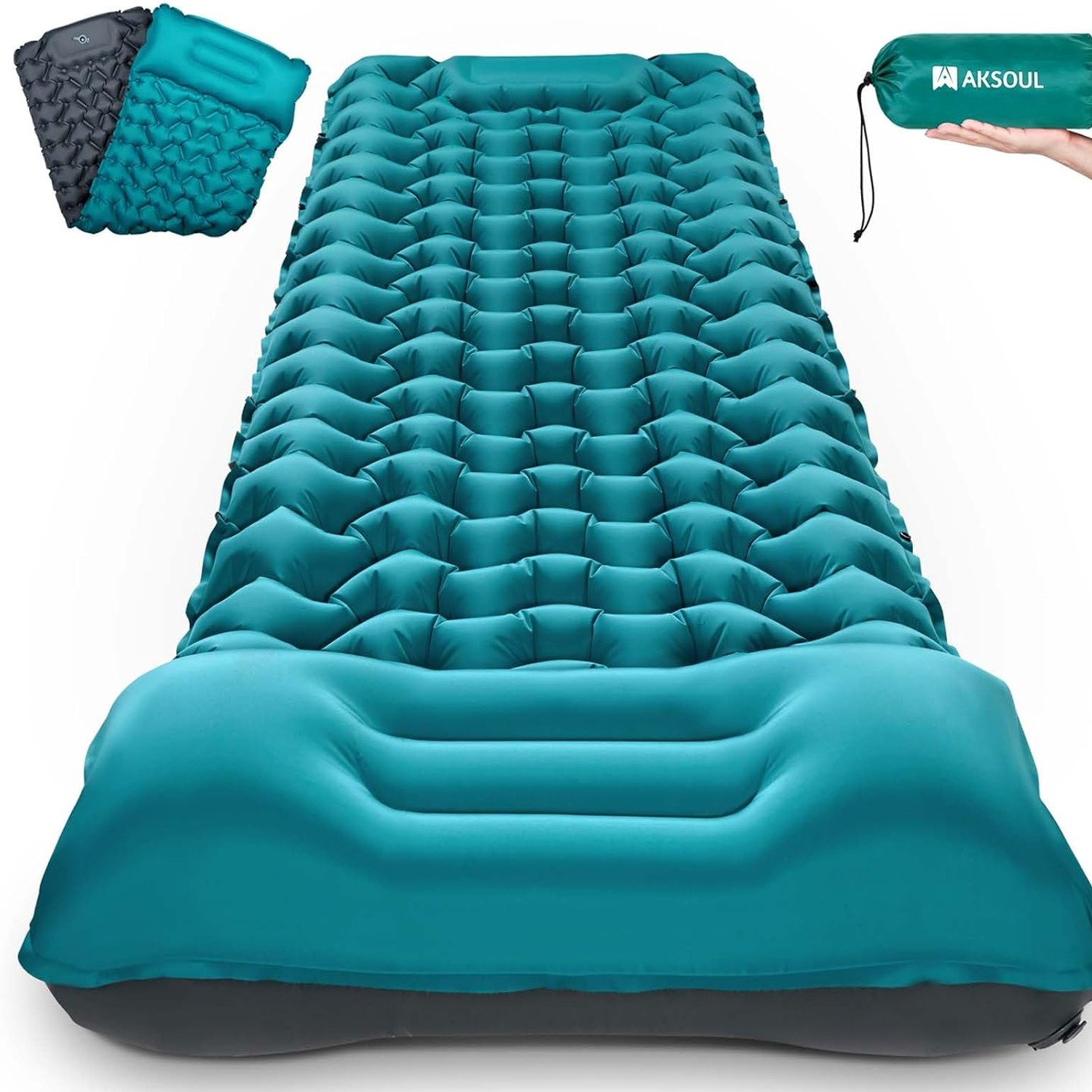
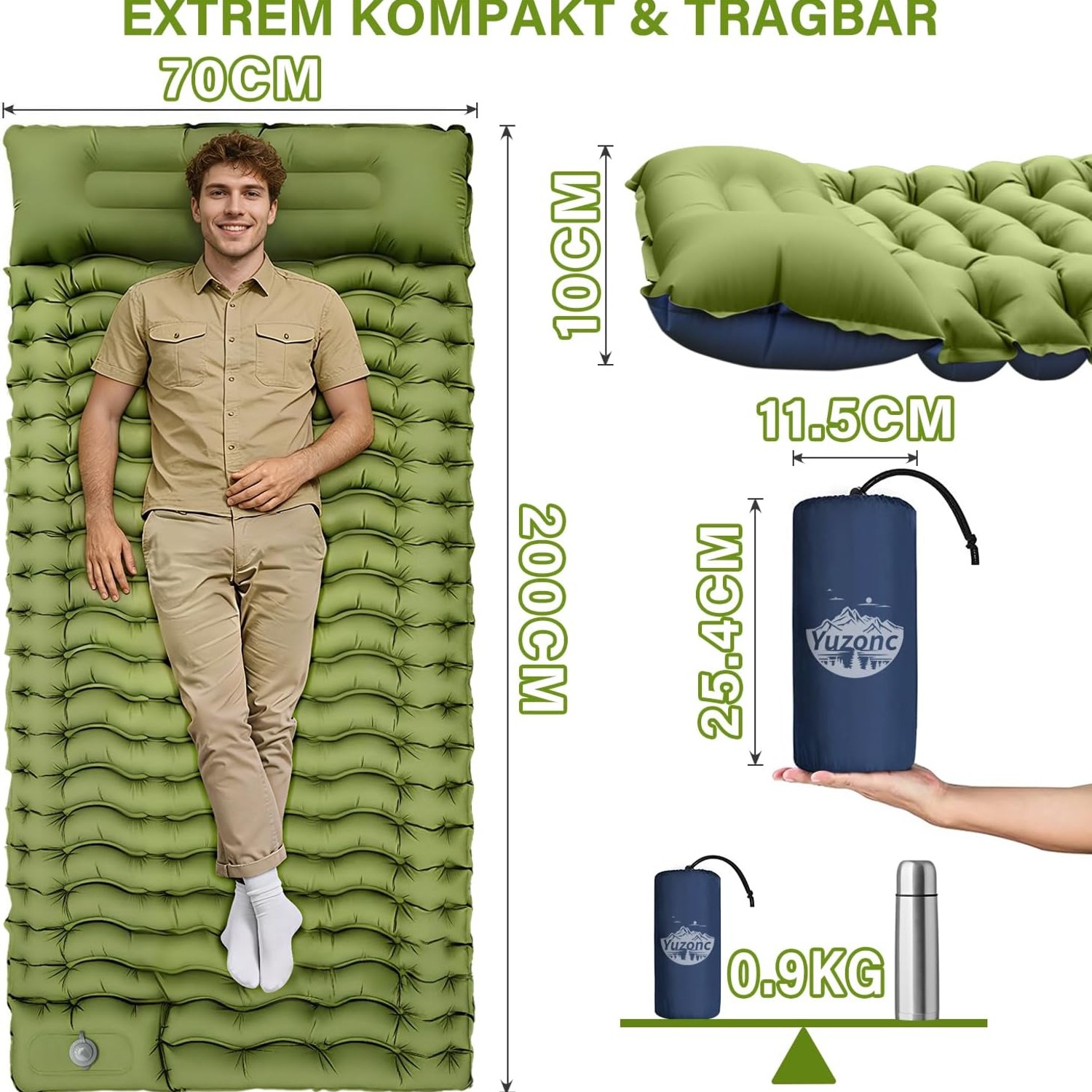
A camping air mattress solves it by putting a cushion of air in the way. This one is 10 cm thick, which is enough that an average-sized adult will not bottom out on their hip or shoulder. The structure is described as an air cell design, so the air is divided internally rather than sloshing around in one big chamber. That is what stops you feeling like you are on a lilo in a pool.
How the foot pump changes things
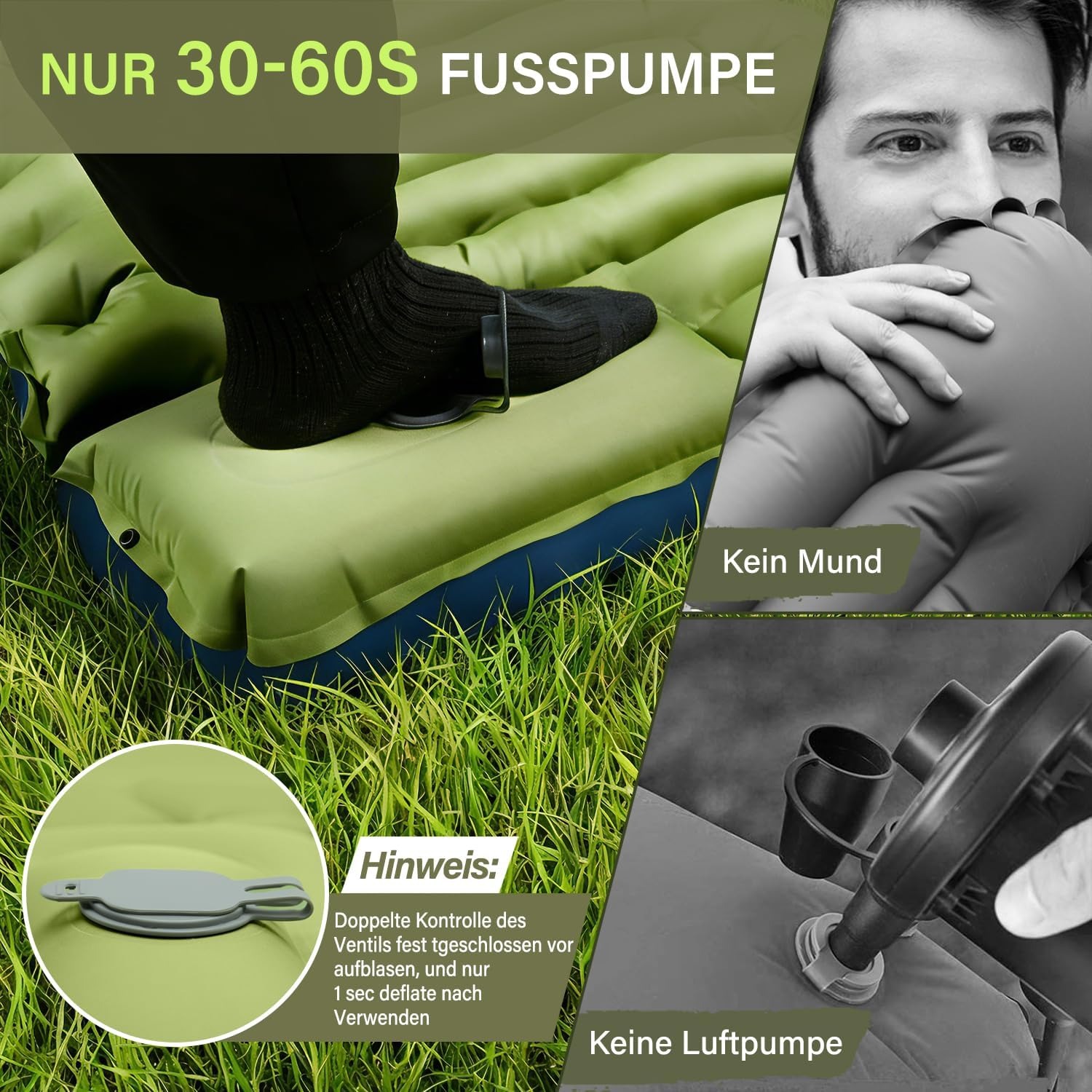
There are three ways to put air into a camping mat. You can blow it up by mouth, which is slow and tiring and pushes damp breath into the mat. You can carry a separate pump or pump sack, which works but is another thing to lose. Or the pump can be built into the mat, which is what happens here.
You put the mat down flat, open the valve and press the pump with your foot. The supplier describes 30 to 60 seconds of pedalling for a full inflation. The practical advantage is not just speed. It is that you cannot leave the pump at home, and you can inflate the mat while standing up, in the dark, with cold hands, without kneeling in wet grass.
Deflation runs the other way. Open the release valve and the air leaves fast, then roll the mat from the foot end toward the valve to squeeze out the rest. Doing that properly makes the difference between a mat that fits neatly in its bag and one that fights you.
Thickness, width and why both matter
Camping mats get sold on thickness, and thickness does matter. Below about 5 cm, side sleepers tend to feel the ground through their hip. At 10 cm you have enough air that your pressure points stay clear of whatever is underneath.
Width is the spec people forget. A lot of basic mats are around 50 to 60 cm wide, and if you move at all in your sleep you end up with an elbow or a knee on the tent floor. This mat is 68 cm wide and 195 cm long, which gives most adults room to roll over without falling off. If you are shopping for the best lightweight sleeping mat for hiking, width is the first thing to check after thickness, because a narrow mat undoes a lot of the benefit of a thick one.
The built-in pillow
The integrated cushion at the head end is a small feature that saves a surprising amount of hassle. Camp pillows are easy to forget, annoying to pack and rarely stay where you put them. Having one shaped into the mat means your head stays supported and nothing slides away in the night.
If you like a high pillow, you may still want a bit more loft. A folded fleece or a small stuff sack with clothes in it sits neatly on top of the built-in cushion. But for most people, one mat doing both jobs is the point.
Making a double bed
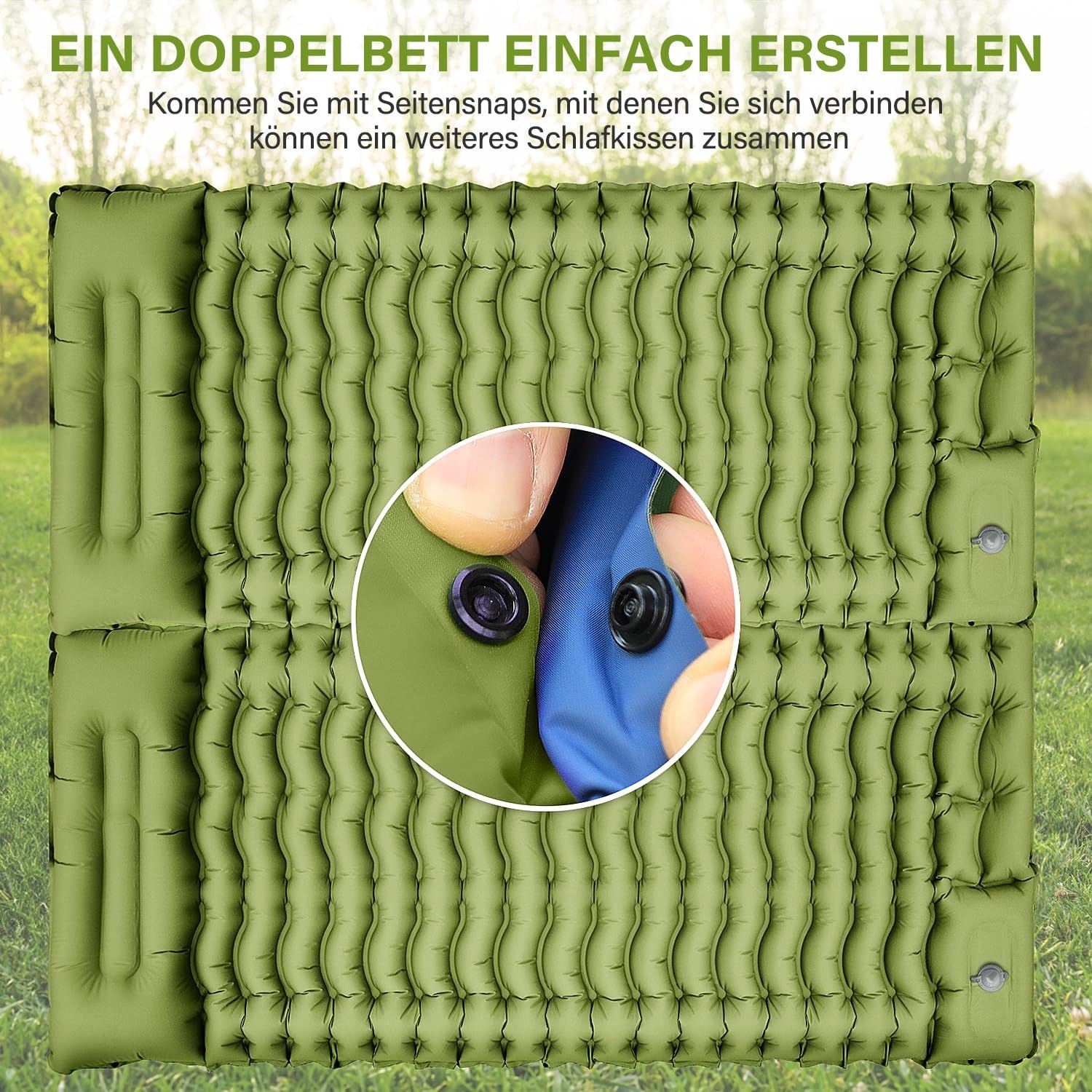
Along one side of this mat are buttons that connect to another mat of the same type. Two singles join into a double sleeping surface, which is genuinely useful for couples and for families where someone always ends up migrating across the tent at 2am.
Worth knowing: joined mats still behave as two separate air chambers. If one person likes a firmer surface than the other, each of you can set your own. That is often more comfortable than a true double airbed, where one person turning over moves the whole thing.
Who this suits, and who it does not
It suits car campers, festival goers, van sleepers, people doing weekend hikes and anyone who keeps a spare bed in a cupboard for visitors. It is a good step up for someone who has been using a cheap foam roll and has decided that camping does not have to mean bad sleep.
It is less ideal if you are doing serious alpine or winter trips. No insulation rating is given for this mat in our record, and cold-weather camping is one of the few situations where that number really matters. In those conditions, pairing any air mat with a closed-cell foam layer underneath is sensible practice.
It is also not a replacement for a proper mattress at home. It is a single-width camping product. For occasional guests it works fine. For nightly use, buy a bed.
Setting it up well
Clear the ground first. Thirty seconds spent kicking away stones and sticks does more for your night than any spec on a box. Pitch on the flattest patch you can find, and if there is any slope at all, sleep with your head uphill.
Then think about firmness. The listing describes firmness as customisable, which simply means you choose how much air goes in. Back sleepers usually want it firmer. Side sleepers usually want it softer, so the hip and shoulder can sink slightly. Try it, lie on it, and adjust. Most people overinflate the first time.
Expect a small pressure drop as the night cools. That is physics, not a fault. A few seconds on the foot pump in the morning, or before you settle, sorts it.
Looking after it
Care here is simple. Spot clean with a damp cloth and mild soap, then let it dry completely in the air before rolling it. Putting a damp mat into a sealed bag is how mats start to smell.
Keep it away from sharp things and from fire. Nylon is tough but it is still fabric, and a stray ember leaves a hole that air will find. Brush off grit before you fold, because trapped grit grinds against the coating every time you roll it.
For storage between trips, loose is better than tight. Months of hard compression stresses the seams and valve. A shelf in a cupboard beats the trunk of a hot car.
The short version
If you camp a few times a year and keep waking up sore, this is the sort of upgrade that changes the trip. Ten centimeters of air, 195 by 68 cm of space, a pillow built in, and a pump you work with your foot so there is nothing extra to carry. Two of them button together if you want a double.
Set the firmness to suit how you sleep, clear the ground before you lay it down, and dry it before you pack it. Do those three things and it should give you a lot of good nights.