Camping Company
Company
Shop By Category
T&Cs
Shop Online
  • Clear materials and product specifications
  • Free tracked USA-wide delivery over $150
  • 14-day returns

Snow And Sand Tent Stakes | Aluminum Tent Pegs | Beach Tent Pegs

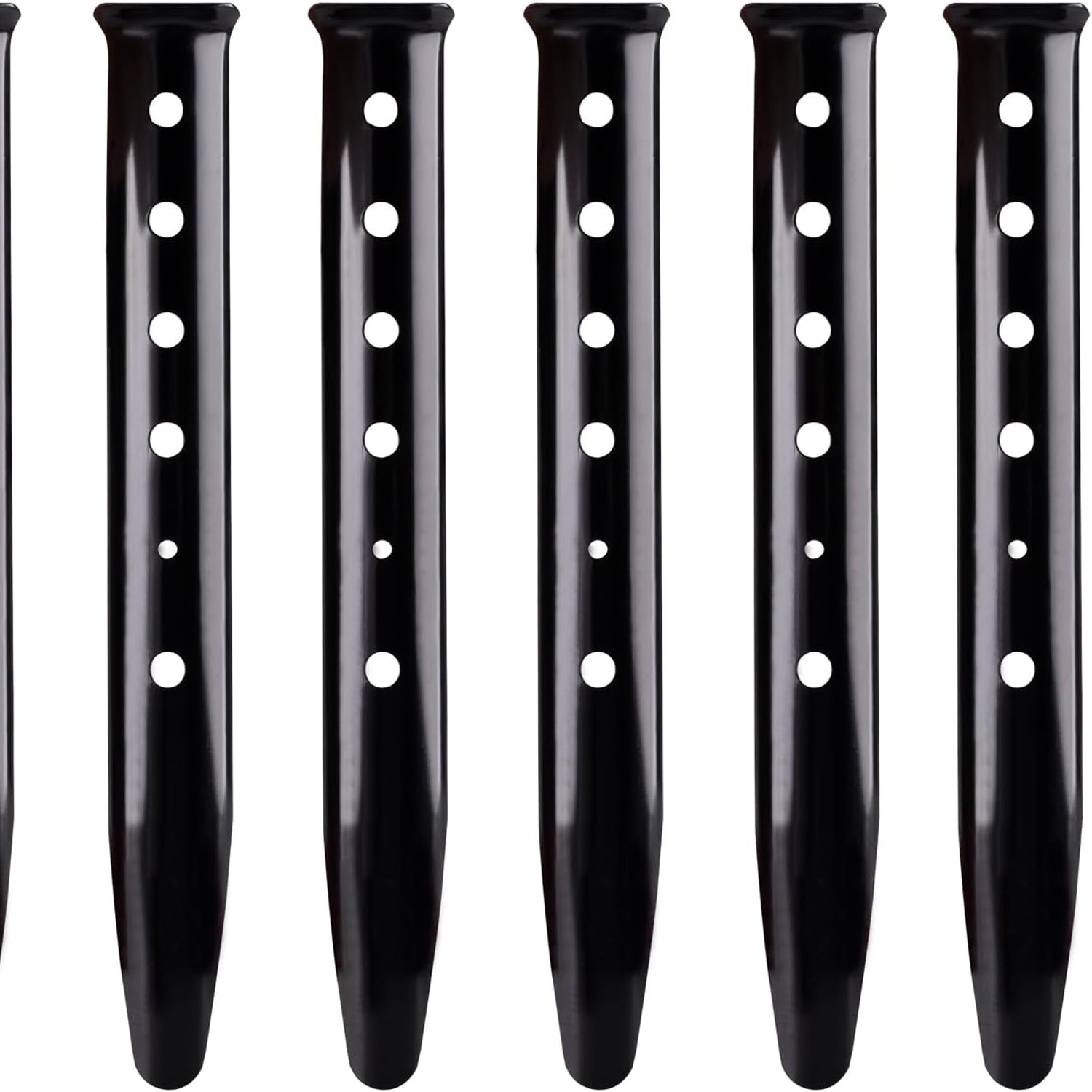
Azarxis Aluminum Snow and Sand Tent Stakes (6 Pack)

$66.99 $79.99 Save $13
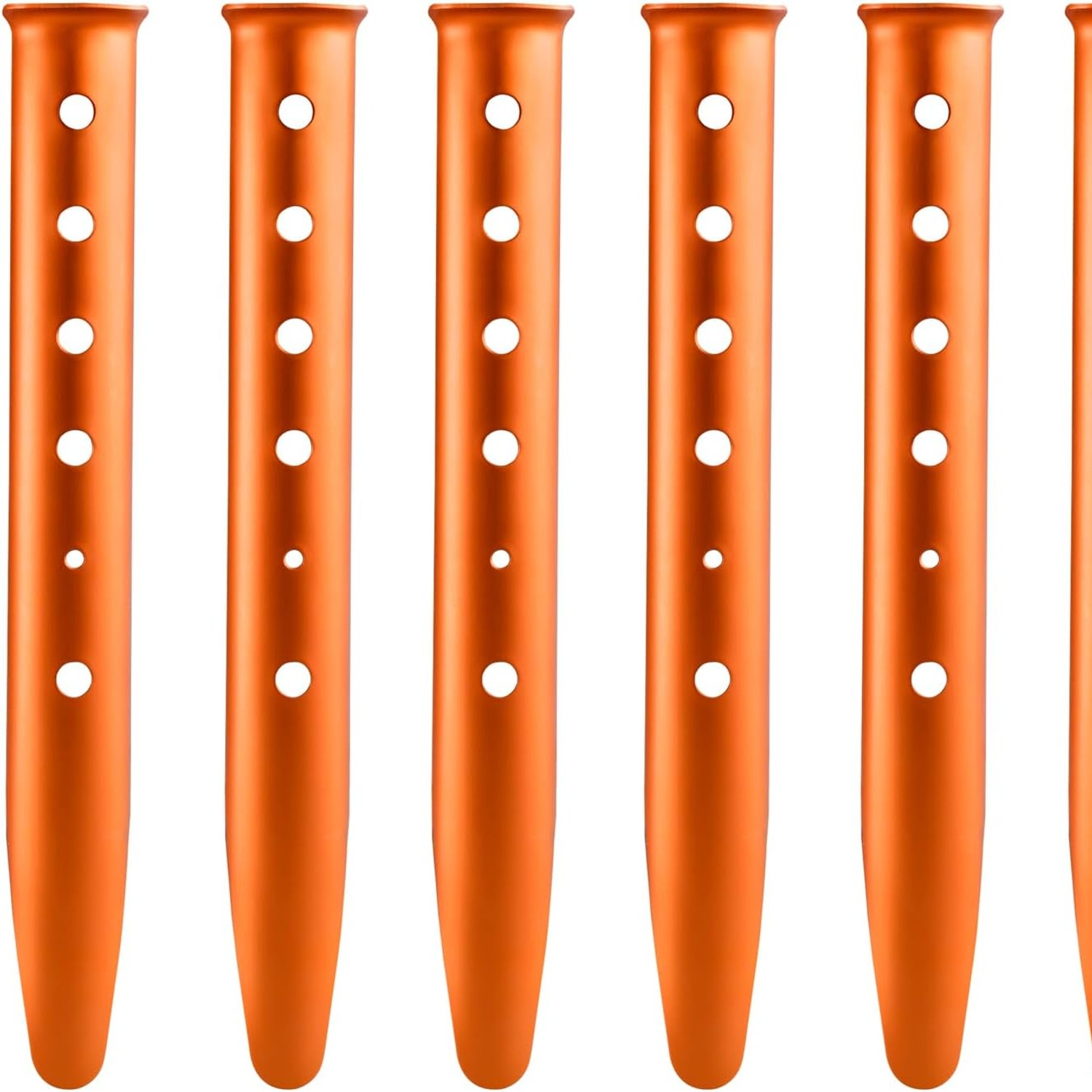
  • Wide Holding Face
  • 52g Per Peg
  • Anodised Aluminum
  • Bright Orange

Price: $66.99 $79.99

  • Free tracked USA-wide delivery on orders $150+, otherwise a flat $20
  • Pay by card or PayPal, handled by the payment provider
  • 14 days to change your mind, plus your statutory rights
Product specifications
BrandAzarxis
ManufacturerAzarxis
Model Number3316
StyleTent Stake
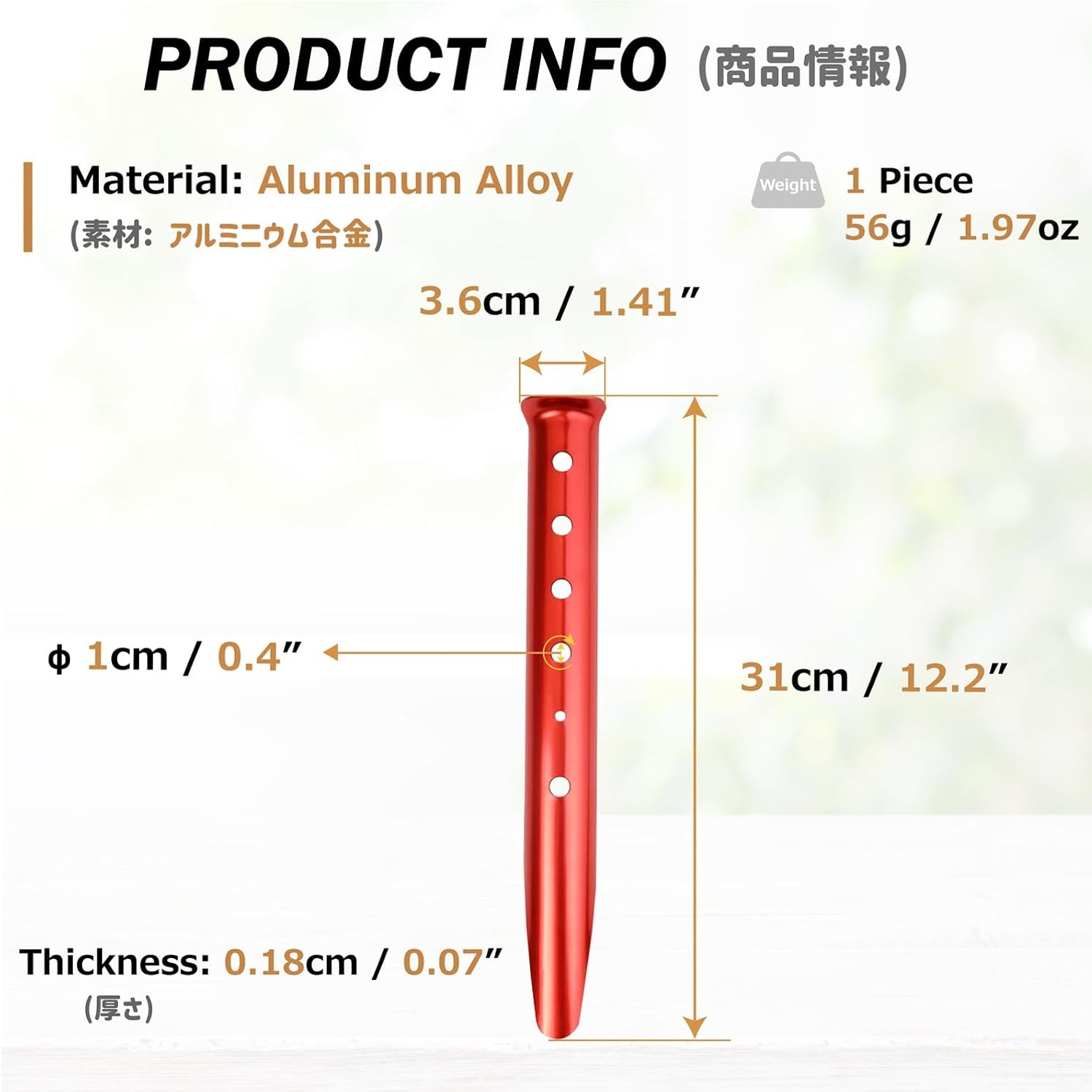
MaterialAluminum
ColorOrange
Length31 cm
Width3.6 cm
Product Dimensions31 L x 3.6 W cm
Weight Per Peg1.84 oz (approx. 52 g)
Number Of Pieces6
Recommended UsesCamping, trips, hiking, backpacking, picnics, shade canopies, beach, snow
Weight0.05 kg
Shipping & returns

Tracked delivery anywhere in the USA. It is free on orders of $150 or more, and a flat $20 below that.

If it is not right for you, send it back within 14 days of delivery in resaleable condition and we refund the price you paid, including standard delivery. That is a voluntary policy we offer on top of your legal rights. You cover the cost of returning it unless the item is faulty.

If it arrives faulty, damaged or not as described, we put it right at no cost to you under the consumer protection law of your state and the Federal Trade Commission Act, return postage included.

Shipping details · Refunds and returns

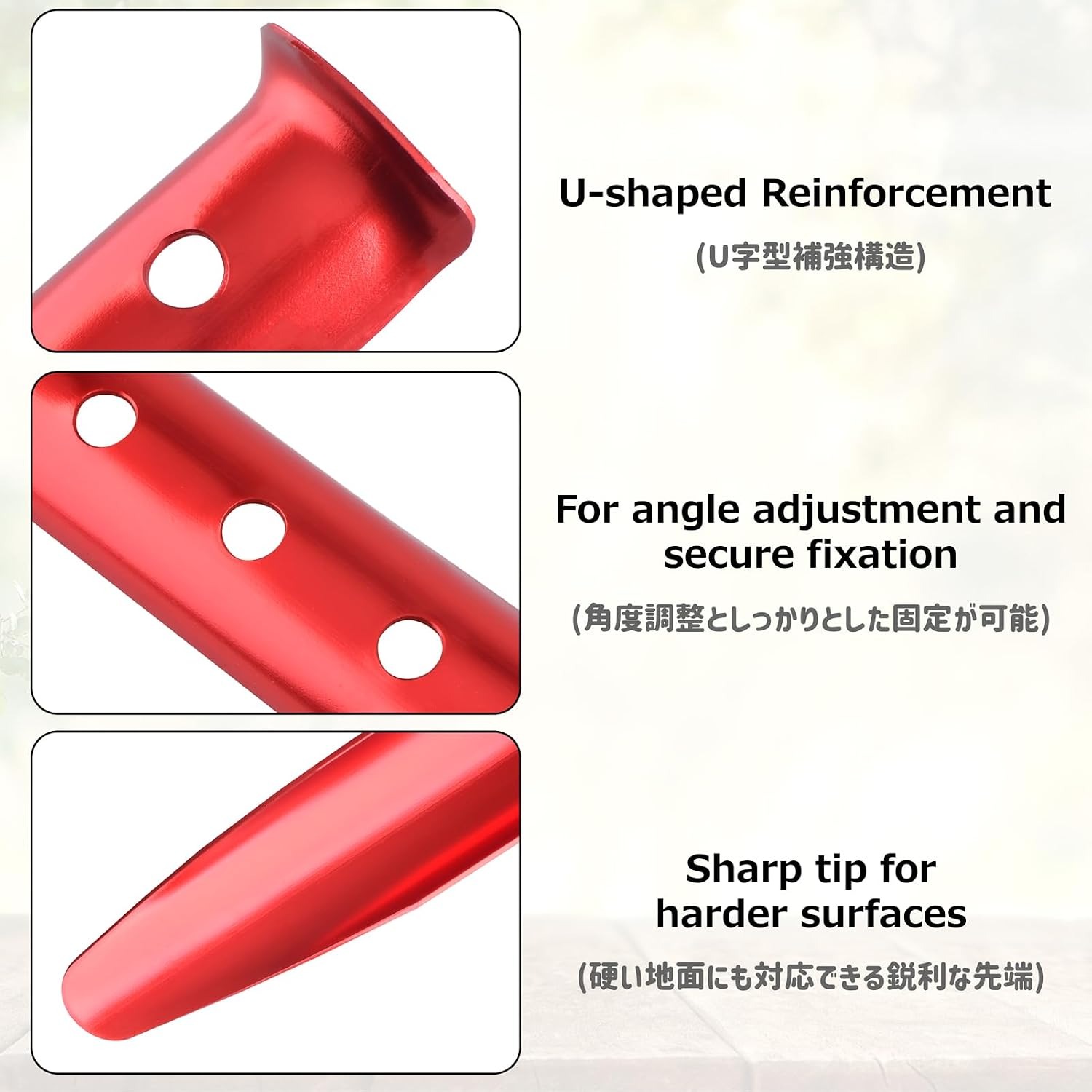
Wide Holding FaceA 3.6cm wide body gives far more grip in sand and snow than a thin round pin.
52g Per PegLight enough to carry in a backpacking kit without thinking twice about it.
Anodised AluminumThe anodised finish adds hardness and resists wear through repeat trips.
Bright OrangeEasy to spot against pale sand or snow, so fewer pegs get left behind.

Keep your shelter planted in loose ground with snow and sand tent stakes built for beaches, dunes and deep powder.

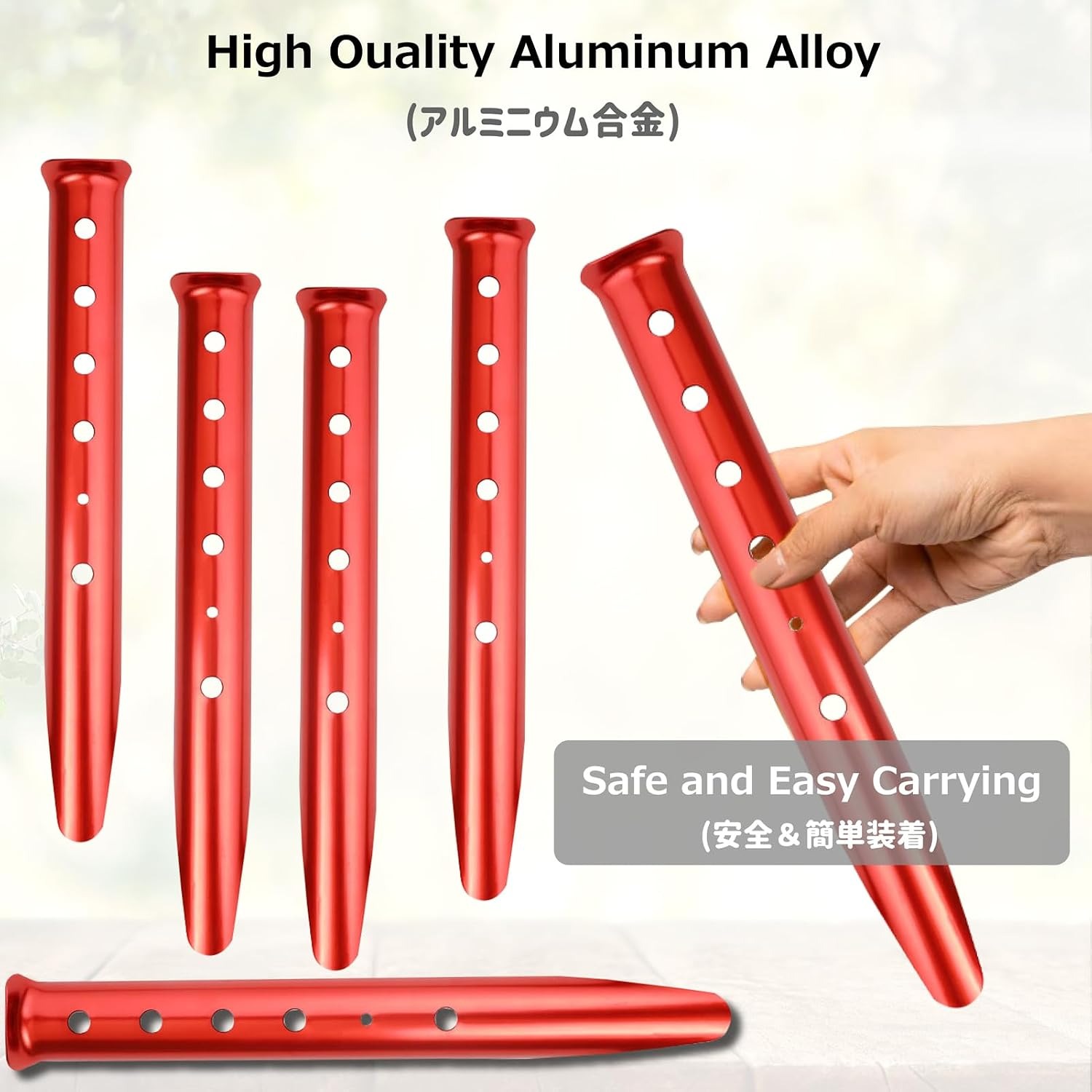
Six anodised aluminum pegs, 31cm long and 3.6cm wide, weighing just 52g each, with a bright orange finish that is easy to spot and hard to leave behind.

Six aluminum snow and sand tent stakes designed for ground that will not hold a standard thin peg.

Each peg measures 31cm long and 3.6cm wide, so the load spreads across a broad surface instead of a narrow point.

At roughly 52g per peg they add very little to a pack, which suits hiking, backpacking and day trips to the beach.

The anodised aluminum surface is wear resistant and holds its bright orange color, making the pegs easy to find in sand or snow.

Suited to beaches, dunes, soft soil and snow, and not intended for hard, rocky or compacted ground.

Azarxis Aluminum Snow and Sand Tent Stakes (6 Pack)

Most tent pegs are built for one job, pushing into firm soil and staying there. Take those same pegs to a beach or a snowfield and they slide straight back out, because loose material does not grip a thin shaft. These Azarxis stakes solve that by changing the shape of the problem. Each peg is 3.6cm wide and 31cm long, so instead of relying on friction along a narrow pin, it relies on the weight of sand or snow sitting on top of a broad blade.

Azarxis Aluminum Snow and Sand Tent Stakes (6 Pack)

The set contains six pegs made from aluminum and finished with an anodising process. Anodising hardens the outer surface, which helps the pegs resist scuffs and wear across repeat trips, and it is also what gives them their bright orange color. That color matters more than it sounds. Pale sand and fresh snow hide gray metal completely, and a dropped peg is gone for good. Orange shows up from a distance.

Azarxis Aluminum Snow and Sand Tent Stakes (6 Pack)

Weight was clearly a priority in the design. Each stake comes in at about 52 grams, or 1.84 ounces, which means the full set of six adds a little over 300 grams to a pack. That is light enough to carry on a hike or throw in a day bag for a beach shelter, and it is the reason these work as backpacking tent stakes rather than only as car-camping gear.

Azarxis Aluminum Snow and Sand Tent Stakes (6 Pack)

The intended ground is soft. Beaches, dunes, loose soil and snow all suit this design, because the wider face can bury properly and let the surrounding material hold it down. Hard-packed earth, gravel and stony ground are the wrong match. A wide blade cannot cut into compacted soil, and forcing it will bend the metal rather than drive it in. For those sites you want a narrow steel or alloy pin instead.

Azarxis Aluminum Snow and Sand Tent Stakes (6 Pack)

One practical note from the manufacturer is worth repeating. These stakes are not suited to tents that use small needle loops at the corners, because the wider head does not sit well in a narrow loop. If your shelter uses webbing loops, guy lines or cord, these will work fine. Check your tent's corner hardware before you head out, and pair the pegs with a cord loop if needed.

Not sure yet? That is fine.

Camping gear has to suit your trip and your climate, and you cannot always judge that from a photograph. If it is not right for you, send it back within 14 days of delivery in resaleable condition and we refund the price you paid, including standard delivery. That is a voluntary policy we offer on top of your legal rights.

If it turns up faulty, damaged or not as described, that is on us. The consumer protection law of your state covers you, and we pay the return postage. Read the full detail on our refunds and returns page, or ask us anything before you order.

Frequently Asked Questions

What are snow and sand tent stakes?

They are pegs with a wide, flat body instead of a thin round shaft. The extra width lets loose material like sand or snow sit on top of the peg and hold it down. Standard narrow pegs rely on soil gripping the sides, which does not happen in sand.

How many pegs are in this set?

The set includes six stakes. That is enough for the four corners of a small tent plus two guy lines, or for a beach shade canopy. Many campers buy two sets if they are pitching a larger shelter.

How long are the stakes?

Each peg is 31cm long, which is noticeably longer than a typical 18cm to 23cm camping peg. The extra length means more of the stake is buried, which matters a lot in material that shifts. Width is 3.6cm.

What are they made from?

Aluminum, with an anodised surface finish. Anodising hardens the outer layer and helps it resist wear and scratching. It is also what holds the orange color in place.

How much does each peg weigh?

About 52 grams, listed as 1.84 ounces. Six pegs come to roughly 310 grams in total. That keeps them viable as lightweight tent stakes for people counting pack weight.

Will these work on a normal grass campsite?

No, and the manufacturer says so directly. The wide blade is not designed to cut into firm soil or turf. You want a narrow pin-style peg for grass, dirt and anything compacted.

Can I use them on rocky or gravel ground?

No. Hard or stony ground will stop the blade and you risk bending the aluminum. These are strictly for soft material like sand, snow and loose soil.

Are these the best sand tent stakes for a beach shelter?

They are built for exactly that job, with a wide face and a 31cm length suited to dry beach sand. Whether they are the best sand tent stakes for you depends on your shelter size and how windy your local beach gets. For a standard beach shade or small tent, six pegs is a sensible starting point.

How do I install them in sand?

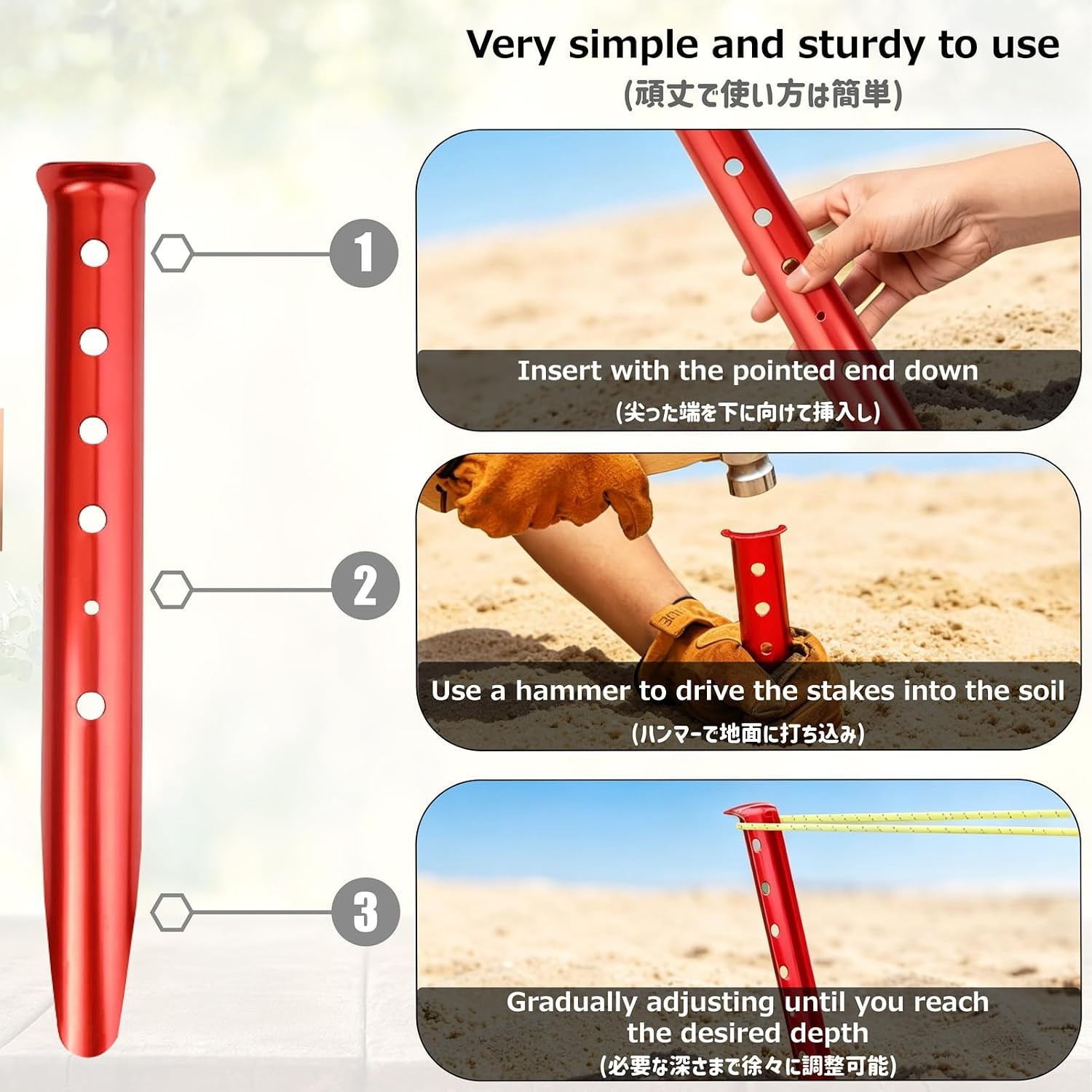
Dig a short trench, lay the peg in horizontally with the cord attached, then bury it and pack the sand down firmly. This is called a deadman anchor and it holds far better than pushing a peg straight down. You can also drive them in at an angle away from the tent if the sand is damp and firm.

Do they work the same way in snow?

Yes, the deadman method works just as well in snow, and often better. Bury the peg sideways, pack snow over it and let it set for a few minutes. In cold conditions the snow refreezes around the stake and the hold gets stronger.

What color are they?

Orange. It is a deliberate choice, because gray metal vanishes against pale sand and white snow. Bright pegs are much easier to find when you are packing up at dusk.

Will the color wear off?

Anodising bonds color into the surface layer rather than sitting on top like paint, so it holds up better than a sprayed finish. Heavy abrasion over many trips will dull it eventually. Rinsing off grit after each use slows that down.

Can I hammer them in with a mallet?

Go gently if you do. Aluminum is lighter than steel but it also bends more easily, and a wide blade takes impact across a larger area. In the soft ground these are made for, hand pressure or a boot is usually enough.

What if a peg bends?

Most light bends in aluminum can be worked back straight by hand. Avoid hammering a bent peg flat, because repeated sharp bending at the same point weakens the metal. If one is badly kinked, retire it rather than trusting it in wind.

Are these suitable for backpacking?

Yes, the weight suits it. Six pegs at roughly 52 grams each is a modest addition to a pack. They are a reasonable pick among the best backpacking tent stakes if your route includes beaches, dunes or snow.

Will they fit any tent?

They fit tents with webbing loops, cord loops or guy lines. The manufacturer notes they are not suitable for tents that use small needle loops at the four corners, because the wider head will not pass through neatly. Check your corner hardware first.

Can I use them for a shade canopy or gazebo at the beach?

That is one of the listed uses. A canopy catches a lot of wind, so bury each peg properly using the trench method and add extra guy lines if you can. For a big canopy you may want more than six anchor points.

Do they float if I drop one in water?

No, aluminum sinks. If you are pitching near the waterline, keep spare pegs in a pouch rather than loose on the sand. The orange finish does help you spot them in shallow, clear water.

How do I clean them?

Rinse them under fresh water to clear salt and sand, then dry them before packing. Salt left on metal encourages corrosion over time, and trapped grit can scratch the finish. A quick rinse at the beach shower is usually all it takes.

How should I store them?

Keep the six together in a small stake bag or pouch. Loose pegs rattling around a pack can scuff other gear and bend against each other. Store them dry.

Can I use these in soft mud?

Soft soil is listed as a suitable use, so wet, loose ground can work. Very sloppy mud gives poor hold for any peg, since there is little structure to grip. In those conditions, the deadman trench method with a rock or log on top is more reliable.

What is the model number?

The model number is 3316 and the brand is Azarxis. That can be helpful if you want to match a second set later.

Are they sold individually?

This listing is for a pack of six. If you need more anchor points, buying a second pack is the simplest option and keeps the set consistent.

Do they come with cord or guy lines?

The listed contents are the six stakes. Cord and guy lines are normally supplied with your tent or canopy. If you plan on burying pegs as deadman anchors, a few meters of spare cord is a handy addition.

Would these make a good gift for a camper?

They are a practical gift for someone who camps on beaches, does winter trips, or has complained about pegs pulling out. Pegs are the kind of thing people forget to upgrade. A set of bright, purpose-built ones tends to get used immediately.

How do they compare to plastic sand pegs?

Plastic sand pegs are often bulkier and can snap in cold weather. Aluminum is lighter for the same surface area and keeps working in snow. The anodised finish also gives better long-term wear than most moulded plastic.

Can I use these in a sandy desert camp?

Yes, dry sand is a core use case. Hot, loose desert sand gives very little grip, so bury the pegs horizontally and weigh them down. Adding a rock on top of a buried peg improves the hold further.

What is the country of origin?

That detail is not specified in this product record. The brand and manufacturer are both listed as Azarxis, with model number 3316.

How long does delivery take?

Delivery times vary with your location and the shipping option chosen at checkout. You will see the estimated window on the order page before you confirm. Tracking details are sent once the order ships.

What if they are not right for my setup?

If the pegs do not suit your tent or your usual ground, get in touch and we will walk you through the return process. Keep the packaging and leave unused pegs clean so they can go back in resalable condition. If your issue is that your campsite is hard ground rather than sand, a narrow steel peg is the better tool and we are happy to point you at one.

How to Choose Tent Pegs That Actually Hold in Sand and Snow

6 min read Camping Company

The problem with standard pegs

Anyone who has pitched a tent on a beach knows the feeling. You push a peg in, it goes in easily, you step back, and a gust of wind pulls it straight out again. You try angling it. You try pushing it deeper. Nothing works, and eventually you end up weighing the corners down with shoes and a cooler box.

This is not a quality problem with your pegs. It is a physics problem. A standard tent peg is a thin pin that holds because soil presses in on it from all sides. Friction along that narrow shaft is doing all the work. Dry sand has almost no friction to offer, because the grains move freely past each other. Fresh snow is worse. The pin just slices through.

Snow and sand tent stakes change the approach entirely. Instead of relying on side friction, they use surface area. A wide, flat blade buried under sand or snow has to lift all that material to come free. That is a lot of weight, and it is why a 52 gram aluminum peg can hold a shelter that a heavier steel pin cannot.

How a wide stake works

The Azarxis stakes measure 31cm long by 3.6cm wide. Both numbers matter.

The length gets the holding surface well below the surface layer. The top few centimeters of dry sand are the loosest part, with no weight on them at all. A short peg sits almost entirely in that useless zone. A 31cm stake pushes down into material that has sand sitting on top of it, which is what creates the hold.

The width is where the real gain is. Compare a 3.6cm blade against a 4mm round pin. The blade presents roughly nine times the face area, and in loose material that translates almost directly into holding power. It is the same principle that makes a snowshoe work.

There is a second way to use these, and it is the method experienced beach and snow campers reach for first. Instead of driving the peg down, you dig a shallow trench, tie your guy line around the middle of the stake, lay it horizontally in the trench, then bury it and stamp the material down. This is a deadman anchor. The pull on the line now has to drag the entire buried stake sideways through packed sand, which is close to impossible by wind alone. For the best beach tent anchors setup, this method beats vertical placement every time.

Who these suit

If your camping happens on grass, firm dirt or forest floor, these are the wrong pegs and you should not buy them. The manufacturer is clear about this and so are we. A wide blade cannot cut into compacted ground, and trying to force it is how aluminum bends.

These make sense if you spend time in any of the following places.

Beaches and dunes, where the sand is dry and deep and nothing else holds. Snowfields and winter campsites, where you need anchors that work in powder. Riverbanks and soft, sandy soil, where conventional pegs loosen overnight. Shade canopies on sand, where the shelter catches wind like a sail and the corners are the first thing to fail.

Day trippers get just as much from these as serious campers. A beach shade that stays up for the afternoon instead of collapsing twice is worth the small investment. And for backpackers heading into snow country, the weight is low enough that there is no real argument against carrying them.

What to look for in a sand or snow stake

A few things separate a peg that works from one that frustrates you.

Width is the headline figure. Anything under about 3cm starts losing the advantage. These sit at 3.6cm, which is a solid working width without becoming awkward to pack.

Length should be at least 25cm for sand work, and longer is generally better. At 31cm these are in the right range for most shelters. Very long stakes become unwieldy in a pack, so there is a practical ceiling.

Material affects both weight and durability. Aluminum gives you the strength-to-weight ratio you want for anything carried on your back. Anodising adds a hardened surface layer, which is why anodised tent pegs tend to survive more trips before looking tired. Steel is tougher but noticeably heavier, and in loose ground the extra strength does not buy you more holding power.

Visibility is underrated. Gray or black pegs disappear in sand and snow, and people lose them constantly. Orange, like these, stays visible when you are packing up in low light. If you are comparing the best wide tent pegs on paper, color never makes the spec sheet, but it is the feature you will notice in real use.

Finally, check how the peg attaches to your shelter. These have a wide head, which is fine with webbing loops, cord loops and guy lines. They are not suitable for tents that use small needle loops at the corners. If that is your setup, you can still use these by adding a short cord loop through the needle loop and pegging that instead.

Getting the most hold out of them

A few habits make a big difference.

In dry sand, always bury rather than drive. The trench method takes an extra minute per corner and multiplies your holding power. Wet, firm sand near the tide line behaves more like soil and will take a vertical peg, but check it before you trust it.

Angle matters when you do go vertical. Lean the peg away from the direction of pull, roughly 45 degrees. A peg driven straight down is far easier for a guy line to lever out.

In snow, pack the material down hard over the buried stake and give it a few minutes. In cold conditions the disturbed snow refreezes around the peg and the anchor becomes genuinely solid. On a long winter stay, that bond keeps getting better.

Add weight if conditions are rough. A rock, a log or a filled dry bag placed over a buried peg adds real resistance for no cost. On exposed beaches with afternoon sea breeze, this is worth doing from the start rather than after something lifts.

Looking after them

Salt is the main enemy. Rinse the pegs with fresh water after beach trips and dry them before they go back in the bag. Anodised aluminum handles moisture reasonably well, but salt left sitting on metal will dull the finish over time.

Clear off caked sand before packing. Trapped grit grinds against the surface inside a stuff sack and wears the color faster than anything else.

Keep the set together in a pouch. Loose pegs in a pack bend against each other and scratch other gear. A simple drawstring bag solves it.

If one bends, straighten it gently by hand. Avoid hammering it flat, because sharp repeated bending at one spot creates a weak point. A peg that has been straightened twice is best kept as a spare rather than relied on in a storm.

The short version

These are specialist pegs, and knowing that is the key to being happy with them. On grass or firm dirt they are the wrong tool. On sand, snow and soft ground they do something standard pegs genuinely cannot.

You get six aluminum stakes, 31cm long and 3.6cm wide, at about 52 grams each, finished in anodised orange so you can actually see them. Use the trench and deadman method wherever the ground is loose, lean them away from the pull when you drive them vertically, and rinse the salt off afterwards.

Do that, and the next time the wind comes up on the beach, your shelter will still be standing when everyone else is chasing theirs down the sand.

Browse the shop

Not sure which peg suits your ground?

Tell us where you camp and what shelter you use, and we will point you to the right stake for the job.

Ask us a question

Page summary

The Azarxis aluminum snow and sand tent stakes are a six-pack of wide-body pegs made for loose ground. Each peg measures 31cm long and 3.6cm wide and weighs about 52 grams (1.84 ounces). They are made from aluminum with an anodised finish in orange, which adds surface hardness and makes the pegs easier to see in sand or snow. The manufacturer lists them for camping, trips, hiking, backpacking, picnics, shade canopies, beach and snow use, and states they suit beaches, soft land and snow but not hard, grassy or stony ground. They are also noted as unsuitable for tents with needle loops at the corners. Model number 3316. Country of origin and packaged dimensions are not specified in this record.