
The complete guide
How To Choose A Pop Up Beach Tent That Actually Gets Used
The problem with beach shade
Everybody has a beach umbrella story. It leans, it spins, it flips inside out, and at some point it takes off across the sand while a stranger chases it. Even when it behaves, an umbrella gives you a circle of shade that moves every half hour, so you spend the afternoon shuffling towels to stay under it.
The other half of the problem is setup. Plenty of beach shelters are technically good products that nobody uses, because getting them up involves twenty minutes of poles, sleeves and swearing. If a shelter is annoying, it stays in the garage. Shade only counts if it actually comes out of the car.
A pop up beach tent attacks both problems. The frame opens itself, so there is no assembly step to dread. And because it is a structure rather than a floating disc, the shade stays put under it and covers more ground for longer.
How an automatic pop up shelter works
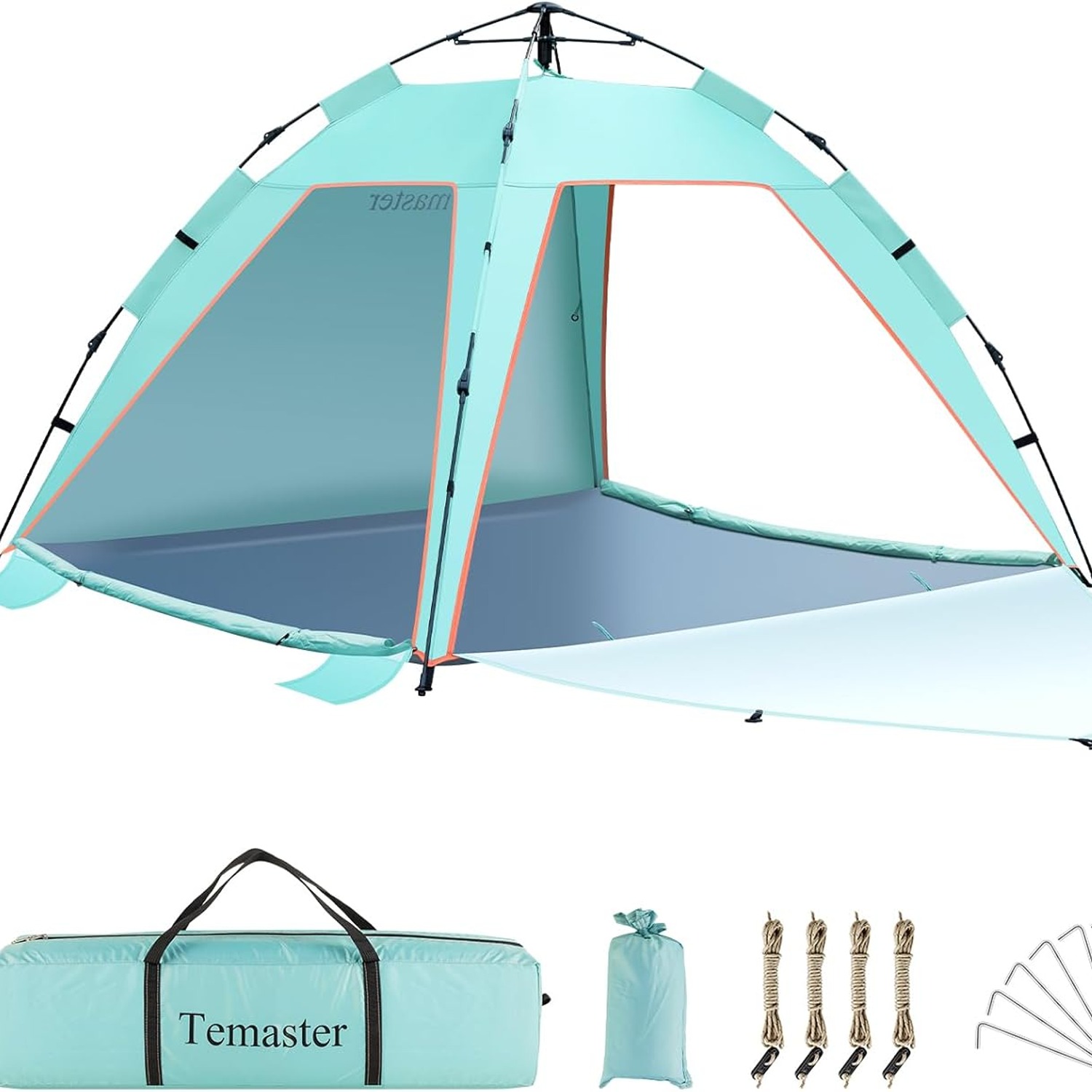
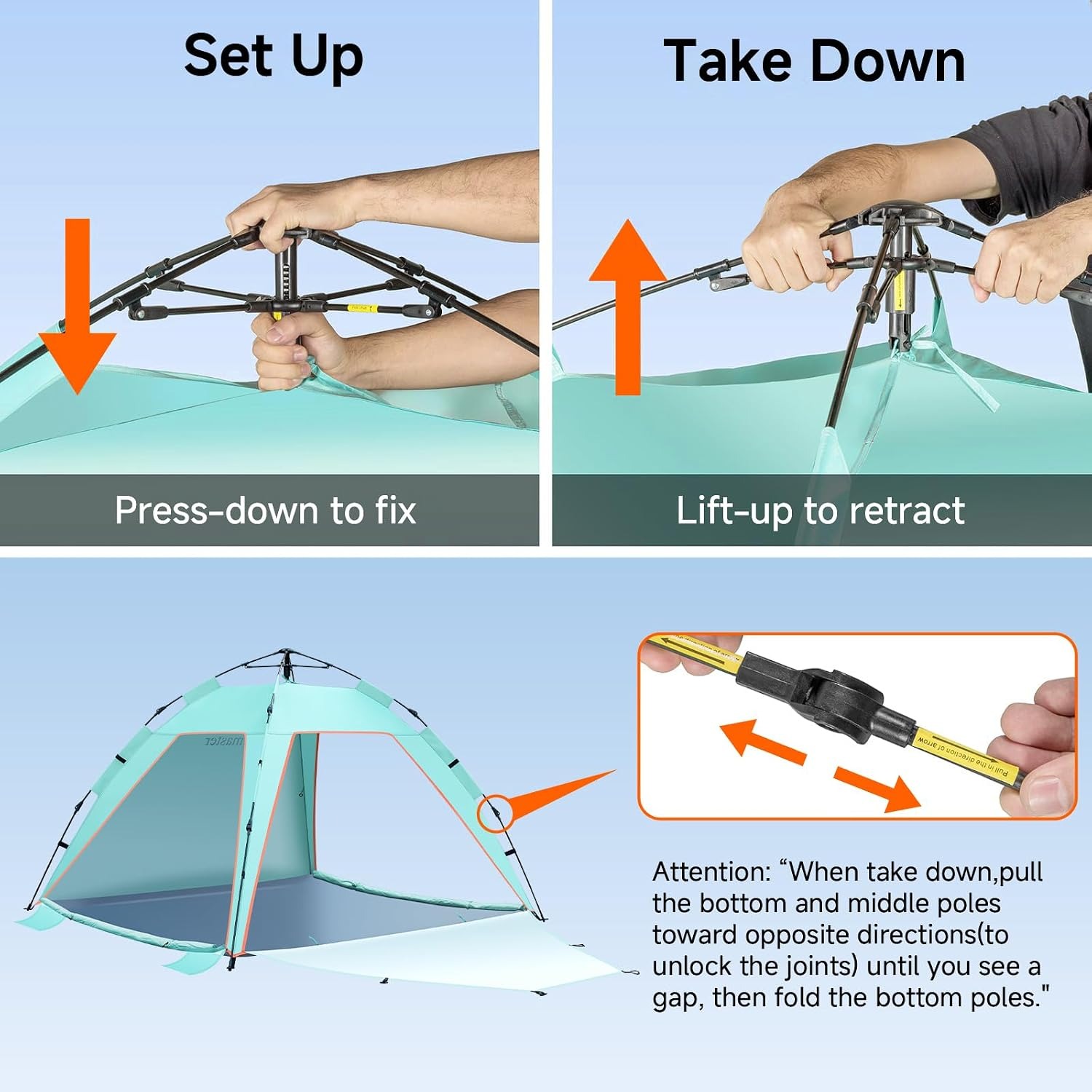
This one uses a hydraulic frame with fiberglass poles. Instead of handing you a bundle of segments to join, the poles are already built into the canopy as a sprung structure. You release it, the frame rises, and the fabric pulls taut on its own. The listing confirms no assembly is required.
Fiberglass is a sensible choice for a beach shelter. It is light, it does not rust in salt air the way some metals can, and it flexes rather than bending permanently when a gust hits. Flex matters more than raw stiffness on an exposed beach, because a frame that can give a little will usually spring back.
Folding it down follows the same principle in reverse. Once you know the motion, it takes seconds. That is the whole point: a shelter you can put up and take down without thinking about it is a shelter you will bring every time.
Size and what it really means
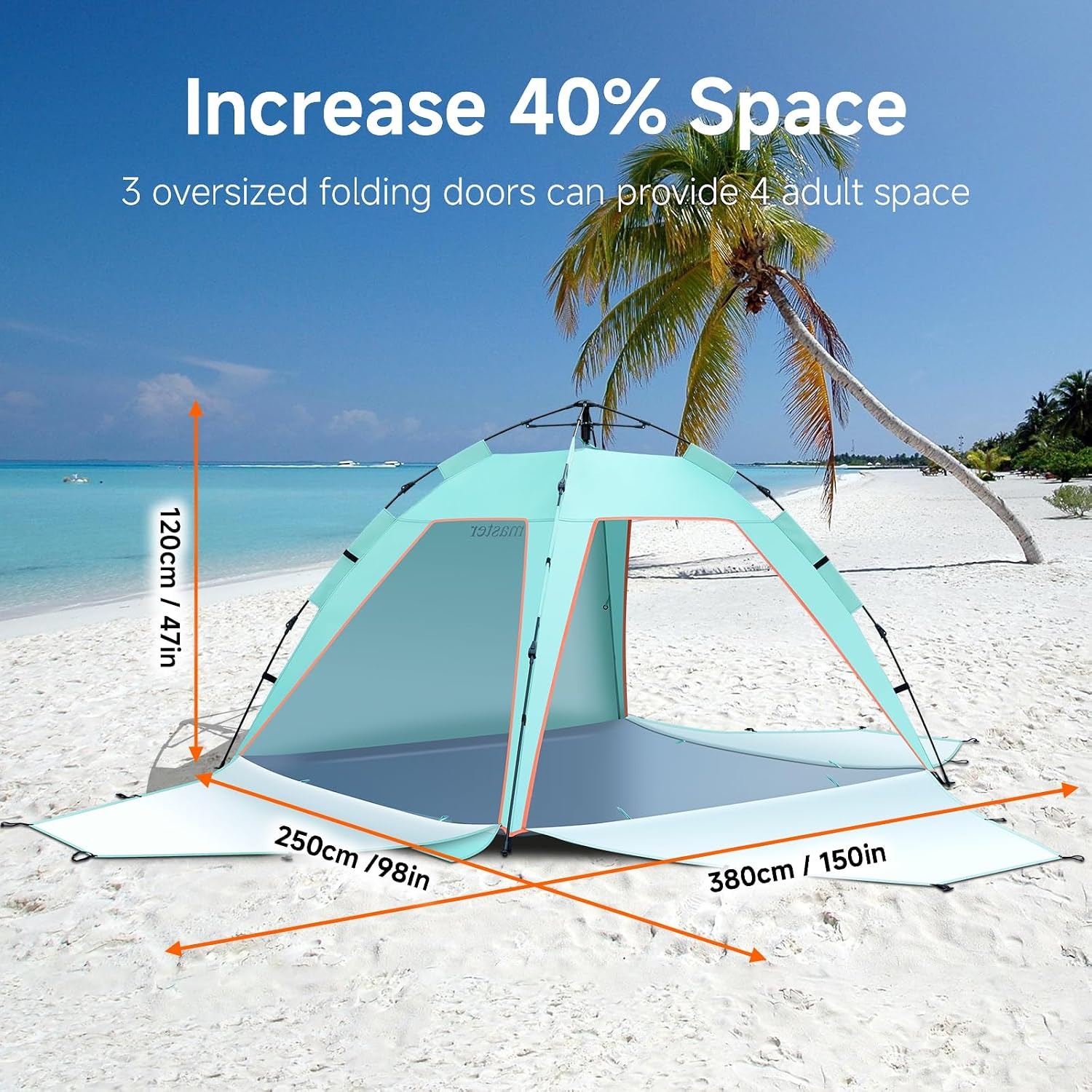
Open, this shelter measures 190cm long, 170cm wide and 120cm high. In practical terms, that is a floor area roughly the size of a large double bed, with enough head height for adults to sit upright comfortably and to lie down with plenty of clearance.
The 120cm height is deliberate. Tall shelters catch wind like a sail. A lower profile sits closer to the ground and gives the breeze less to push against, which is why beach-specific designs tend to sit lower than camping tents of the same floor size.
Think about how you use the space. If it is mostly a base for bags, towels and a cooler with people drifting in and out, this footprint handles a decent group. If you want several adults lying down at once for a long nap, you will be closer packed. People hunting for the best family beach tent usually want this middle ground, room for the gear and the kids, not a bedroom.
Sun protection worth having
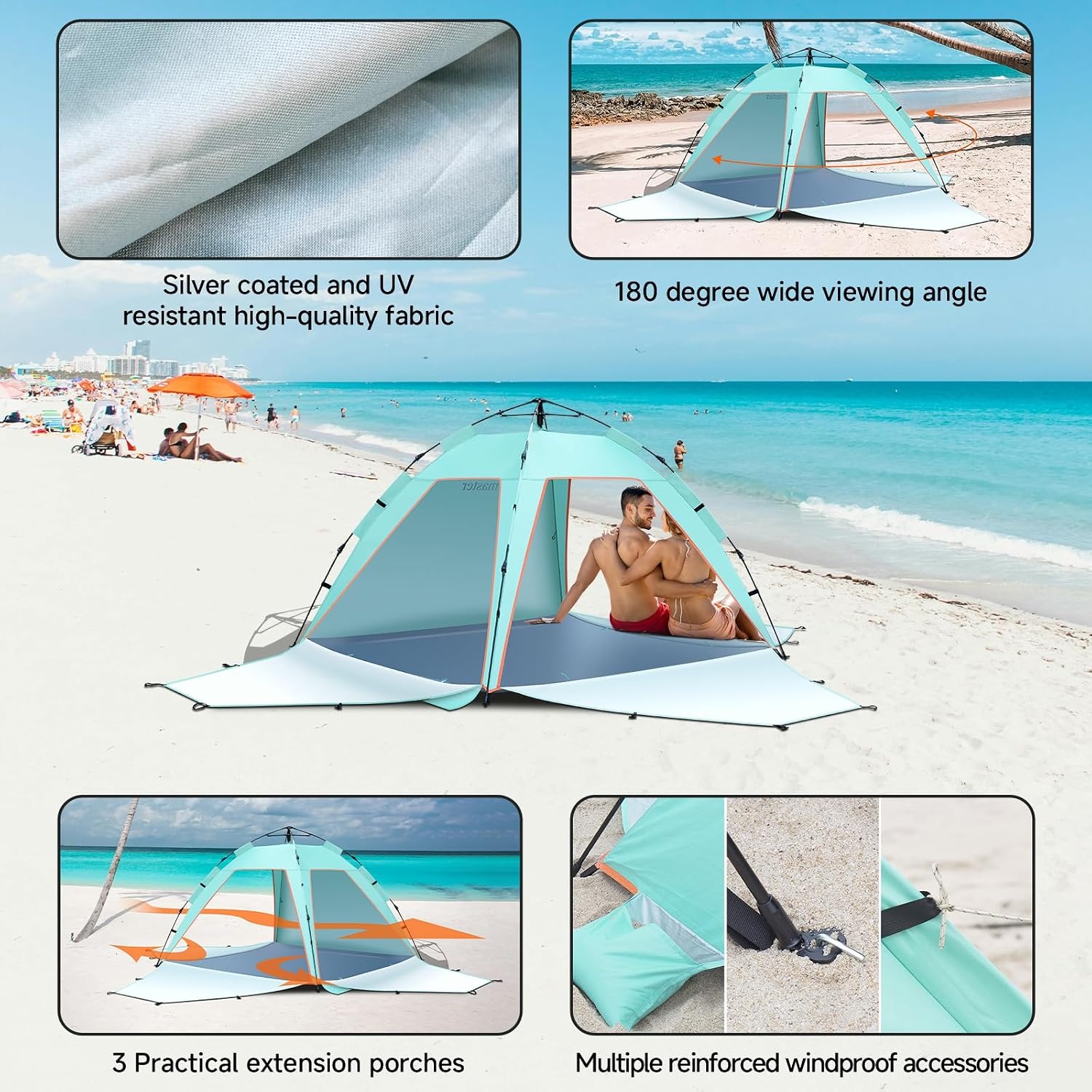
The canopy is polyester rated UPF 50+. That rating is the top band used for sun protective fabric, and it is the number that actually tells you something about shade quality. A thin canopy with no rating can feel shady while still letting a lot of UV through, which is how people get burned sitting "in the shade" all afternoon.
Two things to keep in mind. First, UPF applies to the fabric itself, so reflected light bouncing off sand and water still reaches you from the sides. Sunscreen is still worth wearing. Second, sun protective fabric works best when it is kept clean and undamaged, so avoid harsh chemicals that break down the coating.
If your main reason for buying is sun safety for small children, this rating is the reason to pick a rated shelter over a cheap unrated one. The best instant shade tent for a family is the one with a real UPF figure attached to it.
The three-door design
Most beach shelters make you pick between open and closed. This one has three expandable porch doors, which gives you a range of settings instead of two.
Open everything and you get cross ventilation and a clear line of sight to the water, which matters when you are watching kids swim. On a still, baking day, that airflow is the difference between a pleasant shaded spot and a stuffy box.
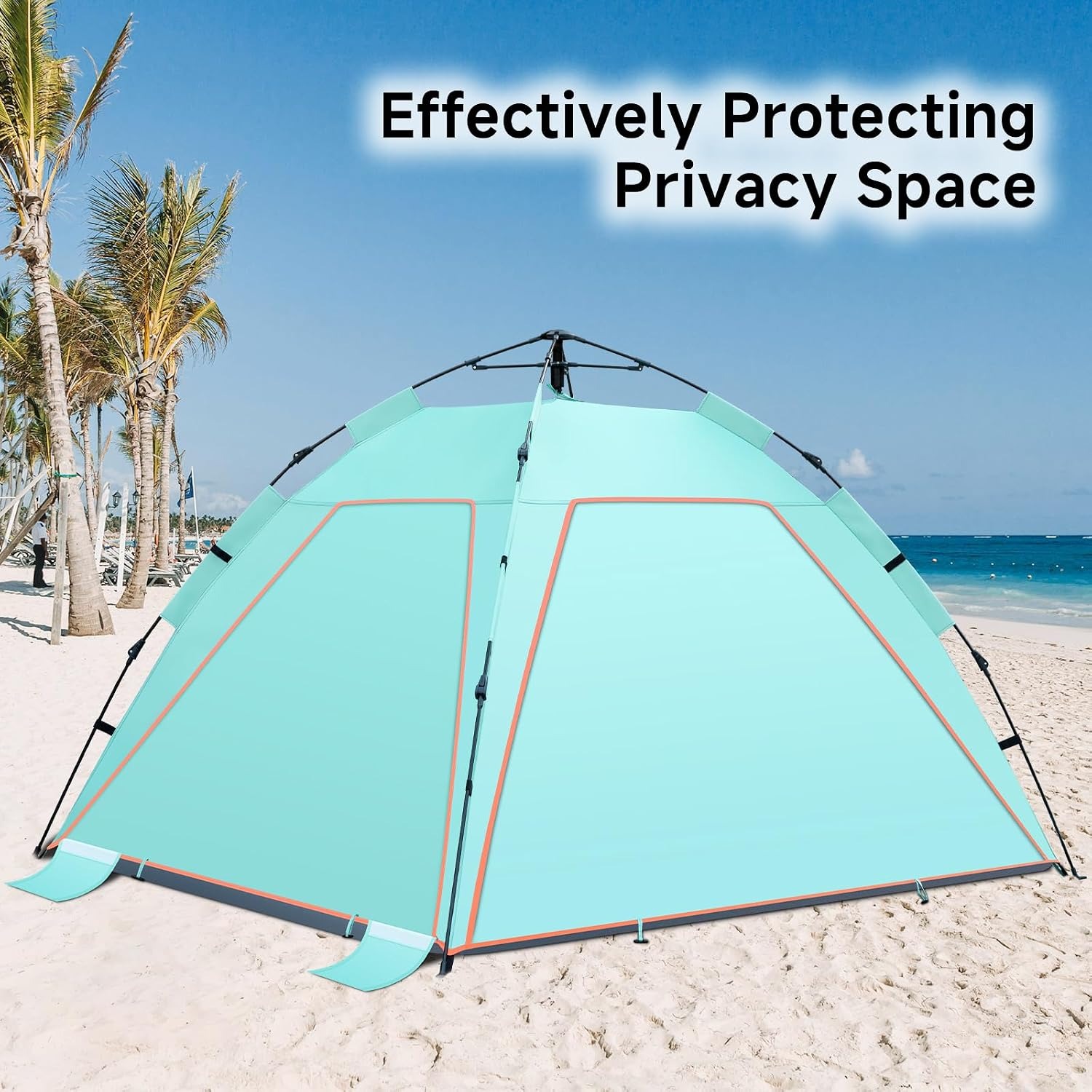
Close everything and the shelter becomes a private pocket. That is where it earns its keep for changing out of wet swimmers, feeding a baby, or giving someone a dim spot to sleep off the heat. Run one door open and two closed when the wind is coming from a single direction and you want shelter without stuffiness.
Wind, anchoring and the thing people skip
The shelter includes four guylines and reinforced wind strips. Use them. The single most common reason a beach shelter ends up tumbling down the sand is that somebody put it up, decided it felt stable, and never ran the lines out.
On sand, standard pegs do very little. Dry sand has almost no grip. The usual approach is to fill bags or containers with wet sand and weight the inside skirt, then run the guylines to buried anchors, which hold far better than surface pegs. On grass at a park or in a garden, pegs work normally.
One honest limitation: this shelter is listed as not water resistant. It is a sun and breeze shelter, not a rain shelter. If weather turns, take it down rather than sitting it out. Treating it as what it is will make it last much longer.
Who it suits
Families with young kids get the most out of it, because the fast setup means you can get children out of direct sun within a minute of arriving. Beach regulars who go often and want less hassle each trip are the second group.
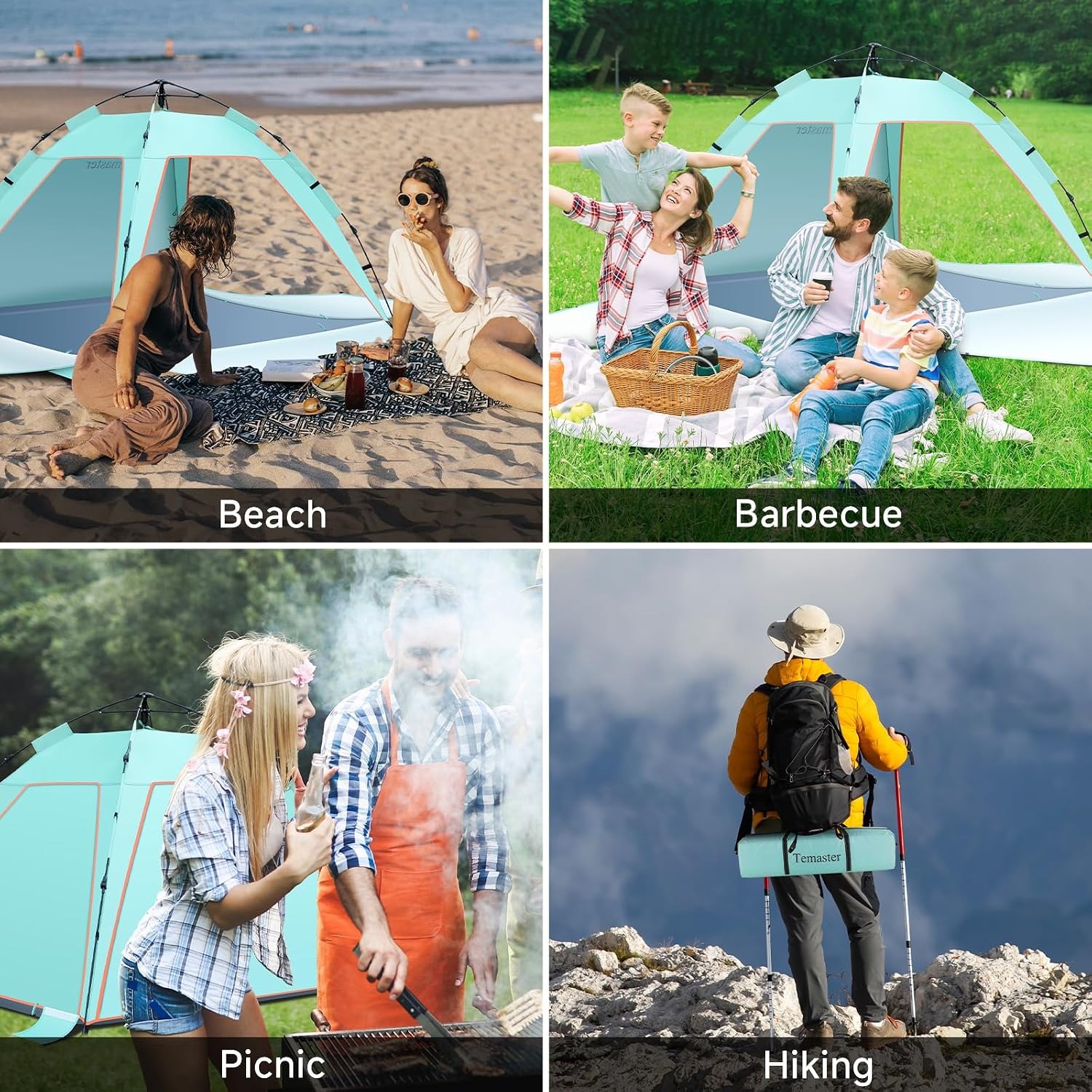
It also works away from sand. Parks, sports sidelines, picnic spots and back gardens are all reasonable uses. Anywhere you want shade without carting poles around, this does the job. People searching for the best picnic sun shelter often end up with a beach design for exactly that reason.
It is less suitable if you want an overnight camping tent, a rain shelter, or something you can stand up inside. Those are different products with different trade-offs.
Care that actually extends its life
Sand and salt are the two things that wear beach gear out. Shake the canopy thoroughly before folding, and pay attention to the frame joints, because grit in a hinge will make the automatic action stiff over time. An occasional rinse of the poles and a full dry does more good than any fancy treatment.
Never fold a damp canopy away for storage. Polyester left damp in a bag will come out with mildew spots that do not wash off. Air dry it out of direct sun, then pack it.
Spot clean with cool water and mild detergent only. Keep bleach, solvents, washing machines and tumble dryers away from it, since all of them can degrade the fabric coating that does the sun blocking.
The short version
This is a 190cm by 170cm by 120cm automatic pop up beach tent in light green, with a UPF 50+ polyester canopy on a hydraulic fiberglass frame. It opens and closes in seconds with no assembly, has three expandable porch doors for airflow or privacy, and comes with four guylines and reinforced wind strips for stability.
It is a day shade, not a camping tent, and the record lists it as not water resistant. Buy it for fast, reliable sun cover at the beach, the park, the sideline or the garden, anchor it properly every time, and dry it before you pack it away.