
The complete guide
How to Choose a Portable Camping Shower That Actually Gets You Clean
The problem with getting clean outdoors
Anyone who has spent a weekend away knows the feeling. The day was good, the walk was long, and now there is sunscreen, dust and sweat sitting on your skin with nowhere to wash it off. Maybe the campground has a shower block, maybe it is a long walk away and the queue is ten people deep. Maybe you are free camping and there is nothing at all.
The usual workarounds are not great. Baby wipes do not really clean you, they just move the dirt around. A bucket and a cup works, but it is cold, slow and uses twice the water it should. Gravity bags hung in a tree start strong and fade to a dribble as soon as the bag is half empty, right when you still have shampoo in your hair.
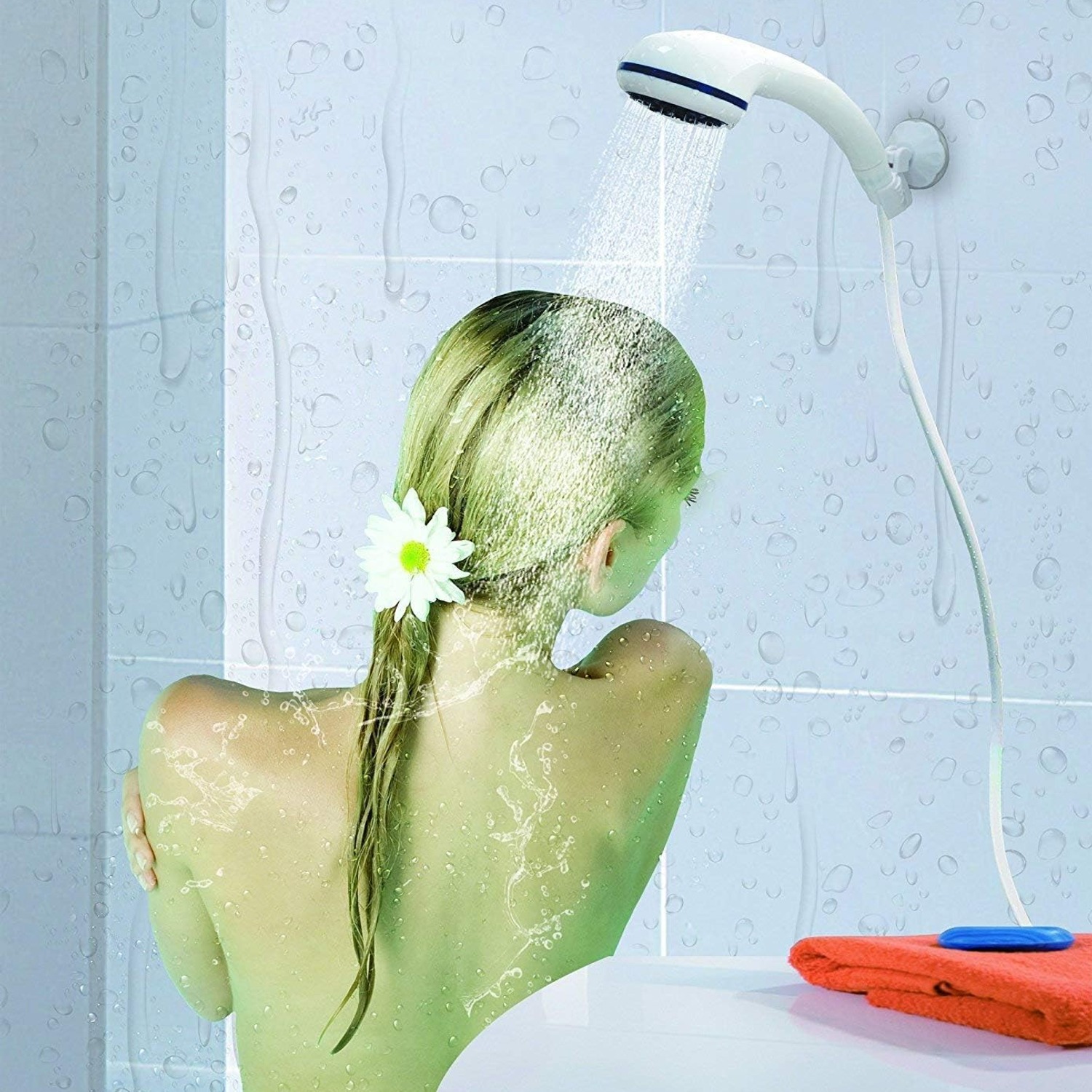
A pumped portable shower fixes the pressure problem. Instead of relying on how high you can hang a bag, a small electric pump sits in your water and pushes it up the hose at a steady rate the whole time. The last liter sprays the same as the first.
How a battery powered camp shower works
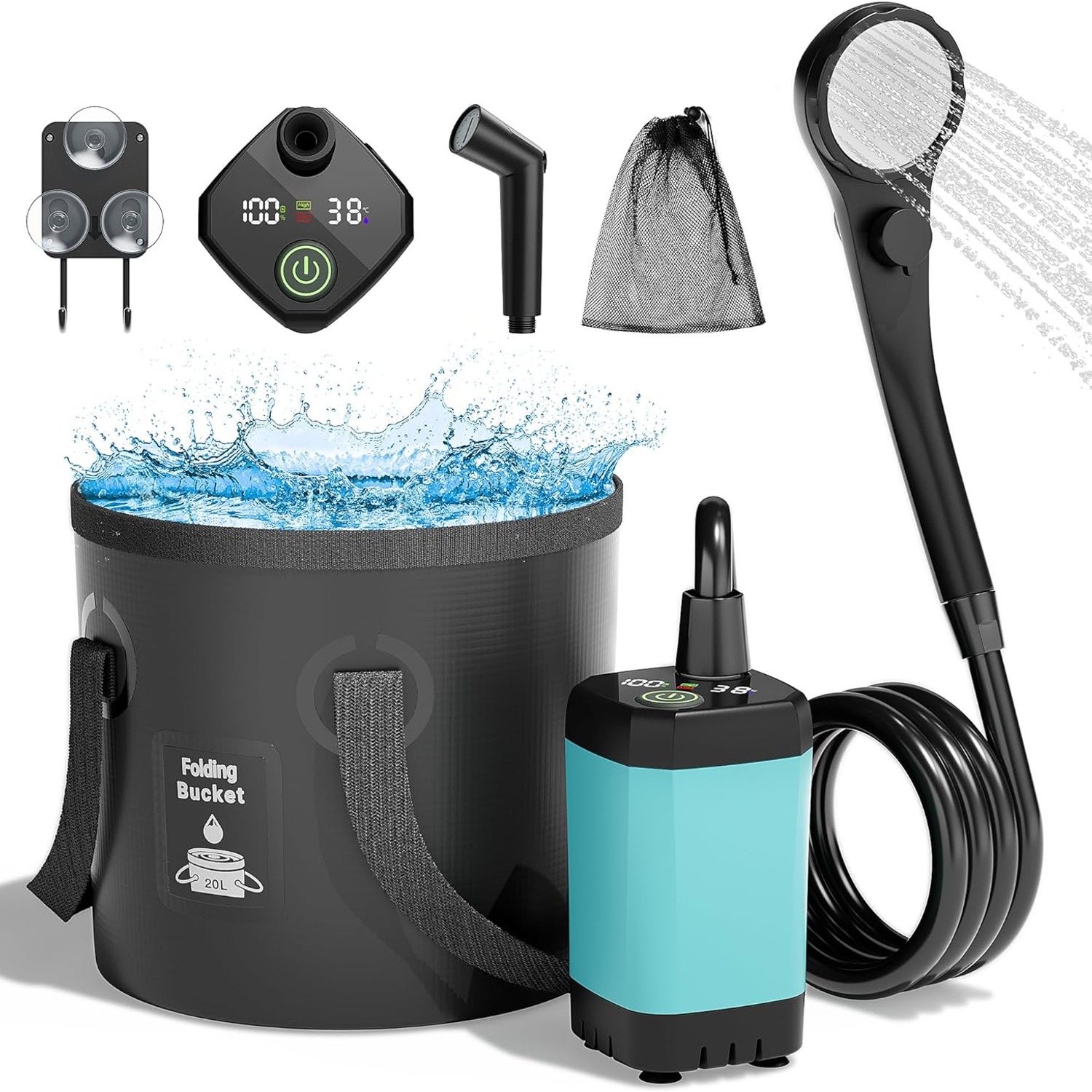
The idea is simple enough that it is easy to underestimate. There are three parts. A submersible pump, a hose, and a shower head you hold or hang.
You put the pump into a container of water. That can be a bucket, a jerry can, a camp basin, a plastic tub or the edge of a lake. The pump draws water in through a filtered inlet, pushes it up the hose, and out through the head. Because the battery is inside the unit, you do not need a car socket, a generator or a campsite power post.
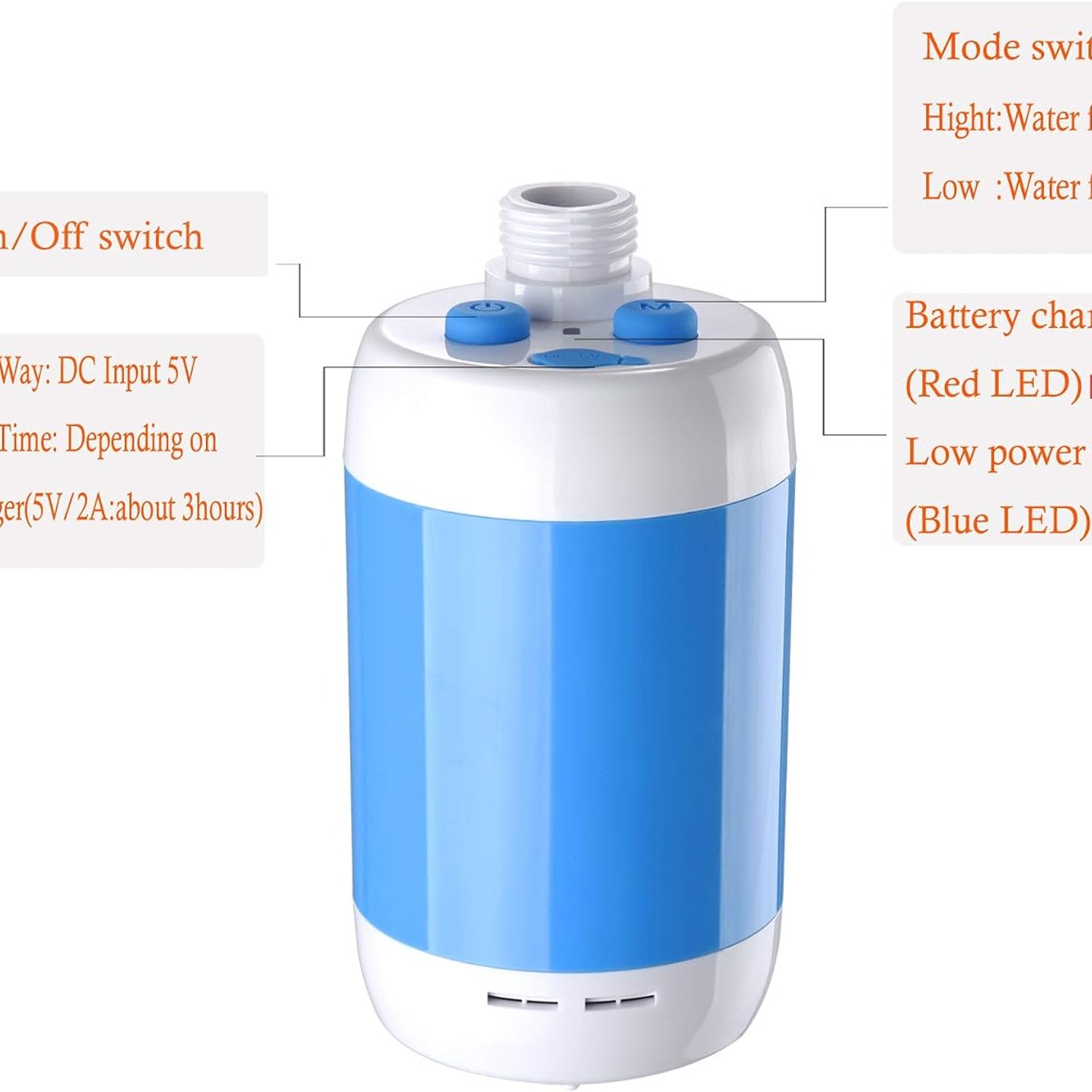
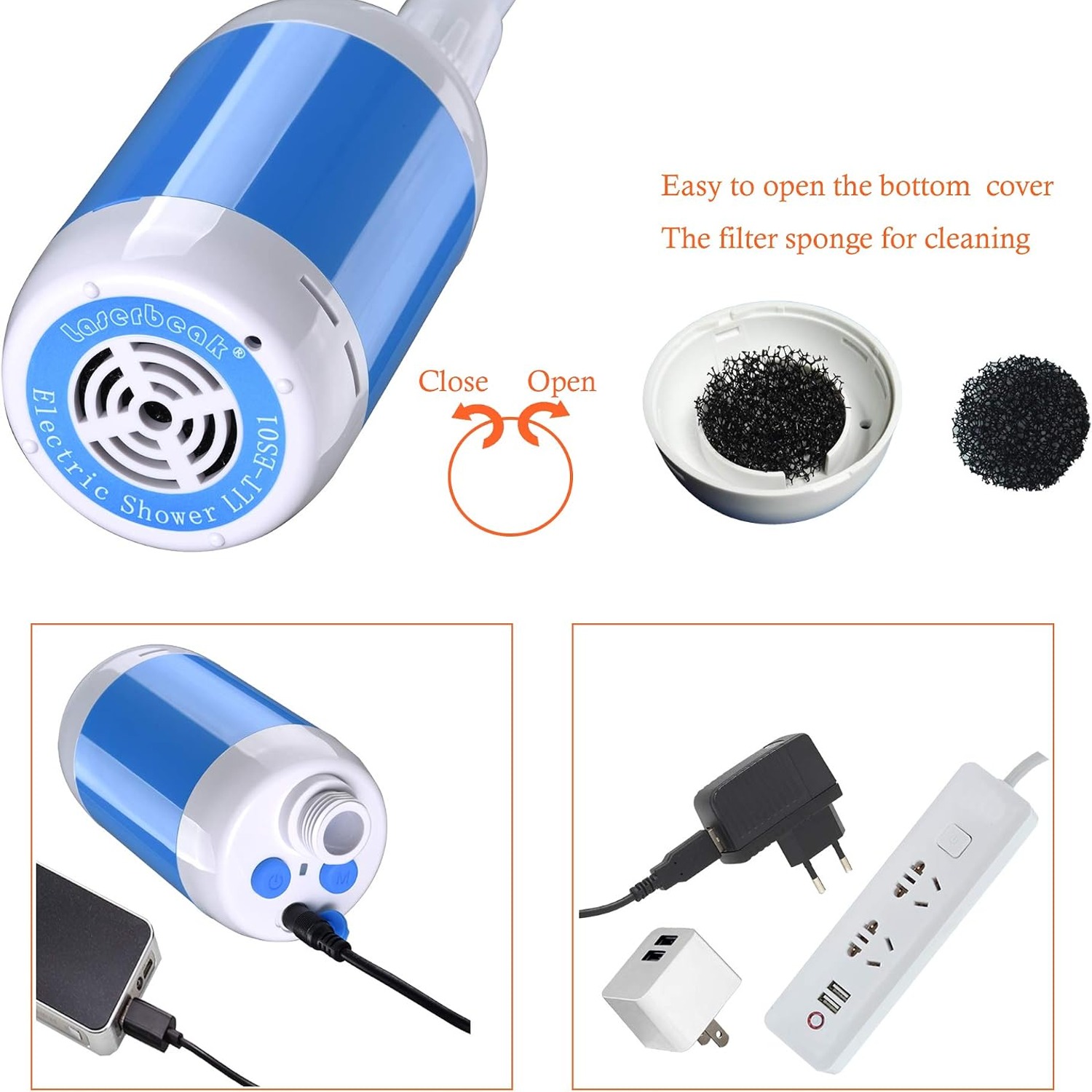
This model carries two 2400mAh lithium ion cells, 4800mAh in total. Charging happens over a standard 5V USB connection using the supplied cable, and a 5V/2A charger fills it in roughly three hours. That means a power bank, a car USB port, a solar panel with a USB output or the charger from your phone all work. A blue light shows charging, a red light warns you the current is getting low.
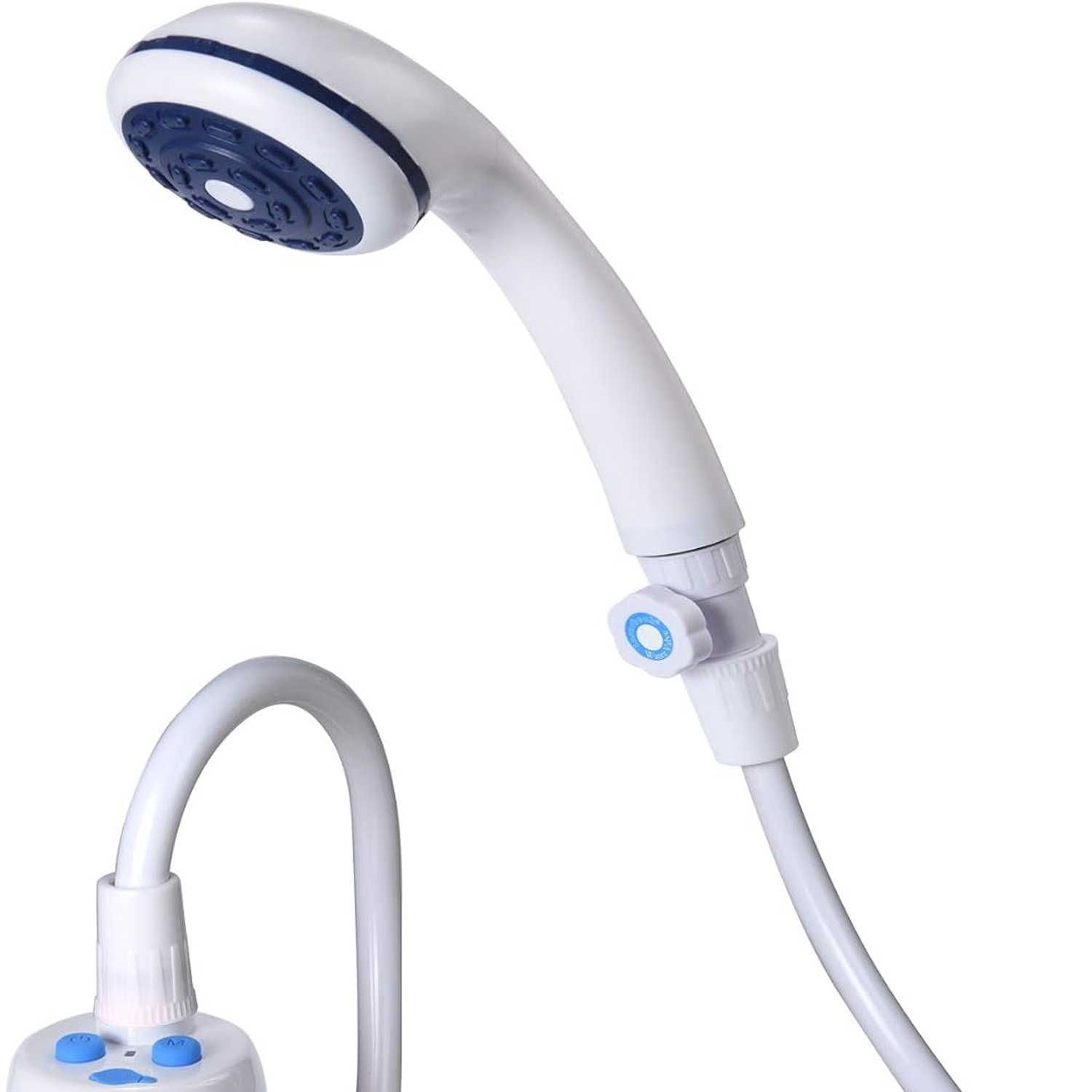
Flow runs at either 3 liters a minute or 4 liters a minute, switched with two buttons. The shower head has its own flow control and a shut-off valve. That valve matters more than it sounds. Being able to stop the water while you soap up is the single biggest water saver in the whole system, and when you are carrying every liter in the back of the car, it is the difference between a decent wash and a rushed splash.
Who it suits
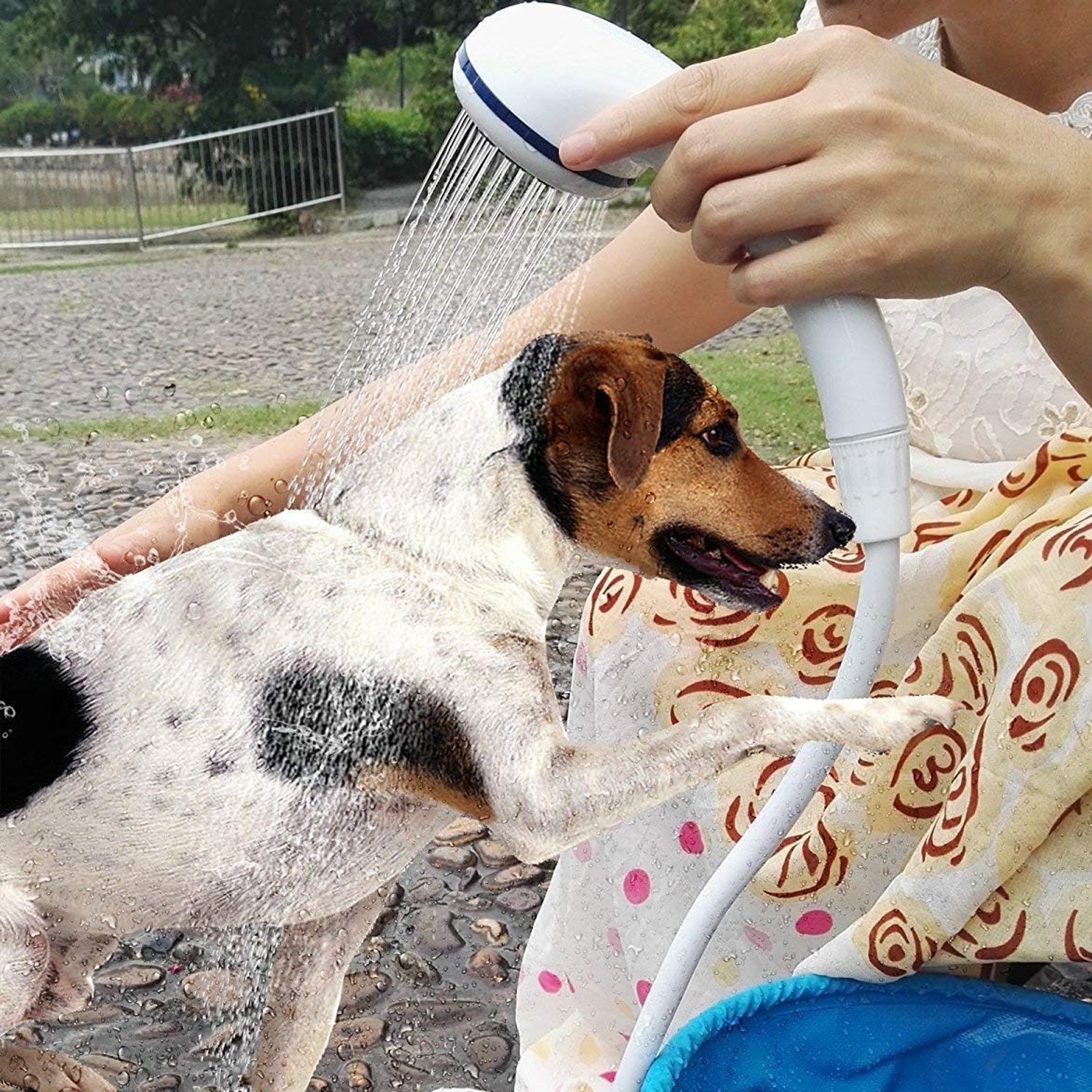
Campers are the obvious group, but they are not the biggest. Dog owners use these constantly. Washing a muddy dog in the bathroom is a job nobody enjoys, and the low flow setting is gentle enough that even a nervous dog tolerates it. A quick wash on the lawn, towel dry, done.
Surfers and swimmers keep one in the car for rinsing salt off skin, boards and wetsuits. Four wheel drivers use them for boots, recovery gear and hands after a tire change. Van and ute campers like them because they add no load to the house battery and need no plumbing cut into the vehicle.
Then there are the less obvious uses. Balcony gardeners pump from a rainwater barrel. Cyclists rinse a muddy frame off the back of the car. Festival goers wash their hair in a camp field. Tradies rinse hands and tools where there is no tap. If you have ever wished for running water where there was none, this is the category that solves it.
Choosing between the options
There are three broad types of portable outdoor shower, and knowing the difference saves money.
Gravity bags are the cheapest. You fill a bag, hang it high and let gravity do the work. They are light and have no battery to charge. The downsides are the fading pressure, the effort of lifting a full bag overhead and the fact that you cannot pump from a creek or a bucket, only from the bag itself.
12V car socket pumps plug into your vehicle. Pressure is consistent and there is nothing to recharge, but you are tethered to the car with a cable and in some vehicles you need the engine running for the socket to stay live. Showering next to a running engine is not relaxing.
Battery powered pumps like this one give you the consistent pressure without the cable. You charge at home or from a power bank, then you are free to wander. The trade-off is remembering to charge it, which the low-battery indicator helps with.
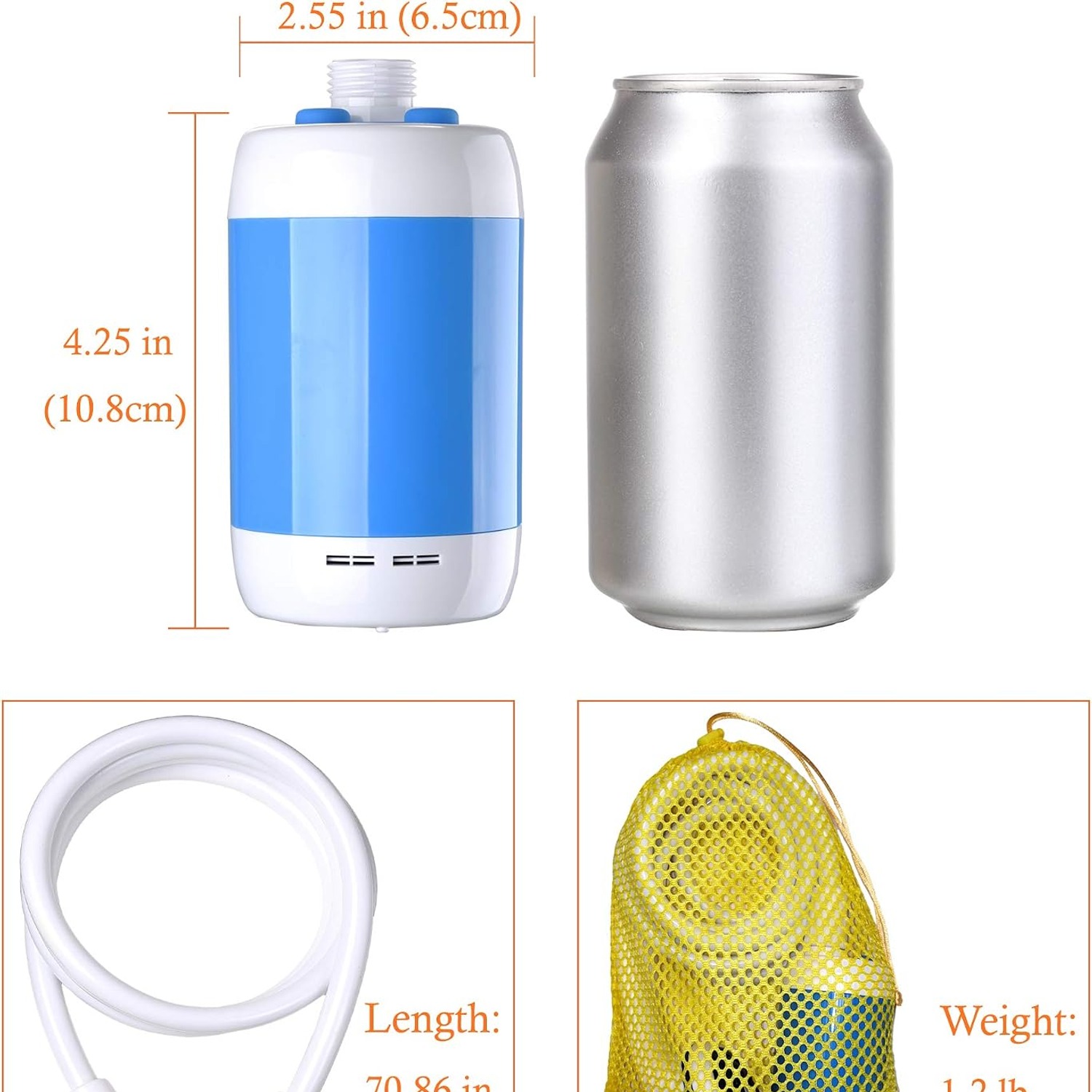
When you are comparing models inside that third group, look at four things. Flow rate matters because anything under about 2 liters a minute feels like a trickle. Battery capacity decides how many showers you get between charges. Hose length decides whether you can hang the head high enough to go hands-free, and 210 cm is a sensible length for that. Water rating tells you whether the unit is built to be submerged, and an IPX7 rating is what you want to see on a pump that lives in a bucket.
Getting a warm shower outdoors
The pump does not heat water, so the warmth comes from how you fill the bucket. A few approaches work well.
The kettle method is the easiest. Boil water on the camp stove, pour it into a bucket of cold, and stir until it feels comfortable on your wrist. Check it before you spray, because the stated range for this unit tops out at 50 degrees C and water above that is both unsafe for your skin and hard on the pump.
Solar is the lazy option. A black bucket or a dark water bag left in the sun all afternoon can reach a very pleasant temperature by late day. In cooler months it will take the chill off even if it does not get properly warm.
A thermos of hot water added to cold is the quietest option for a late night rinse when you do not want to fire up the stove.
Looking after it
These are low maintenance devices, but a few habits double their life. Rinse clean fresh water through the pump after any use involving salt water, soapy water or silty creek water. Salt in particular is unkind to small motors and seals.
Let everything air dry before you pack it. Water sealed inside a bag for a fortnight grows things you do not want spraying on your face next trip. Check the inlet filter now and then and pull out any hair or grit that has collected.
Keep the battery healthy by topping it up every couple of months even when you are not using it. Lithium cells do not like sitting at zero for long periods. Store the kit somewhere dry, out of direct sun, and leave the shut-off valve open so the seal is not compressed for months on end.
If you notice a drip at a joint, the gaskets are the usual culprit. There are two supplied for exactly that reason. Seat them flat and the drip stops.
A note on expectations
This is a shower, not a pressure washer. On the high setting you get a good steady spray, enough to shift sand, salt and loose mud. Caked-on clay or baked-in grime still wants a brush and some scrubbing. If you were hoping to blast a chassis clean, this is the wrong tool.
What it does very well is deliver comfortable, consistent running water in places that have none. For a product that fits in a boot corner and weighs under a kilogram packaged, that is a fair deal.
The short version
If your trips away keep ending with a sticky, sandy drive home, a pumped portable shower is one of the cheapest comfort upgrades you can make. Consistent pressure from first liter to last, no cable to the car, charges from any USB source, and two flow settings so you can match the spray to the job.
Fill a bucket, drop the pump in, hang the head from a branch, and you are clean. Then it packs back into a box the size of a loaf of bread and waits for the next trip.