
The complete guide
How to Choose a Rechargeable Camping Shower (Buyer's Guide)
The problem with getting clean outdoors
Most of the mess of outdoor life happens at the end of the day. You come back off the trail with dust in your socks. You get out of the surf with salt drying on your skin. The dog rolls in something at the river. The four wheel drive comes home gray. And the place you actually want a shower is almost never where a shower exists.
Campground facilities are hit and miss. Some are clean and hot, some are a cold concrete box with a queue, and plenty of the best spots have nothing at all. Beaches often have a single rinse post that forty people are sharing. Boat ramps have a tap if you are lucky. So people improvise, a bottle of water over the head, a wet towel, or just getting in the car dirty and regretting it for the next two hours.
A rechargeable camping shower takes the problem out of the equation. Instead of needing a shower in the right place, you carry the shower and use whatever water is available.
How a pump-and-bucket shower works
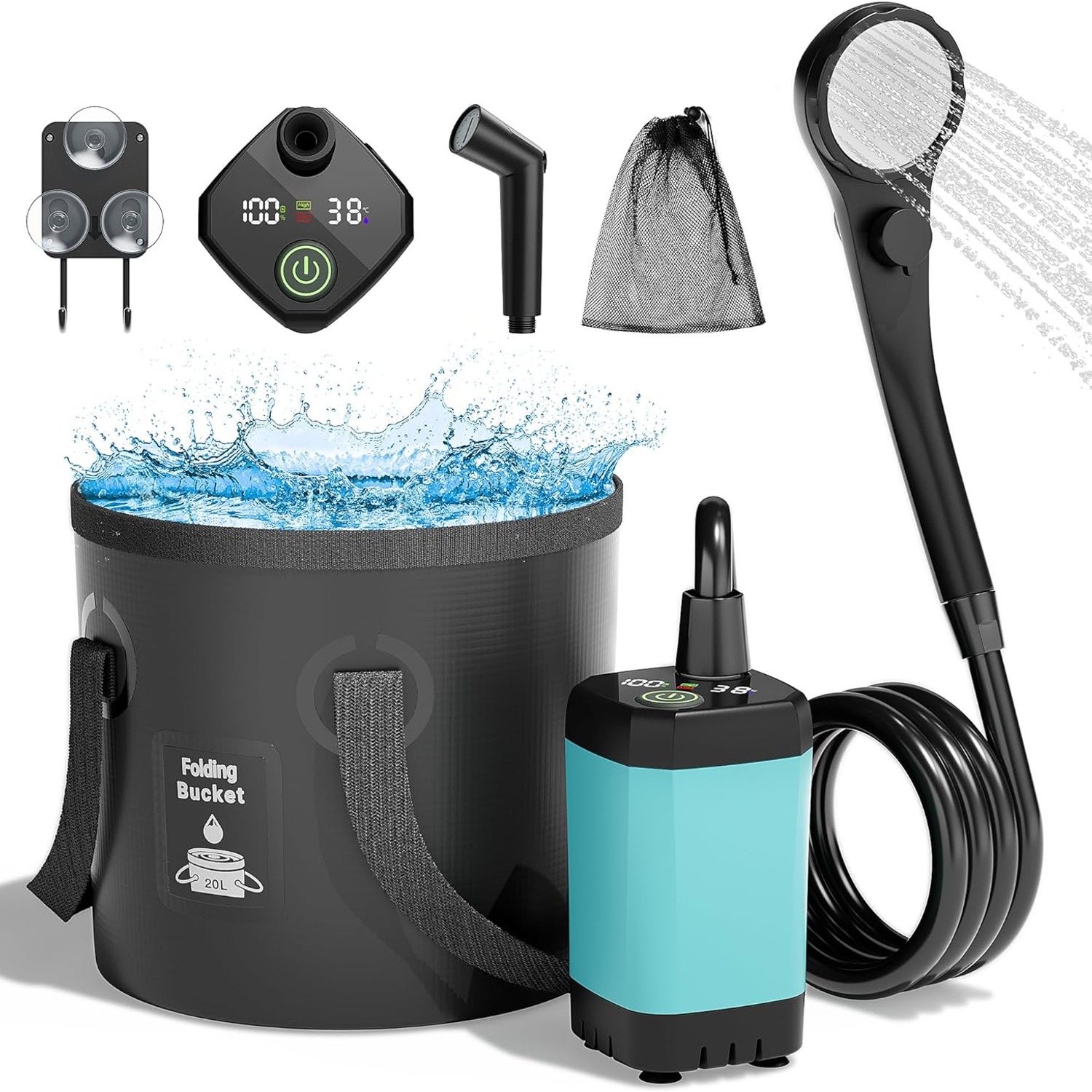
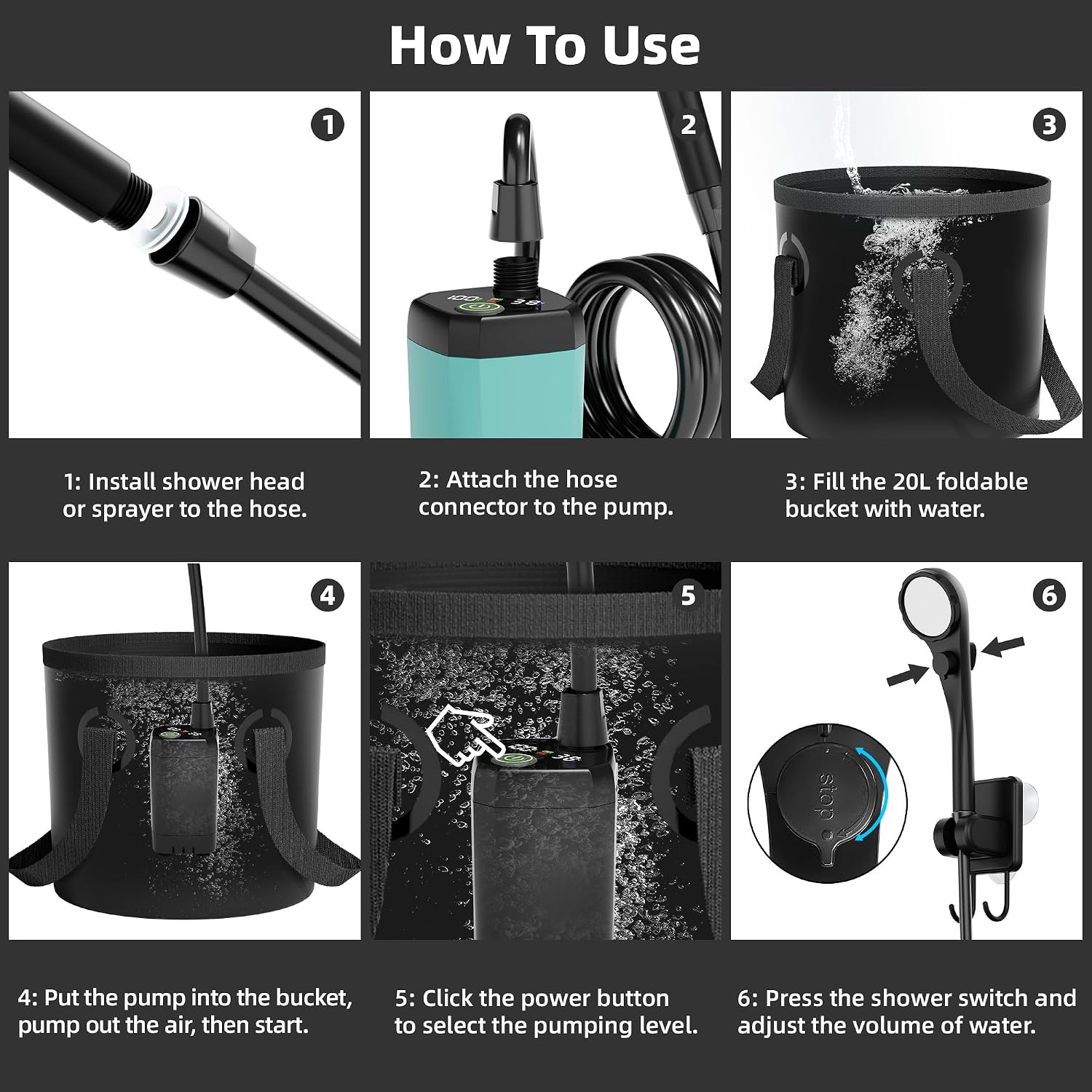
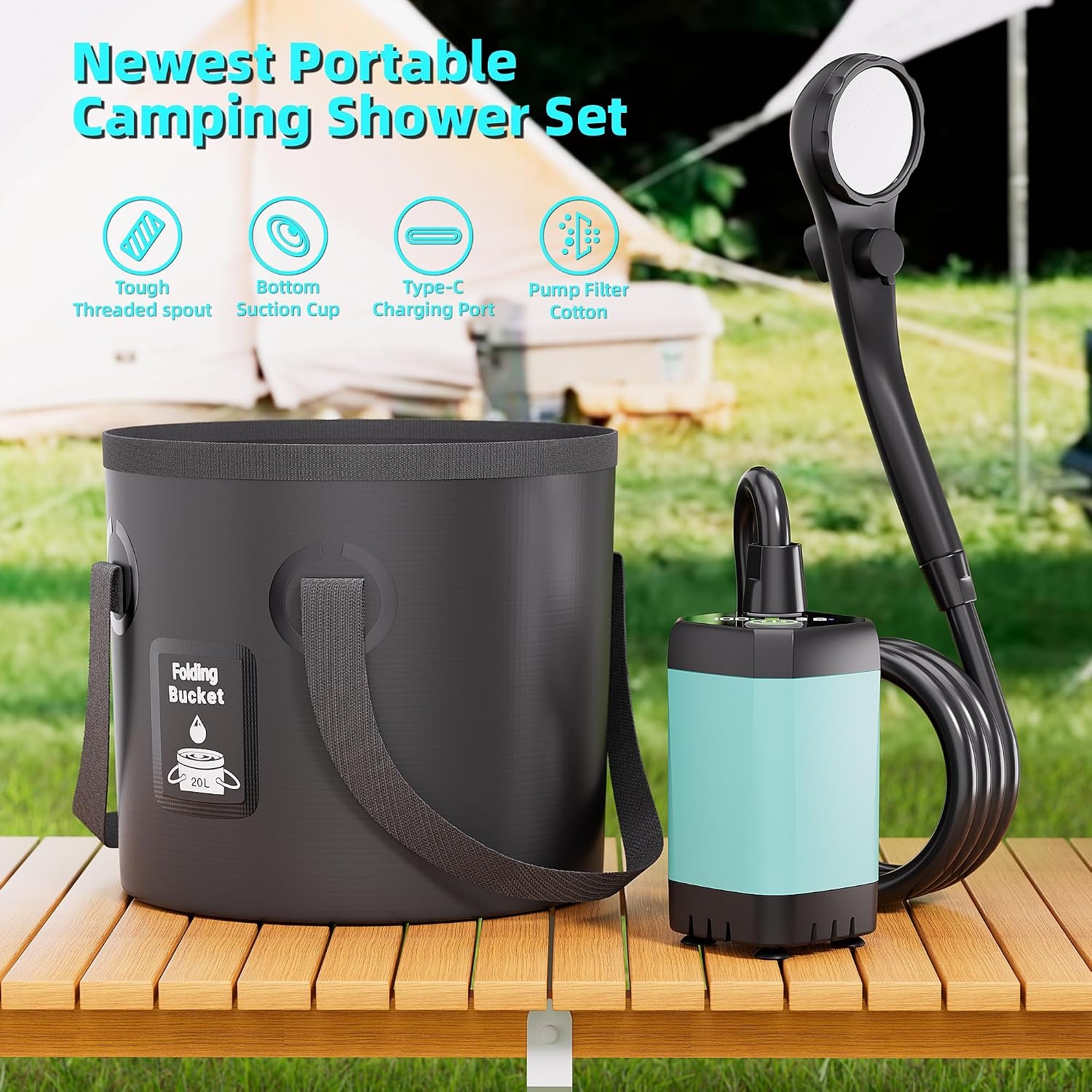
The idea is simple enough that it is easy to underestimate. A small submersible pump goes into a water source. It could be the folding bucket that comes with the kit, a jerry can, a pot of water you have warmed on the stove, a creek or the sea. The pump draws water through a filter that catches grit, then pushes it along a hose to a shower head you hang above you.
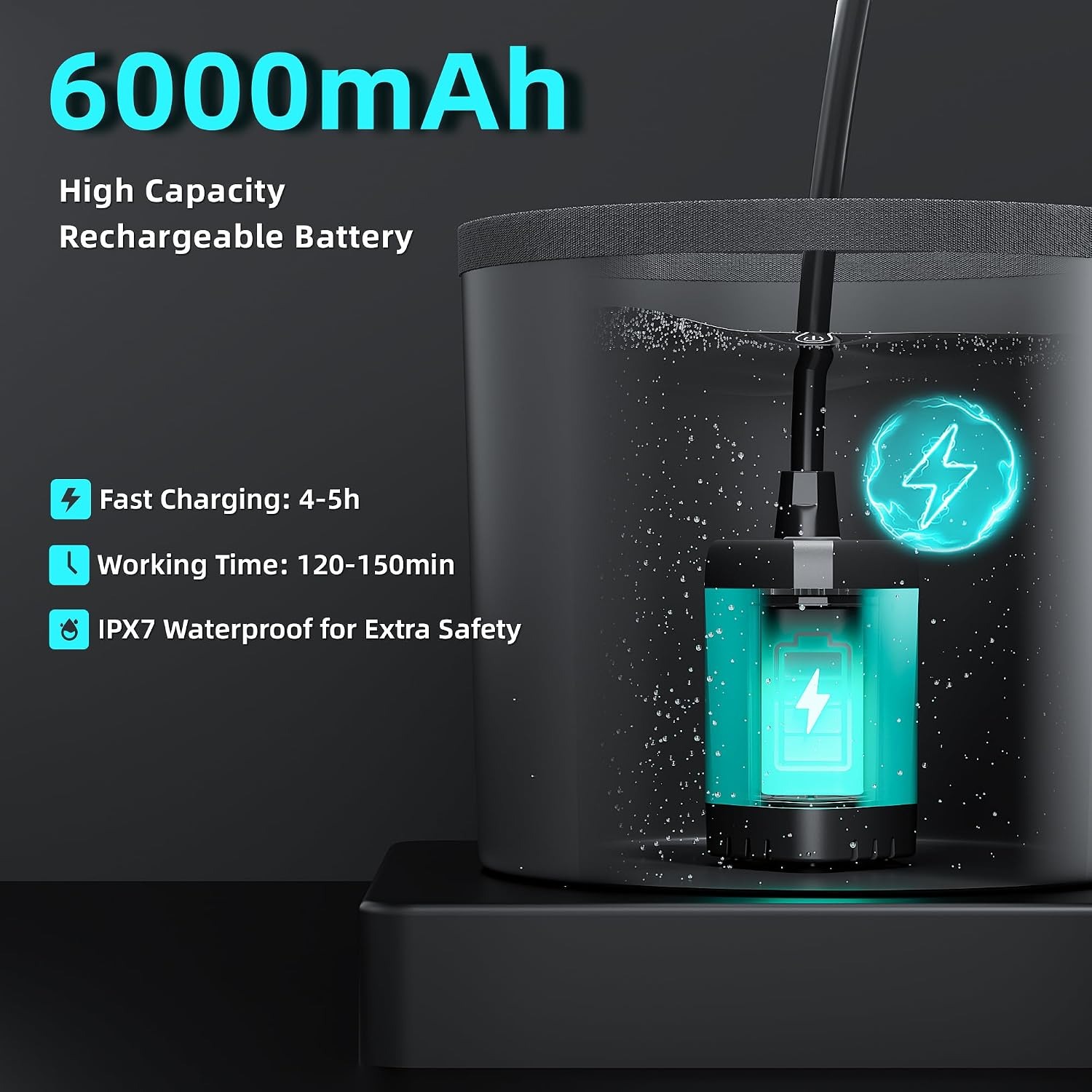
Because the pump carries its own battery, there is no cord trailing back to a car or a power bank while you are standing there wet. You charge it beforehand with a USB-C cable from a phone charger, a laptop, a power bank or a car USB socket, the same sources you already use for everything else.
The pump in this kit sits on suction feet so it stays where you put it rather than wandering around the bucket and sucking air. It is built to run while submerged, with a covered charging port that you keep closed during use. The motor is a quiet type, which matters more than people expect at a campsite at six in the morning.
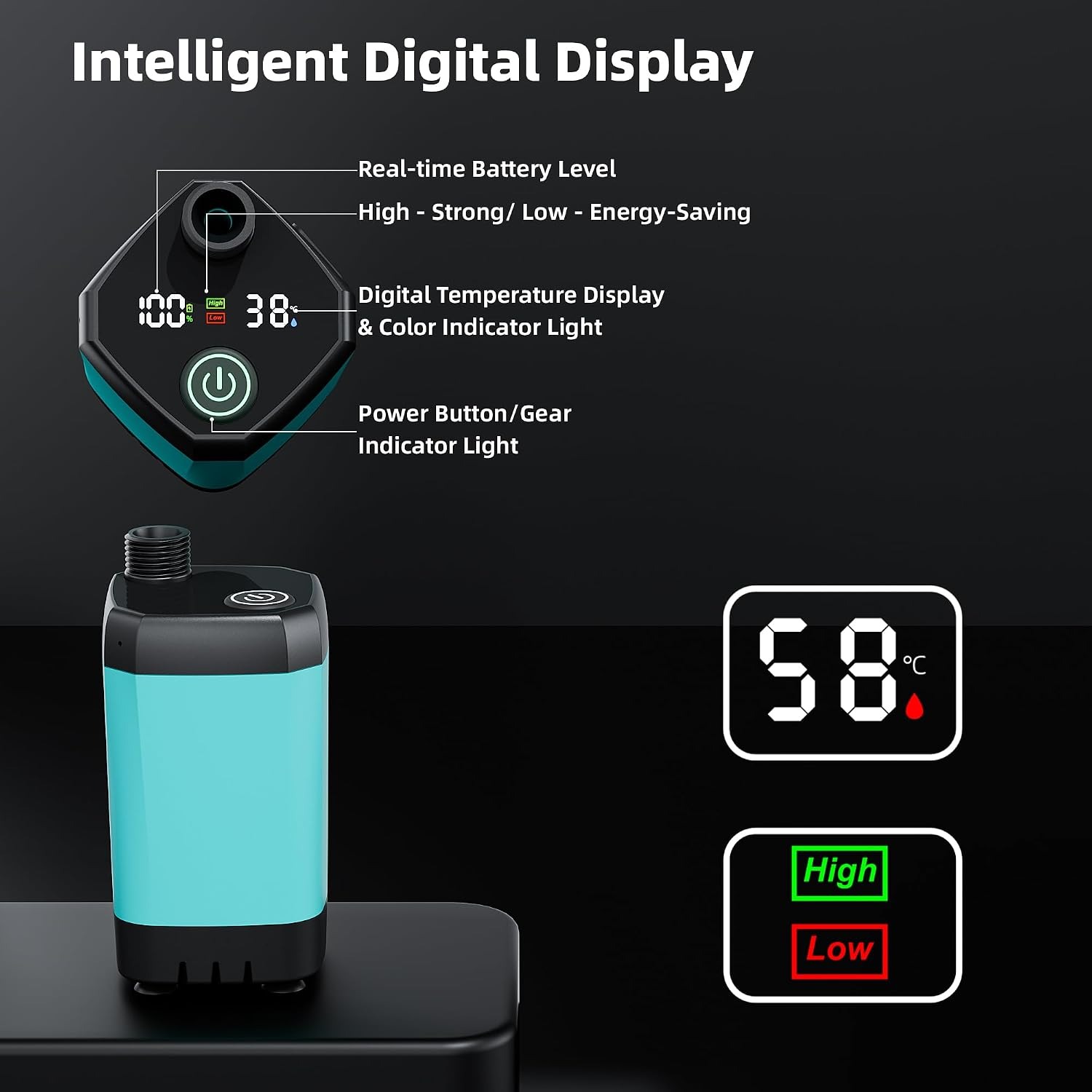
The LED display is the other practical touch. It shows how much battery is left, so you are not guessing mid-shower, and it shows the temperature of the water with color coded indicators. One point to be clear about, there is no heating element. The display tells you what the water already is. If you want warm water, you heat it and mix it into the bucket yourself.
Pressure, flow and making water last
The thing that separates a good portable shower from a disappointing one is control, not raw power. Anyone can blast water. The trick is being able to turn it down.
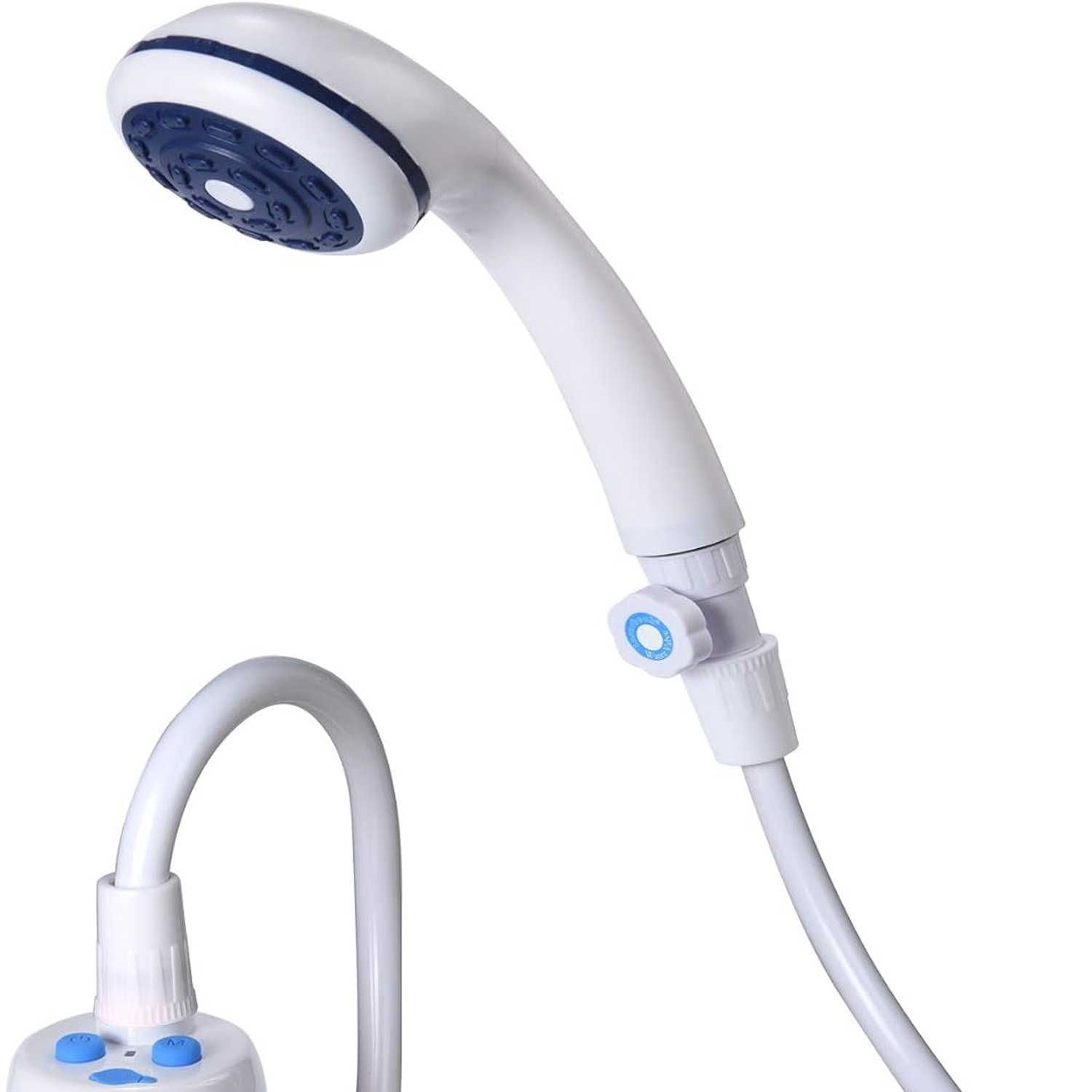
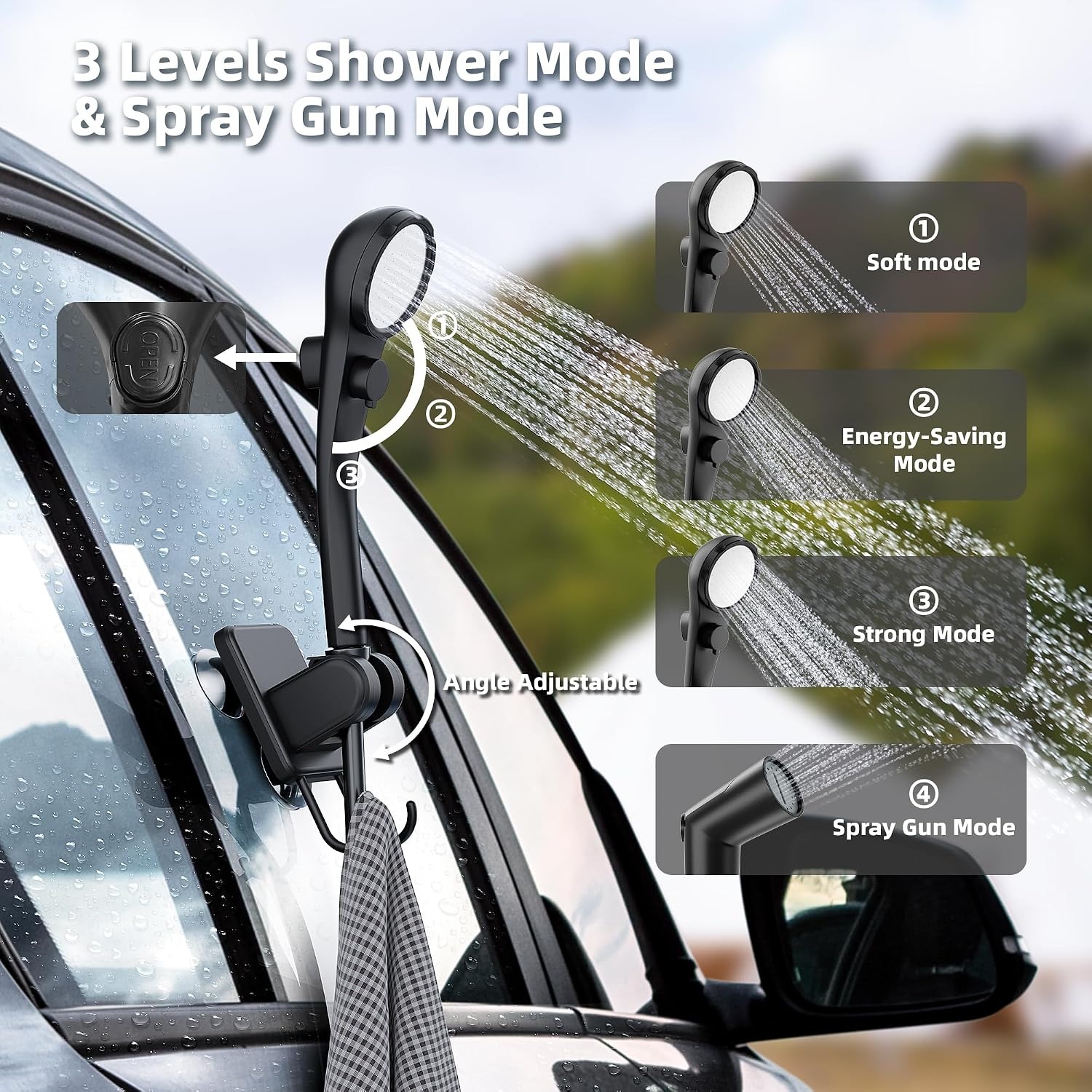
This kit gives you five settings. Three are shower patterns, one is a jet, and the fifth comes from fitting the separate spray gun head. On top of that the flow itself is adjustable. That combination is what lets you get properly clean out of a 20 L bucket. Wet down on a low setting, switch off while you soap up, then rinse on a stronger pattern. Done that way, two adults can both get clean from one bucket.
Turn the jet on and the same pump becomes something else entirely. It will chase sand out of a footwell, clean mud off mountain bike cassettes and blast grit from hiking boots. Fit the spray gun head and you have a wash-down tool for a car, a trailer, a surfboard or a muddy dog.
Who this suits
Tent campers get the most obvious benefit. There is nothing to mount, nothing to plumb and nothing permanent, so it works just as well at a national park site as it does in a mate's backyard.
Van and caravan owners use it slightly differently. Many of them have an onboard tank and do not want to drain it on a quick rinse, or they simply want to shower outside rather than drip through the van. Hanging the head off a rear door and pumping from a bucket keeps the inside dry.
Surfers, divers and swimmers care about the salt. A bucket of fresh water in the trunk, plus this pump, means you and your gear get rinsed before anything touches the upholstery.
Dog owners find a use for it almost weekly. The gentler shower modes are kind enough for an animal, and a hose means you can move around the dog instead of wrestling it into position.
Then there is the everyday stuff. Washing the car away from a tap. Rinsing fishing gear at the ramp. Hosing off a pushbike. Watering plants in a courtyard with no outside tap.
How to choose between portable showers
A few questions sort out the field quickly.
Does it come with a water source? Plenty of pumps are sold on their own, which is fine if you already have a bucket or a jerry can. This one includes a 5 gallon folding bucket with a PVC base, so it stands up steadily when full and folds flat when it does not. If you are starting from nothing, that saves you a separate purchase and a separate thing to pack.
How does it recharge? USB-C is the answer you want, because it means the cable you already carry works. Kits that need a proprietary plug or a 12 V cigarette lighter lead are one more thing to lose.
Can you see the battery level? A pump that gives you no information will eventually quit while you have shampoo in your eyes. A battery readout removes that particular surprise.
How does it pack? This is the one people underrate. A shower kit that lives in a messy tangle gets left at home. A folding bucket, a coilable hose and a mesh bag that lets everything dry are the difference between a kit you use and a kit you own.
Does it filter? Grit is what kills small pumps. A PP filter on the intake is cheap insurance, particularly if you plan to draw from creeks or the sea.
Looking after it
Maintenance is light but it matters. Salt and silt are the two enemies.
After any use in salt water, run clean fresh water through the pump and hose for a minute before packing. The same goes for muddy creek water. Every so often, pull the PP filter out and rinse the grit off it.
Let everything dry before it goes in the bag. The mesh bag helps here because it breathes, which is exactly why a sealed plastic tub is a bad idea for storage.
Keep the charging port cover closed whenever the pump is in water. Only open it when you are actually charging, and make sure the port is dry first.
Batteries like a middle life. Charge the pump before you store it for a season, top it up every couple of months, and try not to leave it sitting in a closed car in full sun.
With the bucket, fold it loosely rather than creasing it along the same line every time. The PVC base will hold its shape for years if you do not abuse it.
The short version
If you spend time outdoors and you are tired of arriving home covered in whatever the day left on you, this is a cheap fix for a constant annoyance. A rechargeable pump, five spray settings, a 2 m hose, a folding 20 L bucket, a spray gun head for gear and vehicles, and a hook to hang it all from. It charges off the cable in your pocket, tells you how much battery you have left, and packs into one mesh bag.
It does not heat water, so bring your own warm water if you want a hot shower. Beyond that, it asks very little, a rinse after salt and a charge before a trip. For camping, van life, beach days, boat ramps and muddy dogs, that is a fair trade.