
The complete guide
How to Choose a Rechargeable Camping Light That Actually Lights the Camp
The problem with most camp lighting
Everyone has done the phone flashlight routine. One person holds the light, everyone else works by it, and nobody can see properly. Head torches help, but they only point where your head points, and they put a beam straight into the face of whoever you are talking to. Small battery lanterns are better, though plenty of them produce a glow rather than light, and they chew through AA cells at a rate that gets annoying fast.
What a camp actually needs is one decent light source placed above head height, spreading down and outward, with enough control to turn it down when the mood changes. That is the gap a rechargeable camping light fills.
How this lamp works
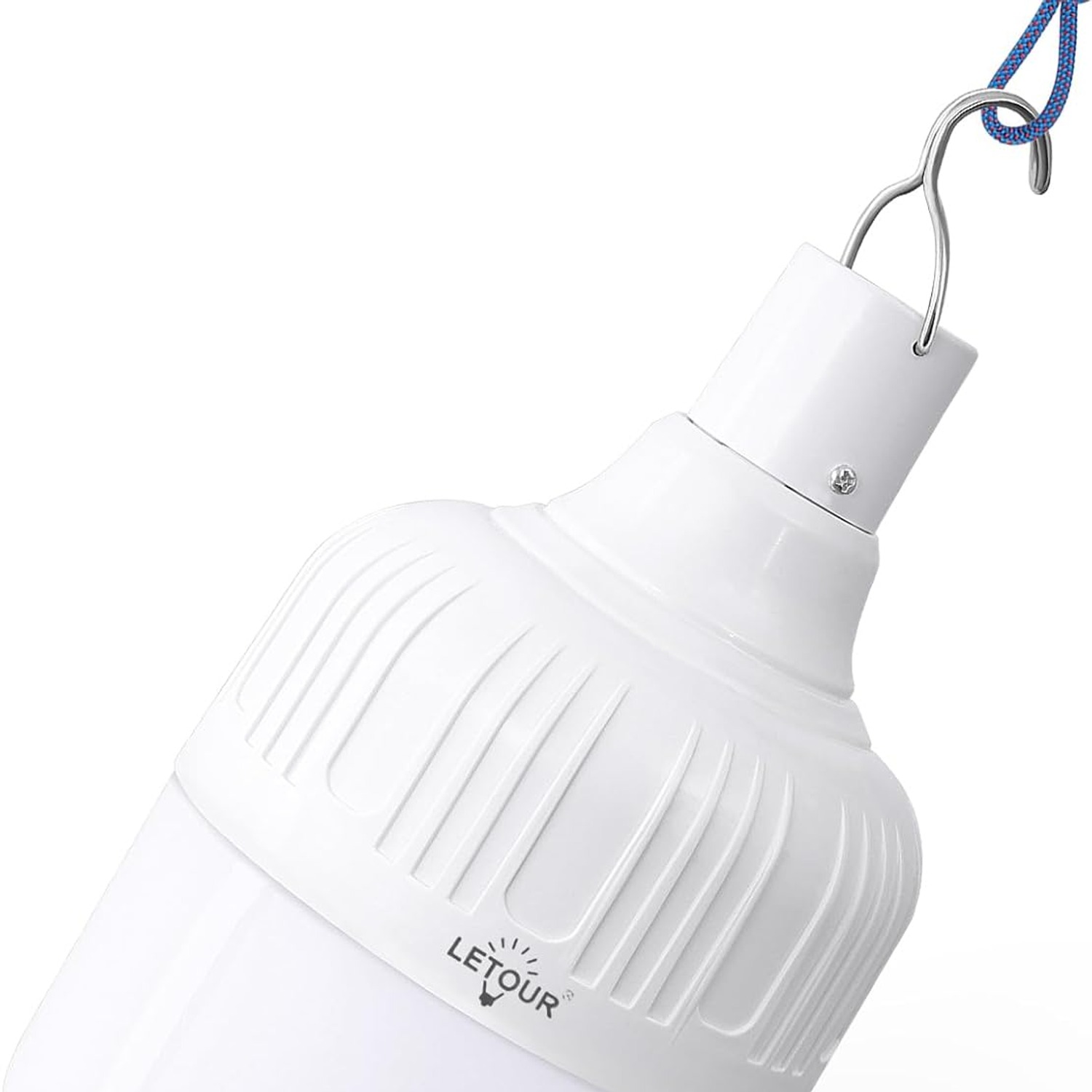
Inside the white ABS housing sit 24 LED beads. Run together at full output, they are rated up to 5000 lumens. Lumens measure total light output rather than beam distance, which is exactly the right measure for area lighting. A spotlight with a long throw is useless for cooking dinner. A broad, even spread is what you want when four people are moving around a small space.
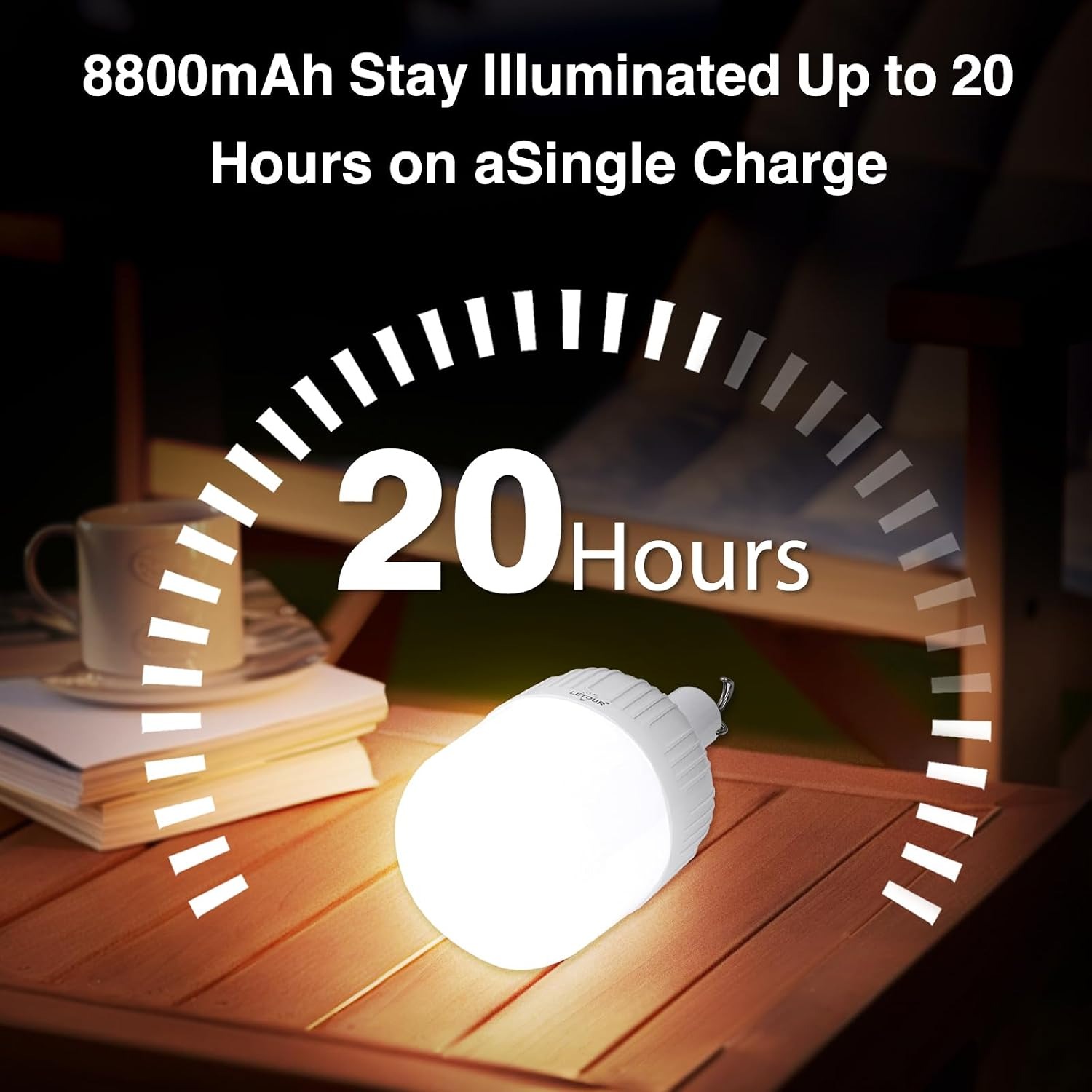
Power comes from a lithium-ion battery that is already inside the lamp, charged through a USB connection at 5 volts. That is the same standard your phone uses, so the gear you already carry will charge it. A power bank in a backpack, a car socket on the drive in, a wall plug at home the night before you leave. No searching for a four-pack of batteries at a servo at nine at night.
The LEDs themselves are rated at 100,000 hours. Put in plain terms, if you ran the light for three hours every single night, you would be well into your eighties before the diodes reached that figure. The battery is the part that ages, not the light source.
The five modes and when to use them
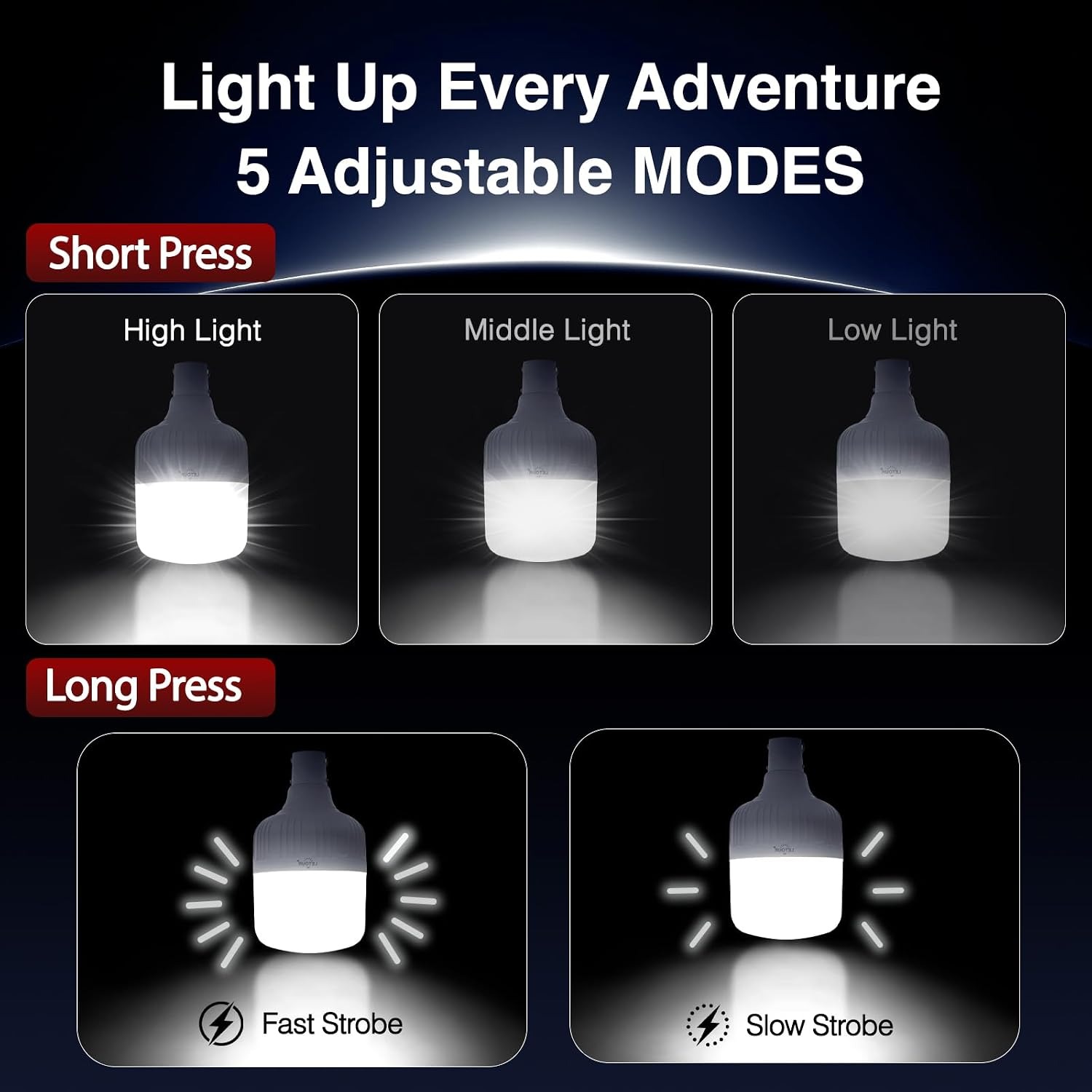
High light is the setup-and-pack-down mode. Pitching a tent after dark, finding gear in a car trunk, cooking, doing dishes, anything where you need to see detail. It is also the mode that drains the battery fastest, so it is worth switching down once the job is done.
Middle light is the one most people settle on for general evenings. Enough to see faces, food and cards, without the slightly clinical feel of full brightness.
Low light is for the end of the night. Reading in a sleeping bag, keeping a soft glow in a tent so nobody trips over a boot on the way out, winding down without resetting everyone's eyes. It is also the kindest mode on the battery.
Then there are two strobe settings, a fast strobe and a low strobe. These are not party lighting. They are there for signalling, marking a vehicle on a dark roadside, or flagging your position to someone walking back in. Most of the time they sit unused, which is fine. You want them there on the one night you need them.
Who this suits
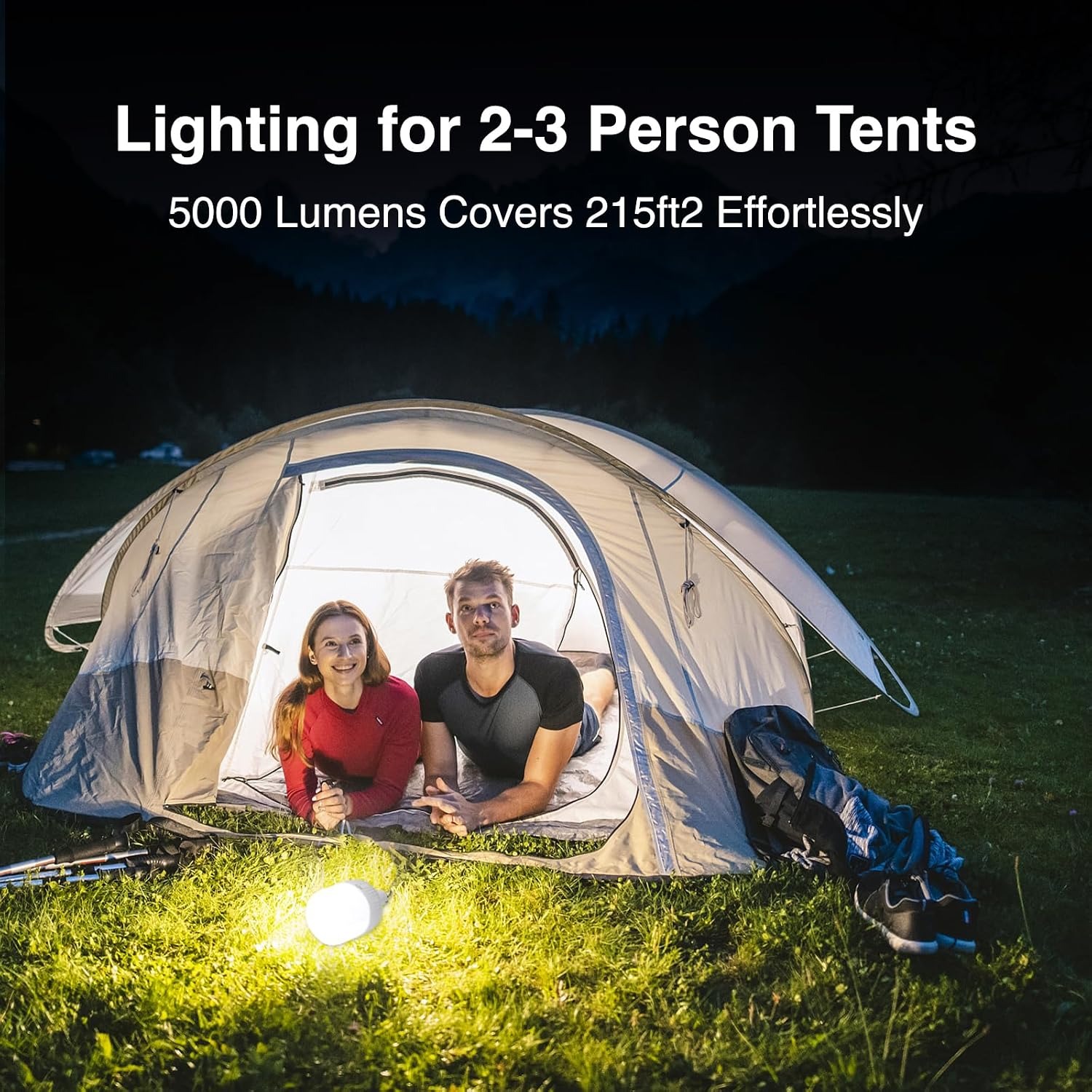
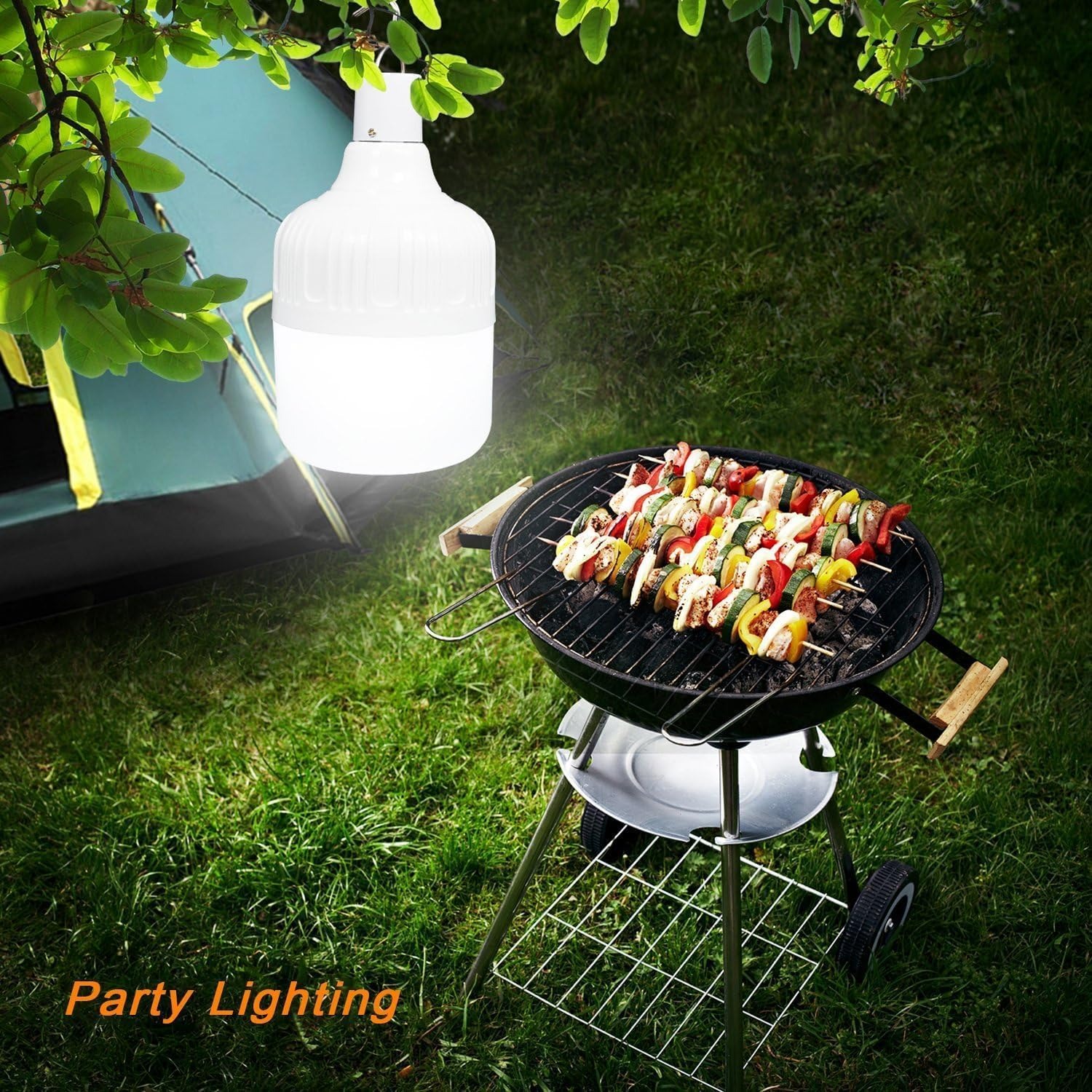
Family campers get the most out of it, because one hanging light serves a whole group. Instead of five separate torches pointing in five directions, you get a lit space everyone shares. Hung from the ridge loop inside a tent, or from the frame of a gazebo over the table outside, it does the work of several smaller lights.
Caravan and motorhome owners often use something like this as a second light. Fixed van lighting tends to be either on or off, and often harsher than you want at eleven at night. A portable lamp you can carry to the awning or hang over a book is a useful addition.
It also makes sense as a household emergency light. Keep it charged in a kitchen drawer and it beats candles for safety and beats a flashlight for usability during an outage. A good camping lantern for tents and a good power cut light turn out to be the same thing.
People who work outdoors in the evenings, on a trailer, under a carport, in a shed, find a hanging lamp more practical than anything handheld. Both hands free, light coming from above.
What to check before you buy
Think about where it will hang. This lamp uses a hanging mount, which is the right setup for area lighting, but it only works if you have something to hang it from. Tent ridge loops, gazebo frames, awning rails, branches, a hook in the shed. If your usual setup has nowhere to hang a light, factor in a carabiner or a bit of cord.
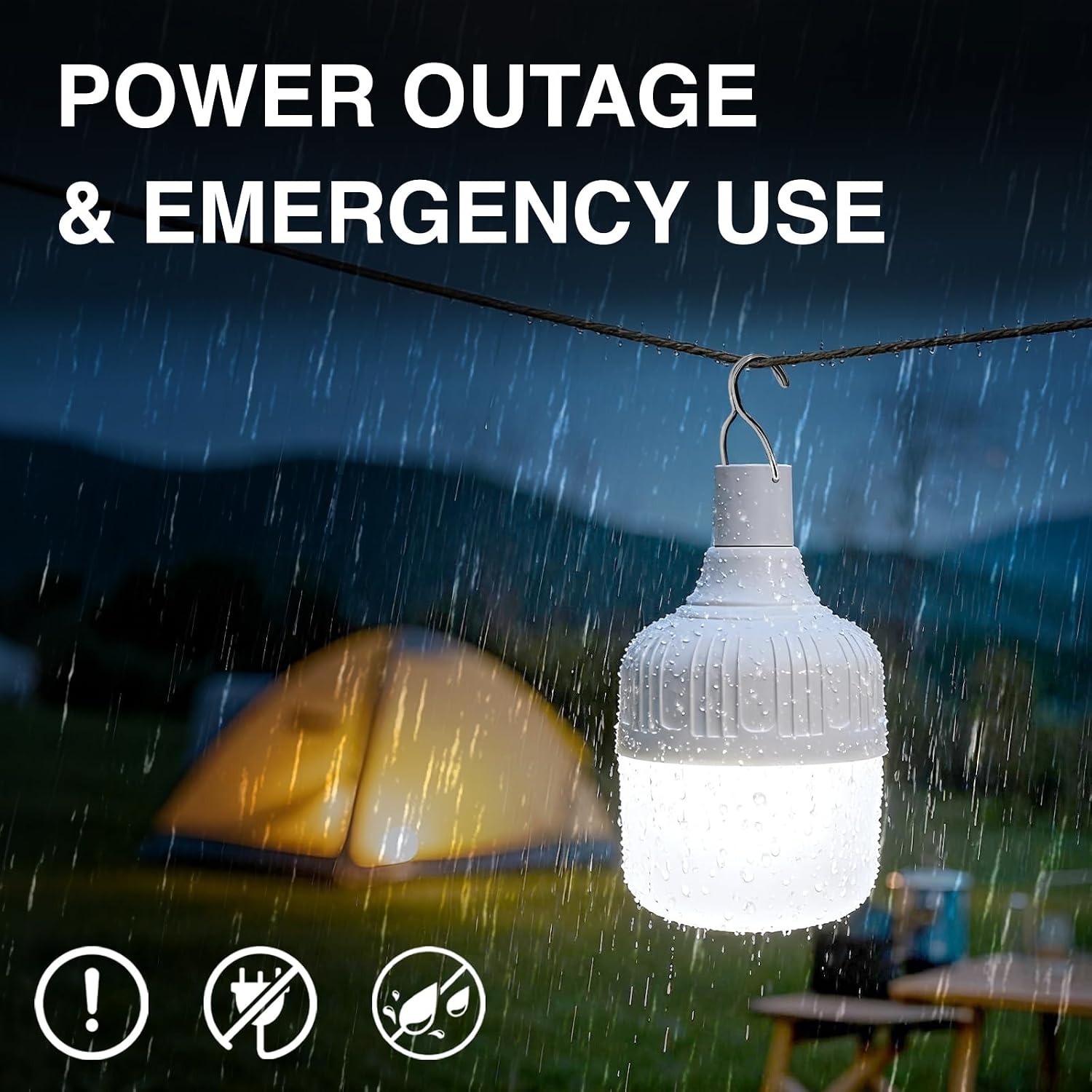
Be realistic about weather. This lamp is listed as not water resistant. That is a genuine limitation and worth being honest about. It is built for inside a tent, under an awning, on a covered porch, in a van or in the house. If your camping routinely involves lights hung out in open rain, you want something with an IP rating instead. For the large majority of camping, which happens under some kind of cover, it is a non-issue.
Match brightness to group size. A solo hiker with a small one-person tent does not need 5000 lumens and will mostly run low. A family of four around a table does. Buying a brighter light and turning it down is a better strategy than buying a dim one and wishing for more.
Count your charging options. USB charging only helps if you have a USB source. For weekend trips, charging at home before you leave is usually enough. For longer trips off-grid, pair it with a decent power bank. That combination covers most situations without needing a generator or a vehicle hookup.
Weight and packing
At 272 grams, the lamp sits in that useful middle ground. It is not an ultralight item you would carry on a long-distance hike where every gram matters, but it is light enough that it adds very little to a car camping load, a daypack or a kit box. ABS plastic keeps the weight down while handling the ordinary knocks of being thrown in with the rest of the gear.
Pack it somewhere it will not get crushed, ideally with the USB port facing inward so grit does not work its way in.
Looking after it
Care is simple. Wipe the housing with a damp cloth and dry it. Do not submerge it or run it under a tap. Keep the USB port clean, a soft brush is enough for dust.
The battery wants a little more attention. Lithium-ion cells do not enjoy sitting completely flat for months, so if the light lives in a cupboard between seasons, pull it out every few months and top it up. Unplug it when charging finishes rather than leaving it connected for days. Store it out of direct heat, so not in a car dashboard through summer.
Treated that way, there is very little to go wrong. The LEDs will outlast almost anything else about the product.
The short version
If you want one light that covers a camp rather than several that cover corners, this is the shape of thing to look for. Up to 5000 lumens from 24 LED beads, five modes from bright working light down to a soft glow, a built-in lithium-ion battery that charges over ordinary USB, and a hanging mount so the light falls from above where it is useful.
Keep it under cover, because it is not water resistant. Keep it charged, because a flat lantern is just a plastic box. Beyond that, it is a straightforward piece of kit that solves a specific and very common problem: it gets dark, and you still have things to do.