
The complete guide
How to Choose a Camping Sleeping Pad That Actually Lets You Sleep
The real reason you sleep badly in a tent
It is almost never the tent. It is the ground. Soil, gravel, grass, and timber decking all do the same thing: they take your body weight and push it straight back into whichever part of you is touching them. On your back that is your lower spine and heels. On your side it is your shoulder and hip, which carry far more pressure over a much smaller area.
Thin foam mats help a little with the cold, but they do almost nothing for pressure. Three or four hours in, you start the shuffle. Roll, resettle, roll back, give up, lie awake. Everybody who camps has done it.
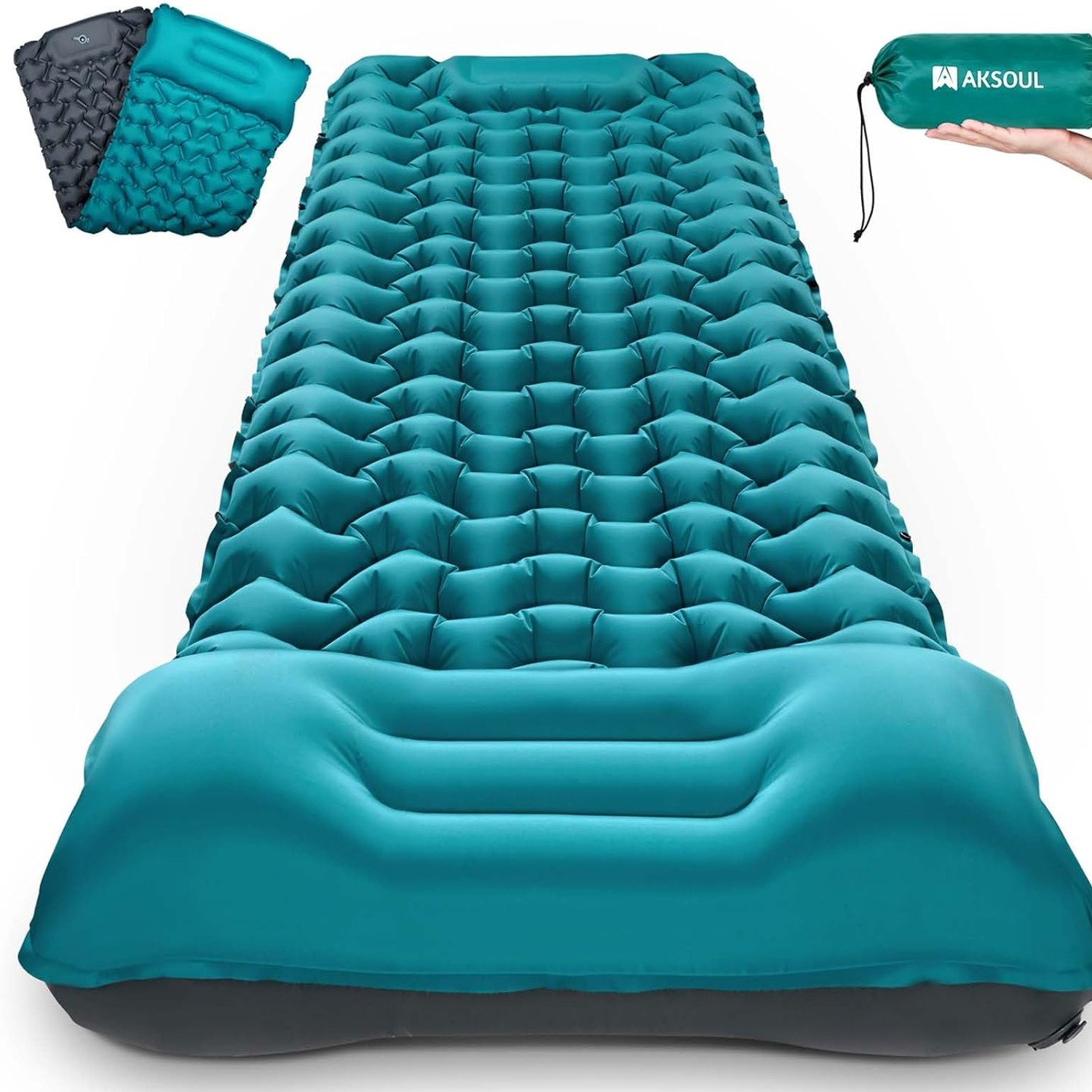
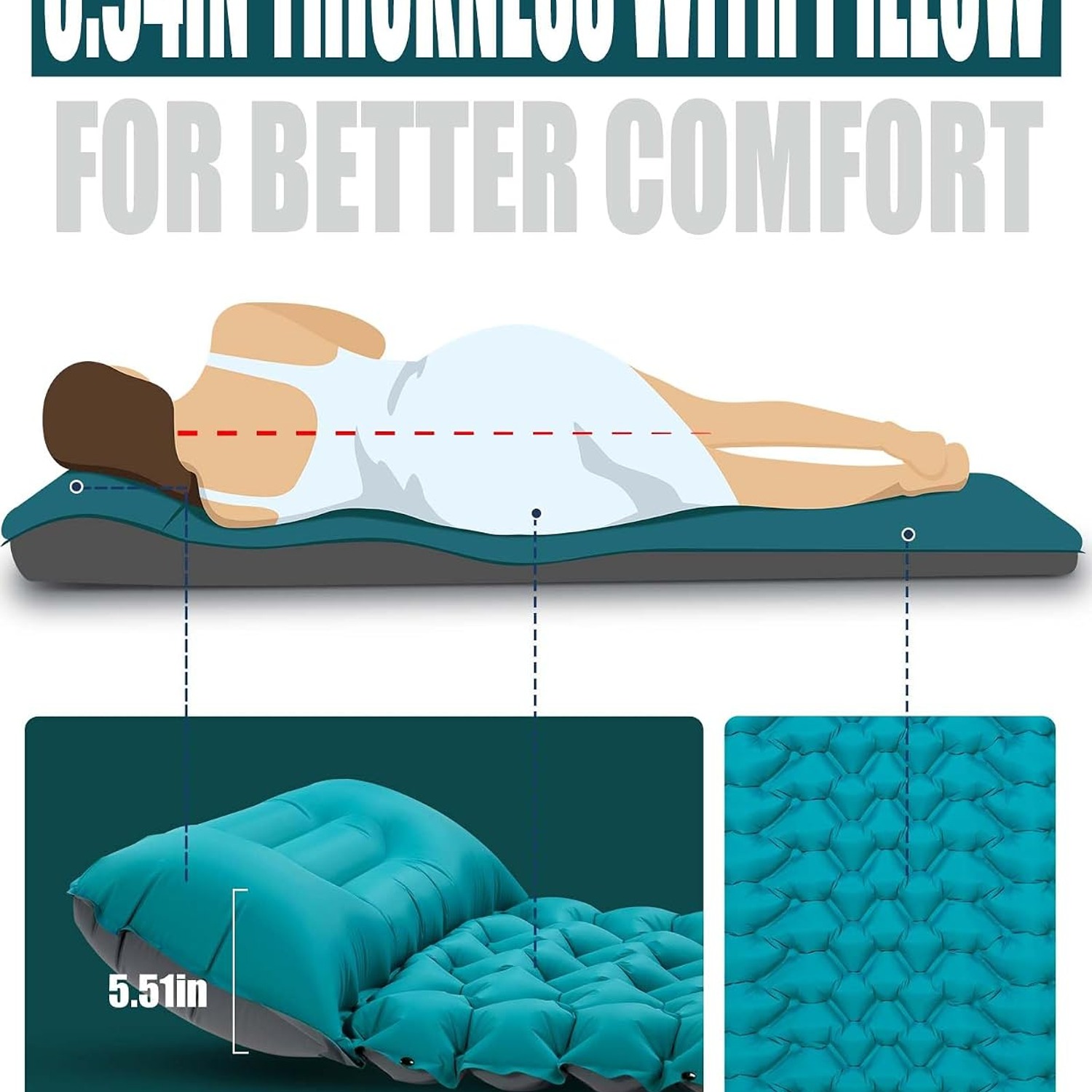
What fixes it is depth. You need enough space between your body and the ground that your heaviest points can sink in without touching bottom. This pad gives you 9.9 cm of it, which is a different category of sleep to a 2 cm foam roll. That single number is the one most people should be shopping on when they look for the best camping sleeping pad for their trips.
How an inflatable pad with a foot pump works
An air pad is a sealed nylon shell with an internal chamber. Fill the chamber and the trapped air carries your weight. Let some out and the surface gets softer, because the air has more room to move around under you.
The inflating part is where a lot of pads lose people. Blowing one up by mouth takes ages and leaves you dizzy, and moisture from your breath ends up sitting inside the pad. Separate hand pumps and electric pumps work, but they are another thing to carry, another thing to charge, and another thing to leave on the kitchen table.
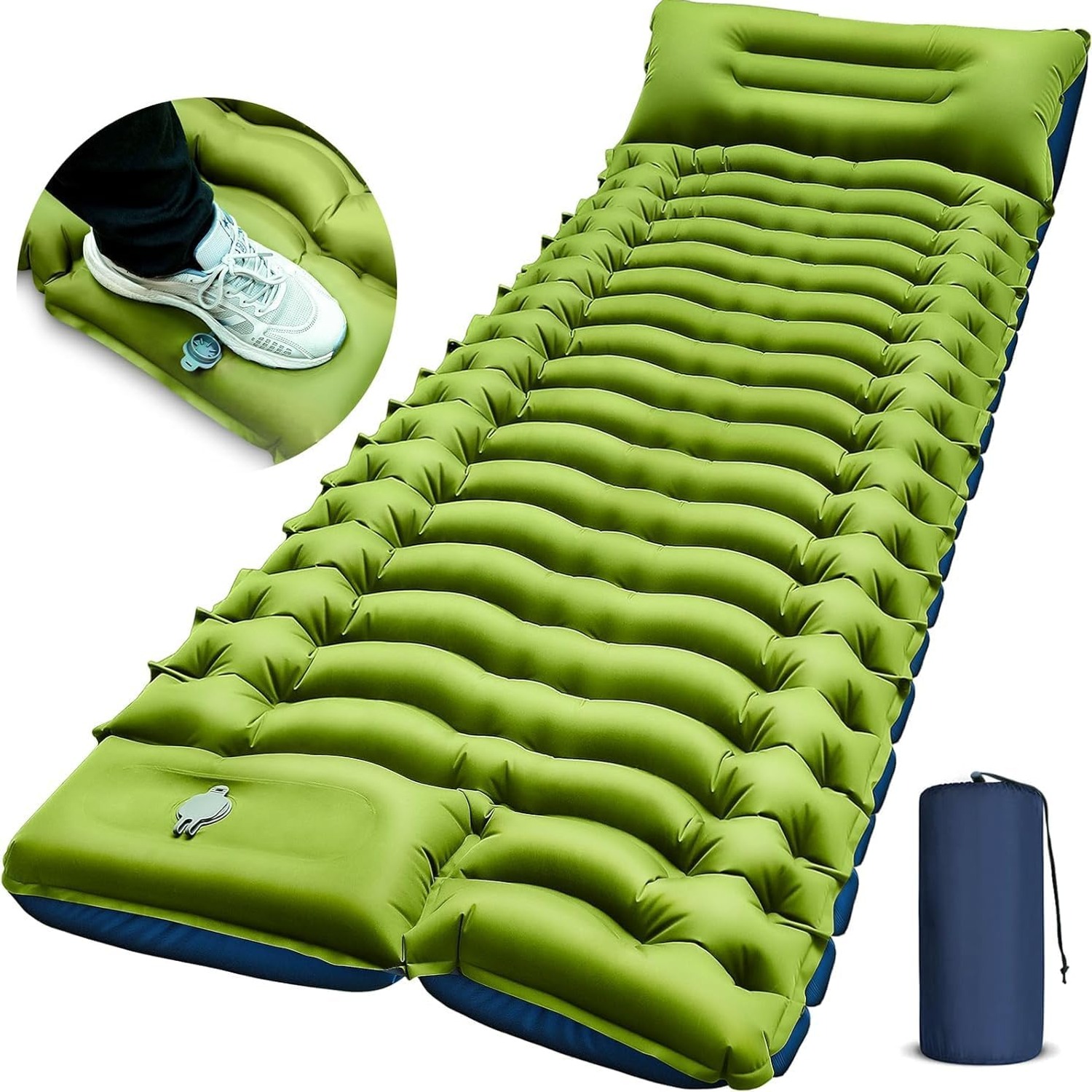
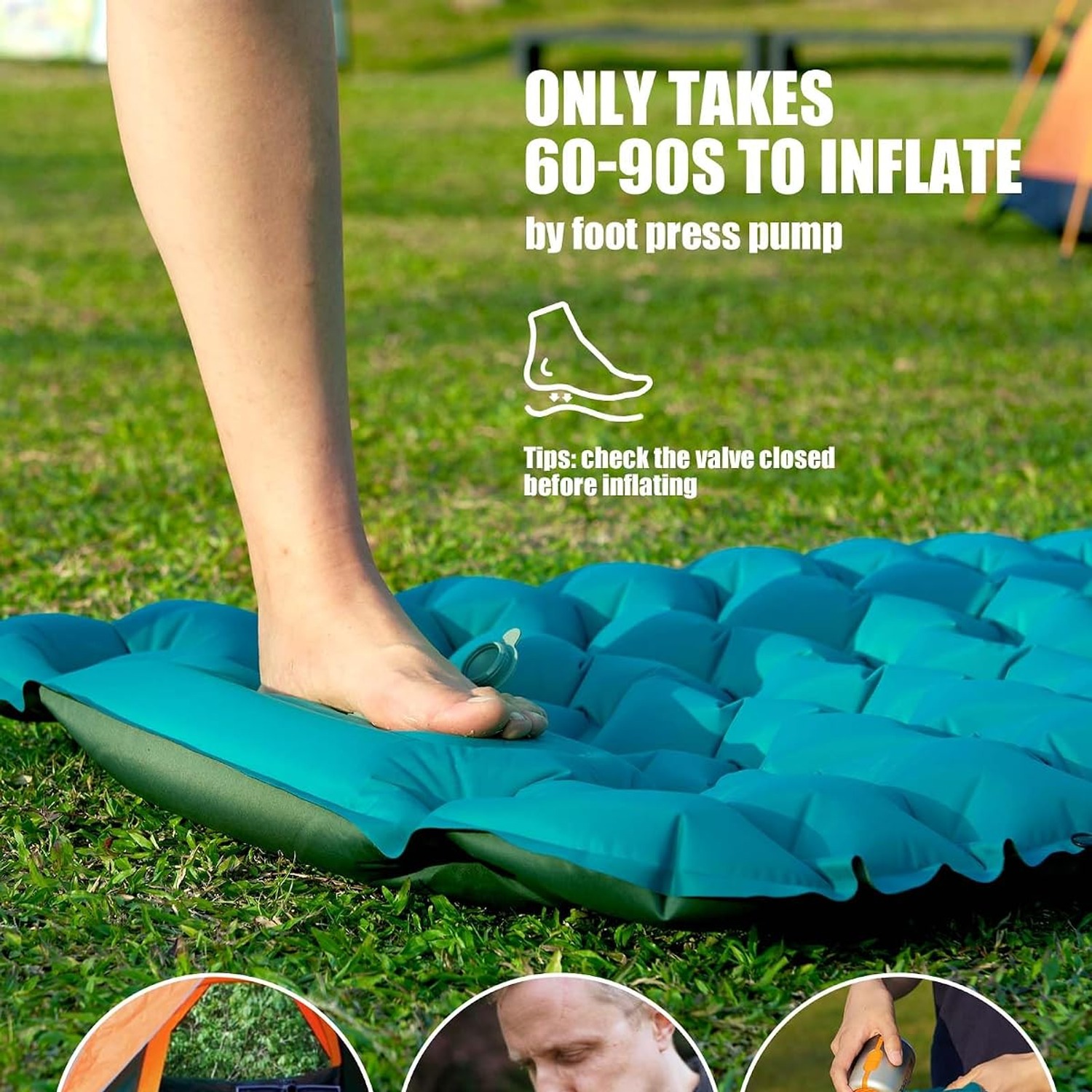
This one has the pump built into the pad. You lay it out, put your foot on the pump area, and press. Your leg does the work, your body weight does the pushing, and the pad fills in well under a minute. There is nothing to pack separately and nothing to break. If you have been looking for the best foot pump air mattress for camping, the advantage is really about having one less piece of kit in the bag.
The valve also lets you fine tune. Pump it hard and firm for a supportive, bouncy feel. Let a little out and it becomes plush, which is usually what side sleepers want.
The pillow and the snaps
Two details on this pad change how a trip actually feels.
The first is the pillow. It is part of the pad, so your head is supported without packing a separate camp pillow or rolling up a jumper. It also stays where you put it, which a loose pillow on a slippery nylon surface never does.
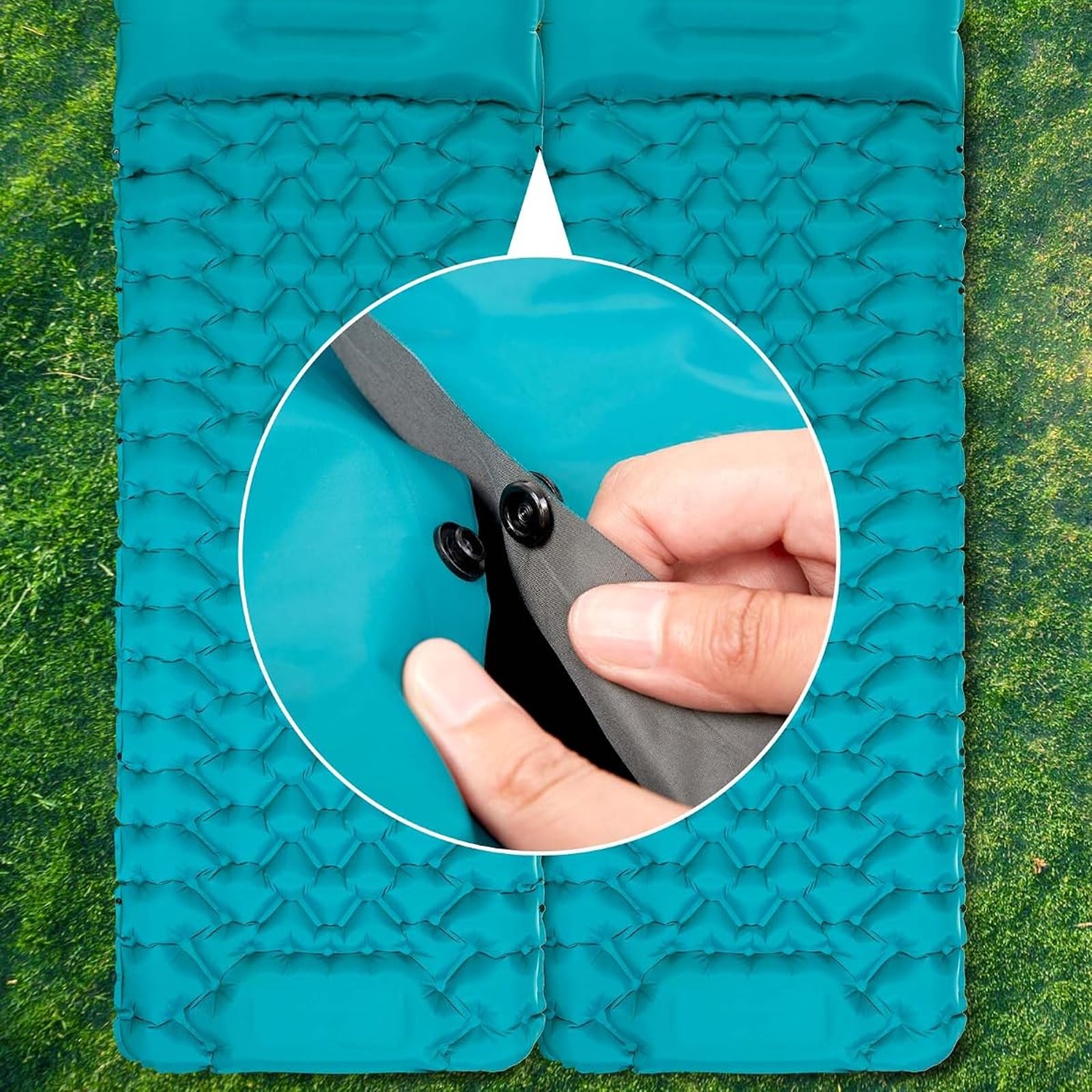
The second is the row of snaps along both sides. Clip two pads together and you have one continuous double bed rather than two mats that slowly separate while you sleep. If you have shared a tent with a partner on two loose mats, you know the gap in the middle is where you lose blankets, warmth, and patience. For families, the same snaps let you build out a row so nobody ends up on the bare floor. It is a cheap way to get to the best connectable sleeping mats setup without buying a big dedicated airbed.
Who this pad suits
Car campers get the most obvious win. Weight hardly matters when the car is doing the carrying, so you may as well have thickness and a pillow.
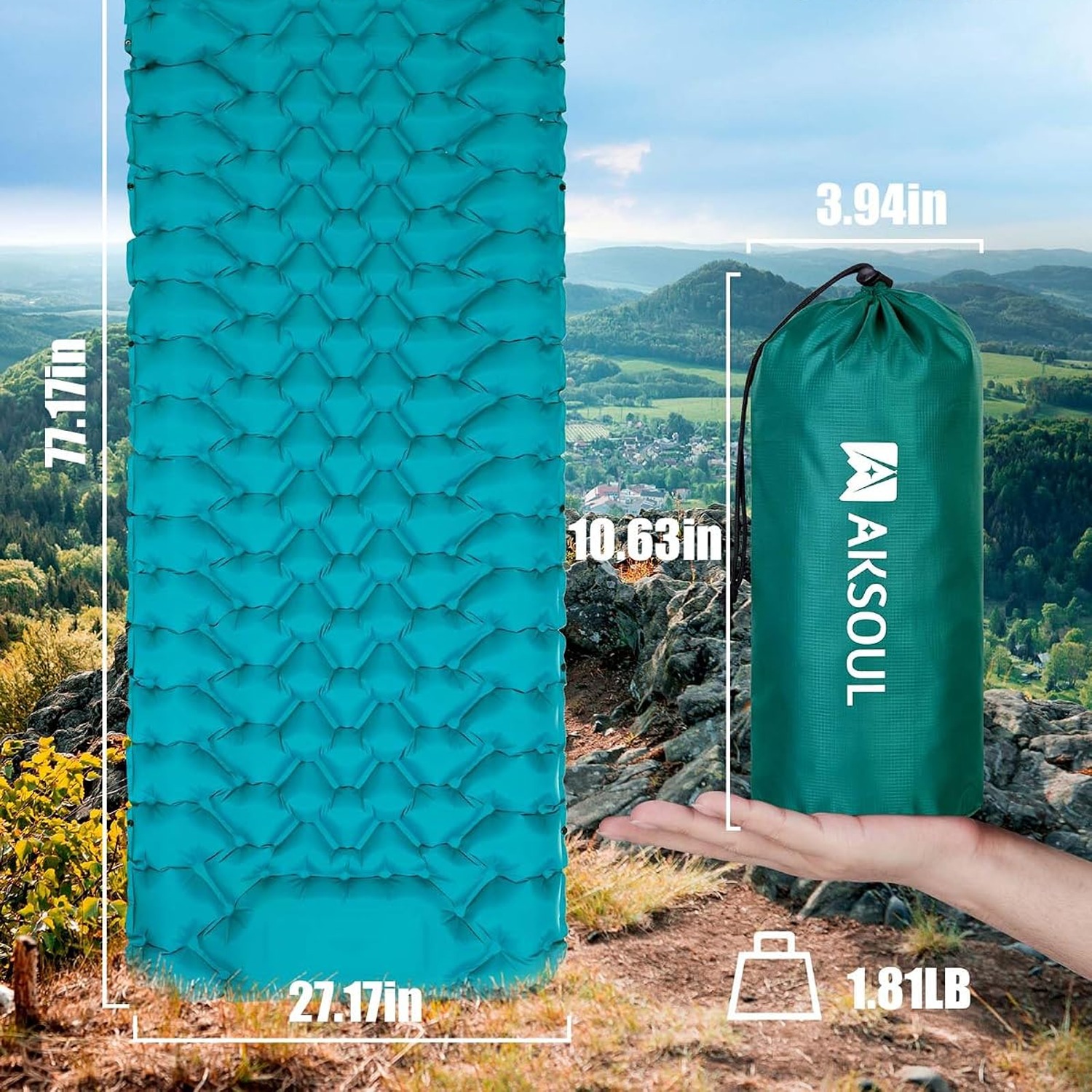
Festival goers are another good fit. You are sleeping on compacted, lumpy ground for a few nights, you want to pack light on the walk in from the car park, and 850 g is nothing to carry.
Van and road trippers like it because it rolls away during the day. Check your interior length against the 195.8 cm inflated measurement before you commit, and inflate it inside the vehicle rather than wrestling a full-size pad in through a door.
Hikers can use it too. At 850 g it is not the lightest thing on the market, and someone chasing the absolute best lightweight camping mat by weight alone will go thinner. But thinner means less depth, and less depth means your hip finds the ground. For most people that trade is not worth it on a two or three night trip.
Then there is home. Guests arrive, a kid has a sleepover, you move into a new place before the furniture does. This works as a floor bed and then disappears into a cupboard, which a real spare mattress never does.
How to choose, in plain terms
Start with thickness. If you sleep on your side, look for depth first. Anything under about 5 cm will have your shoulder on the ground before morning. This pad's 9.9 cm is well above that line.
Then check the footprint. Inflated it is 195.8 cm long and 68.8 cm wide. If you are over about 190 cm tall your feet will reach the end, so measure yourself and measure your tent floor. Tapered ultralight tents narrow at the foot, and that is where people get caught out.
Look at capacity. This one is rated to 199.58 kg, or 440 pounds. That is generous for one person and gives you room to spare, which also tells you something about how the pad is built.
Think about how you will fill it. A built-in pump is simpler than any separate system. It is worth more than it sounds when you are setting up in the dark with cold hands.
Decide if you need two. If you camp as a couple, buying a pair and snapping them together is usually better than one wide mattress, because you can still split them for solo trips.
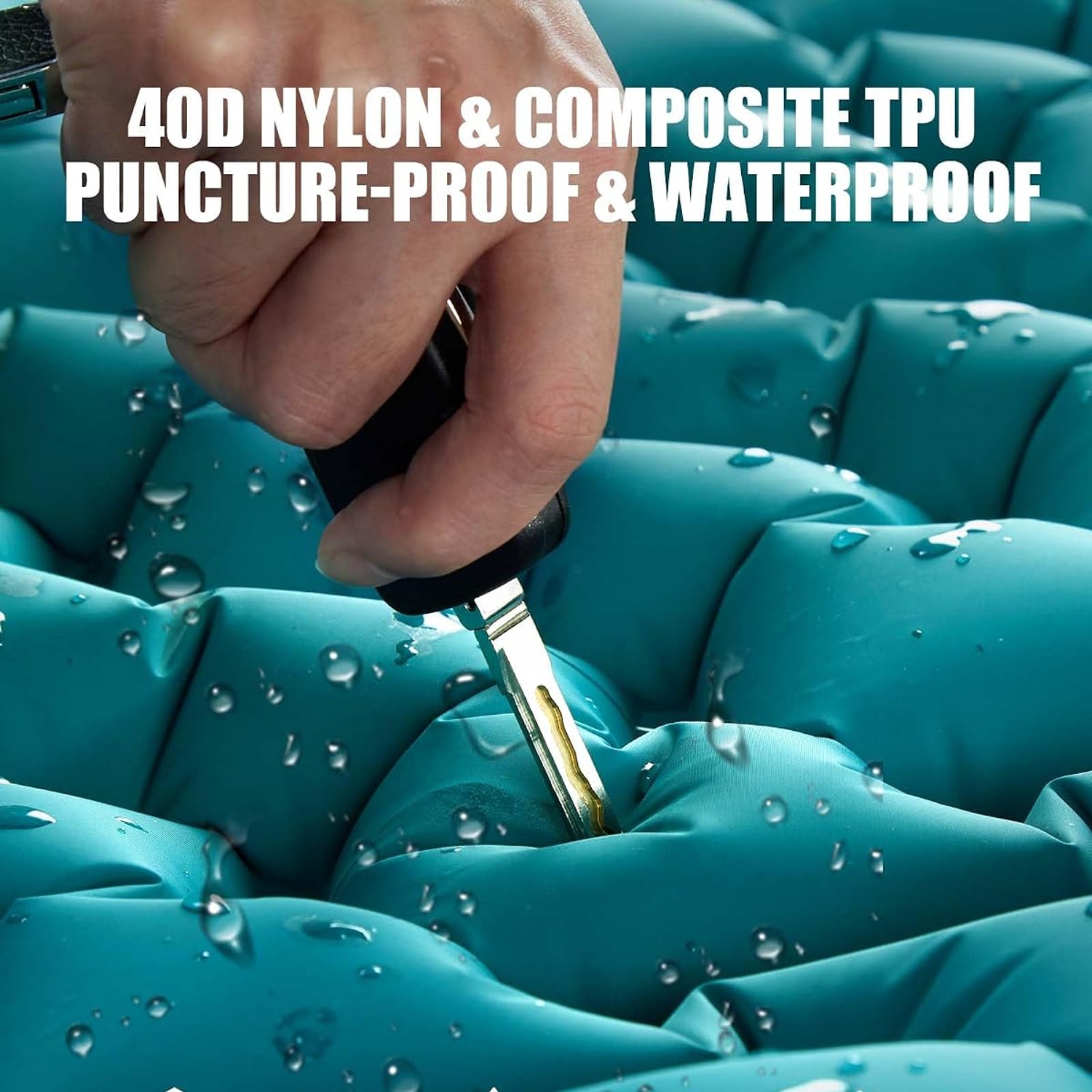
Check the material. Nylon is the standard shell for a reason. It handles abrasion reasonably well, packs down small, and does not hold water. This pad is a two-layer build listed as water resistant, so damp tent floors and dew are not an issue.
Looking after it
Air pads last a long time if you treat them sensibly. The main enemies are sharp objects, heat, and being packed away damp.
Clear your pitch before you lay anything down. Sticks, stones, and dry thistle are what cause most punctures, and thirty seconds of sweeping the ground saves a lot of trouble. A groundsheet or tent footprint adds another layer of protection.
Cleaning is hand wash only. Wipe the nylon with a damp cloth and a bit of mild soap, rinse off the soap, and let it dry fully before it goes away. No machine washing, no tumble drying, no bleach, no ironing.
For storage, open the valve and let it sit loosely rolled or flat rather than compressed tight for months. Trapped moisture inside an air chamber is the thing that causes smells and mold, so the open valve matters.
If you do get a puncture, it is usually fixable. Inflate the pad, listen for the hiss or run soapy water over the surface to find the bubbles, dry the area, and patch it. Keeping a patch kit in your camp box is just sensible with any air pad.
Keep it away from campfires, stoves, and hot car dashboards. Nylon and direct heat do not get along.
The short version
If you have been camping on something thin and waking up sore, thickness is the fix. This pad gives you 9.9 cm of air between you and the ground, inflates in under a minute with a pump you cannot forget to bring, and comes with a pillow already attached.
It weighs 850 g, holds up to 199.58 kg, and snaps to a second pad when you want a double. It works in a tent, a van, a festival field, or a spare room floor.
That is most of what matters. Pick the thickness that suits how you sleep, measure your tent, and the rest sorts itself out.