
The complete guide
How To Choose A Lightweight Travel Sleeping Bag
The problem with other people's bedding
Anyone who has travelled on a budget knows the moment. You arrive late, you are tired, and the bed in front of you is dressed in linen you did not choose and cannot vouch for. Maybe it is spotless. Maybe it was turned over in four minutes between guests. You will never actually know.
A travel sleeping bag solves this in the simplest way possible. You bring your own layer. Whatever the sheets have been through, the fabric against your skin is yours, washed by you, packed by you. That one change makes a surprising difference to how well people sleep away from home.
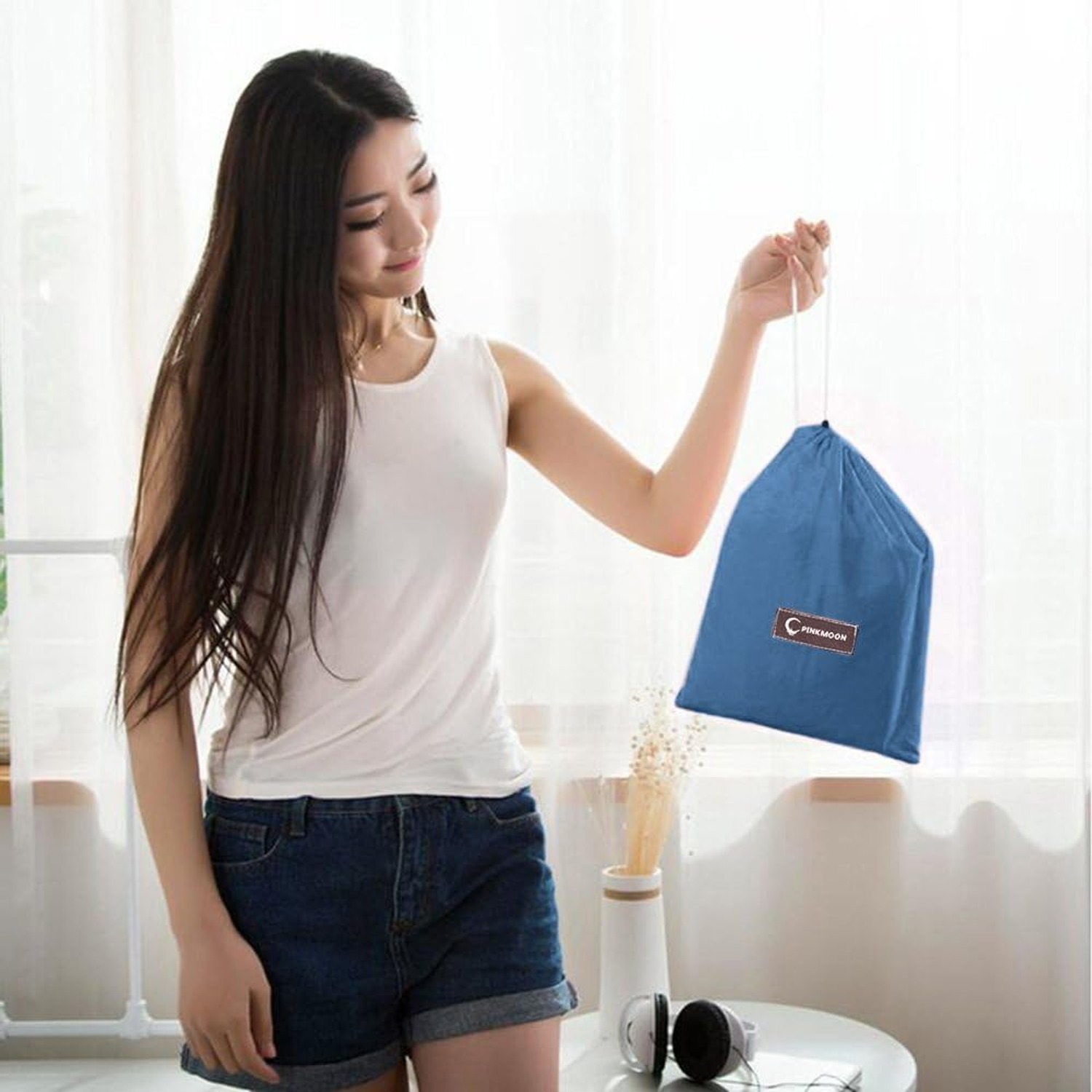
It solves a second problem too. Carrying bedding usually means carrying bulk, and bulk is the enemy of anyone with one bag and a long walk from the station. A full camping bag swallows half a backpack. A 500 g microfibre bag that squashes into a 20 x 20 cm pouch does not.
What this one actually is
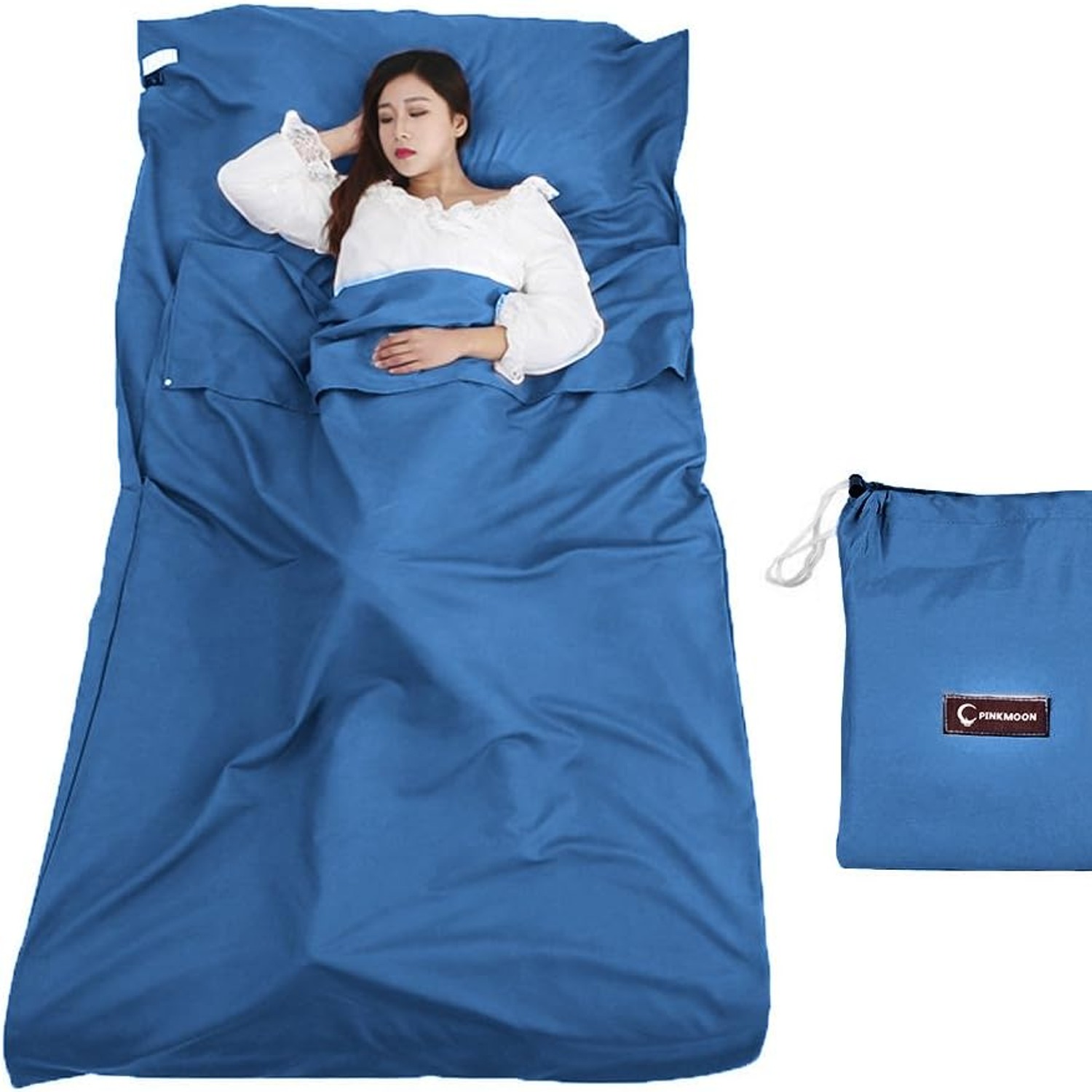
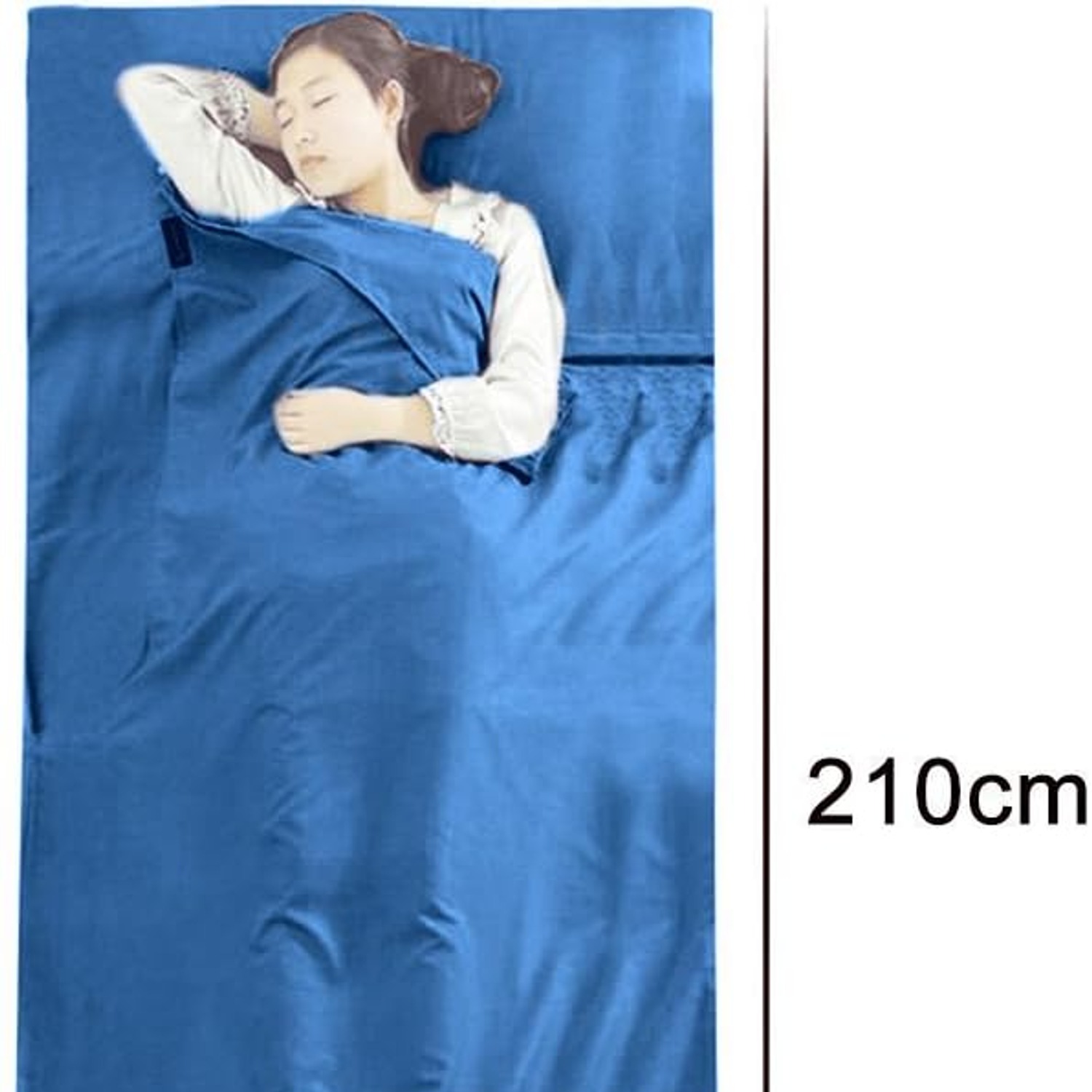
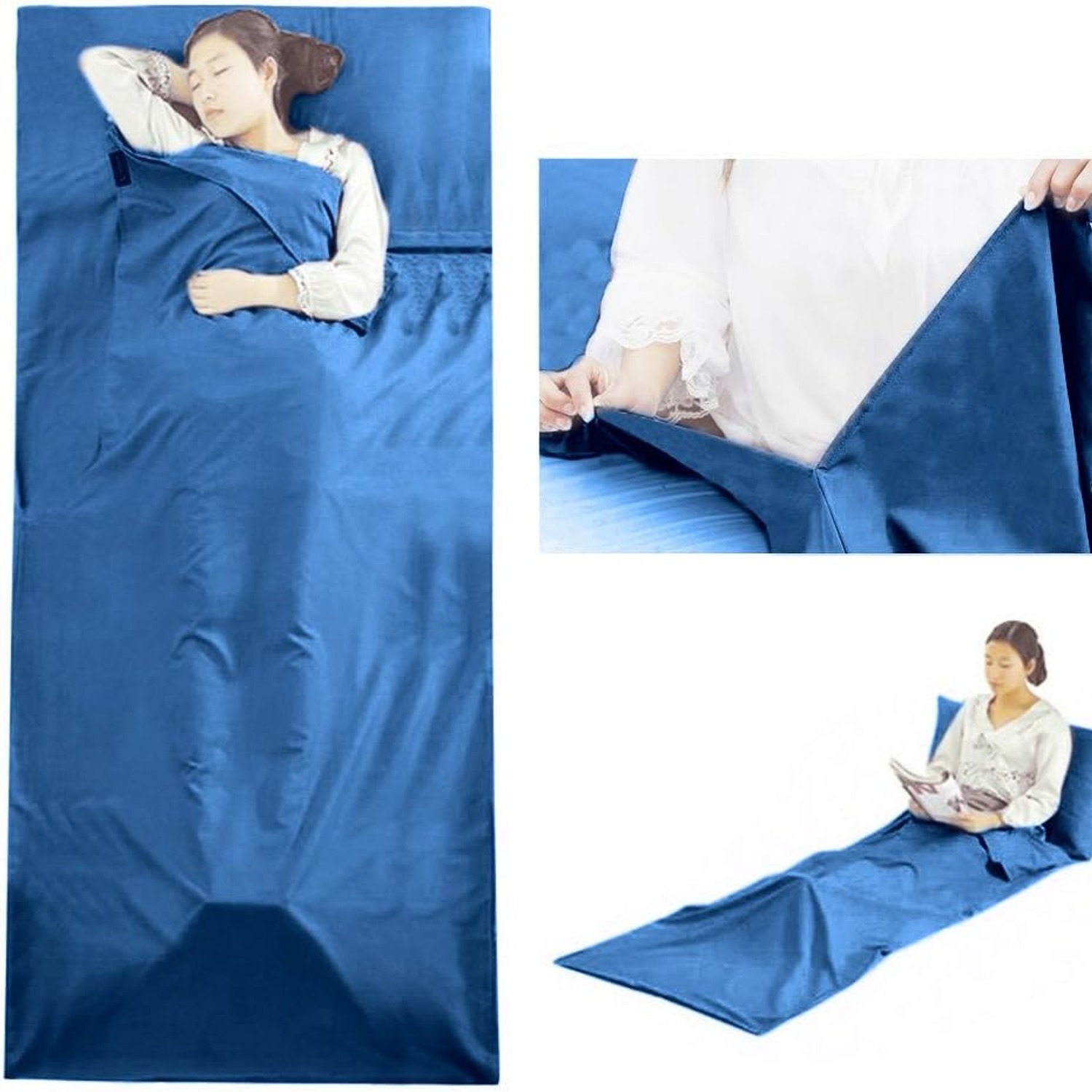
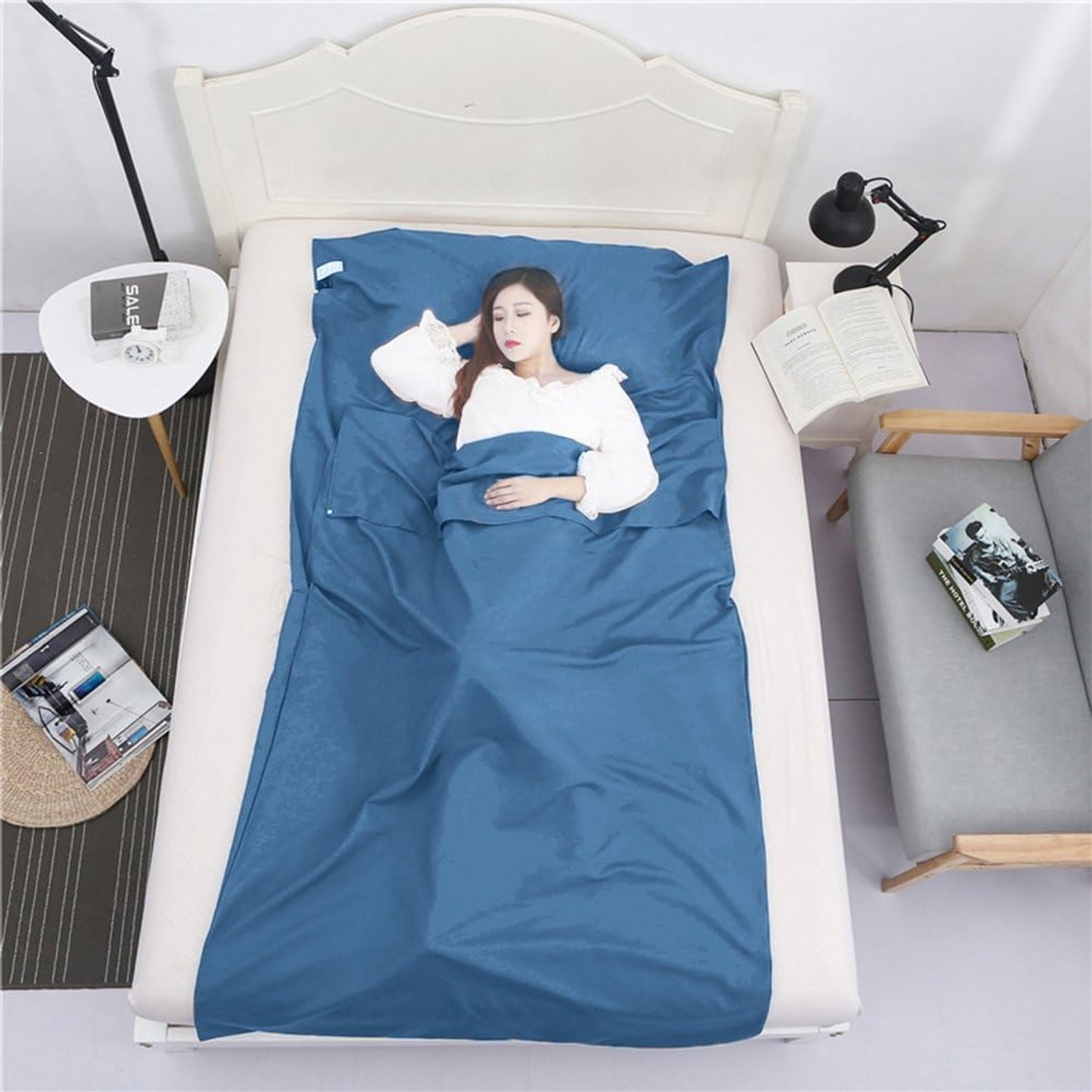
Opened out, it measures 210 cm long by 115 cm wide. That is a rectangle rather than a tapered mummy shape, which means more room around your legs and the ability to lie it flat as a blanket. Rectangular bags are less thermally efficient than mummy bags, but they are far more comfortable for people who move in their sleep.
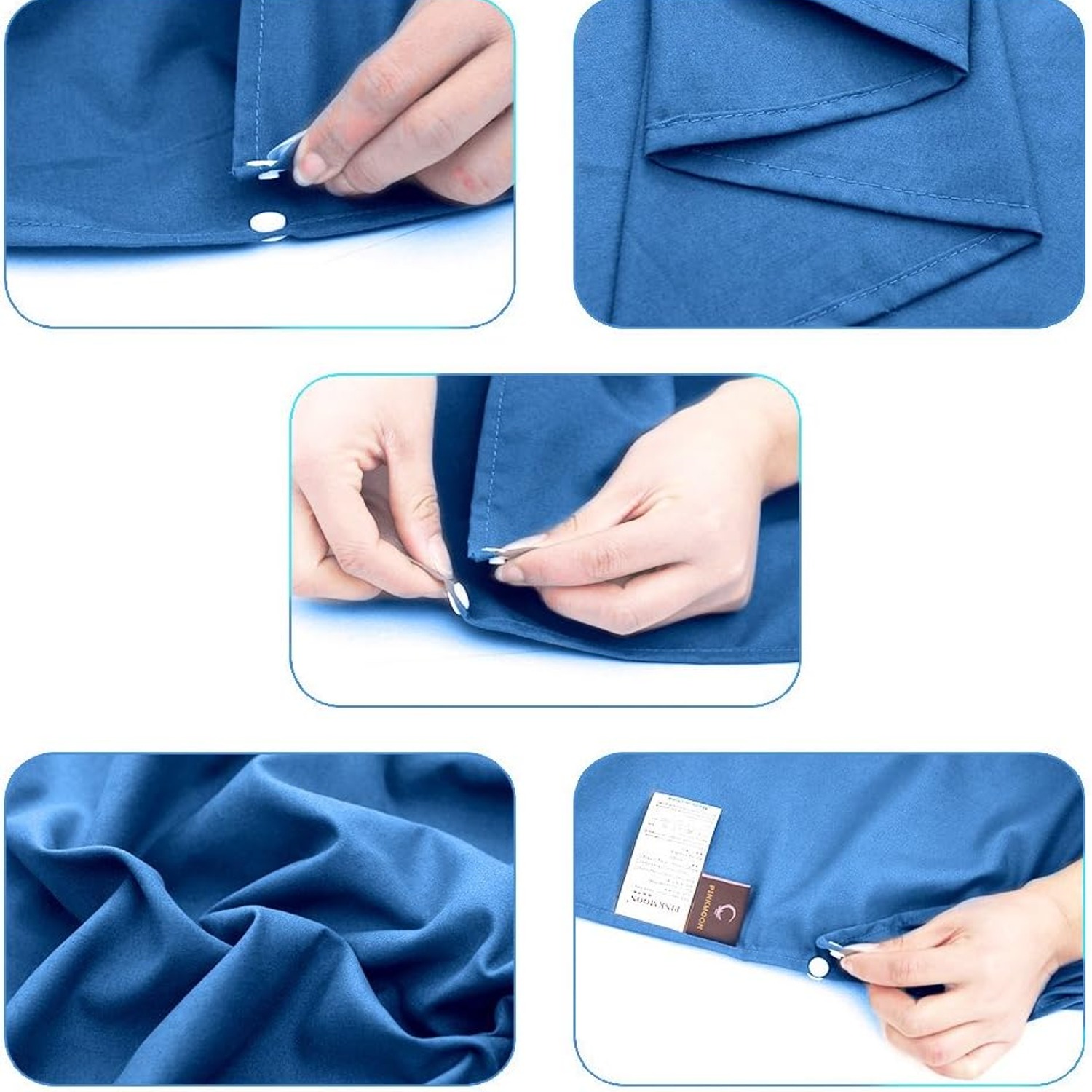
The shell is 100% microfibre. The fill material is listed as polyester. Microfibre is a good pick for travel because it is smooth, light, dries faster than cotton and holds its color through a lot of washing. This one is made not to discolour, which matters once a bag has been through a few unfamiliar laundries.
It closes with a zipper, and the design also includes buttons, so you can shut it fully, leave it partly open for airflow, or spread it out completely. The carry bag is included, which sounds minor until you lose one and spend a trip trying to cram loose fabric into a side pocket.
The color is Mysterious Blue. Darker shades are the practical choice for travel gear.
How warm is it, honestly
This is the part worth being clear about. A 500 g microfibre bag is not winter equipment. Think of it as a summer sleeping bag, a liner, or an indoor layer.
On a warm night in a tent, in a hostel bunk, on a sofa or in a guesthouse with a fan going, it is comfortable on its own. When the temperature drops, it needs help. The usual approach is to slide it inside a thicker insulated bag. You get the soft, clean inner layer plus proper warmth, and the outer bag stays cleaner for longer because your skin never touches it.
That liner trick is also how a lot of people extend the life of expensive gear. Washing a down bag repeatedly shortens its life. Washing a microfibre liner does not.
Who it suits
Backpackers are the obvious group. If you are moving between hostels, night buses and the occasional cheap hotel, this covers all three without being noticeable in your pack. It is a solid pick if you are comparing options for the best backpacking sleeping bag that still fits in hand luggage.
Hikers doing warm-weather trips get good value too. Carrying 500 g instead of two kilos changes how a long day feels. Pair it with a sleeping mat and you have a workable setup for mild nights.
Families use it for different reasons. The age range is listed as youth and the maximum height recommendation is 180 cm, so it suits children and teenagers well. It makes a good sleepover bag because kids can roll it up and carry it themselves. It is also handy at home as spare guest bedding that lives on a shelf rather than taking up a whole cupboard.
Festival-goers like it because it is light to carry across a field and cheap enough that a muddy weekend does not feel like a disaster.
How to choose between options
Start with the nights, not the days. Daytime temperatures mislead people constantly. A place that hits 30 degrees in the afternoon can fall to single digits after dark, especially at altitude or in a desert. Look up overnight lows for the exact weeks you are traveling, then decide whether you need warmth or just a clean layer.
Next, check packed size against your actual bag. A 20 x 20 cm bundle disappears into most packs. If you are traveling with a small cabin bag and no spare room, measure before you assume.
Then think about shape. Rectangular bags like this one give you space to move and open flat as blankets. Mummy bags hold heat better but feel restrictive, and they cannot double as a cover on a train. If your trip involves more hostels than mountains, rectangular wins.
Finally, consider washing. If you are away for weeks, you want fabric that survives a hand wash in a sink and dries overnight on a balcony. Microfibre handles that far better than cotton, which is why it keeps showing up in lists of the best compact sleeping bag options for long trips.
Looking after it
Machine wash cold or warm on a gentle cycle with a mild detergent. Wash it separately the first time so no color transfers anywhere it should not. Skip bleach and skip fabric softener, since softener coats fibres and makes microfibre feel waxy over time.
Tumble dry on low or line dry. Heat is the thing most likely to damage synthetic fabric, so keep the dryer gentle. Make absolutely sure it is dry before packing it away, because a damp bag stuffed in a pouch will smell within days and the smell is hard to shift.
Between trips, store it loose rather than crushed. A cupboard shelf or a cotton bag is fine. The carry bag is for traveling, not for six months of compression.
On the road, air it out whenever you can. Half an hour over a chair in the sun keeps it fresh between washes.
Small habits that help
Pack it last so it sits at the top of your bag and comes out first at night. Keep the carry bag inside the sleeping bag itself when you are using it, so it does not go missing in a dorm.
If you are using it as a liner, get in the habit of pulling it out of the outer bag each morning. Leaving them nested means neither dries properly.
And if you are flying, remember it counts as soft, squashable luggage. It is useful padding around anything fragile in your bag, which is a small bonus you only notice once you have done it.
The short version
This is a 500 g, 210 x 115 cm microfibre travel sleeping bag with a zip, a button design and its own carry bag. It packs to about 20 x 20 cm and comes in Mysterious Blue.
It is built for warm nights, hostel bunks, summer camping, buses, trains and spare rooms. It is not a winter bag, and it is not trying to be. Used on its own in mild weather, or as a liner inside something heavier when the temperature drops, it does a genuinely useful job for very little weight.
If your trip involves beds you did not make and a pack you have to carry all day, it earns its space.