
The complete guide
How To Choose A 4 Person Dome Tent That Actually Works
The problem with most first tents
Plenty of people buy a tent once, use it twice, and never take it out again. Usually it is not because camping was bad. It is because the tent was the wrong shape for the trip, took too long to put up in fading light, or let in a damp morning that nobody enjoyed.
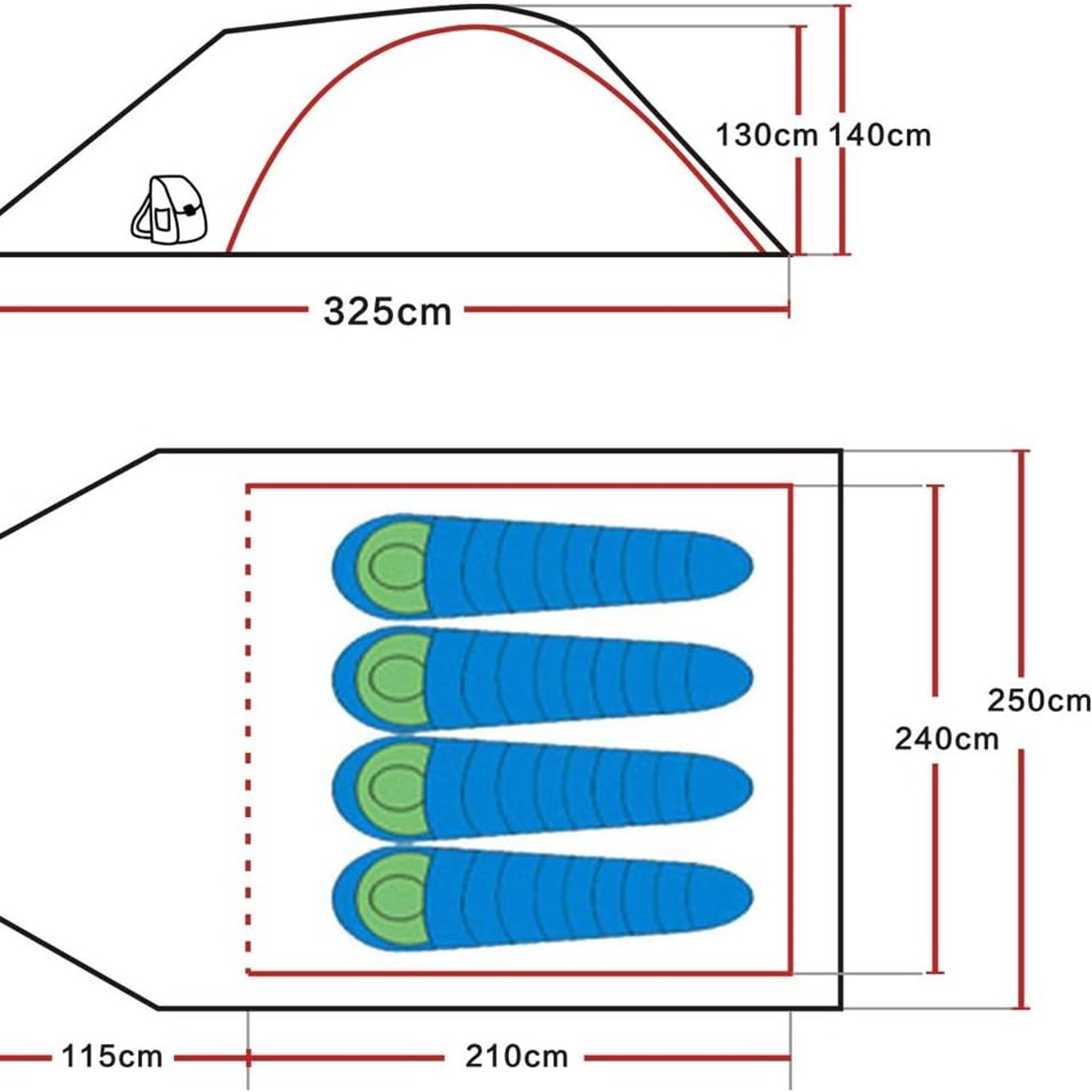
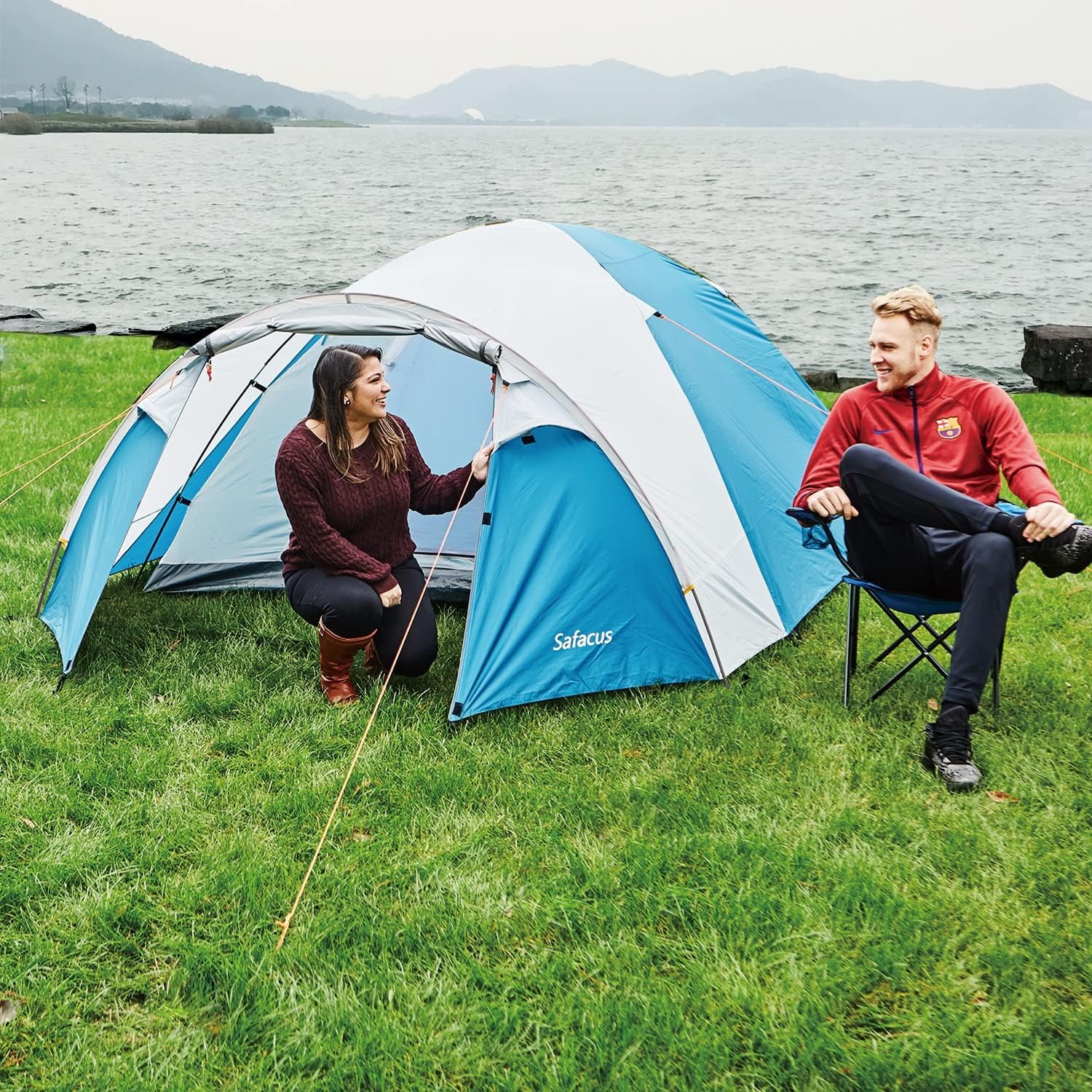
A 4 person dome tent solves most of that. It is big enough for a family or a group of friends, simple enough to pitch without an argument, and light enough that nobody has to make three trips from the car. This one weighs 4.8 kg packed, has a 325 cm floor length and a 140 cm peak, and goes up in around ten minutes.
How a double layer dome tent works
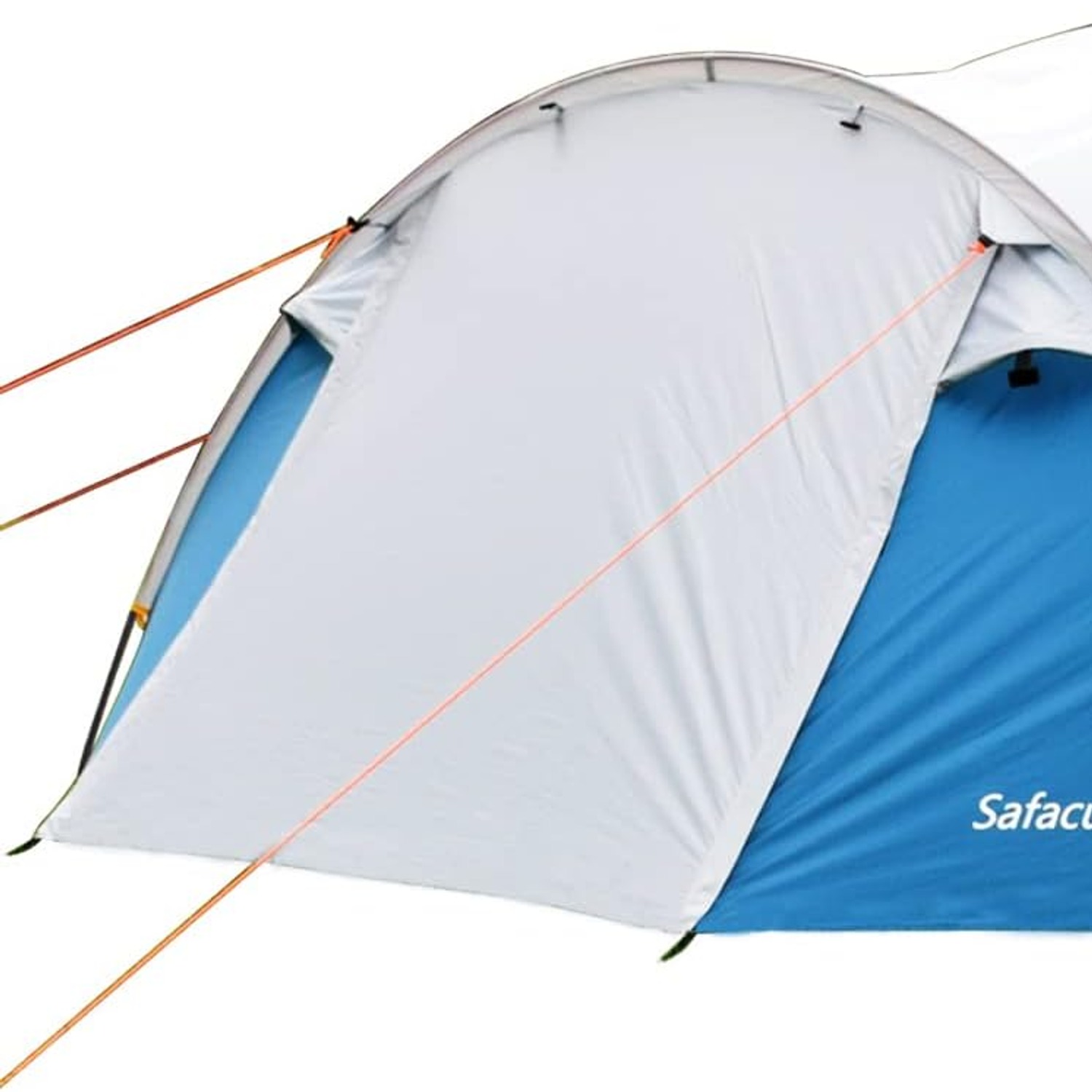
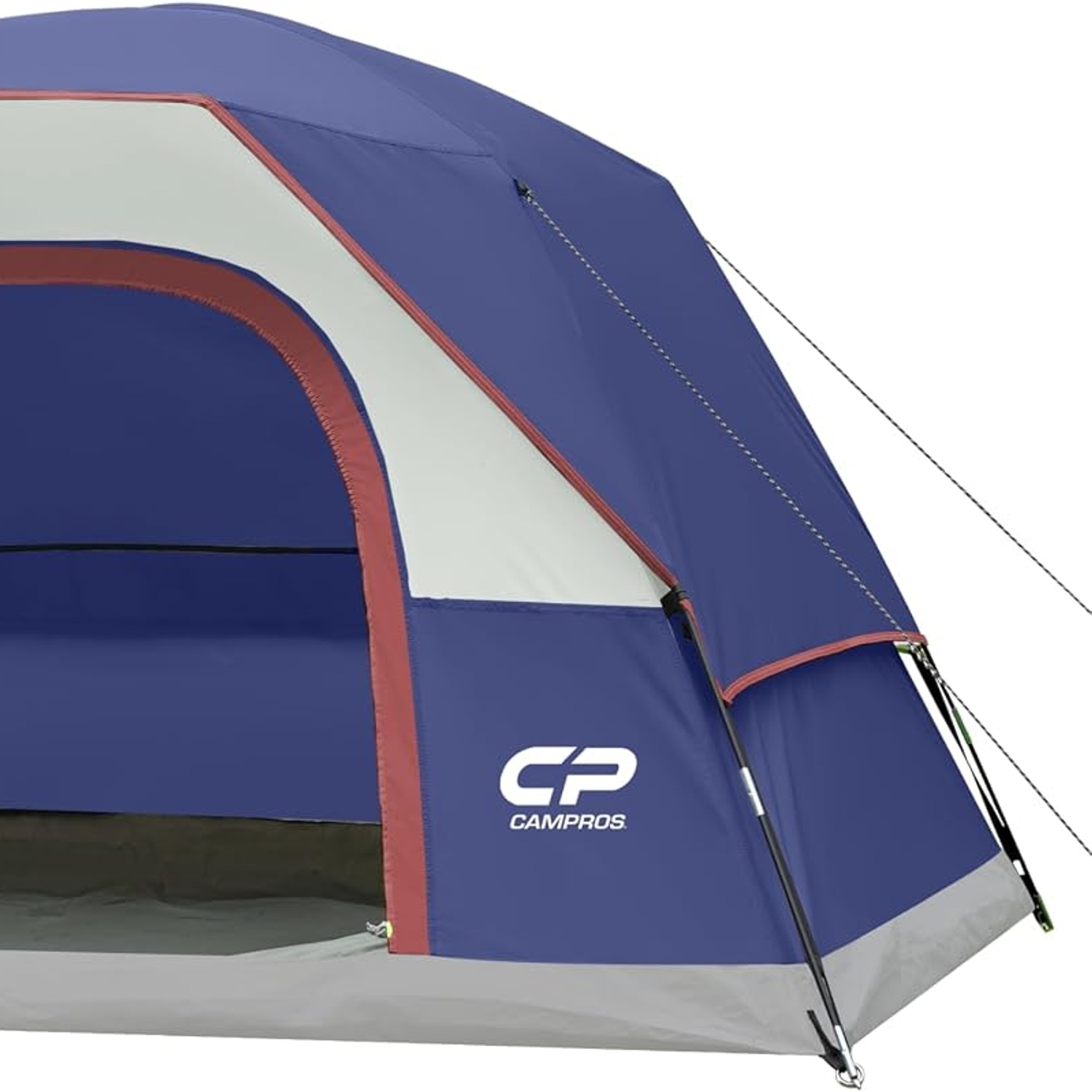
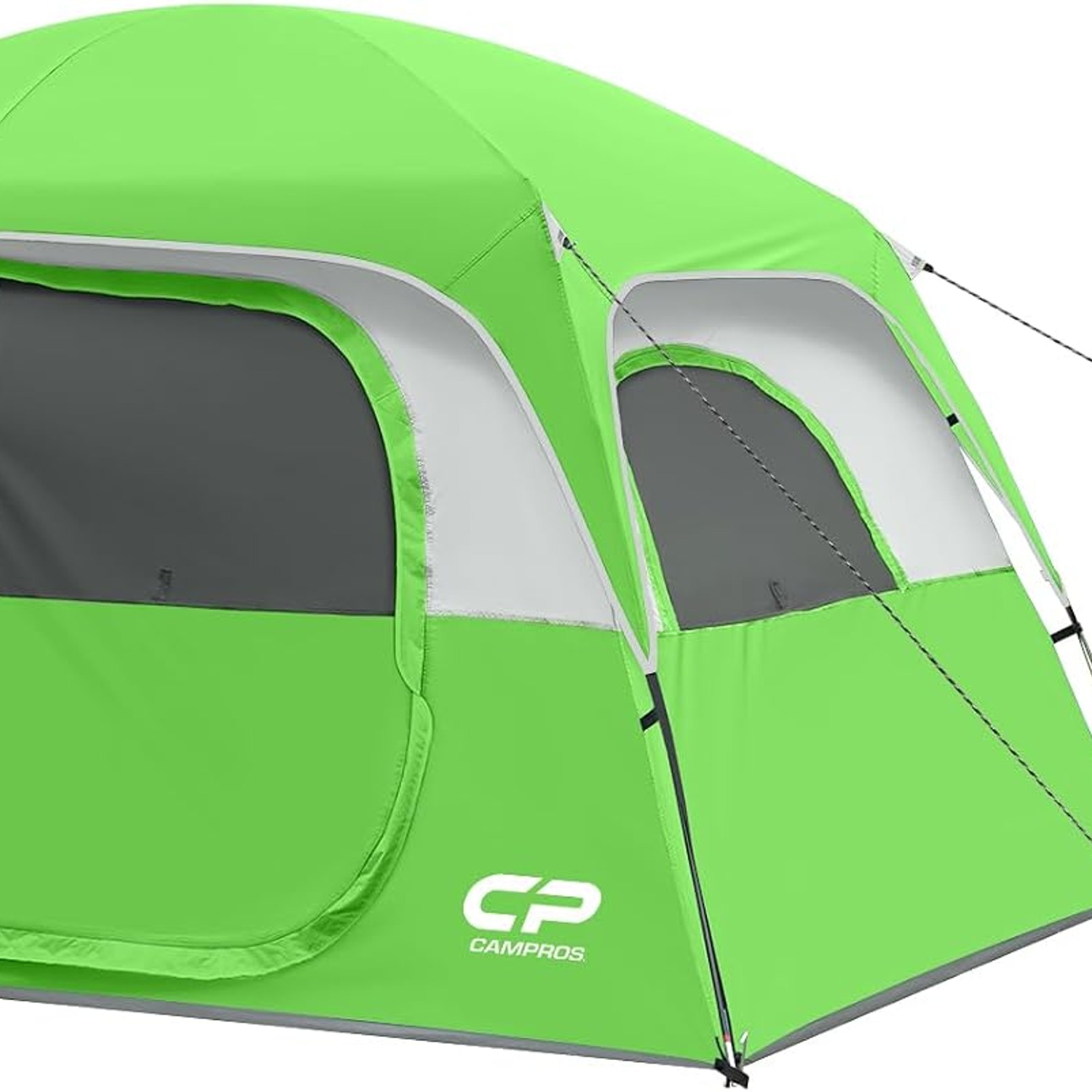
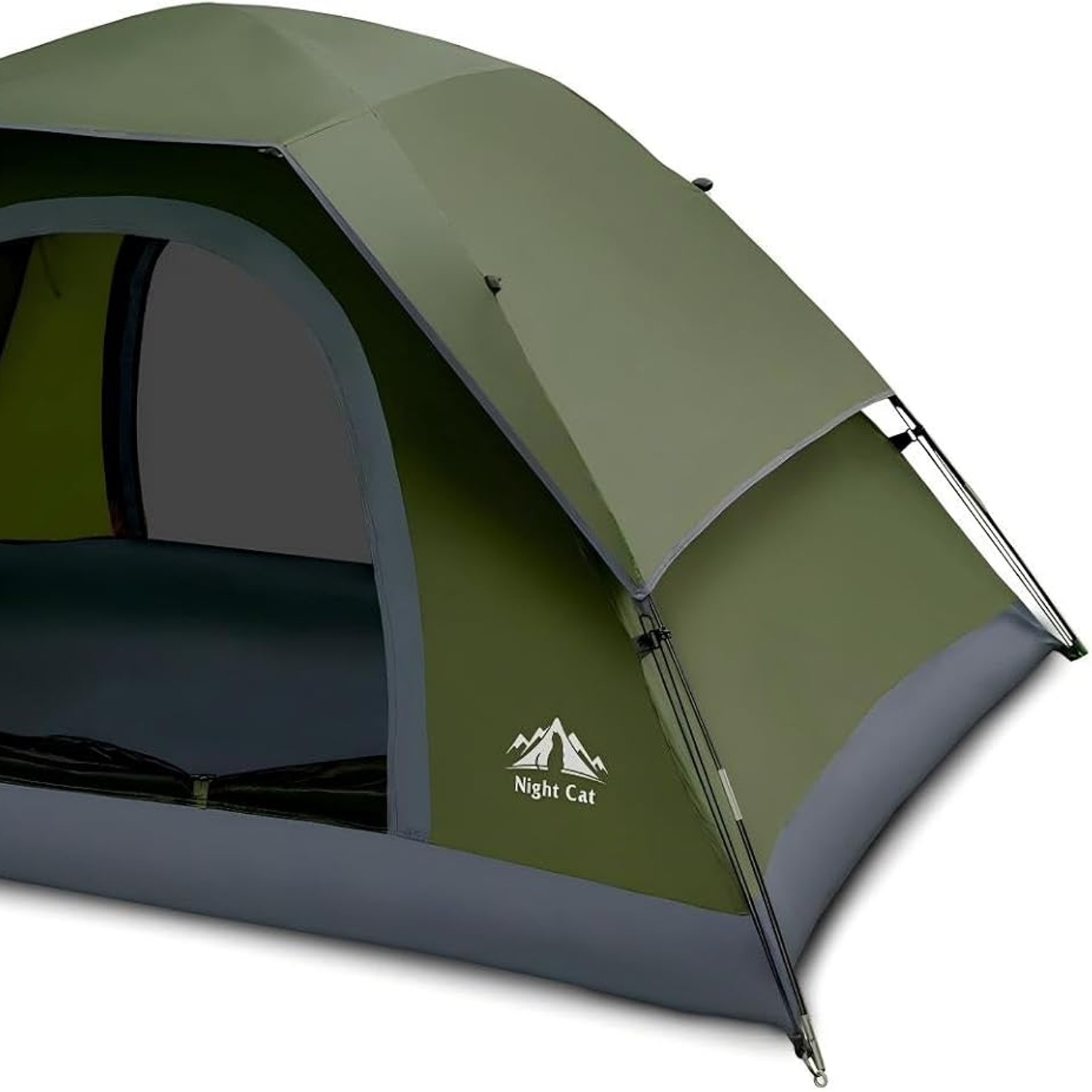
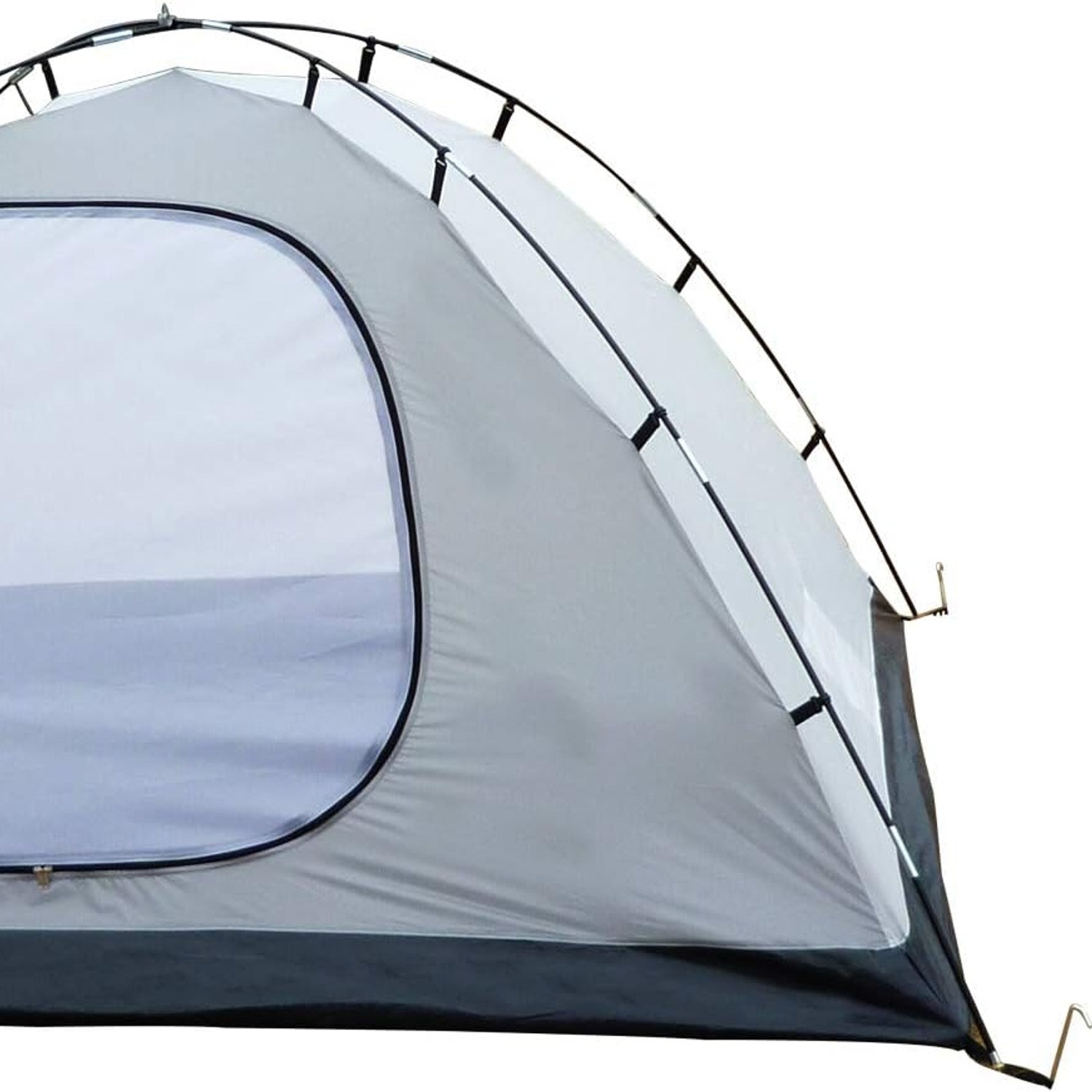
The dome shape is the oldest trick in camping for good reason. Two fiberglass poles cross over the top of the tent and bend into an arc. That curve creates tension, and the tension is what holds the whole structure up without needing anything tied to the ground. Wind hitting a dome slides around it rather than pushing flat against a wall.
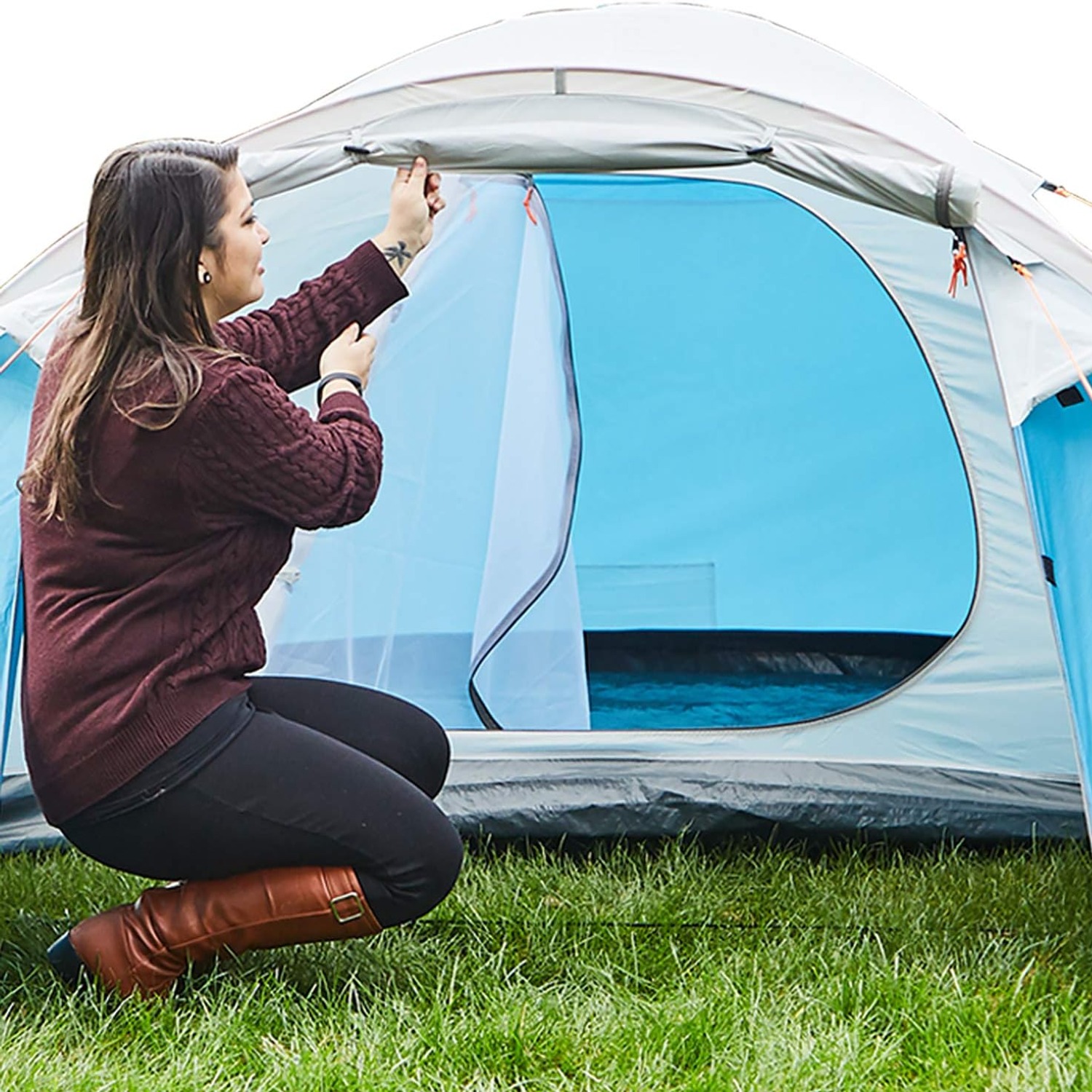
The double layer part is what keeps you dry. Inside there is a breathable inner tent with the floor sewn in. Over that goes a waterproof polyester rainfly treated with polyurethane. Rain lands on the fly and runs off the outside. At the same time, the warm, moist air you breathe out overnight passes through the inner and condenses on the underside of the fly instead of on your sleeping bag.
That gap between the two layers is doing real work. Single skin tents are cheaper and lighter, but they tend to drip condensation on everything inside once the temperature drops. If you have ever woken up in a tent and wondered whether it rained inside, that is why.
The poles here attach with clips rather than fabric sleeves. Clips are faster, easier to do with cold hands, and they hold the inner slightly away from the fly, which helps airflow.
Who this tent suits
This is a car camping and short-walk tent. Think campgrounds, national park sites, beach days, fishing weekends and festivals. The brand lists beach, camping and hiking, fishing and traveling as recommended uses, and that is a fair description of where it fits.
Four adults will sleep in it, but it is snug once you add bags. The more realistic sweet spot is two adults and two children, or three adults who want room to stash gear at one end. Many people hunting for the best 4 person tent are really after exactly that extra bit of breathing room rather than true four-adult capacity.
It is less suited to long backpacking trips. At 4.8 kg it is not heavy, but a dedicated hiking tent for two would be half that. If you are walking ten kilometers with everything on your back, weight matters more than floor space.
How to choose the right size
Tent capacity numbers across the industry are based on sleeping mats laid side by side with nothing else inside. Treat the number as a maximum, not a comfort rating.
A quick way to check: measure your sleeping mats or air bed and compare them with the floor dimensions. The floor here is 325 cm long with a 3.25 m width, which gives 81250 square centimeters of floor space. A standard double air mattress fits along the length easily and still leaves a strip for bags.
Height is the other thing people forget. At 140 cm you can sit up, kneel, change clothes and sort gear comfortably. You cannot stand. For most campers that is fine, because the time you actually spend inside a tent awake is short. If you want to stand up, you are looking at a cabin or tunnel tent, which is heavier and slower to pitch.
Pitching it well
Pick the flattest piece of ground you can find and clear away stones and sticks. Lay the inner tent out, thread both poles, and clip them on. The tent will stand up on its own at that point, which is the advantage of a freestanding design. You can pick it up and shuffle it a meter to the left if you spot a better patch.
Peg the corners first and pull the floor taut but not stretched. Then throw the fly over and line up the door. Last, peg out all four guylines. People skip guylines on calm evenings and regret it at 2am when the wind picks up. They pull the fly away from the inner, which stops flapping noise and stops condensation transferring across.
Point the door away from the prevailing wind if you can. It makes a bigger difference to how the tent feels than almost any other decision you make at the site.
Staying dry and comfortable
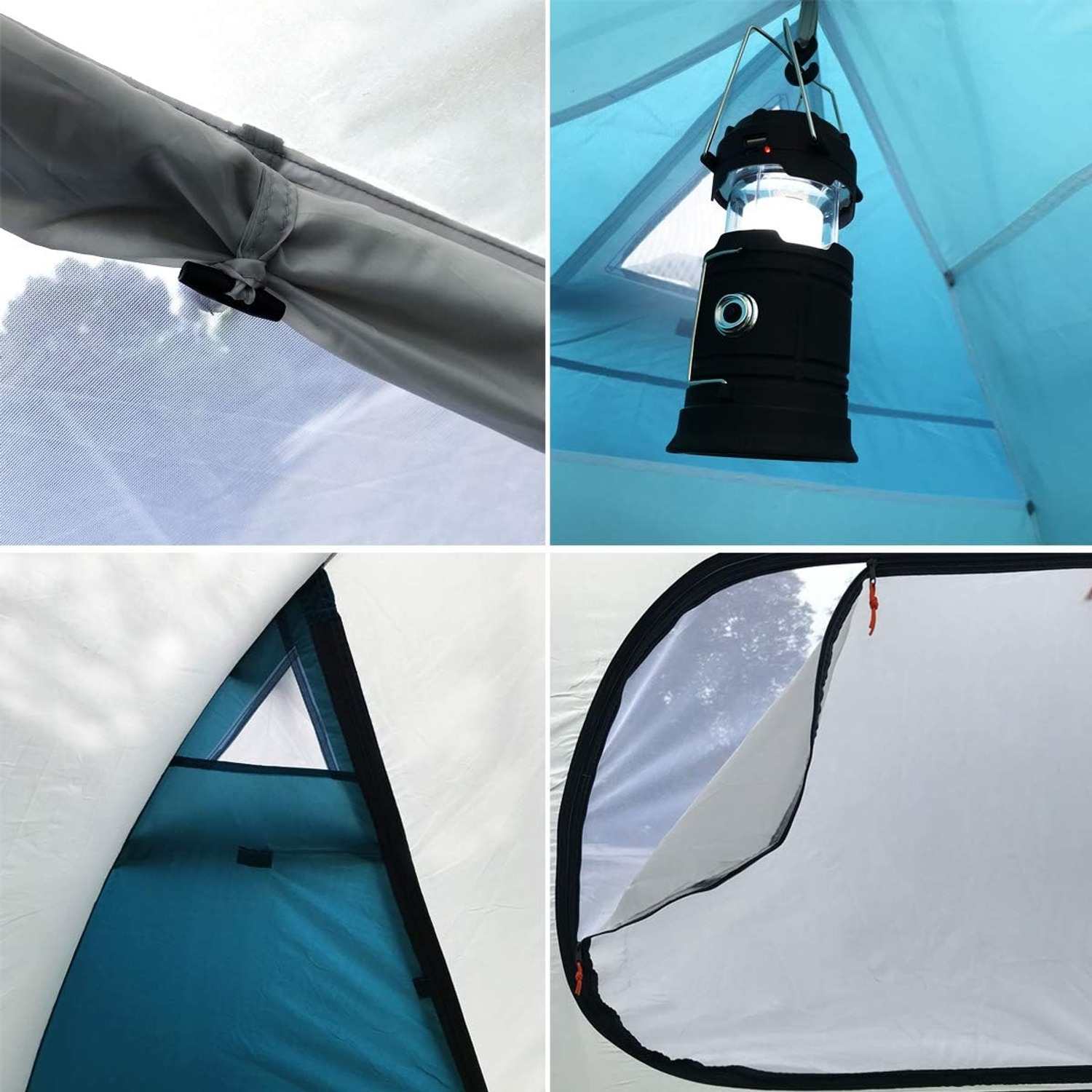
Ventilation beats insulation when it comes to condensation. Even on a cold night, leaving a door zip open a few centimeters at the top gives moist air somewhere to escape. Four people breathing inside a sealed tent will produce a surprising amount of water overnight.
Keep wet boots and jackets in the entry area rather than next to sleeping bags. A cheap tarp or footprint under the tent protects the polyurethane-coated floor from sharp ground, and it is far cheaper to replace than a tent. Just make sure it sits slightly smaller than the footprint of the tent, or rain running down the fly will pool underneath you.
If water does find its way through a seam over time, seam sealer from any camping shop fixes it in an afternoon. Most leaks in older tents are seams or peg-point stress, not the fabric itself.
Care and storage
The single biggest thing you can do for a tent is dry it before storage. Pack a damp tent away for a week and mildew sets in, which smells bad and eventually eats the waterproof coating. If you get home late and it is wet, pitch it in a garage or hang the fly over a line the next day.
Brush off sand and dirt with a soft brush. Sponge stubborn marks with cool water and a little mild soap, then rinse. Skip the washing machine, bleach and solvents, because all three strip the coating on the fly and floor.
Check your zips before every trip. Grit in a zip is the most common tent failure, and a quick brush plus a little zip lubricant prevents it. Give the fiberglass poles a look too, especially the shock cord inside, which stretches out over the years and can be replaced cheaply.
Store it loose if you have space. Months of hard compression creases the fabric along the same lines and wears the coating where it folds.
The short version
This is a straightforward 4 person camping tent that does the important things well. Double layer construction with a waterproof polyester fly keeps weather out and cuts condensation. Two fiberglass poles with clip attachment make setup quick, roughly ten minutes by the stated assembly time. Four guylines and the freestanding dome shape give it decent stability once you peg it properly.
At 4.8 kg packed, with 325 cm of floor length and 140 cm of headroom, it suits weekend camping, beach trips, fishing and festivals. If you need a stand-up living space or a sub-two-kilo hiking shelter, look elsewhere. For everything in between, it covers the ground.