
The complete guide
How to Choose a Headlamp That You Will Actually Use
The problem with the flashlight in your pocket
Almost everyone has stood in the dark holding a phone in their teeth. Maybe it was a tent zip, a dropped car key, a dog lead tangled around a fence post. The light is in the wrong place, your hands are busy, and whatever you are trying to do takes three times as long as it should.
A headlamp fixes that one small thing very well. The light goes where you look. Your hands stay free. That is the entire pitch, and once you have used a decent one for a week you stop thinking of it as camping gear and start thinking of it as a tool.
The catch is that headlamps are sold on numbers, and the numbers are not the part that decides whether you keep using it. Weight, button layout and battery type matter far more in daily life than a big lumen figure on the box.
How a headlamp actually works
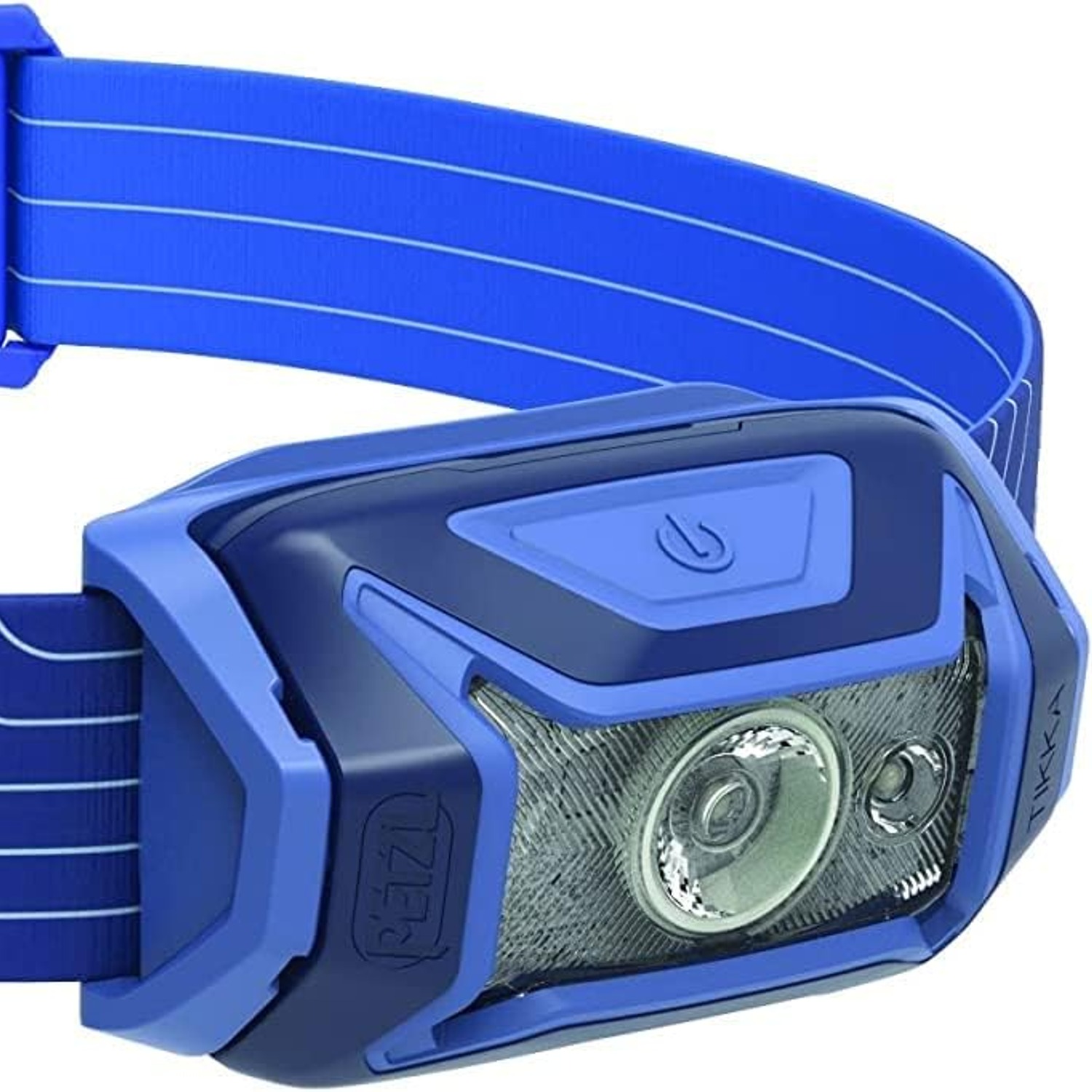
Inside the housing is an LED, a reflector that shapes the light, a battery compartment and a switch. The reflector is what separates a wide beam from a narrow one. A wide beam spreads light across a broad area close to you, which is what you want for cooking, reading, packing a bag or walking a familiar path. A narrow beam concentrates the same light into a tighter cone that reaches further but shows you less to either side.
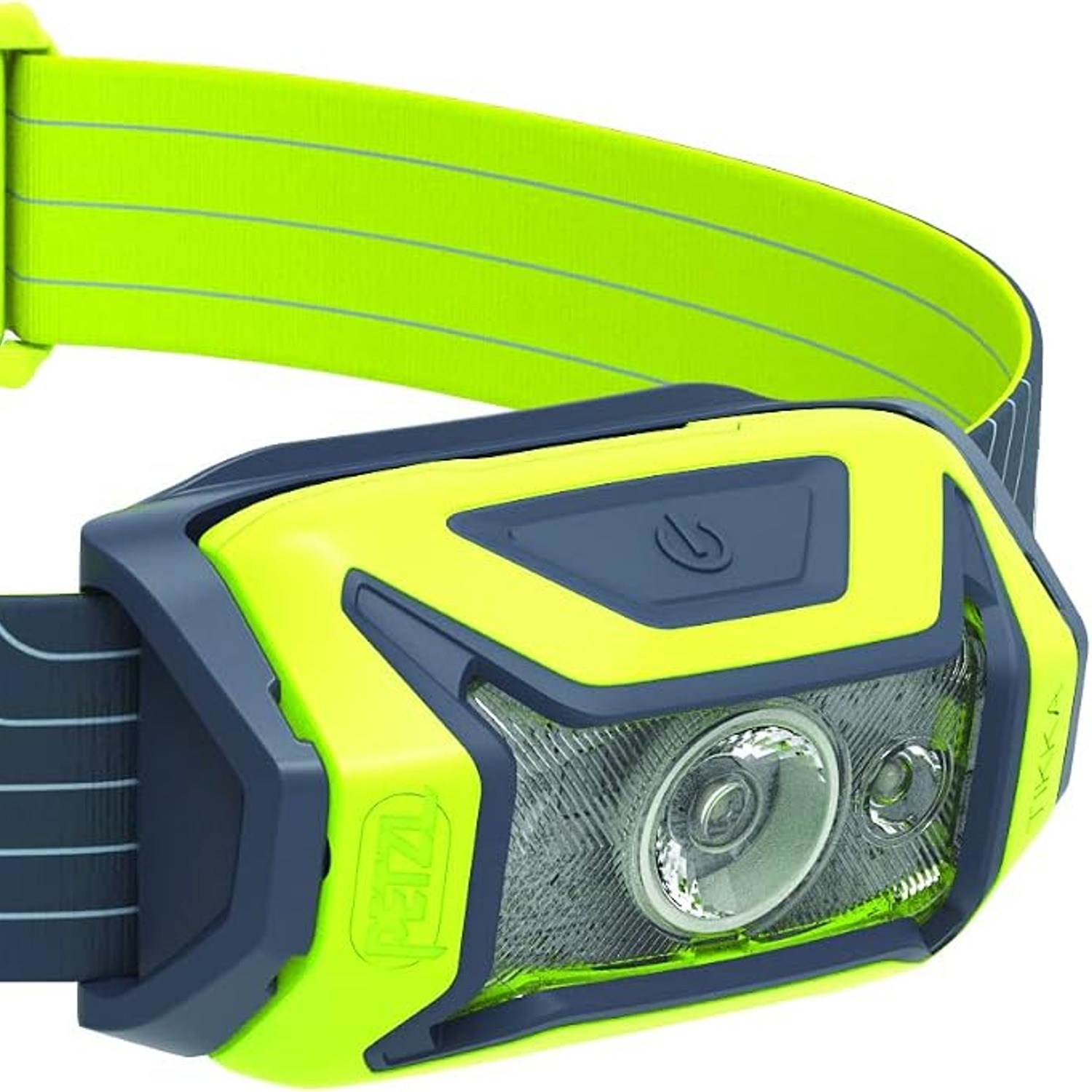
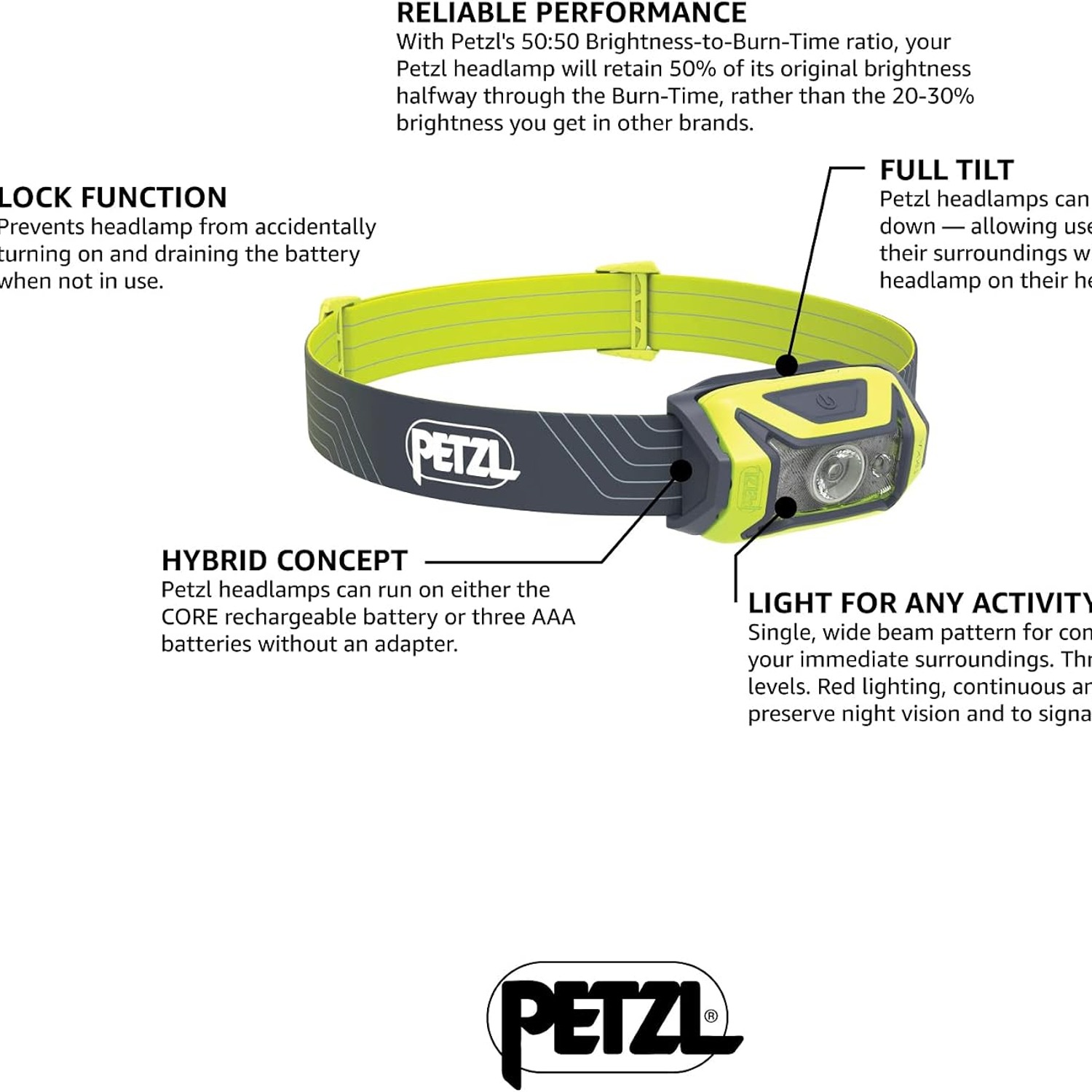
The Petzl TIKKA uses a wide beam. It casts 350 lumens of white light with a listed beam distance of 45 meters. In plain terms, you can see the ground, your gear and the next stretch of path clearly, without the tunnel-vision effect of a spot beam.
Lumens measure total light output. They are useful for comparing lamps but they are not the full story. A lamp with a well-shaped wide beam at 350 lumens is more pleasant for close work than a harsh spot beam at the same number. Beam distance tells you how far usable light reaches, and runtime tells you how long you get before the batteries give up. Here that figure is 6 hours, which shifts depending on which level you use.
Red light deserves its own mention. White light resets your night vision in seconds, and it takes your eyes a long while to readjust. Red light does not do that. It also does not blind the person standing opposite you. The TIKKA has both a steady red mode for preserving night vision and a flashing red mode for signalling where you are.
Who it suits
This is a lamp for proximity lighting and short movements in the dark. That covers more ground than it sounds.
Campers use it for setting up after dark, cooking, finding things in a bag and reading in a sleeping bag. Hikers use it for the last stretch when the walk ran longer than planned. Dog walkers use it on winter mornings. Cyclists clip it on for visibility, though a dedicated bike light is still the better choice for the road itself. Plenty of people never take it outside at all and just keep it for the fuse box, the loft and the night the power goes out.
Who it does not suit is the person who needs to pick out a landmark 200 meters away, or who is running fast down rocky trails at night. Those jobs call for a high-output lamp with a long-throw beam and a separate battery pack, and they cost and weigh a lot more. If what you need is the best lightweight headlamp for ordinary dark, this category is the right one.
Choosing: the things that actually matter
Weight. This is the quiet dealbreaker. A heavy lamp bounces, presses on your forehead and makes you take it off. At 94 g with batteries in it, the TIKKA sits lightly enough that you forget about it. Anything you forget about is anything you will keep wearing.
Button layout. Look for one button if you can. Trying to remember a double-press sequence with cold wet fingers at 5am is nobody's idea of fun. One button that cycles levels and colors is slower in theory and much faster in practice.
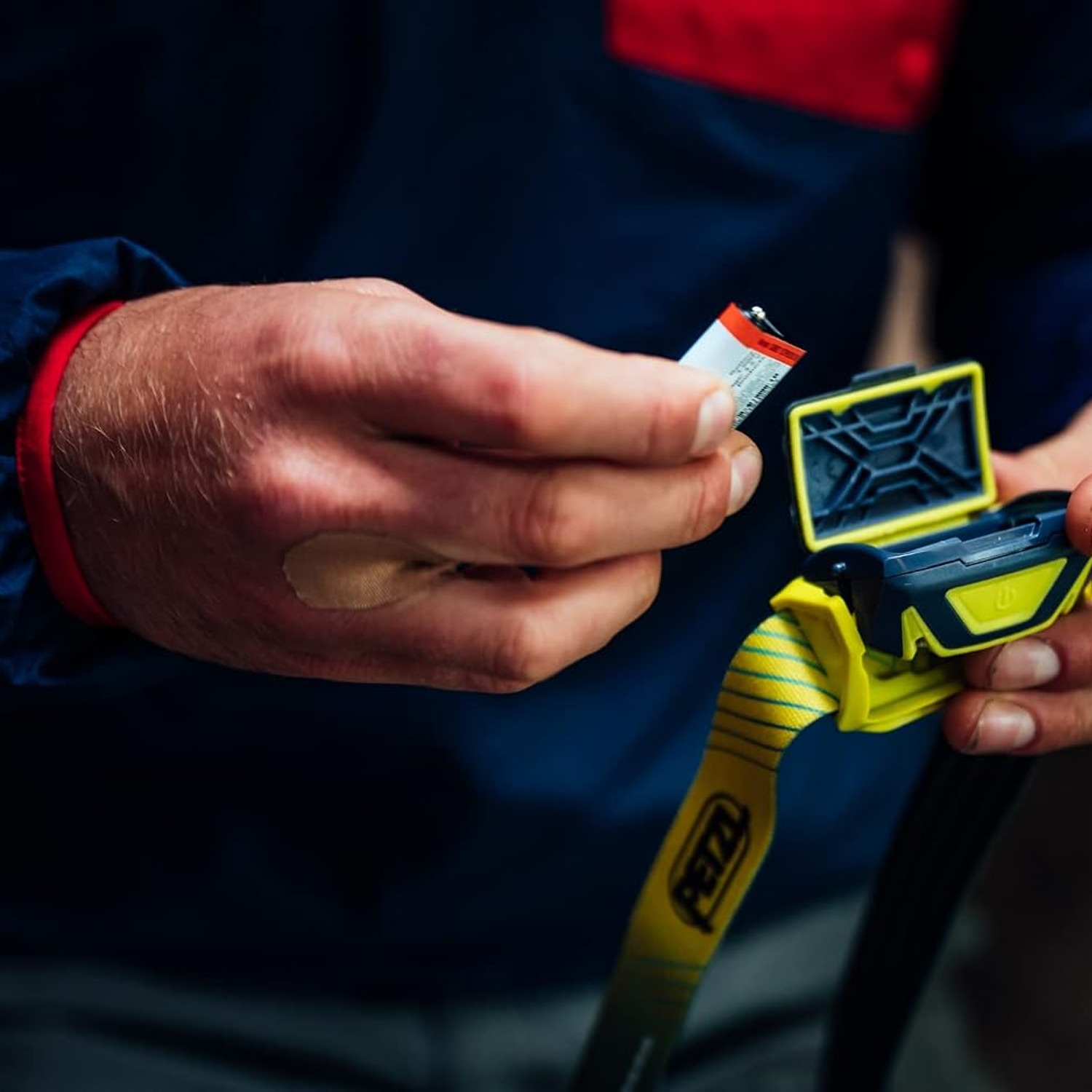
Battery type. This is where people get caught out. A sealed rechargeable lamp is tidy for daily use but useless on day four of a trip with no power. A battery lamp is instantly fixable anywhere that sells AAA cells. The TIKKA takes three AAA batteries, which are included, and also accepts the Petzl CORE rechargeable battery as an optional extra. That covers both situations without buying two lamps.
Beam shape. Wide for close work, narrow for distance. Most people spend most of their headlamp time doing close work, which is why a wide beam is the sensible default.
Water resistance. IPX4 means it handles rain and splashes. That is the right level for almost all outdoor use. Only divers and people who routinely drop things in water need more.
Extra touches. A tilting plate lets you aim the beam down instead of craning your neck. A battery charge indicator tells you where you stand before you set off. A phosphorescent reflector glows after light exposure, which sounds like a gimmick until you are feeling around a dark tent floor for a lamp you put down somewhere.
Getting the best out of it
Use the lowest level that works. Most people default to maximum power and burn through batteries for no reason. For cooking, packing or reading, the lowest white setting is plenty, and you will double or triple your runtime.
Switch to red in company. In a tent, around a campfire or on a group walk, red light is the polite option and it keeps everyone's eyes adjusted to the dark.
Tilt the beam down when walking. Pointing it straight ahead lights up the horizon and leaves your feet in shadow. Angled down a few meters in front gives you far better footing.
Carry a spare set of AAA cells on longer trips. They weigh almost nothing and remove any doubt about whether you will make it back.
Care and storage
Take the batteries out if the lamp is going into a cupboard for months. Leaking cells are the single most common way a perfectly good headlamp dies.
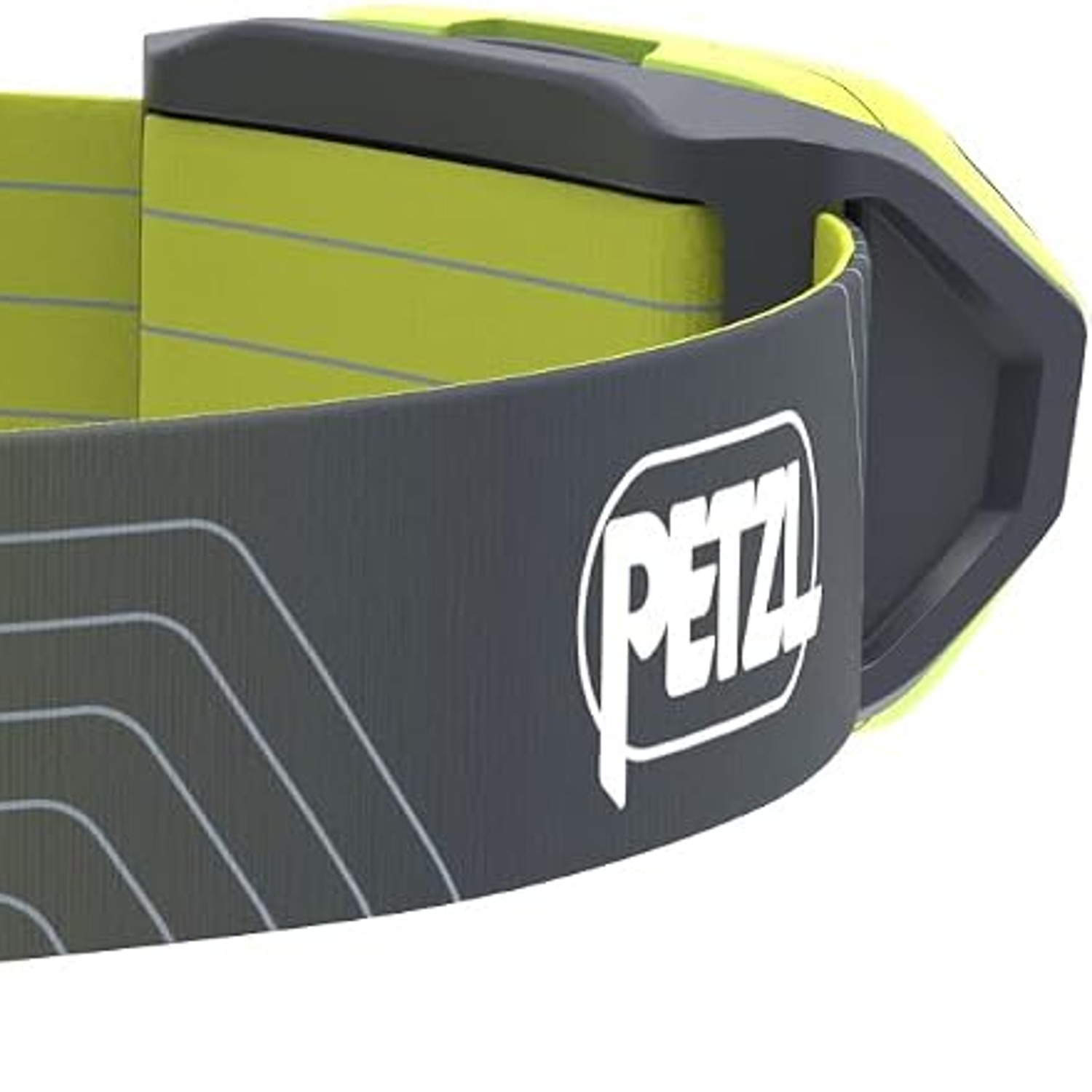
The headband comes off and can be hand washed in cool water, then left to air dry. Sweat and sunscreen build up in elastic over time and washing it occasionally keeps it from going stiff and smelly.
Wipe the body and lens with a soft damp cloth. Skip solvents and abrasive pads, which will haze the lens. Store it dry, away from direct sun, with the band loose rather than stretched tight around something, so the elastic keeps its shape.
The short version
The Petzl TIKKA is a 94 g LED headlamp with 350 lumens, a wide beam reaching 45 meters, three white levels, steady and flashing red, a tilting head and an IPX4 rating. It runs on three AAA batteries, included, and takes the optional CORE rechargeable pack if you prefer.
It is not built for long-range searching or fast technical night running. It is built for the hour after sunset, the inside of a tent, the walk back to the car and the cupboard under the stairs when the lights go out. For most people, most of the time, that is exactly the lamp they needed.