
The complete guide
How to Choose a Camping Kettle That Earns Its Place in Your Pack
The problem with boiling water outdoors
Boiling water sounds like the easiest job in camp cooking. It is, right up until you try to do it with the wrong gear. A deep pot takes forever and then you have to tip the whole thing to pour, which usually means a splash of boiling water near your foot. A pot with no lid loses heat to the wind. A mug on a stove works for one person and no one else.
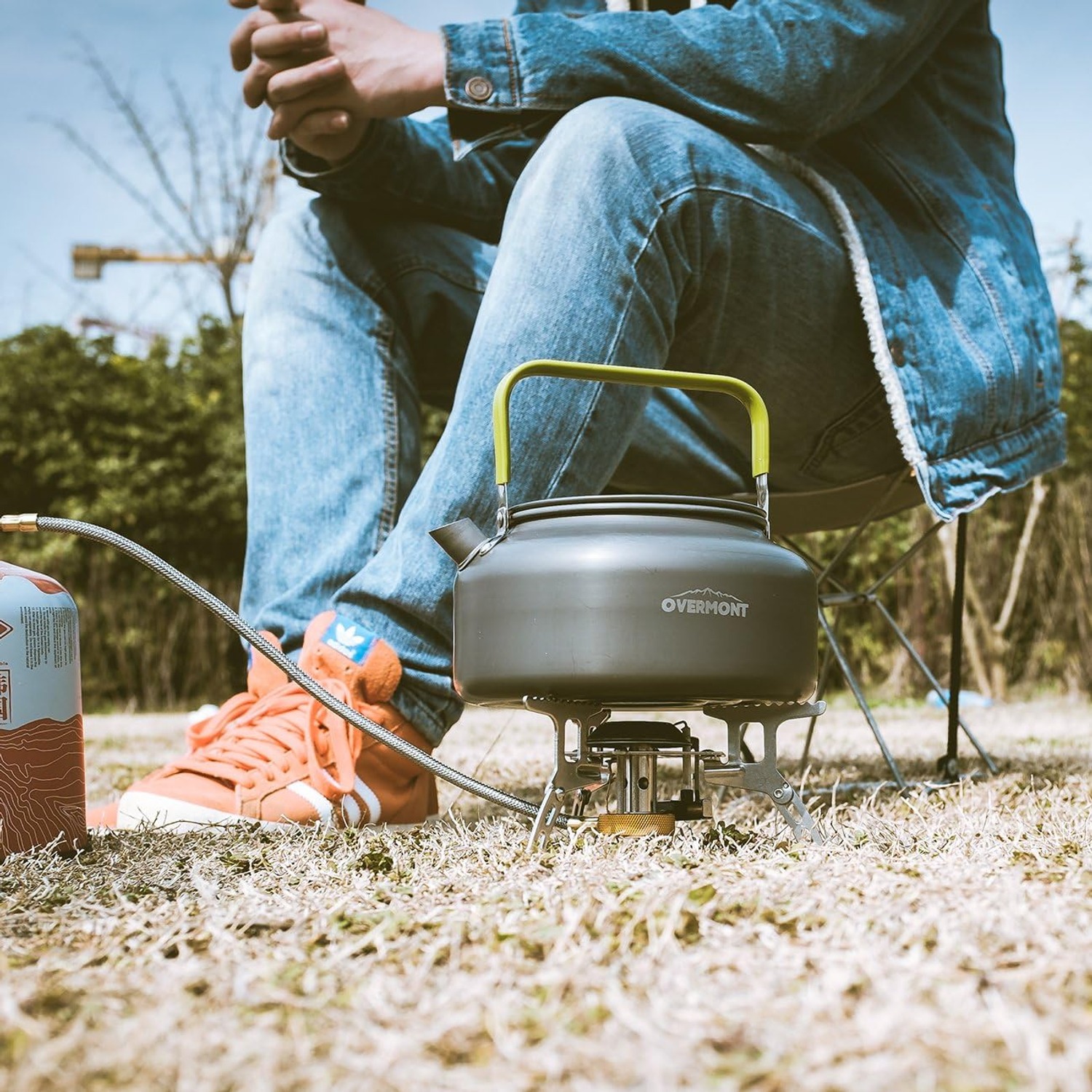
A kettle fixes all of this by doing one job properly. It has a sealed shape that holds heat in, a spout that gives you a controlled pour into a narrow mug, and a handle that keeps your hand away from the hot body. On a cold morning, that difference is the gap between coffee in four minutes and coffee in fifteen, with a burn on your thumb.
The trouble is that camping kettles range from tiny titanium cups to heavy enamel pots meant for a static site. Picking the right one comes down to a handful of practical decisions, and none of them are complicated once you know what to look at.
How an aluminum camp kettle works
Aluminum conducts heat quickly. That is the whole reason it has been the default camp cookware metal for a century. Put an aluminum body over a flame and the heat moves through the metal and into the water fast, with very little waiting around for the vessel itself to warm up.
The trade-off is that aluminum is soft compared to steel. It will dent if you drop it on rock, and the outside will discolour over a campfire. Neither of those stops it working. A dented, soot-black kettle boils exactly as well as a shiny new one, which is why so many well-used camp kits contain a kettle that looks like it has been through a war.
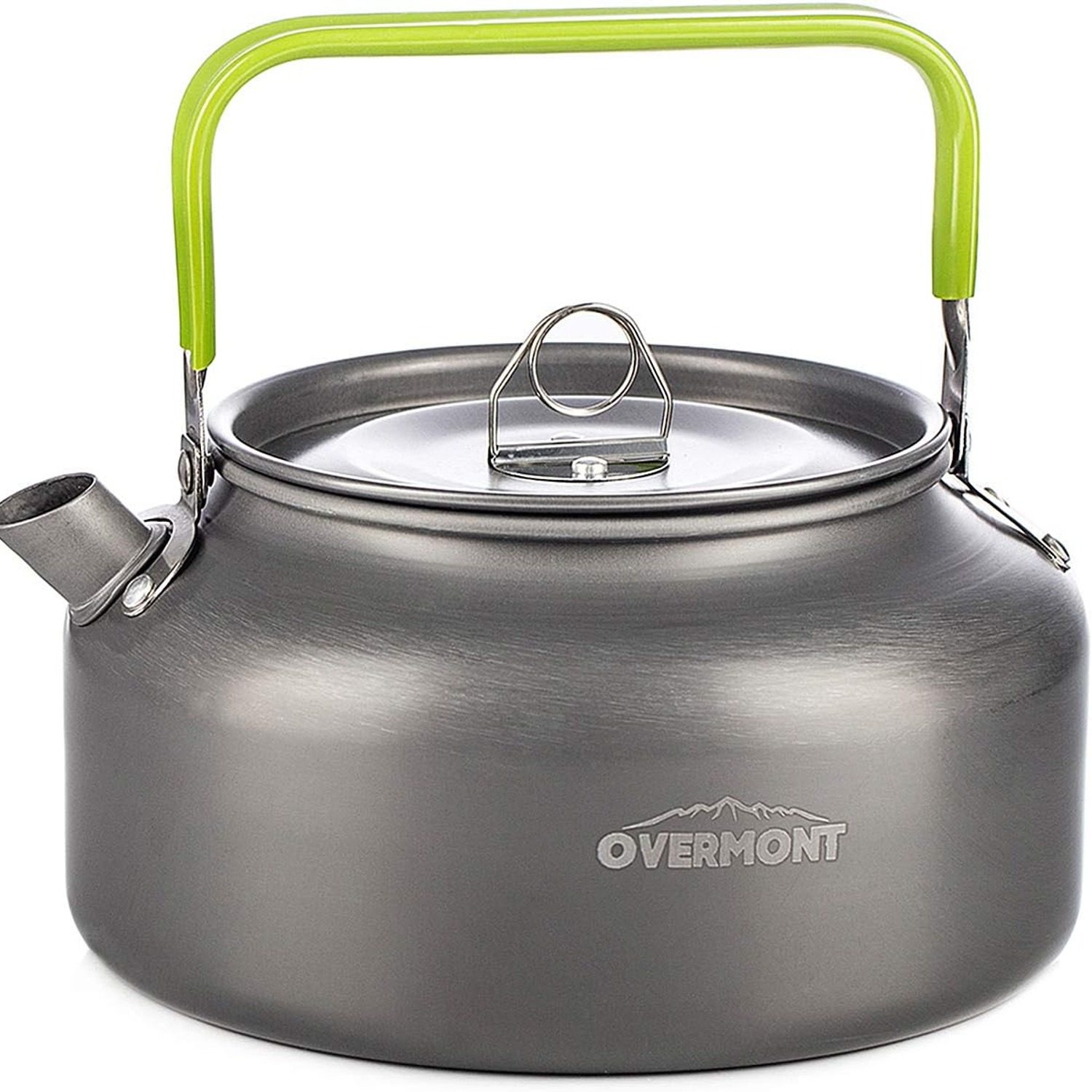
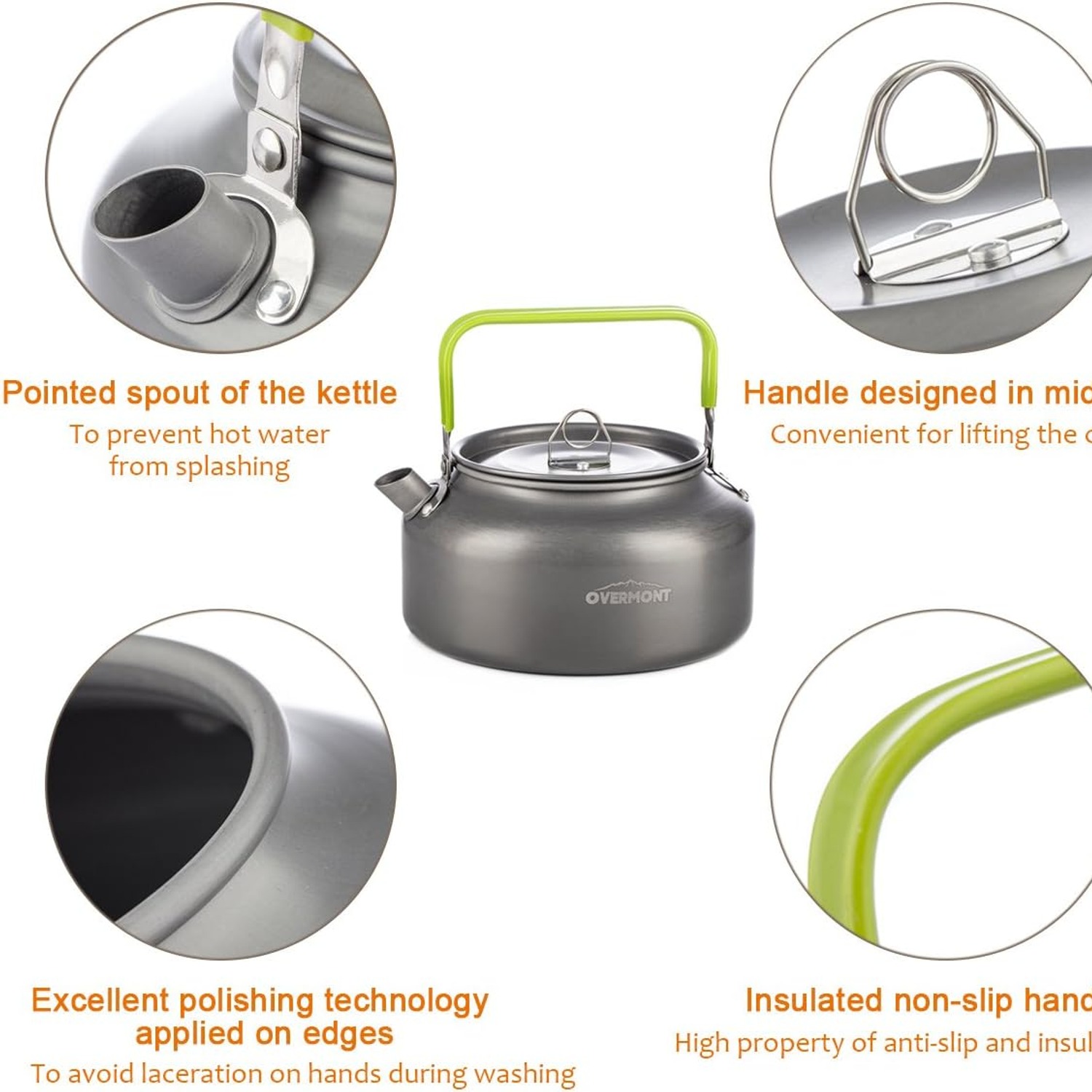
This particular model weighs 318 grams with a 1.2 liter capacity. That is a good ratio. You are carrying very little metal for a decent amount of water. The lid is stainless steel, which handles the repeated heating and the grip of fingers better than a thinner material would, and the handle material is silicone so there is something comfortable to hold.
Then there is the whistle. The spout produces a sound once steam starts moving through it at a boil. It is a genuinely useful feature in camp because camp is full of distractions. You are hammering a peg, finding the mugs, telling someone to stop poking the fire. A whistle means you do not have to keep one eye on the stove the whole time.
Who this size suits
The 1.2 liter capacity is the sweet spot for small groups. One fill gives you two generous mugs of coffee plus water left for rinsing, or enough for a couple of freeze-dried meals. Solo walkers sometimes want something smaller, and families of five will boil twice, but for one or two people it is close to ideal.
Think about where you actually camp. If you drive to a site and unload a crate, weight barely matters and you could carry something much heavier. If you walk in, every hundred grams counts, and at 318 grams this sits comfortably in the territory of the best hiking kettle options without you having to spend titanium money.
It also works for people who are not camping at all. Van travellers, festival goers, people with a gas hob and a habit of power cuts, anyone running a workshop or a boat. Hot water is hot water, and a kettle that works on any flame has a long list of uses.
How to choose between kettles
Start with capacity, because it drives everything else. Under a liter is personal size. Between one and one and a half liters covers pairs and small groups. Above two liters you are into base camp territory where you will be setting up rather than carrying.
Next look at weight relative to that capacity. A kettle that holds 1.2 liters and weighs under 350 grams is doing well. Compare before you buy, because some kettles carry a surprising amount of dead weight in thick bases and heavy lids.
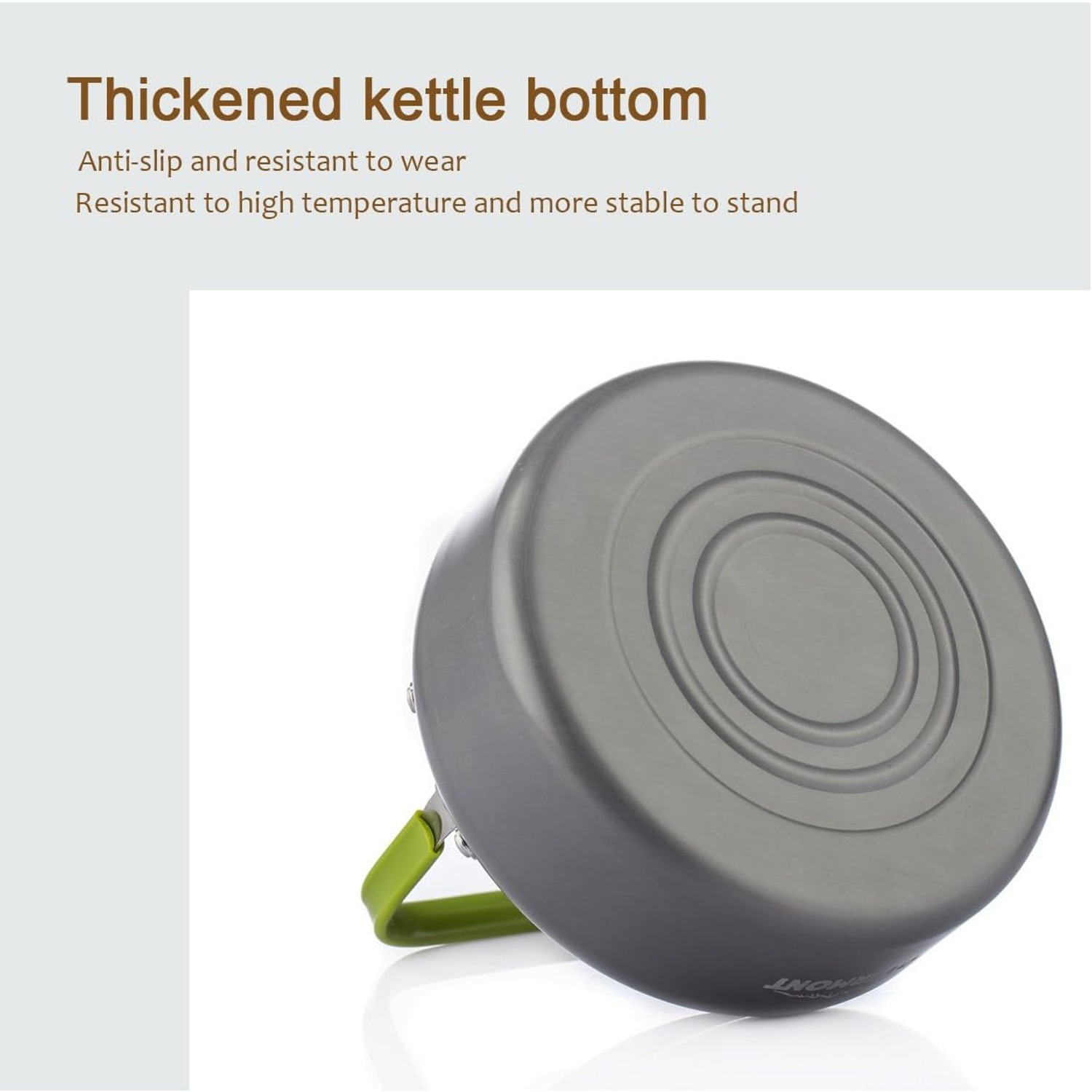
Then check the shape of the base. A wide, flat base makes contact with a burner properly and sits stable on a grate. A narrow base is more likely to tip when it is full, which is a problem you only need to have once. The 17 centimetre footprint here is on the wide, stable side.
Pay attention to the handle. Bare metal handles get hot. Something with silicone or another insulating material on the grip makes everyday use much more pleasant, especially if you are pouring with cold hands in the early morning.
Finally, decide whether you want a whistle. Some people find it unnecessary and prefer the quiet. Most people who have camped with one keep buying them. It is a small feature that changes how you use the kettle.
Living with it day to day
The one rule to remember is hand wash only. This kettle is not dishwasher safe, and aluminum in a dishwasher tends to come out looking dull and chalky anyway. Warm water, mild detergent and a soft sponge are all it needs.
Let it cool first. Pouring cold water into a very hot kettle is hard on the metal and sends a cloud of steam at your face. Give it ten minutes, then wash.
Hard water leaves a white mineral layer inside over time. If that builds up, fill it with a mix of water and white vinegar, bring it to a boil, let it sit, then rinse it out two or three times. Do this once a season and the inside stays clean.
Dry everything properly before packing. Water trapped in a sealed kettle in a dark kit box for a month is how you end up with a smell. Store it with the lid off or just resting on, so air can move.
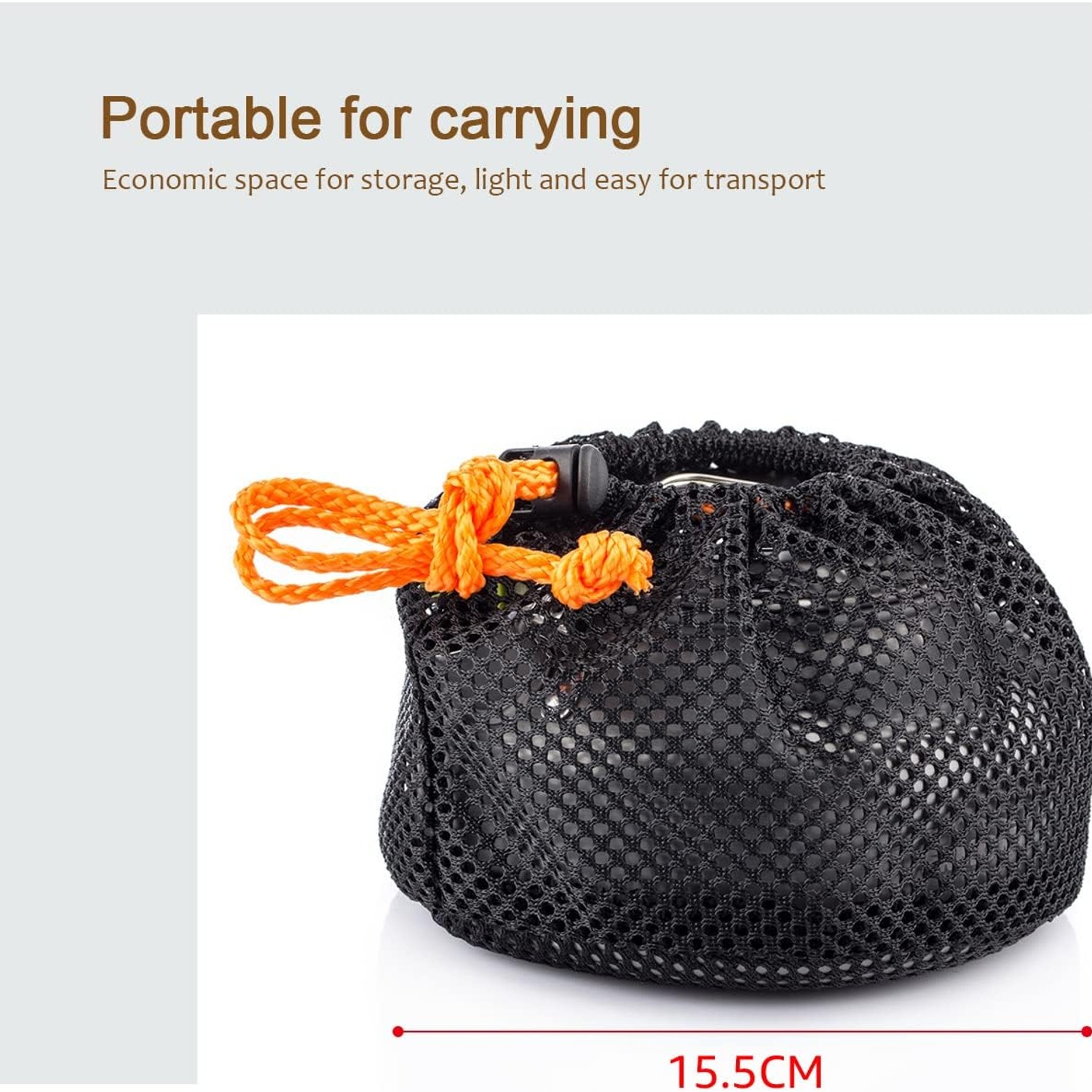
The outside will go black. Accept it. If you want to keep the soot off the rest of your gear, put the kettle in a stuff sack or wrap it in a tea towel. Some people keep a dedicated cloth bag that lives permanently sooty, which is the practical answer.
A few things to pack with it
A kettle is better with a couple of companions. A small pour-over cone or a press turns it into the best camping tea kettle and coffee setup in one. A folding grill gives you a flat, stable surface over a fire. A cheap pair of work gloves makes handling anything near coals less of a gamble.
If you are packing light, use the empty kettle as storage. A gas canister, a folded cloth and a couple of tea bags all fit inside, which saves space and stops the kettle rattling against everything else in your pack.
The short version
If you want hot water outdoors without a fuss, a dedicated kettle beats improvising with a pot. This one holds 1.2 liters, weighs 318 grams, has an aluminum body with a stainless steel lid and a silicone handle, and whistles when the water is ready. It measures 17 x 17 x 10 centimeters, so it packs easily.
It suits one or two people, works on camp stoves and open fires, and asks only that you wash it by hand and dry it before it goes away. Do that and it will keep making coffee for a very long time.