
The complete guide
How to Choose and Use an Insulated Reflective Survival Tarp
The problem with being cold and wet
Most uncomfortable nights outdoors come down to two things. Water gets to you from below or above, and heat leaves you faster than your body can replace it. A sleeping bag handles part of that. A tent handles another part. But there are plenty of moments that fall between the two, like a sudden storm on a day walk, a flat tire on a cold road at night, a damp patch of ground where you need to sit for an hour, or a hot afternoon with no shade in sight.
That gap is what a survival tarp fills. It is one flat sheet that does several jobs badly enough to be light and well enough to be useful. The Arcturus XL version takes that idea and makes it bigger and tougher than the thin foil blankets most people have stuffed in a glovebox.
How a reflective tarp actually works
Heat leaves your body three ways. It conducts into whatever you touch, it convects away in moving air, and it radiates off you as infrared. A reflective surface deals with that third one. Mylar, which is a polyester film coated with a microscopically thin layer of aluminum, bounces a good share of radiant heat back toward its source.
Point the shiny face at yourself and you slow the heat loss. Point it at a fire and it pushes some of that warmth back in your direction. Turn it around and face it at the sun and the same property works in reverse, keeping heat out rather than in. That one surface giving you both options is the reason a reflective sheet beats an ordinary tarp for anything weather related.
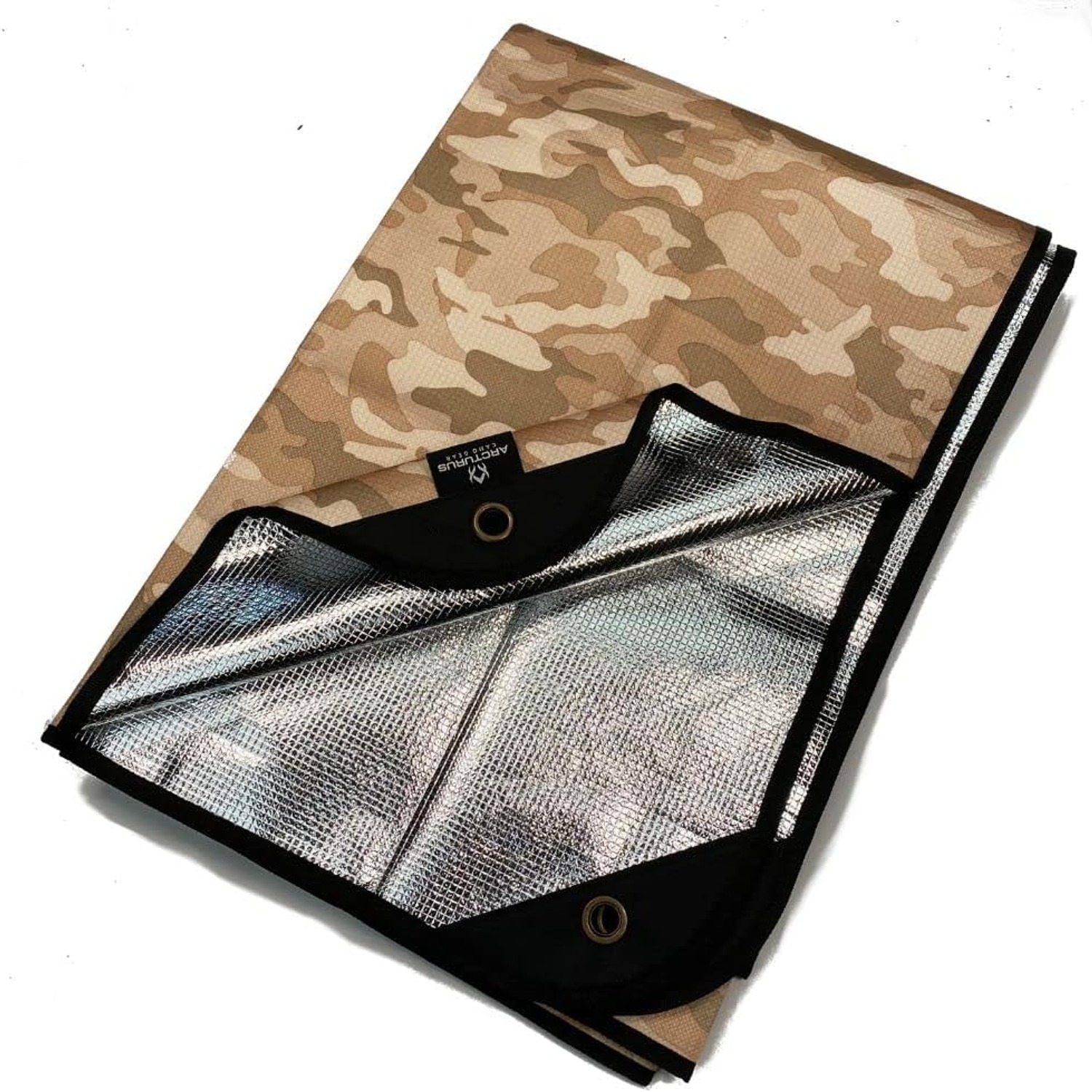
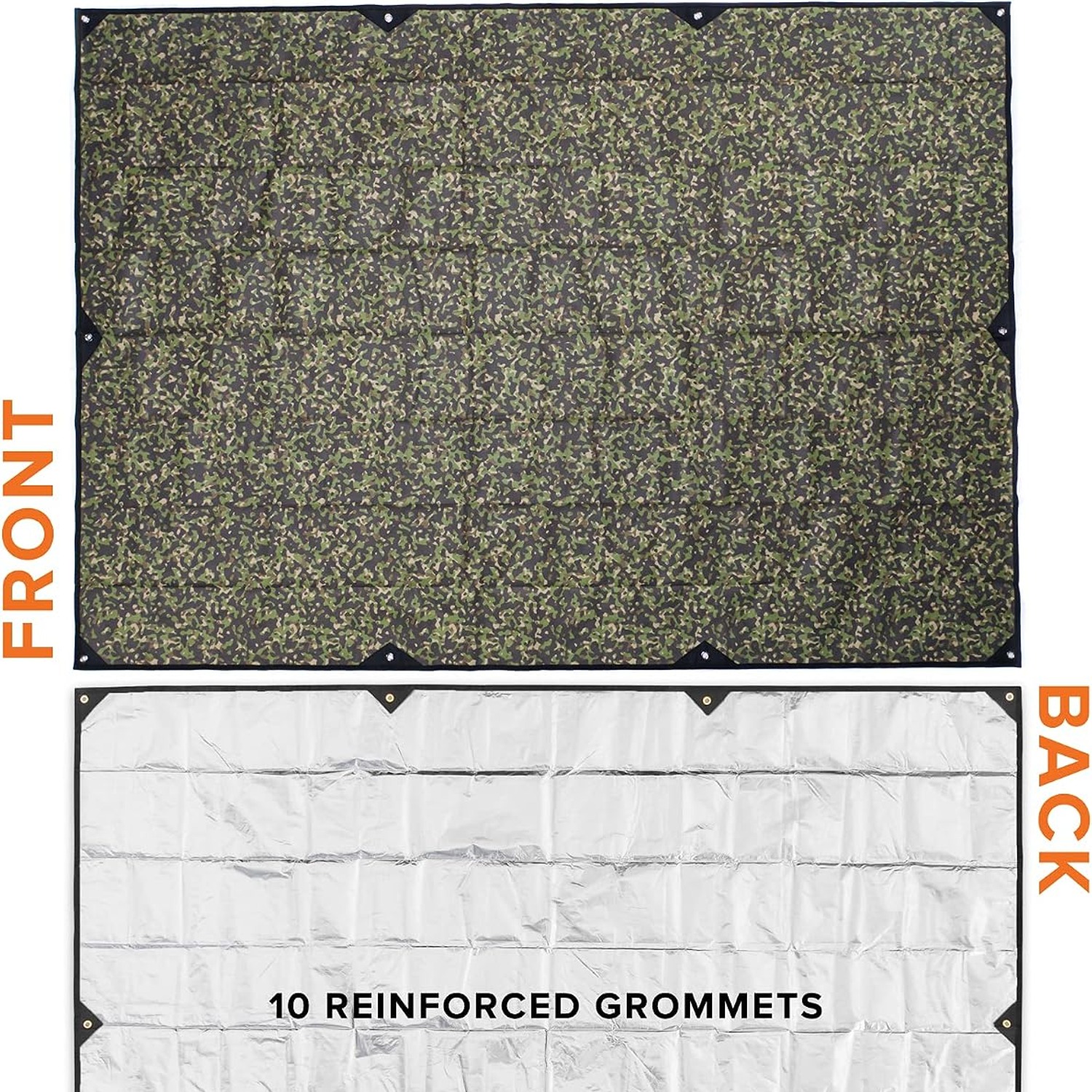
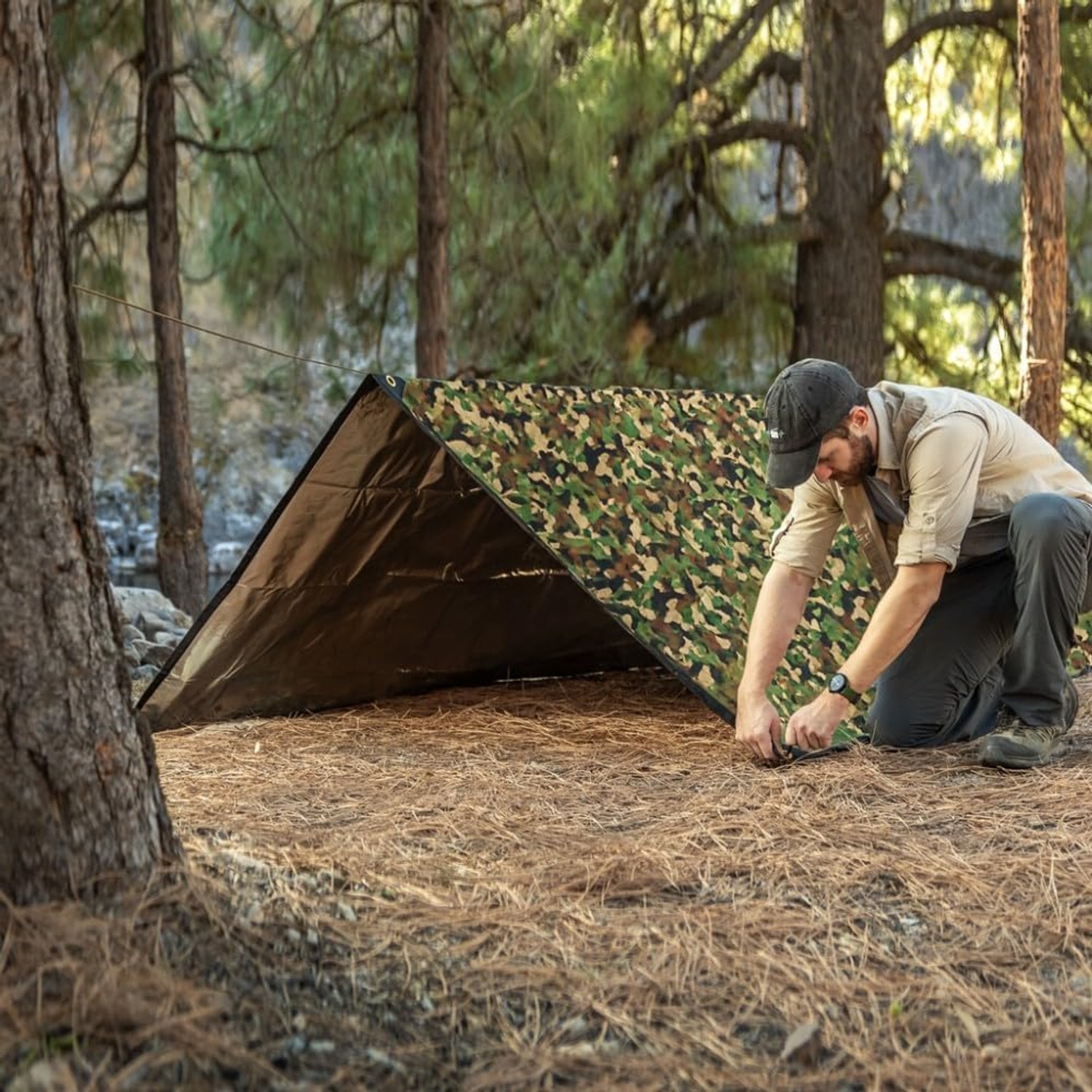
The other side of this tarp is two layers of polypropylene. It is not glamorous, but it is the layer that stops groundwater soaking through while you sit on it and sheds rain when you string it up. Together you get a thermal face and a weather face on the same sheet, with ten reinforced grommets so you can decide which one points where.
Where the grommets earn their keep
Grommets are where cheap tarps fail. A thin metal ring punched through unsupported fabric tears out the first time you load it in wind. This one uses claw-style grommets that grip reinforced nylon patches instead of crushing into the material. There are ten of them spread around the edges, which gives you real options for rigging.
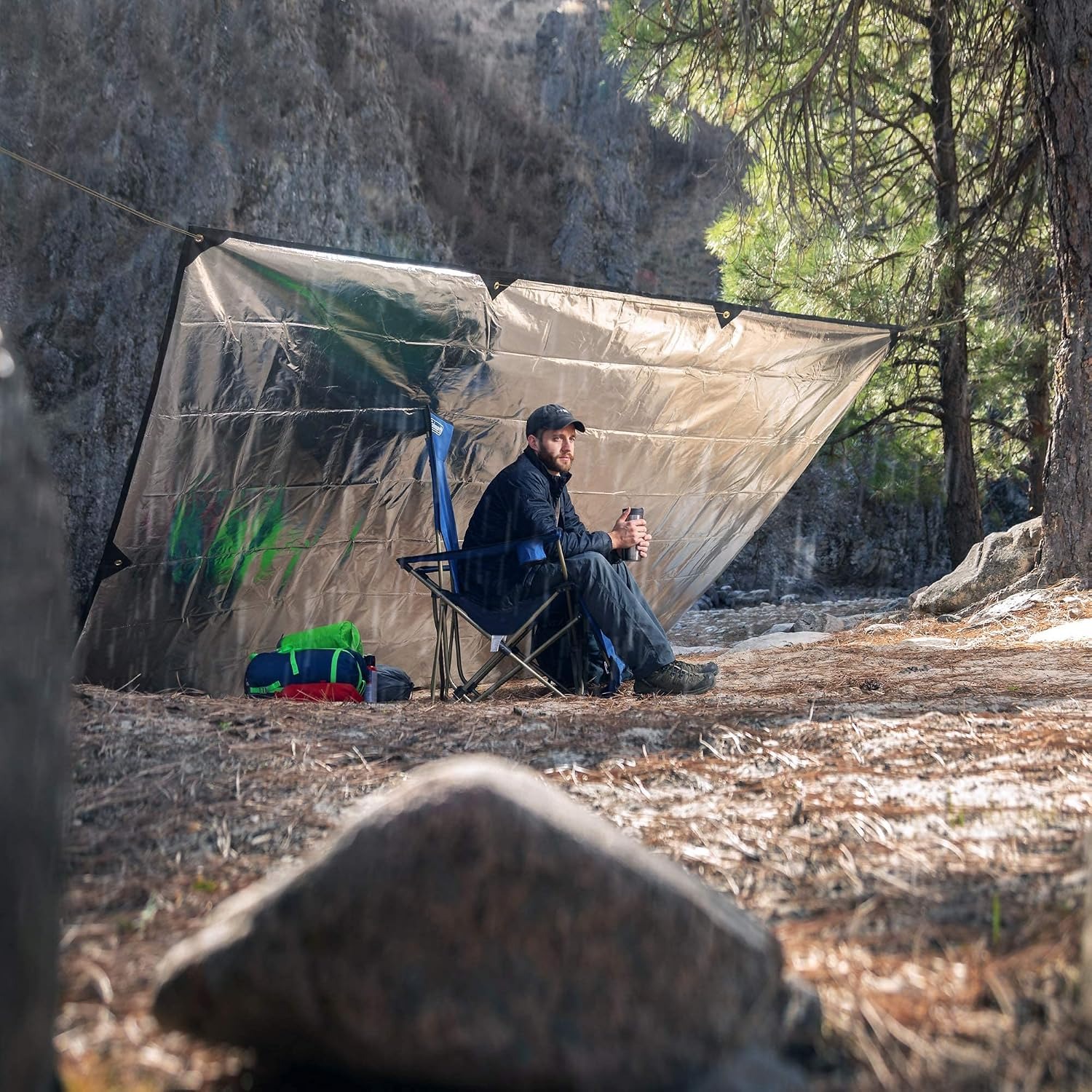
A few setups cover most needs. An A-frame, with a ridgeline between two trees and the edges pegged out, gives you a simple roof. A lean-to, with one edge high and the other staked low, blocks wind from one direction and reflects fire heat back if you face the Mylar in. A flat fly over a picnic table keeps sun or drizzle off a group. Rolled and tied along one side, it becomes a windbreak at the beach.
Whatever you build, spread the load. Tension across four or six grommets rather than hanging everything from one, and the sheet sits flatter and lasts longer.
Who this suits
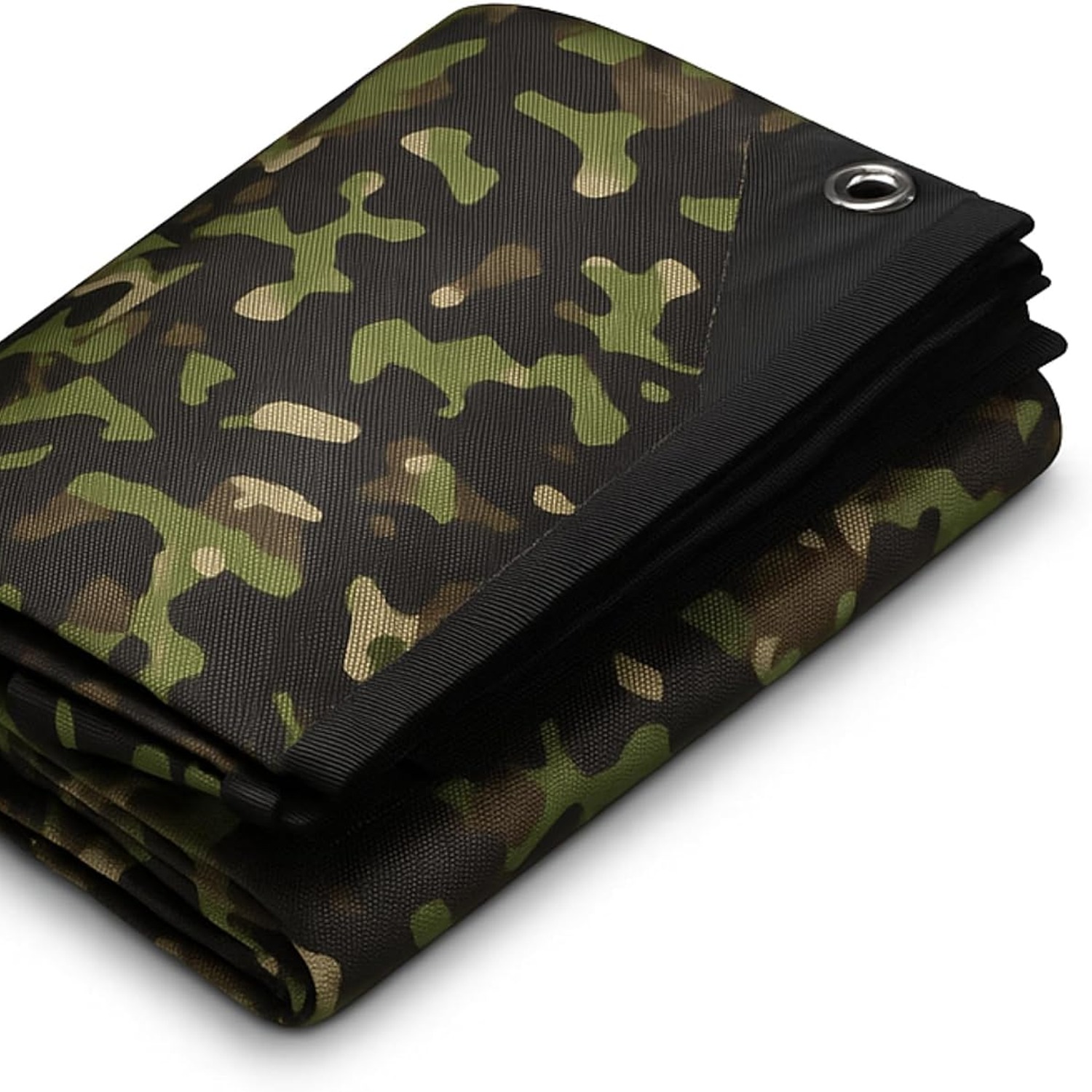
Campers who already own a tent still find a use for a sheet like this, usually as a clean porch floor, an extra fly or a cover over gear left outside. Hunters like the woodland camo and the quiet handling, and use it as a ground sheet or a screen. Boaters keep one aboard because salt spray and sudden weather are part of the deal.
Then there are the people who never intend to camp with it at all. It lives in the trunk of a car, the back of a ute or a cupboard by the door, as part of a kit that also holds a flashlight, water and a first aid pouch. The best car trunk emergency kit tarp is the one you forgot you packed until the night you needed it.
At 1.63 kg, serious ultralight hikers may prefer a lighter silnylon fly. That is a fair call. This is a sturdier, heavier piece of kit, and the weight buys you durability and reusability a disposable foil blanket cannot offer.
How to choose between this and the alternatives
A thin emergency blanket costs very little and weighs almost nothing, but it tears in a breeze and you generally throw it away after one use. A plain poly tarp is tough and cheap, but it does nothing for radiant heat and comes in sizes that are awkward to carry. A proper tent fly is excellent at being a tent fly and not much else.
This sits in the middle. You get the thermal behaviour of a space blanket, the waterproofing of a tarp, and grommets strong enough to rig properly. If you want one item that covers warmth, rain and shade without carrying three separate things, that is the pitch.
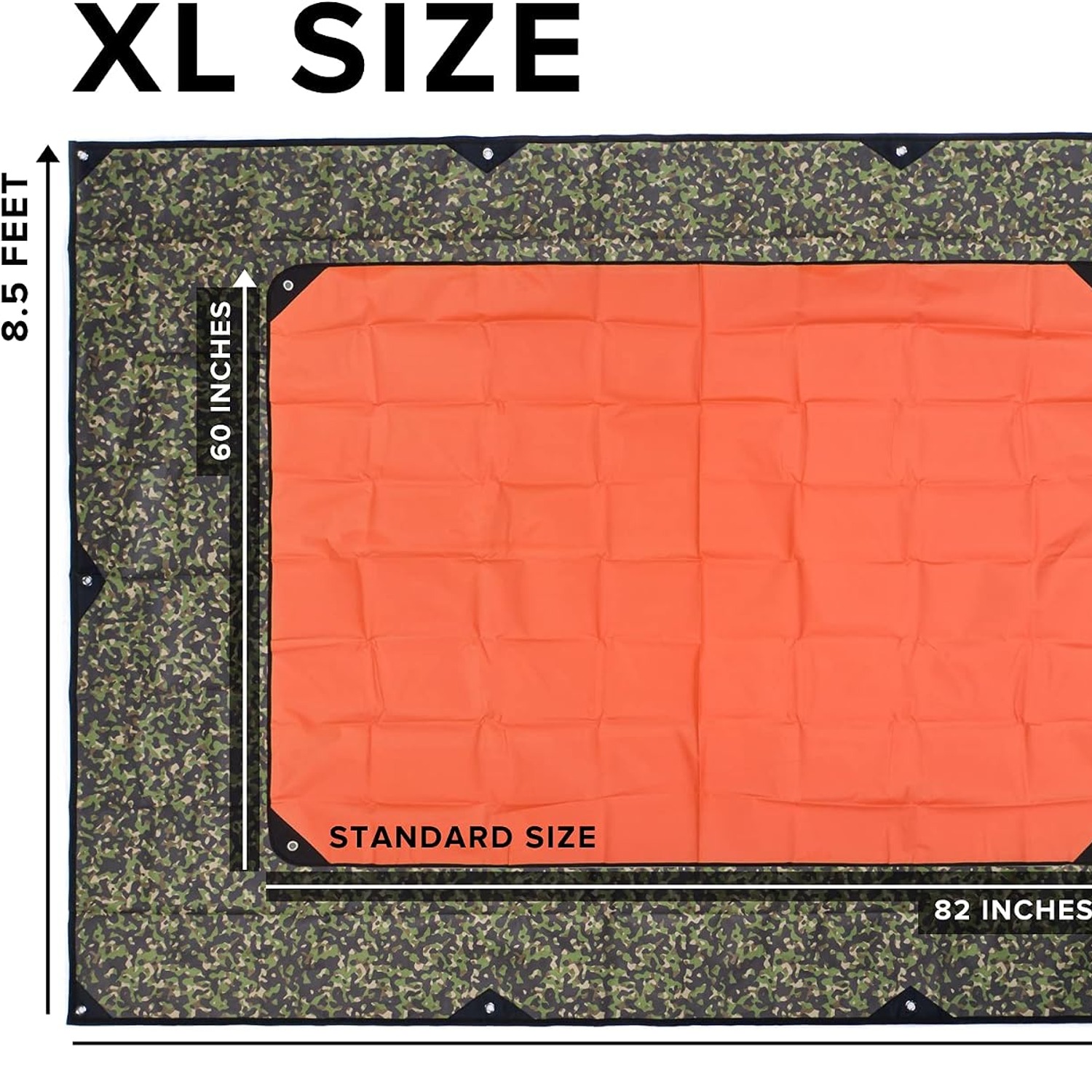
Size matters too. At 2.59 m by 1.52 m this is the extra large version, big enough for an adult to lie on with margin or to build a usable shelter roof. If you only ever want something to wrap around your shoulders in an emergency, a smaller sheet will do. If you want to actually sleep under it, bigger is better.
Getting more out of it in the field
A few habits make a real difference. Always put something between you and the ground for insulation, because a tarp blocks moisture but does not stop heat conducting into cold earth. A foam mat or even a pile of dry leaves under the sheet does more for warmth than any amount of reflective film.
Pitch with a slope. Water sitting in a dip will eventually find a weak point or simply collapse the rig. Angle one edge lower and let it run off.
Keep it away from flames. Sparks will melt Mylar and polypropylene, so position any fire at a safe distance and let the reflection do the work rather than moving the tarp closer.
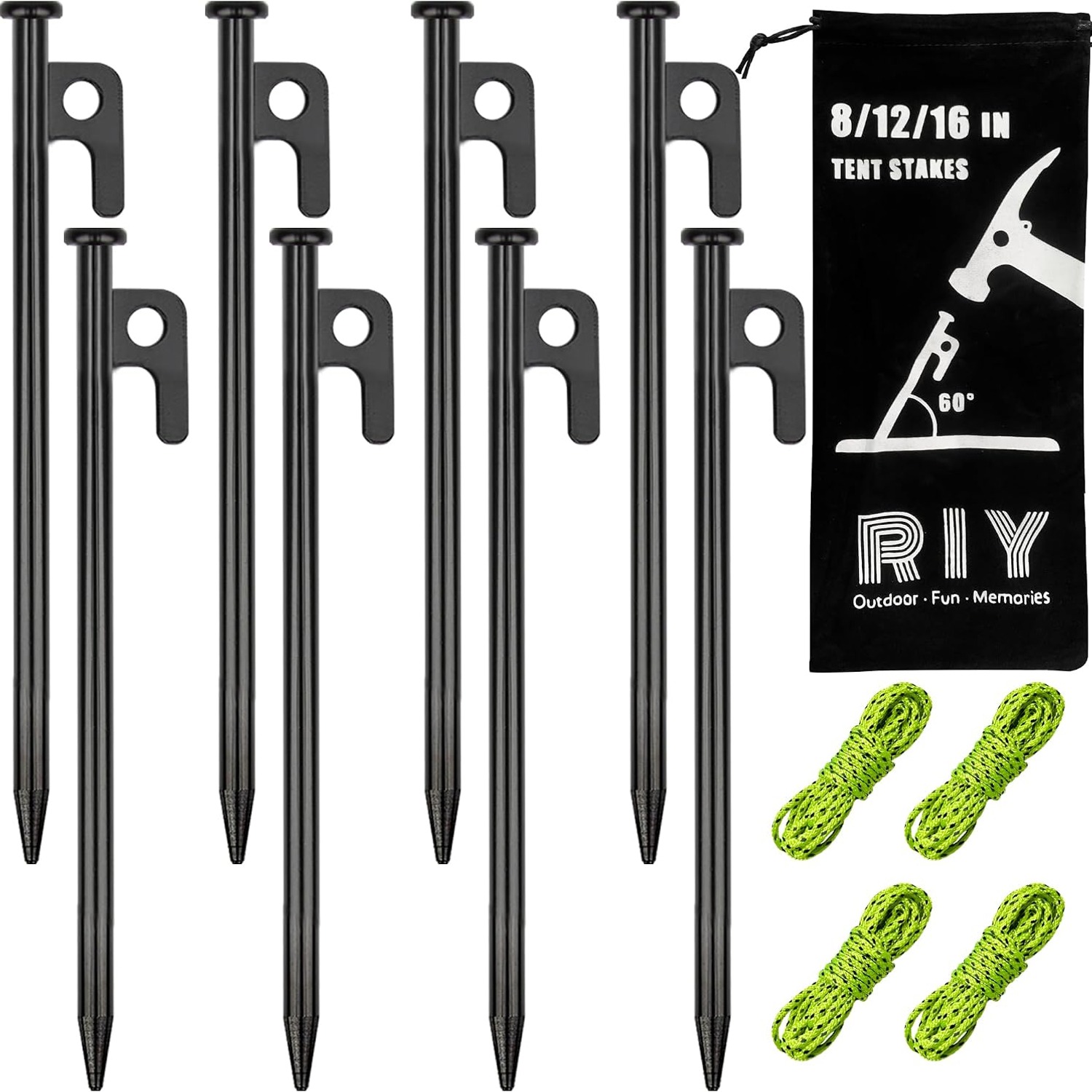
Carry a short length of spare cord. Ten grommets are only as useful as the cord you have to thread through them, and a few meters of paracord weighs nothing.
Looking after it
Care is simple. Shake off dirt before packing. If it is muddy, sponge it with cool water and a little mild soap, rinse, then let it dry fully before folding. Storing it damp is the quickest way to get a musty smell you cannot shift.
Roll rather than sharply fold where you can. Repeated hard creases in the same place are what eventually wears a reflective layer. Store it loosely in the carry bag somewhere dry and out of permanent direct sunlight, and it will be ready whenever you reach for it.
Small holes can be patched with good tarp tape on clean, dry material, applied to both faces. Treat damage near a grommet more carefully and avoid loading that point again.
The short version
This is a big, tough reflective sheet that works as a shelter, ground cover, windbreak and emergency blanket. One face reflects radiant heat in whichever direction you choose. The other face keeps water out. Ten reinforced grommets make it genuinely riggable rather than just drapeable.
It is 2.59 m by 1.52 m, weighs 1.63 kg, comes in woodland camo with a carry bag, and is built to be used again rather than binned after one night. If you want a single piece of kit that quietly covers several problems at once, this is a sensible one to own.