
The complete guide
How To Choose A Camping Cookware Set That Actually Gets Used
The problem with cooking at camp
Most people start out camping with a pot from the back of the kitchen cupboard, a frying pan that someone replaced at home, and a handful of mismatched bowls. It works, once. Then you realize the pan handle does not fold, so it jams across your boot or your pack. The pot lid rattles loose in the bag. Nothing nests, so five items take the space of ten. And when the washing up comes around, the egg you fried at 7am has welded itself to the base and you are scrubbing in cold water by torchlight.
A proper camping cookware set fixes all of that at once, not because any single piece is magic, but because the pieces are designed to live together. That is the honest case for buying a matched kit rather than assembling one.
What this set is
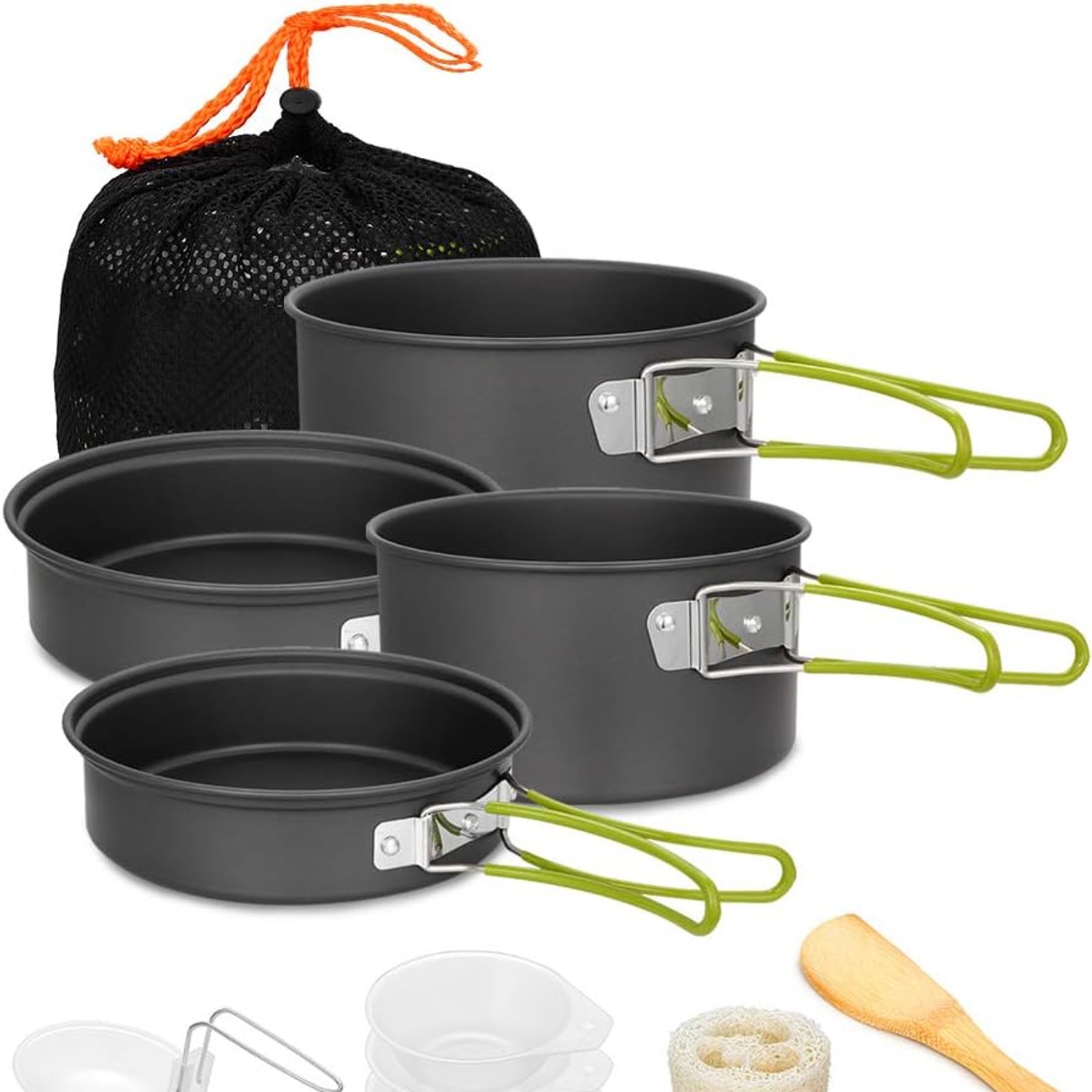
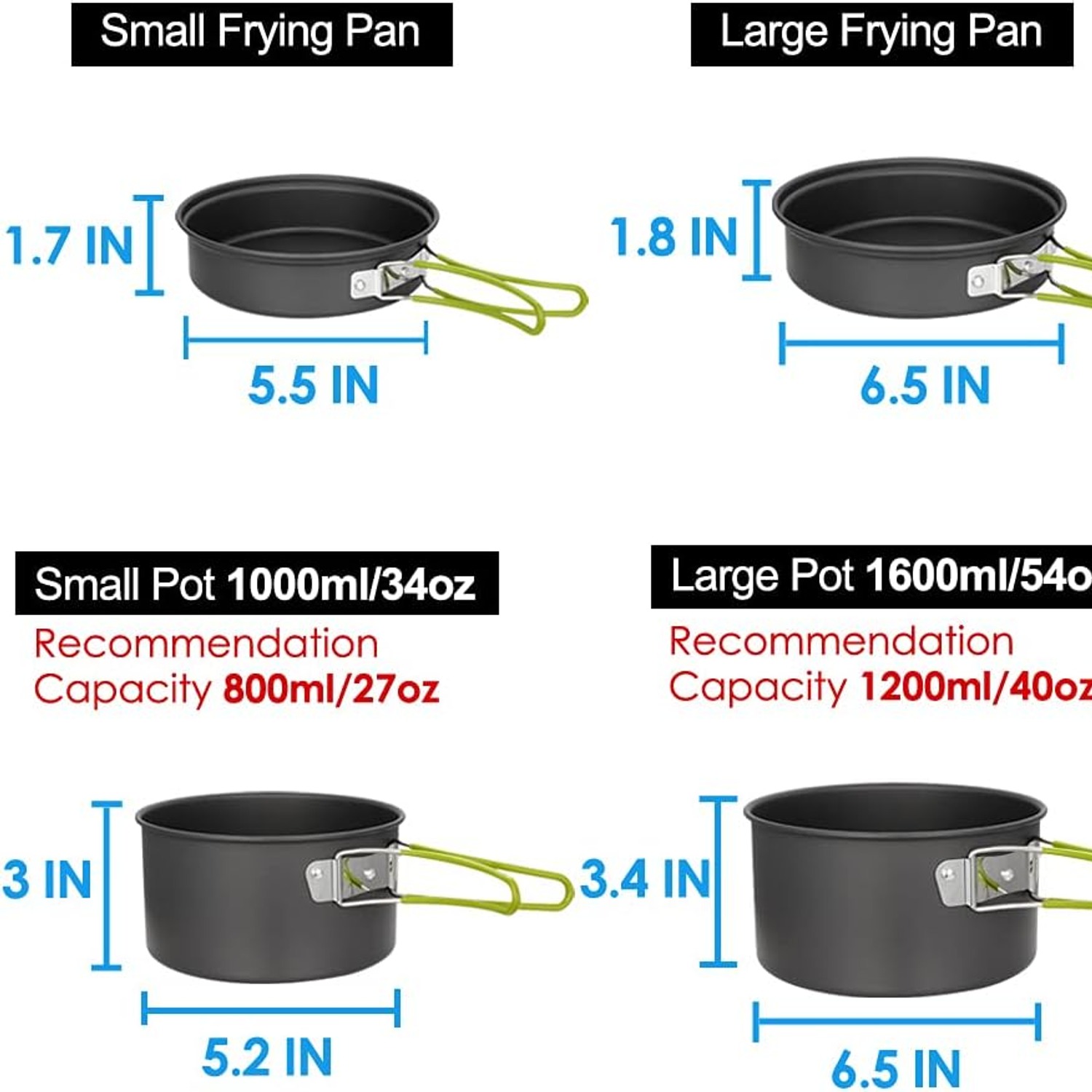
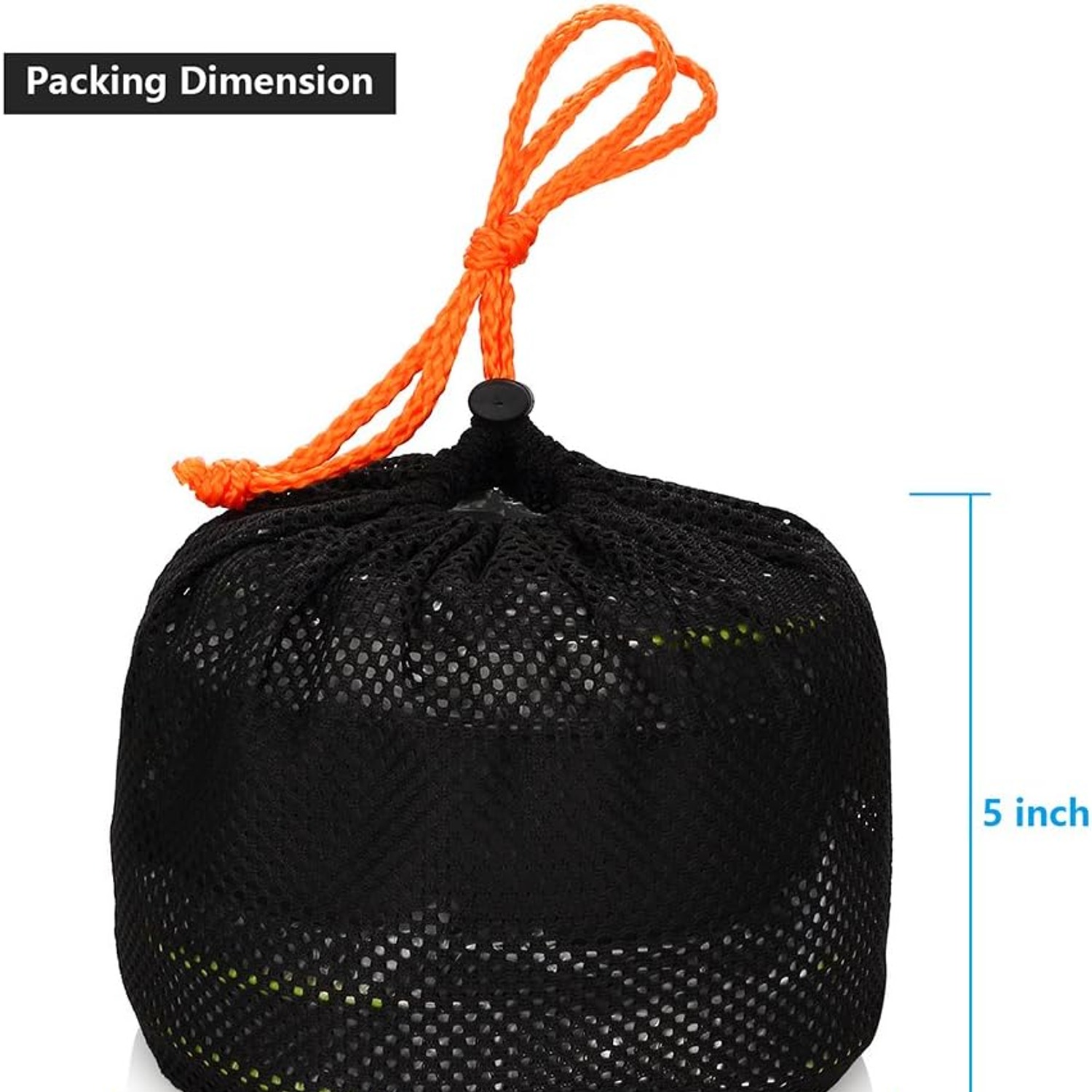
This is an eleven piece kit built around two people. You get a large pot of roughly 1.8 liters, a small pot of roughly 1 liter, a large pan, a small pan, three bowls, a soup spoon, a bamboo spoon, a cleaning sponge and a nylon mesh bag to hold the lot. Packed weight is listed at 1 kilogram.
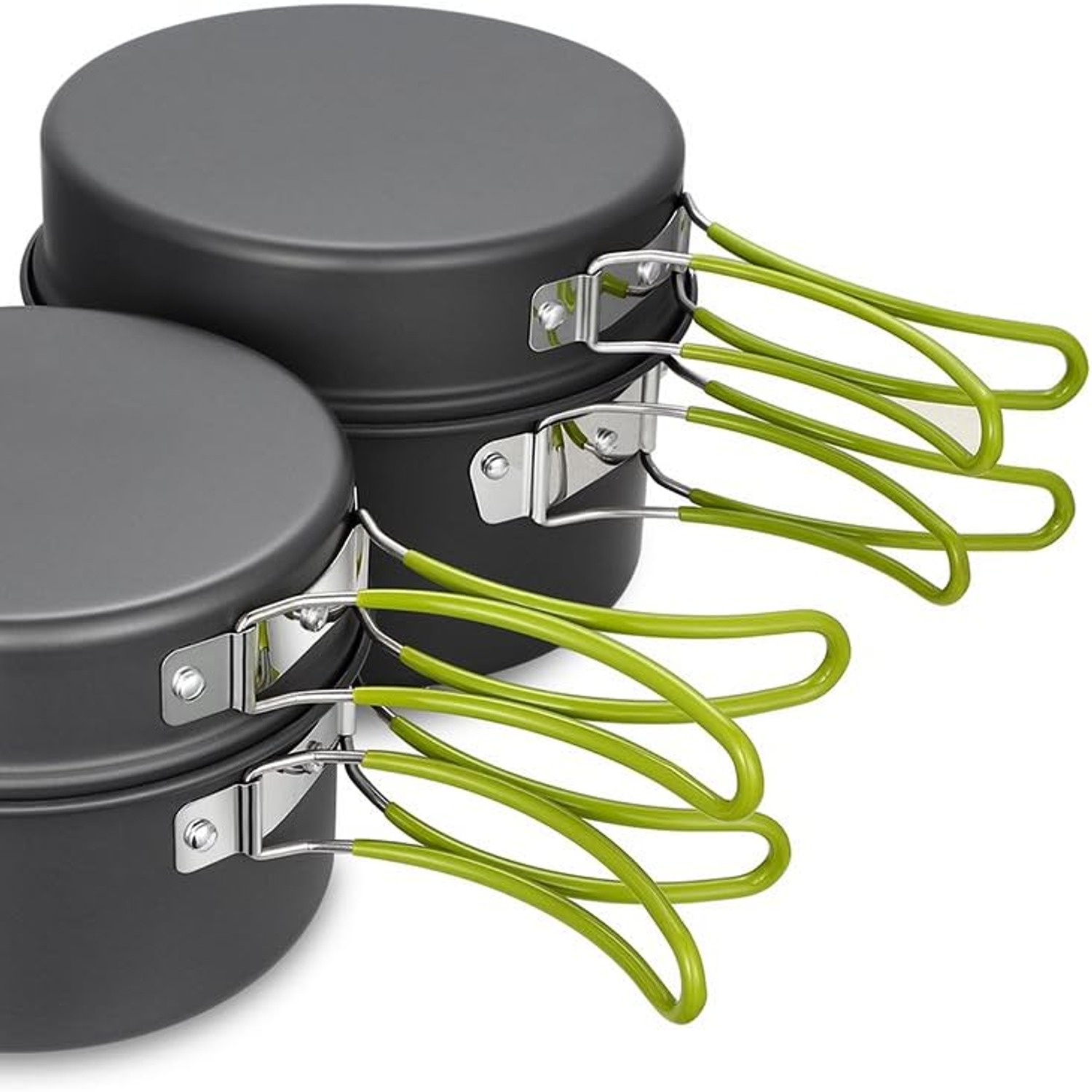
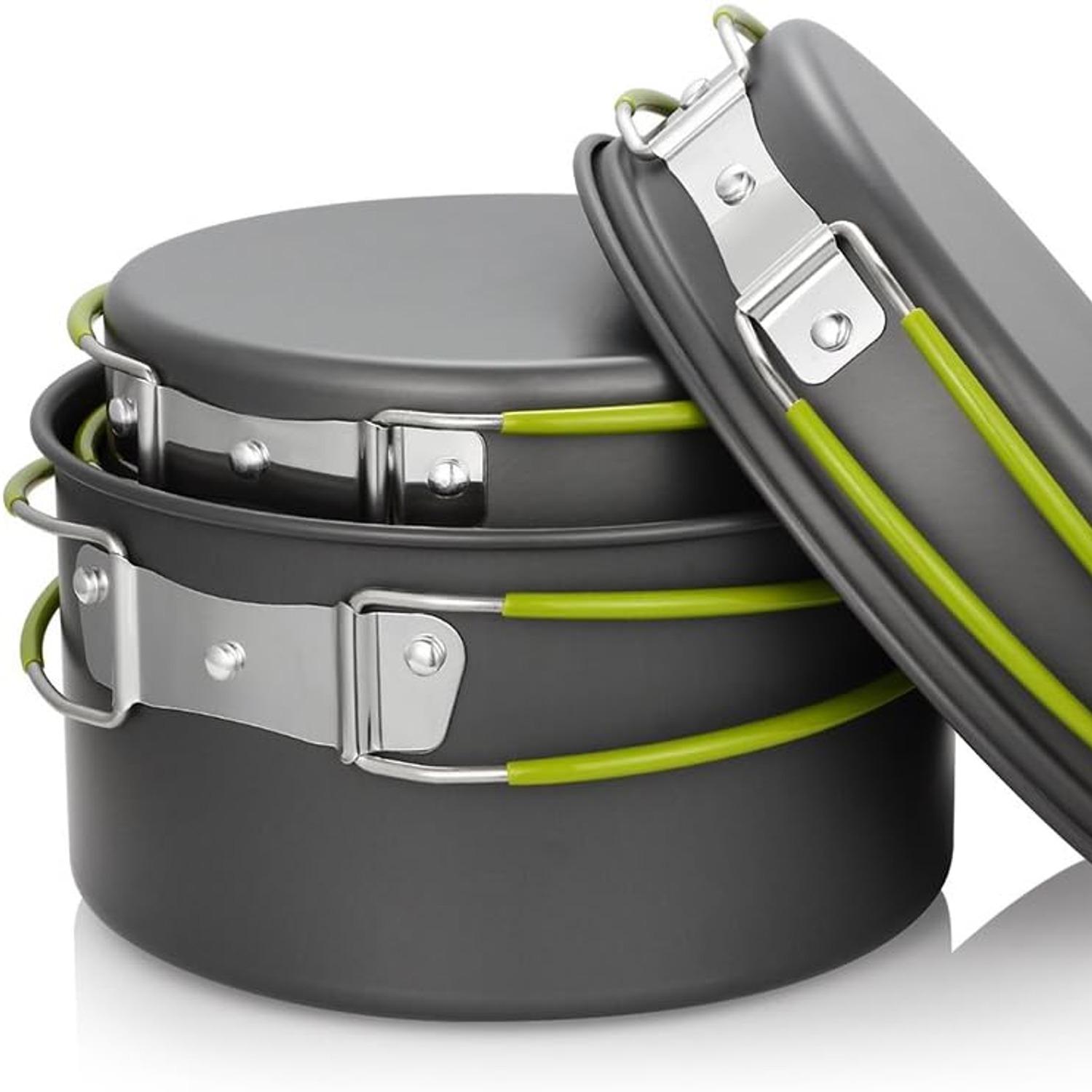
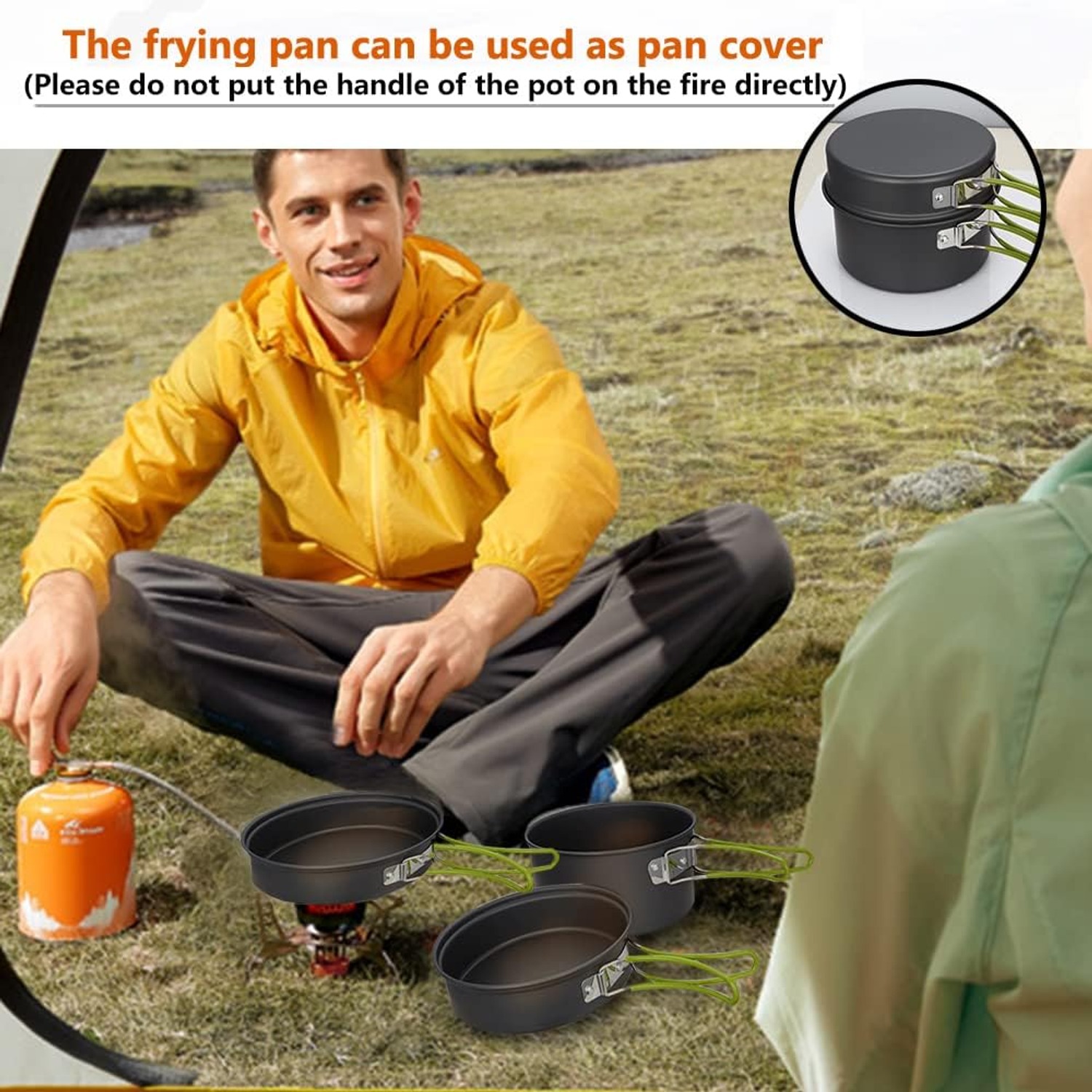
The pots and pans are aluminum with a non-stick cooking surface. The handles fold in, and they have silicone sleeves so you can lift a hot pot without burning your fingers. The pans sit on top of the pots as lids. Everything stacks into one column that slides into the bag.
Why aluminum matters more than you think
Camp cookware comes in a few materials, and each has a trade-off. Stainless steel is tough and takes abuse, but it is heavy and it heats unevenly, which means scorched rings on the base of your pot. Titanium is beautifully light and expensive, and it heats so fast that it is easy to burn things. Aluminum sits in the middle, and for most people that middle is exactly where they want to be.
The practical benefit is fuel. Aluminum moves heat quickly from the burner into the water, so a liter comes to the boil in less time. Less time means less gas. Over a four day trip that can be the difference between one canister and two, which is weight you do not carry and money you do not spend. Hard anodising the surface makes the metal harder and more resistant to wear than bare aluminum.
The non-stick question
Non-stick gets a mixed reputation outdoors, usually from people who treated it badly. Used sensibly, it is the single biggest quality of life improvement in a camp kitchen.
Here is why. Outdoors, hot water is limited and detergent runoff matters. Anything that reduces scrubbing is a real win. On a non-stick base, fried eggs slide, pancakes flip, rice lifts off and noodles do not glue themselves into the corners. A wipe with the sponge and a rinse usually finishes it.
The rules for keeping it that way are short. Use plastic, wooden or silicone utensils, which is why a bamboo spoon is in the box. Cook on low to moderate heat rather than full blast. Never heat an empty pan dry. Wash with a soft sponge and mild detergent, never steel wool or scouring powder. Before the very first cook, wash and dry the pieces, then rub a thin film of cooking oil over the surface to condition it.
Follow those and a set like this will see you through many seasons. Ignore them and you will be disappointed in a month, with any brand.
Who it suits
Two campers sharing meals is the sweet spot. Two pots means you can cook a main in one and heat a sauce or boil a brew in the other at the same time, which is how real meals get made rather than everything being a one pot stew.
Backpackers will care about the 1 kilogram packed weight and the fact that the handles fold in flat. Car campers and caravanners will care more about the mesh bag keeping everything in one place so the cutlery drawer does not become a lottery. Van lifers get a compact camp kitchen kit that lives in a cupboard rather than sprawling across three. Anglers, four wheel drivers and people with a beach shack all fall into the same bracket, where a second small kitchen is handy and a full set of home cookware is overkill.
Where it is less suitable is a group of five or six. The pot capacities simply are not there. If you regularly cook for a crowd, look at larger pots and plan on fewer, bigger pieces instead.
How to judge any camp cook set
A few things are worth checking before you buy any kit, this one included.
Capacity first. Look at liters, not at the piece count. Eleven pieces sounds impressive, but what matters is whether 1.8 liters will cook the dinner you actually eat. For two people and a one pot meal, it will.
Nesting second. If the pieces do not stack, the set is just loose cookware in a bag. Check that the pans double as lids and that the handles fold rather than being fixed.
Handles third. Fixed handles are the main reason camp cookware does not fit anywhere. Folding handles with a grip sleeve are the standard to look for in a good non stick camping pots set.
Then weight, and be realistic about it. If you are walking in, every hundred grams counts. If you are driving to a site twenty meters from the car, weight matters far less than how tidily the kit stores.
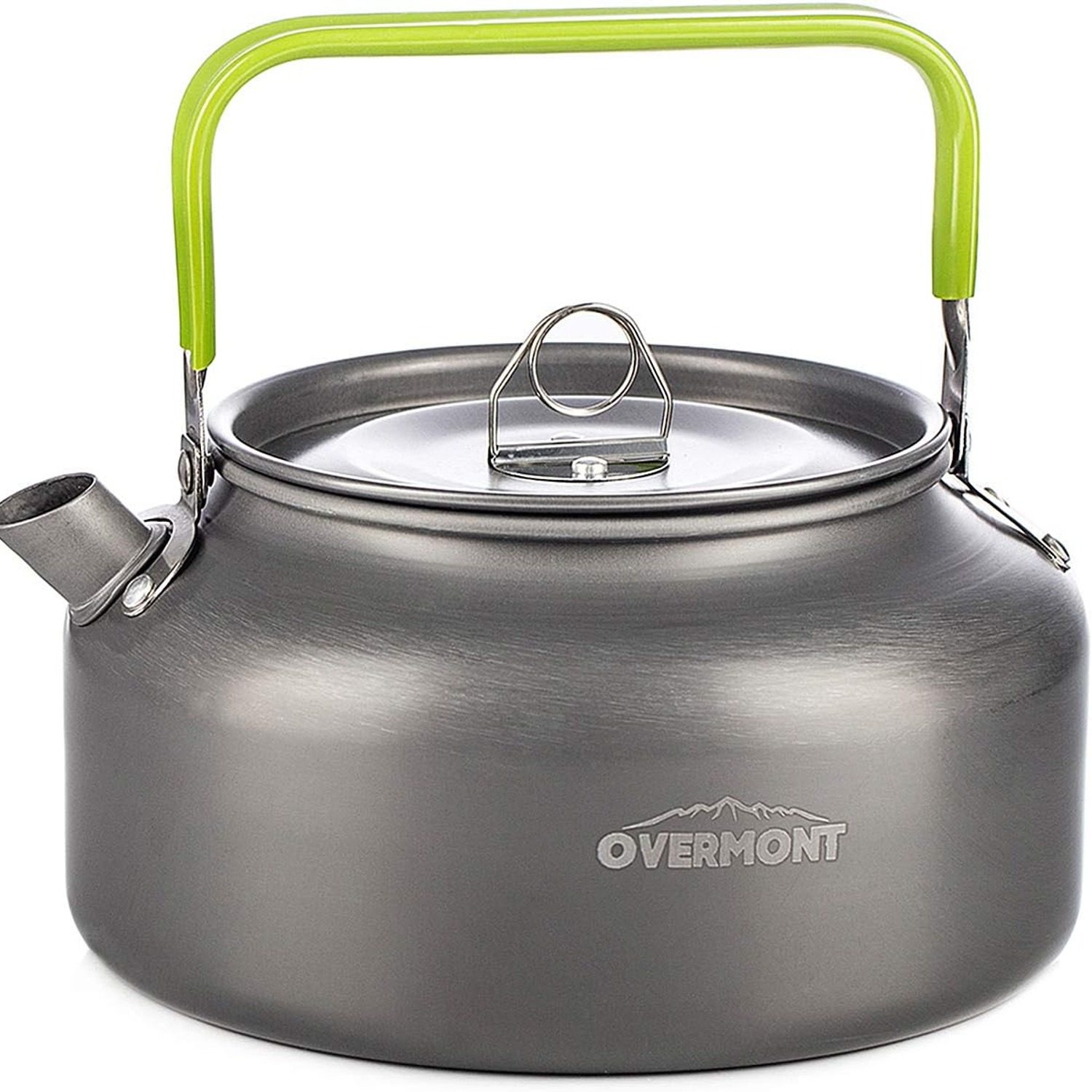
Finally, think about what is missing. This set has no kettle, no plates and no cutlery beyond two serving spoons. Boiling water in a pot works fine, and bowls beat plates outdoors because food stays put on uneven ground. But you will want to pack your own eating cutlery and a mug each.
Living with it on a trip
A few habits make the kit work better. Set the stove on flat ground and keep the flame under the base rather than licking up the sides, so the handles stay out of the heat. If you are cooking on an open fire, be extra careful, because fire heat is harder to control and the handles are not meant to sit in flame.
Wash as you go rather than stacking dirty pots. Hot food comes off easily, cold food does not. Let everything dry properly before you nest it, and the mesh bag will help by letting air through. Damp gear stored in a sealed pouch is how smells start.
Do not store leftovers in the pots overnight. Move food into a sealed container, clean the pots and put them away. Acidic food left sitting in any aluminum cookware is best avoided.
The short version
If you camp with one other person and you are tired of mismatched gear, this is the kind of kit that quietly solves the problem. Two pots and two pans in light aluminum with a non-stick surface. Three bowls and two spoons so nobody eats out of the pot. Folding handles, pans that double as lids, and a mesh bag that keeps the whole stack together at 1 kilogram packed.
Treat the non-stick gently, cook on moderate heat, hand wash with a soft sponge, and keep the handles away from flame. Do that and you will get years of hot breakfasts out of a bag that takes up less room than a pair of boots.