
The complete guide
How to Choose a Soft Sided Cooler Bag That Actually Stays Cold
The problem with most cooler bags
You know the pattern. You buy a cooler bag, you pack it with ice, and four hours later the drinks are cool rather than cold. Open it at the bottom of the esky and there is a slick of water that has worked its way through a seam. By the time you get home the bag smells faintly of whatever leaked, and the fabric has taken on a damp heaviness that never quite goes away.
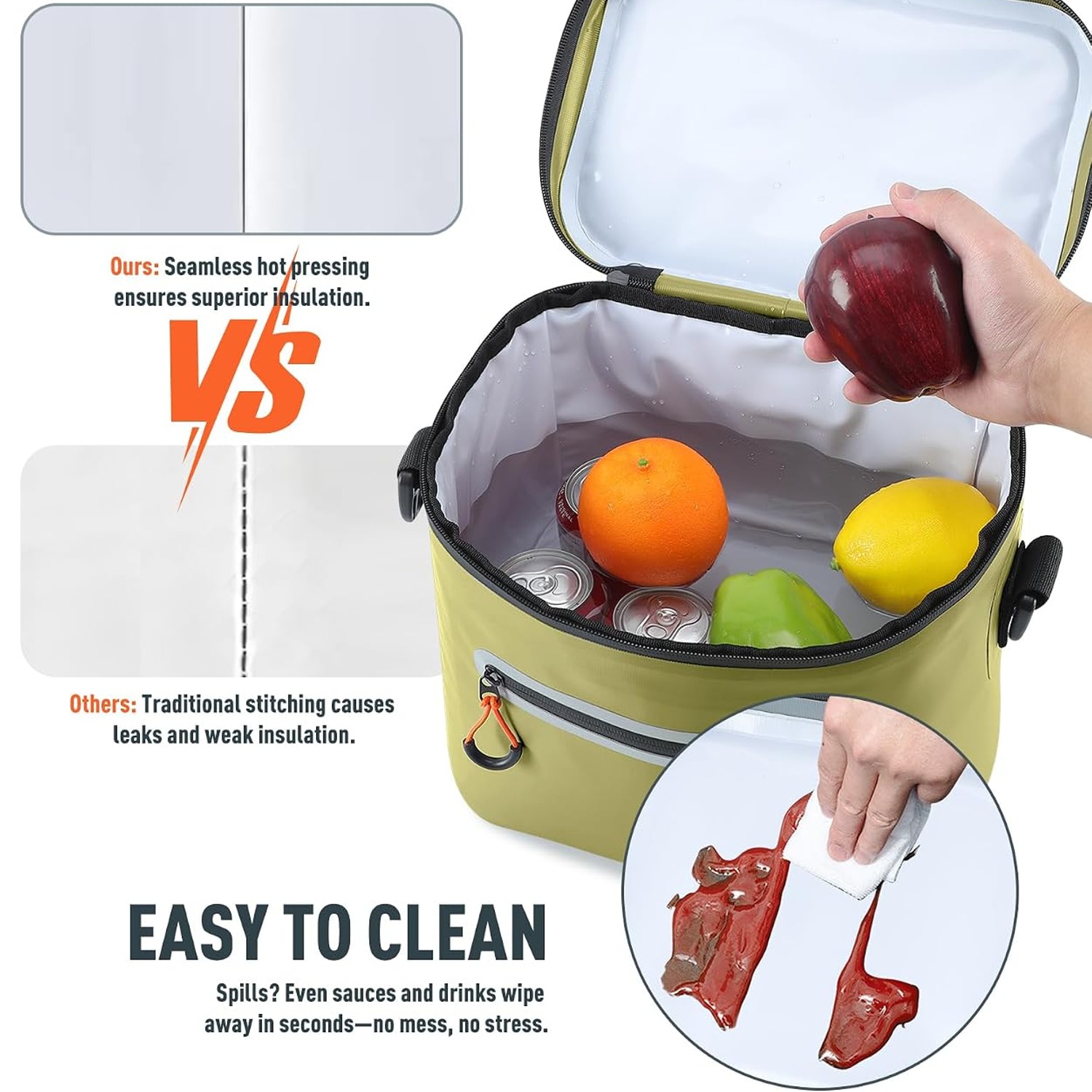
That failure is almost never about the amount of insulation. It is about seams, thin spots and liners that are water resistant rather than genuinely sealed. A cooler is a box of cold air, and cold air escapes through the weakest point in the wall. Add a dozen stitched-on pockets and you have added a dozen weak points.
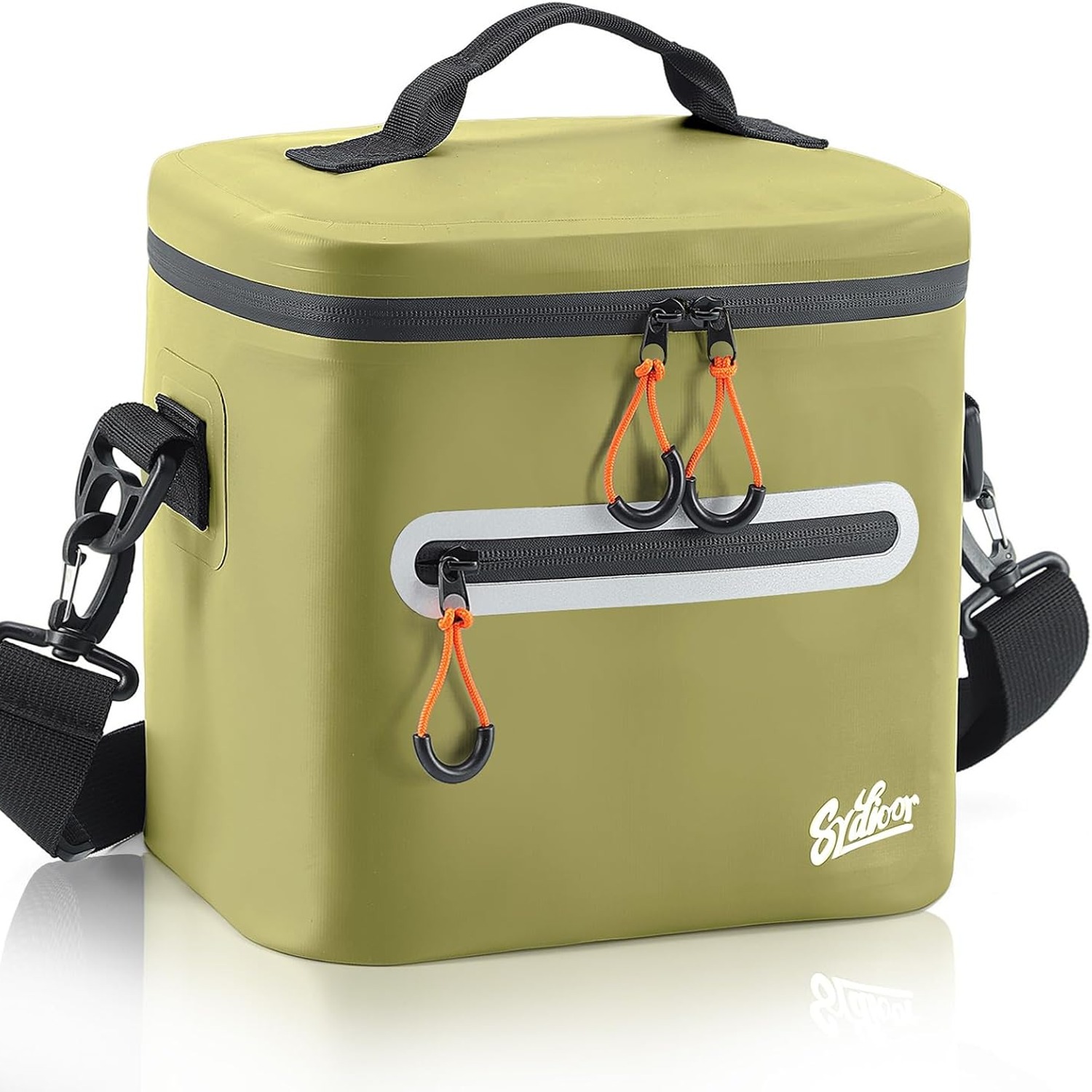
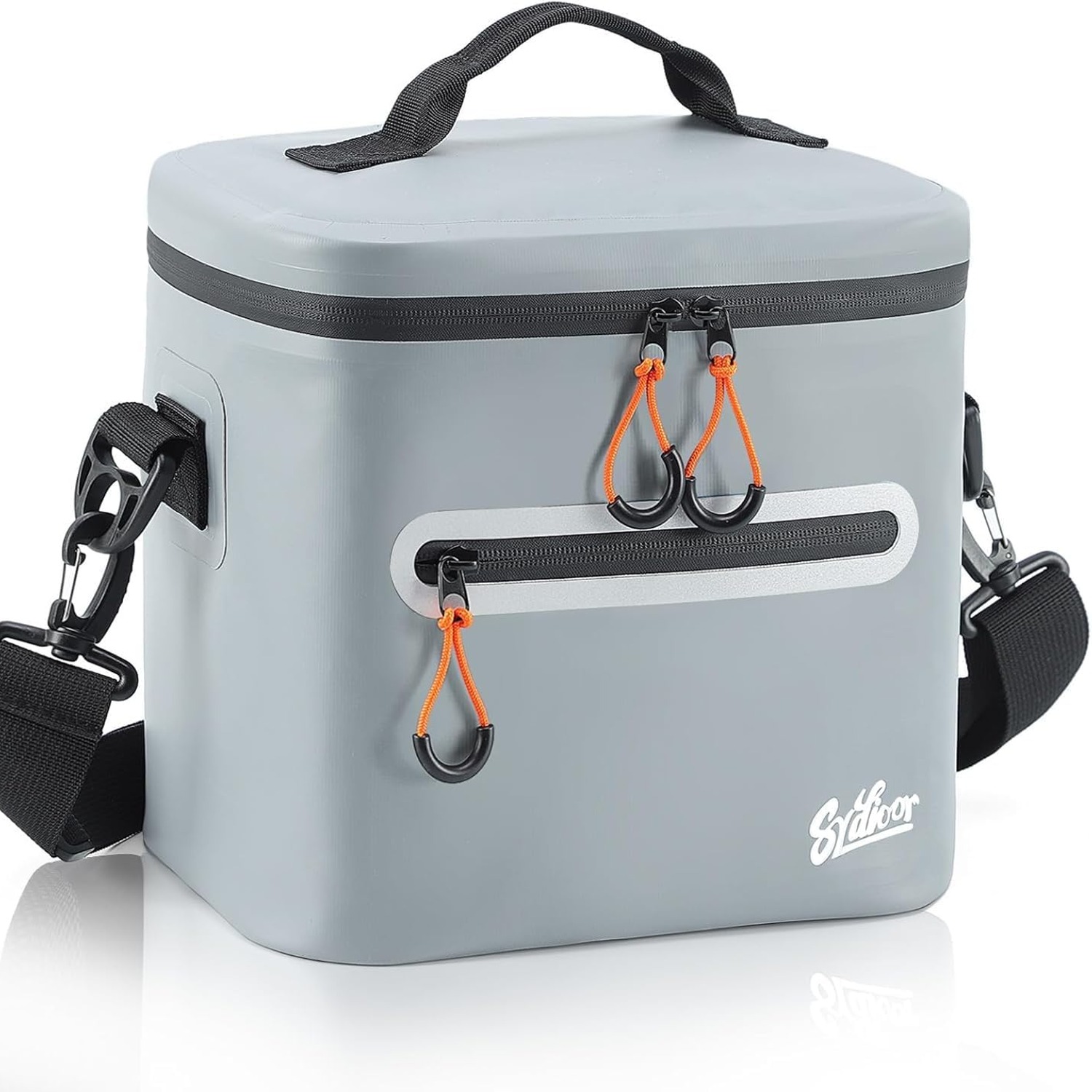
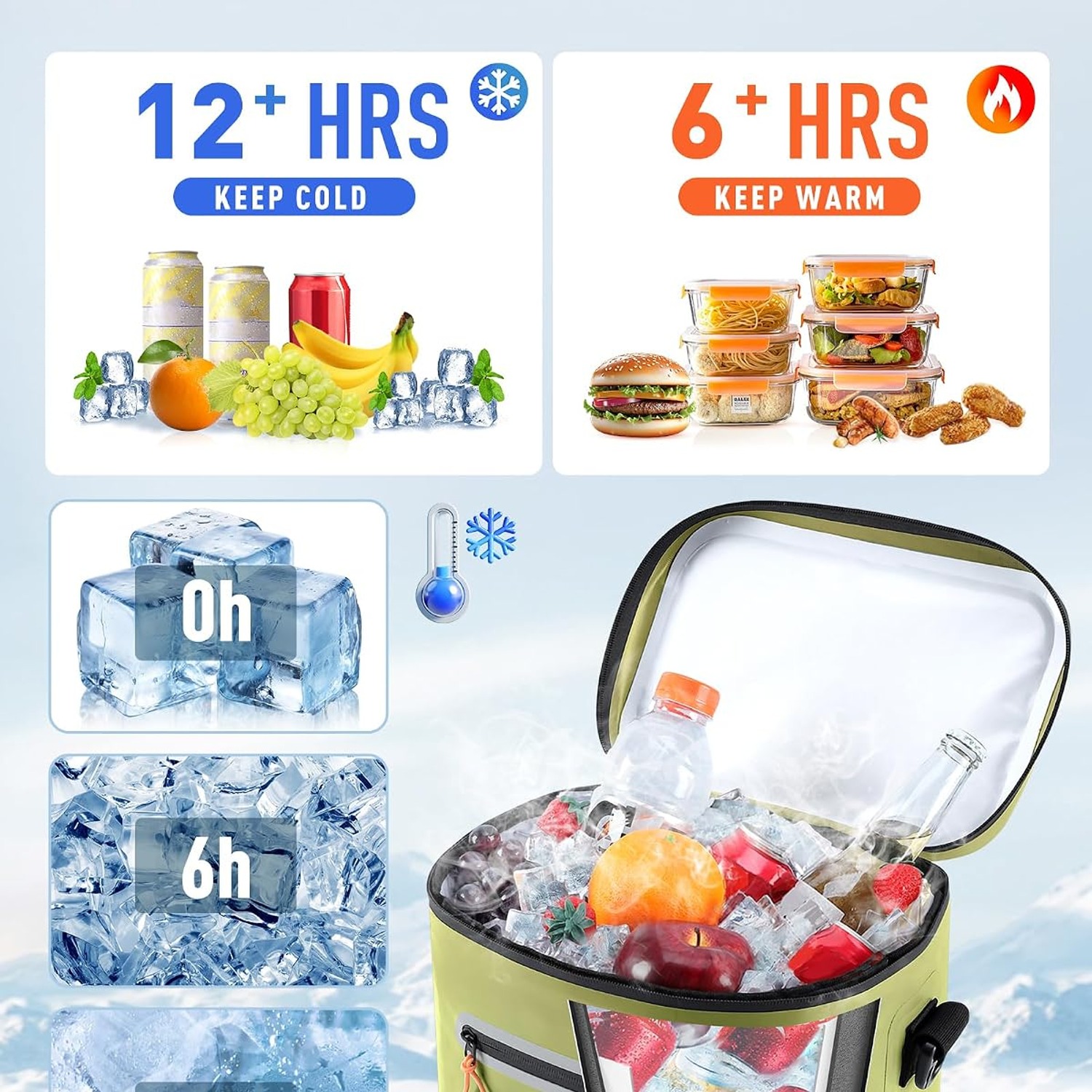
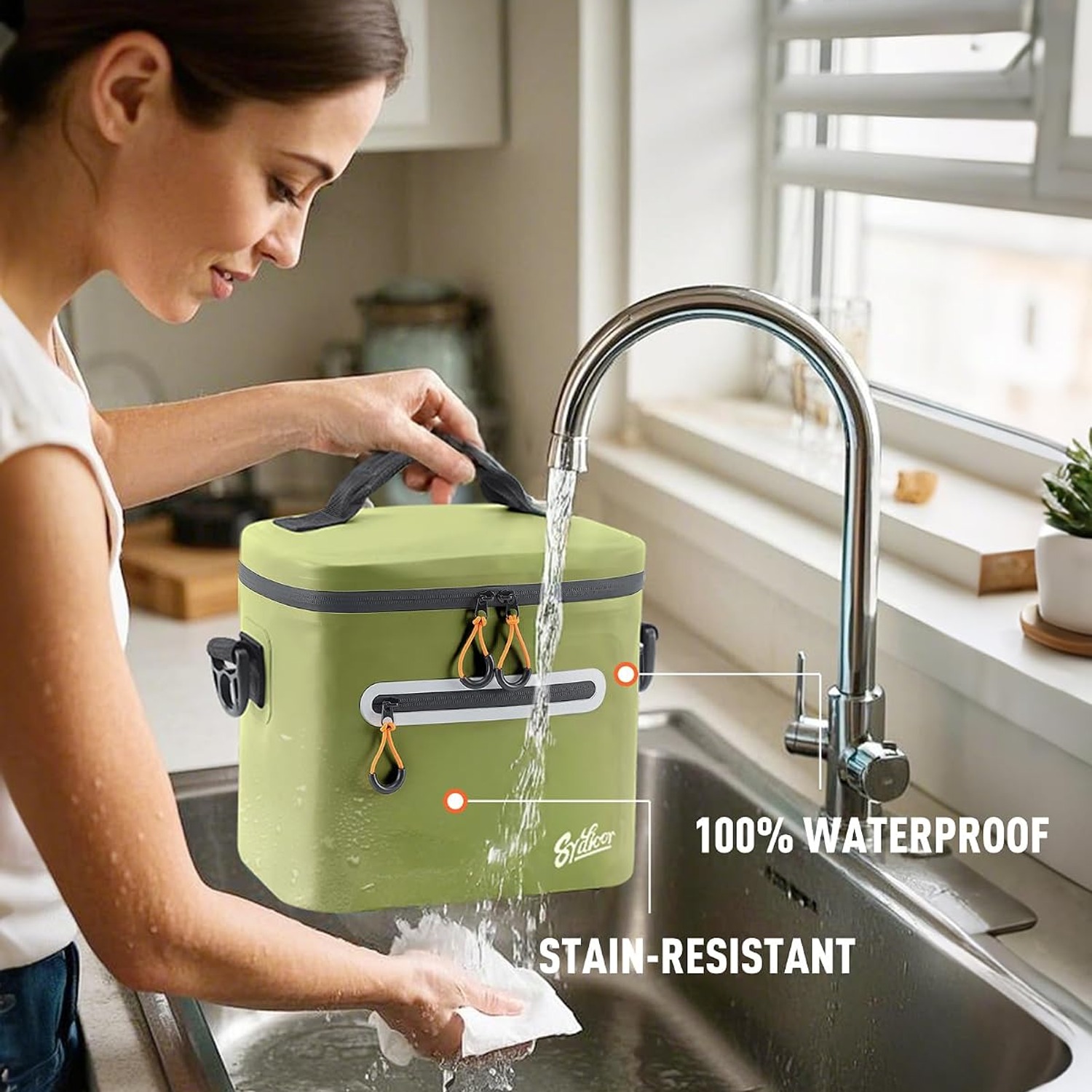
This bag takes a different approach. The main compartment is left as one clean insulated chamber with a five-layer build, and the storage you need is moved to a single zippered pocket on the front. The inside is a food-grade PEVA liner that holds meltwater. The outside is TPU, which is waterproof rather than merely coated. With ice loaded properly, the stated hold time is over 20 hours, though that number always depends on how hot the day is and how much ice you packed.
How a soft cooler actually works
A cooler does not make anything cold. It slows down the movement of heat from outside to inside. Everything you do with it is about slowing that movement further.
The insulation layers are the main barrier. More layers and thicker walls mean heat takes longer to get through. The liner matters too, because a sealed liner keeps the meltwater inside, and meltwater is still cold. A bag that drips is literally throwing away its cooling.
Air is the enemy. A half-empty cooler is mostly warm air, and every time you open it that air is replaced with fresh warm air that your ice then has to cool down again. This is why a full cooler holds longer than a half-full one, and why a front pocket for your keys is more useful than it looks. If you are not opening the main zip to grab a bottle opener, you are not dumping cold.
Sun is the other enemy. Direct sunlight on a dark bag will beat any insulation given enough hours. Shade, a towel over the top, or keeping it in the trunk rather than on the back seat all buy you real time.
Who this size suits
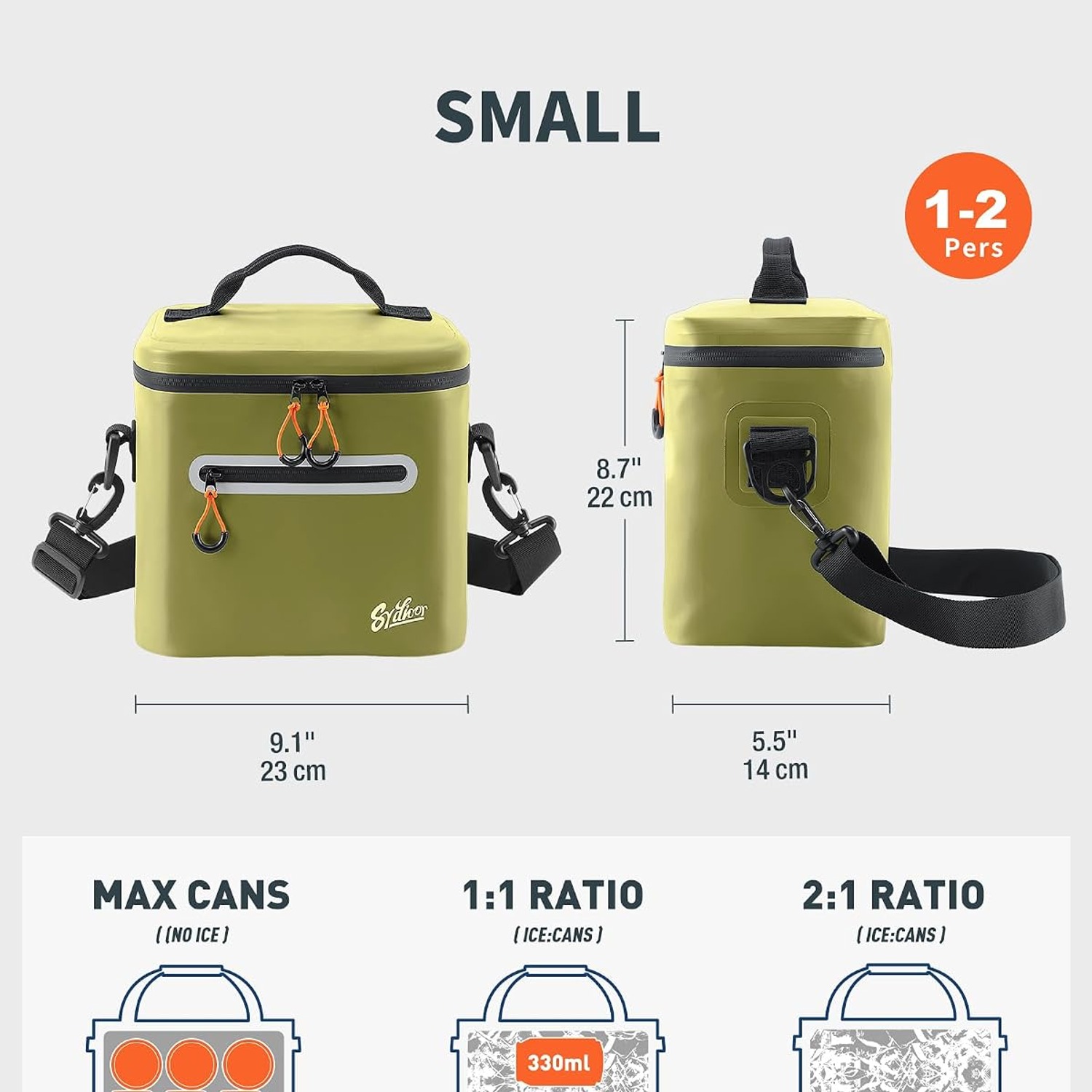
Fourteen liters, roughly 16 cans, is a size that covers a lot of ground without becoming awkward.
It works for two people at the beach for the day, with drinks, a few sandwiches and some fruit. It works for a family picnic where the cooler carries the cold stuff and a separate basket carries the rest. It works for meal prep, where you are moving several days of containers from the fridge to a work fridge or a campsite. And it works as a car cooler for road trips, sitting in the footwell with drinks that stay genuinely cold for the whole drive.
It is less suited to feeding six people for three days. For that you want a larger hard cooler as the main store, and a bag like this as your grab bag, the one you actually open while the big one stays shut and keeps its ice. That two-cooler system is what experienced campers do, and it is the single best trick for making ice last a whole weekend.
If you are only carrying one lunch and a drink, this is bigger than you need. A small lunch bag will do the job and take up less room in your bag.
What to look at when comparing coolers
Liner first. Ask whether the inside is sealed or just lined. A leak proof liner, like the food-grade PEVA here, means melted ice stays put. That keeps the contents cold longer and keeps your car dry.
Shell material second. Oxford cloth is the common default and it soaks up water, sunscreen and smells. TPU is smooth and waterproof, which changes the cleaning job from scrubbing to wiping. On a beach or a boat that difference shows up fast.
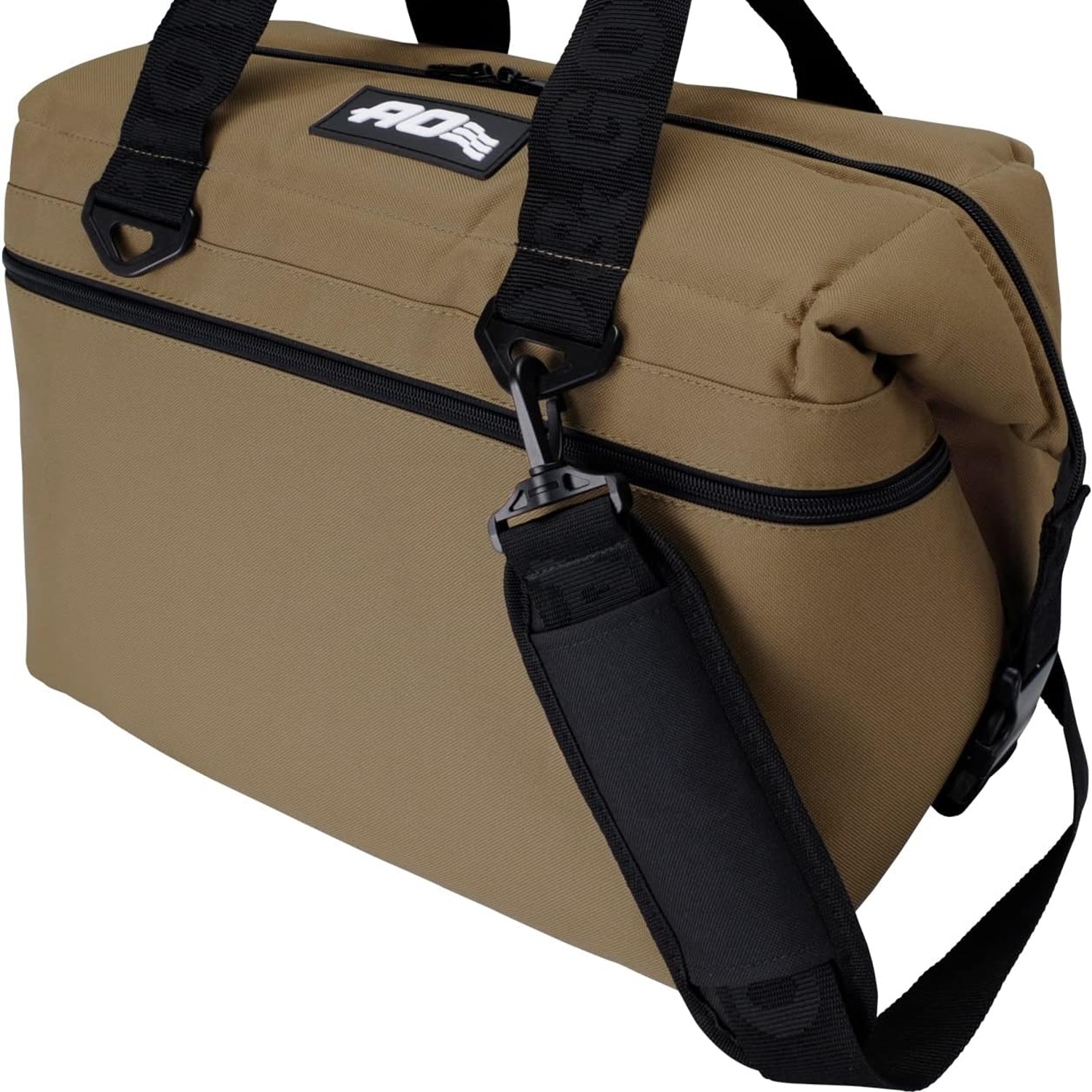
Then the carry. A detachable shoulder strap gives you options. Clip it on for the walk from the car, take it off when the bag is parked. Fixed straps flap around and get in the way more than people expect.
Then the pockets. Counterintuitively, fewer pockets on the cold section is better. One external zip pocket for keys, cutlery and a bottle opener is the right amount. Pockets built into the insulated wall are a sign the designer prioritised looks over temperature.
Then the size. Measure the space you will actually store it in. At 19 by 30 by 25 cm, this one fits most boot corners and car floors. Check yours before assuming.
Packing it properly
Start cold. Put the bag in a cool spot and chill the drinks in the fridge before they go in. A cooler spends its first hour cooling down whatever you put inside, and if you load warm cans you have just burned a third of your ice on nothing.
Layer it. Ice packs or a flat layer of ice at the bottom, heavier items next, then loose ice poured over the top to fill gaps. Cold sinks, so ice on top is doing more work than ice on the bottom.
Fill it. Gaps are warm air. If you have spare room, add more ice, or a towel, or a couple of extra drinks. A packed cooler outlasts a loose one every time.
Keep it shut. Decide what you want before you open it. Every browse costs you cold.
Keep it shaded. Under the car, under a chair, under a towel. Anything is better than full sun on black TPU.
Looking after it
This is the easy part, and it is where the TPU shell earns its keep. Wipe the outside with a damp cloth and a little mild detergent. Rinse the PEVA liner if anything spilled. There is no absorbent fabric to hold onto fish smell or spilled milk, which is a relief if you have ever tried to rescue a fabric cooler after a bad weekend.
The one rule that matters is drying. Leave the bag open until the inside is completely dry before you store it. A damp cooler zipped shut in a cupboard for three weeks will smell, and that smell is hard to shift. Store it unzipped, somewhere with a bit of air.
Skip the washing machine and the dishwasher. Heat and agitation can separate insulation layers and damage the waterproof shell. Hand cleaning is all this needs and it takes two minutes.
Avoid dragging it across sharp rocks or concrete, and try not to leave it squashed flat under heavy gear for months. Soft coolers are tough but the shell is still the thing keeping water out.
The short version
A soft cooler lives or dies on two things, the liner and the shell. This one has a food-grade PEVA liner that holds meltwater and a waterproof TPU outer that wipes clean, built into a five-layer wall with no pockets cut into the cold section. With ice, it is rated to hold cold for over 20 hours, subject to how hot it is and how much ice you use.
At 14 liters and about 16 cans, it suits beach days, picnics, fishing trips, commutes and road trips for one or two people, or as a grab bag alongside a bigger cooler on longer camps. The detachable strap and single front zip pocket cover the practical side without compromising the insulation.
Pack it cold, pack it full, keep it shut and keep it shaded. Do those four things and it will see you through the day with ice to spare.