
The complete guide
How to Choose a Rechargeable LED Headlamp
The problem with holding a flashlight
Most flashlight problems are hand problems. You need light on a task, and the task needs both hands. So the flashlight goes in your teeth, or under your chin, or balanced on a rock where it promptly rolls off and points at nothing useful.
A headlamp fixes that by putting the light where you are already looking. The catch is that cheap ones are either too dim to be worth carrying, too heavy to wear comfortably, or they eat AAA batteries at a rate that makes you ration the light. This rechargeable headlamp 2 pack is aimed squarely at those three complaints.
What this one actually does
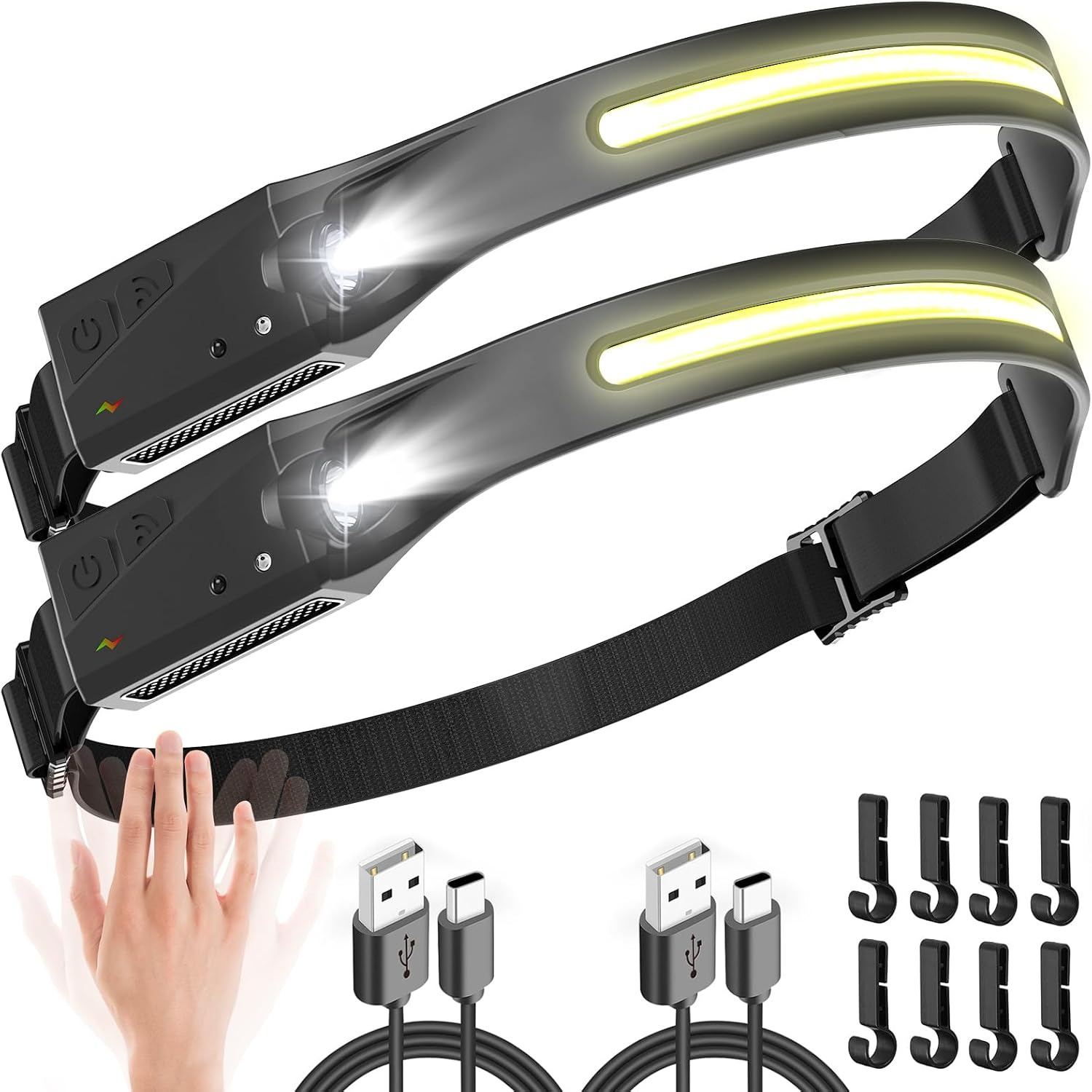
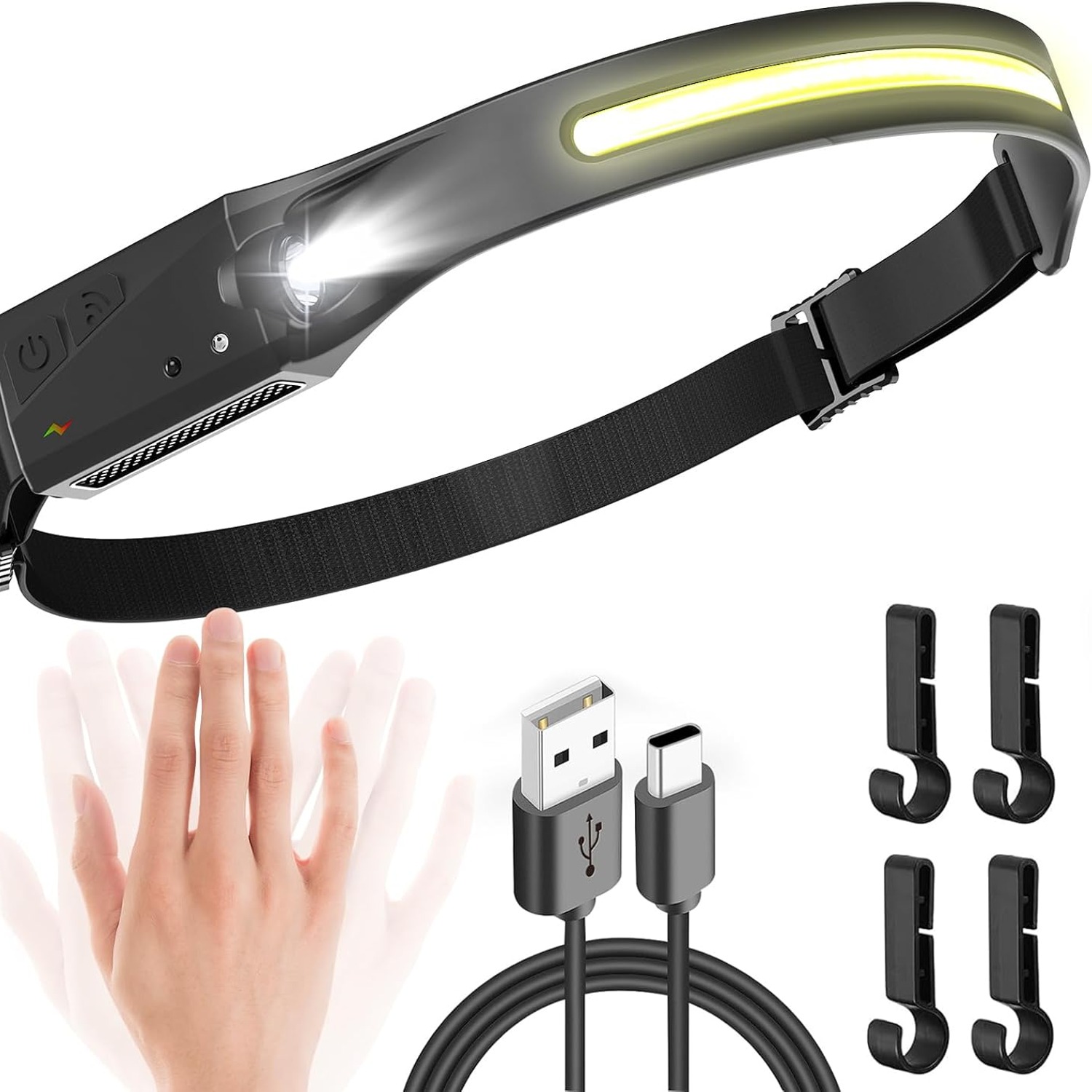
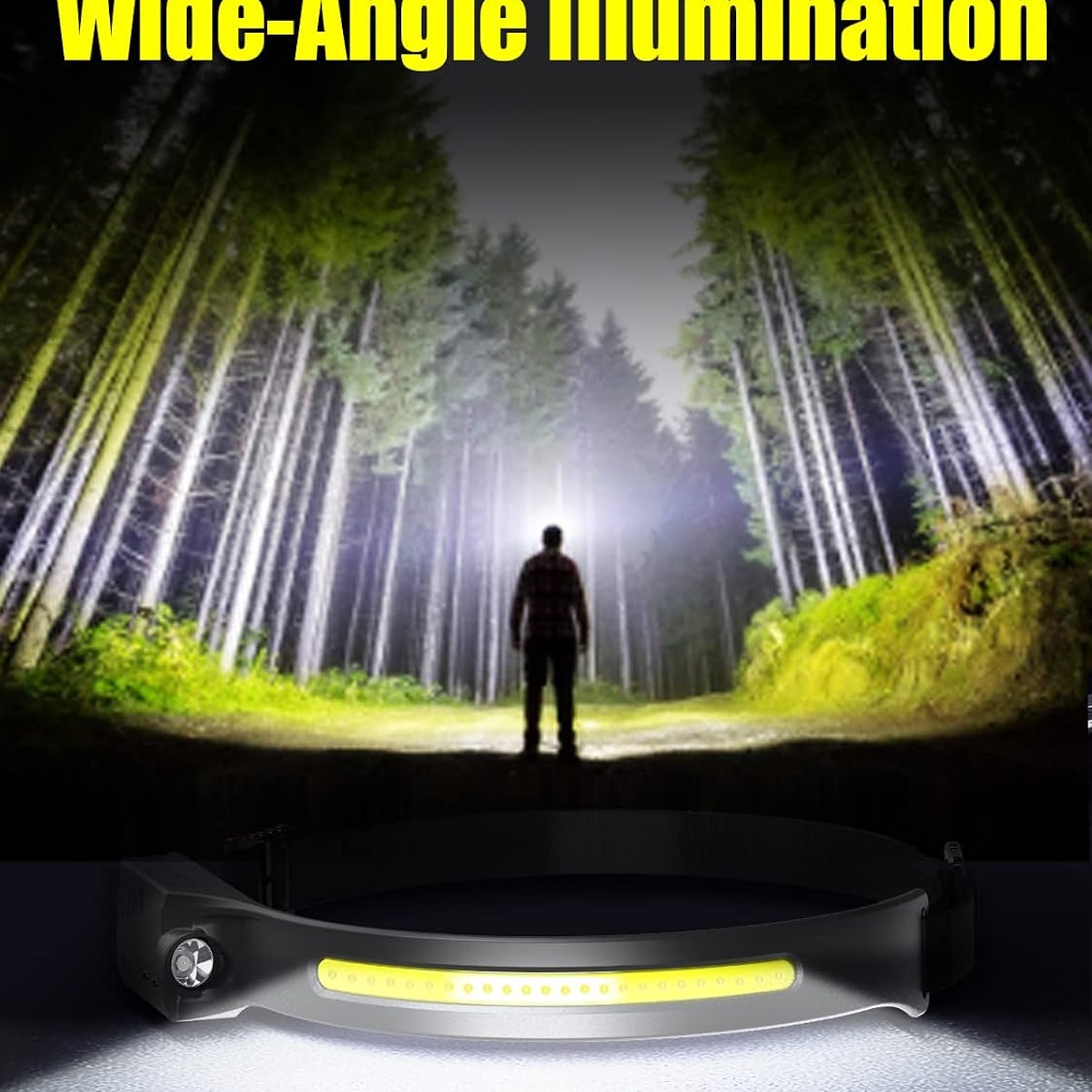
There are two light sources in each lamp. The COB strip is a wide flood with a 230 degree spread. It washes light evenly across whatever is in front of you, which is the right tool for close, detailed work. Think cooking at camp, tying a hook, reading a map, or peering into the back of a cupboard.
The XPE spot does the opposite. It squeezes the output into a narrower beam that travels, with a listed light path distance of up to 300 meters. That is what you want for checking a track ahead, spotting a landmark, or looking across water.
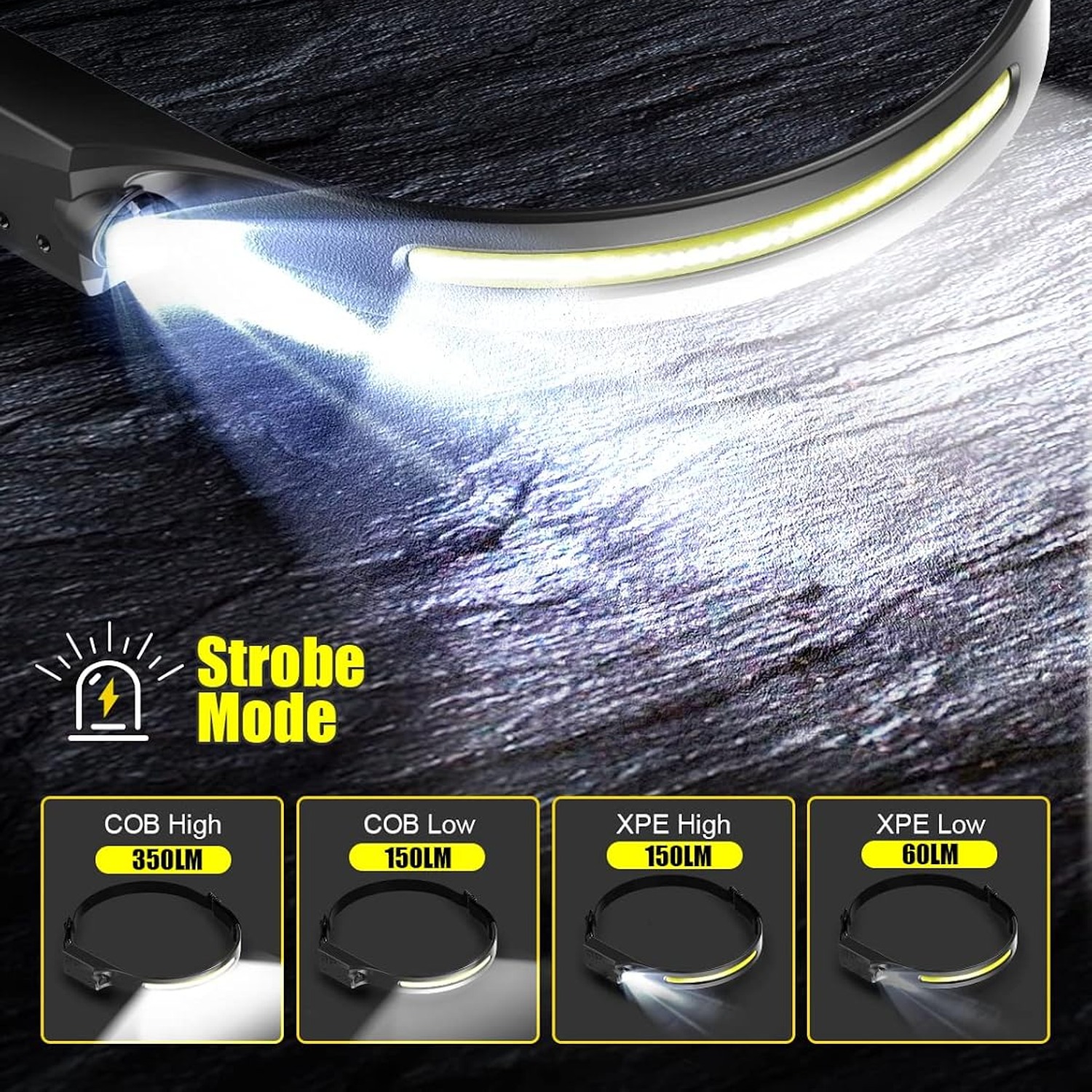
Maximum output is 350 lumens. Numbers on their own can mislead, but as a rough guide, that is plenty for walking, camp chores and workshop jobs, and more than enough to be seen by traffic. You will rarely need full power for close work.
Five modes let you choose between them: COB at 100 percent, COB at 40 percent, spot at 100 percent, spot at 40 percent, and a flashing mode. The two 40 percent settings matter more than people expect. Running a lamp at its maximum all night is a quick way to find yourself in the dark, and most tasks do not need it.
The wave sensor
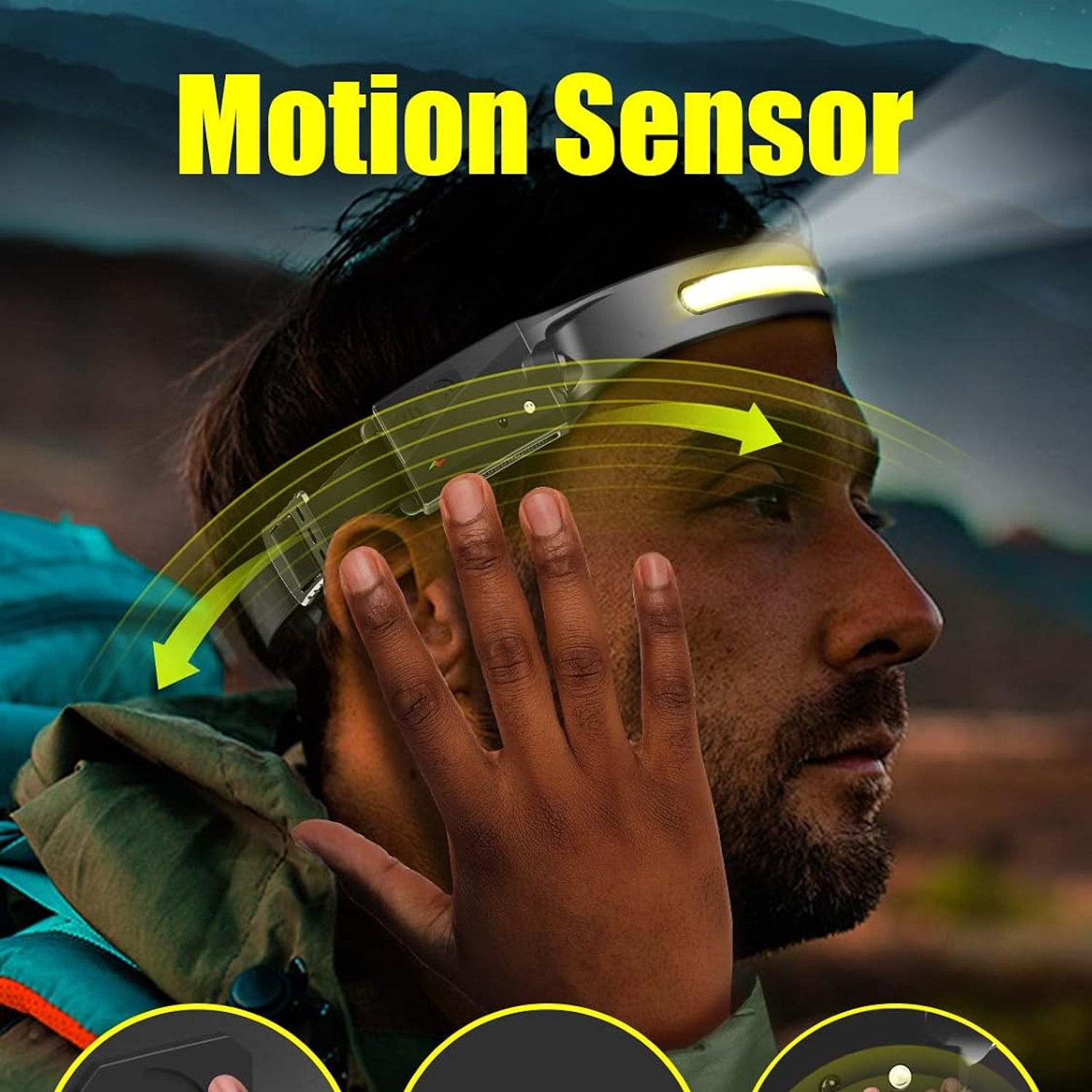
The motion sensor is the feature that tends to win people over. Wave a hand past the front of the lamp and it switches on or off. No searching for a button, no pressing with a knuckle because your fingers are covered in fish or grease.
If you have ever tried to operate a small switch with cold hands or thick gloves, you will understand why this matters. Mechanics, anglers and anyone doing repairs in awkward positions get the most benefit. It is also quietly useful at 2am in a tent, when you want thirty seconds of light and nothing else.
Worth knowing: a sensor that reacts to hand movement can occasionally react to other movement near the front of the lamp. If you are doing something with a lot of arm motion right under your face, you may get the odd unintended switch. Most people adjust their habits within a day.
Battery and charging
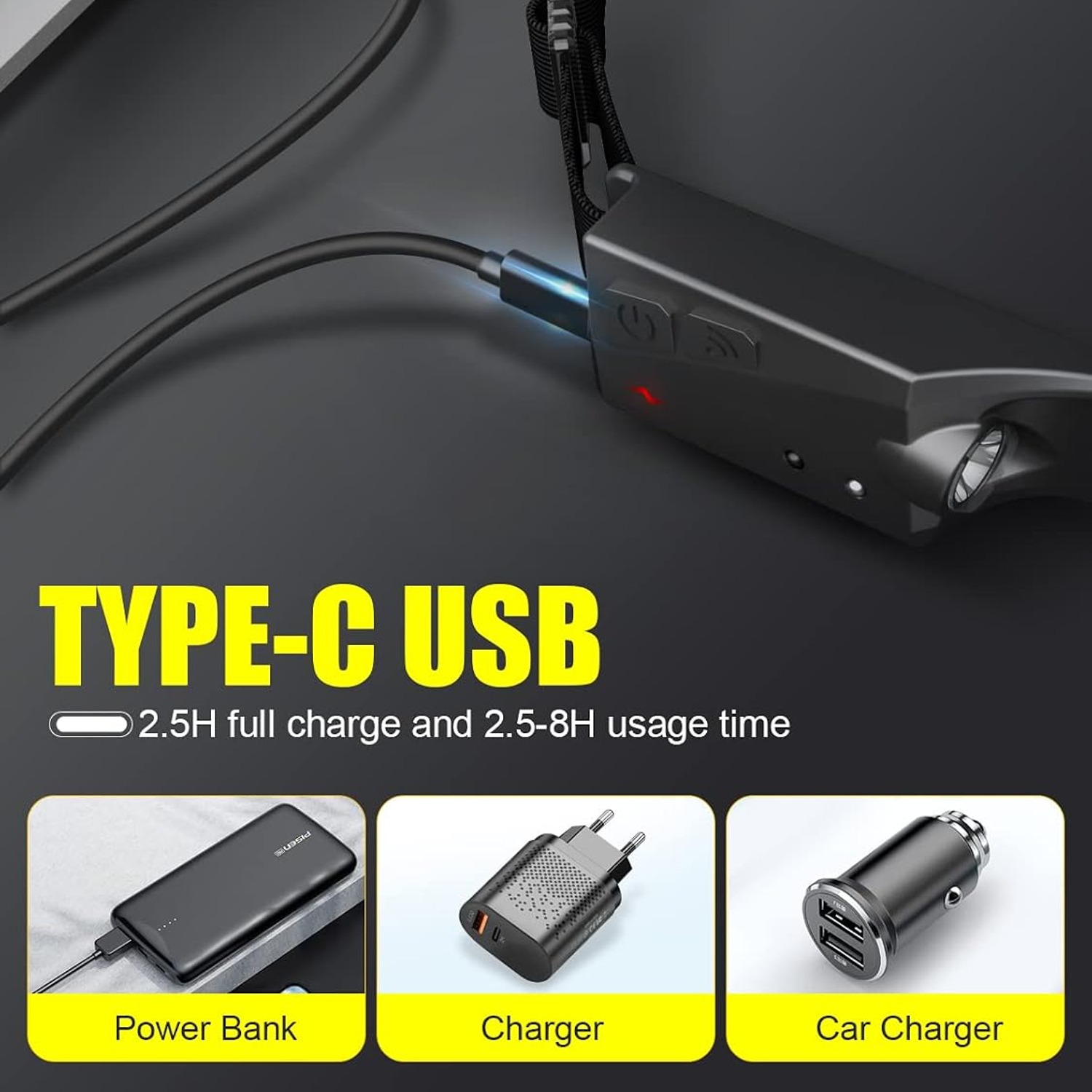
Each lamp runs on a built-in 1200 mAh lithium ion battery. There are no AAAs to buy, lose or discover have leaked inside the housing after a winter in the shed. Charging is over USB-C with the included cable, and a full charge takes around 2.5 hours.
Runtime is up to 8 hours, which depends heavily on the mode. Full-power spot drains faster than a 40 percent flood. If you are planning a long night, start on a lower setting and save the high modes for when you genuinely need distance.
For multi-day trips, pair the lamps with a small power bank. Between two headlamps and one bank you have a lighting system that will outlast most weekends. That setup is part of why a rechargeable model usually beats disposable-battery options for regular campers.
Fit, weight and comfort
Each unit weighs 80 grams. That sounds like a small detail until you have worn a heavy headlamp for four hours and felt the band digging into your forehead. Light gear is gear you keep wearing.
The band is soft elastic silicone. Silicone grips skin and hair better than a plain woven strap, so it holds position when you are jogging, bending over or looking up. It also stretches to go over a helmet, which is handy for cycling, caving or site work.
A quick fitting tip: set the tension so the band is snug without pressure, then tilt the housing before you start. Pointing the beam slightly down is almost always better on foot, because it lights the ground where your next step lands rather than the air at eye level.
Water, weather and build
The housing is ABS with a silicone band, and the lamp is listed as water resistant. Rain, spray and the usual damp of an evening outdoors are fine. Submersion is not. If it gets soaked, dry the body and especially the charging port before you plug anything in.
ABS is a reasonable choice for this kind of gear because it takes knocks without cracking. Head torches get dropped more than most equipment, usually onto the exact rock you were trying to see.
Who it suits
Campers and hikers get the clearest benefit, since the flood and spot combination covers both camp chores and night walking. Anglers get the hands-free switching at the moment it is most useful. Cyclists and runners get the low weight and the flash mode for visibility.
Trade and DIY users are a big group here too. If you spend time under cars, in roof cavities, behind appliances or inside cabinets, the COB flood gives you the broad even light that a pencil-beam flashlight cannot. The wave sensor seals it.
Two lamps in the pack also changes how you use them. One can live permanently in the car or the toolbox while the other stays in the camping gear, so neither is ever the one you forgot to pack.
Looking after it
Care is simple. Wipe the housing and band with a damp cloth and dry them. Keep the charging port clean and closed when not in use. Avoid leaving the lamp in a hot car or in direct sun for long stretches, because heat is hard on lithium cells.
If the lamps are going into storage for a season, charge them before they go in the cupboard and give them a top-up every few months. A lithium battery left completely flat for a long time does not come back as strong.
Choosing between modes in practice
A useful habit is to pick a default. For most people the 40 percent COB flood is the right everyday setting, because it lights your immediate area without blinding anyone you are talking to. Step up to full flood for detailed work and switch to spot only when you need to see distance.
Flash mode is for being seen, not for seeing. Use it when you are walking or running on a road shoulder, and switch back once you are off the traffic.
The short version
This is a two-pack of lightweight USB-C rechargeable headlamps with a wide 230 degree COB flood, a 300 meter spot, 350 lumens at maximum, five modes and a wave sensor so you can switch the light without touching it. Each lamp weighs 80 grams, runs up to 8 hours and charges in about 2.5 hours.
If you want hands-free light for camping, fishing, running, cycling or workshop jobs, and you are tired of buying disposable batteries, this covers it. Buy it as a pair, keep one in the car, and you will stop looking for a flashlight.