
The complete guide
How to Choose a Portable Camping Table That You Will Actually Pack
The problem with eating off your knees
Anyone who has camped for more than a weekend knows the moment. Dinner is ready, the stove is on the ground, and there is nowhere to put the plate. You balance it on a knee, a cool box lid or an upturned bucket. Something tips. Someone laughs. It happens again the next night.
A table fixes this, but most tables create a new problem. They are heavy, awkward and they take up the boot space you needed for the tent. So the table gets left at home, and you are back to the knee balancing act.
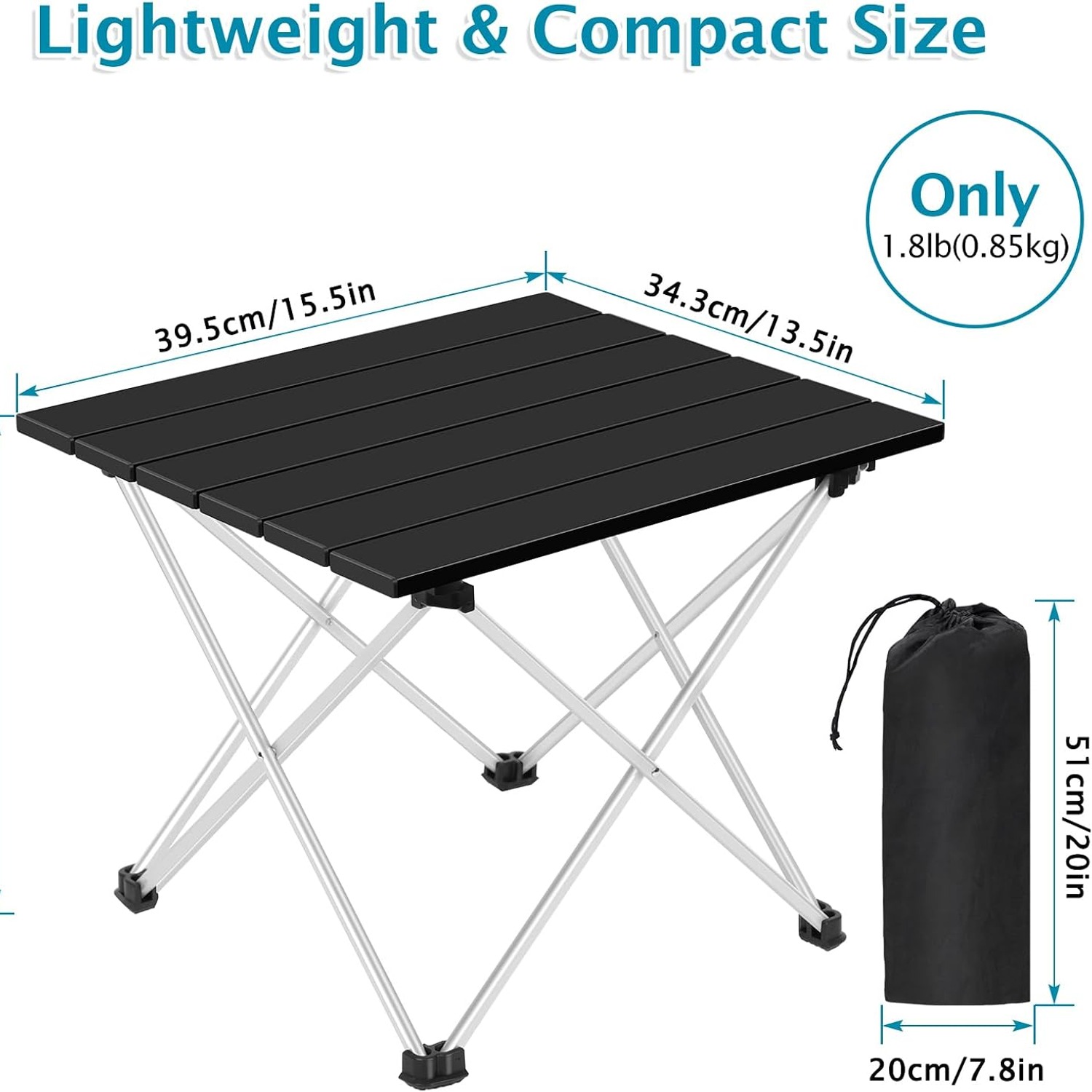
The answer is not a bigger table. It is a smaller one that is light enough that packing it never involves a decision. That is the gap this product fills. At 780 g and a folded length of 440 mm, it is barely an inconvenience to bring.
How a folding camp table works
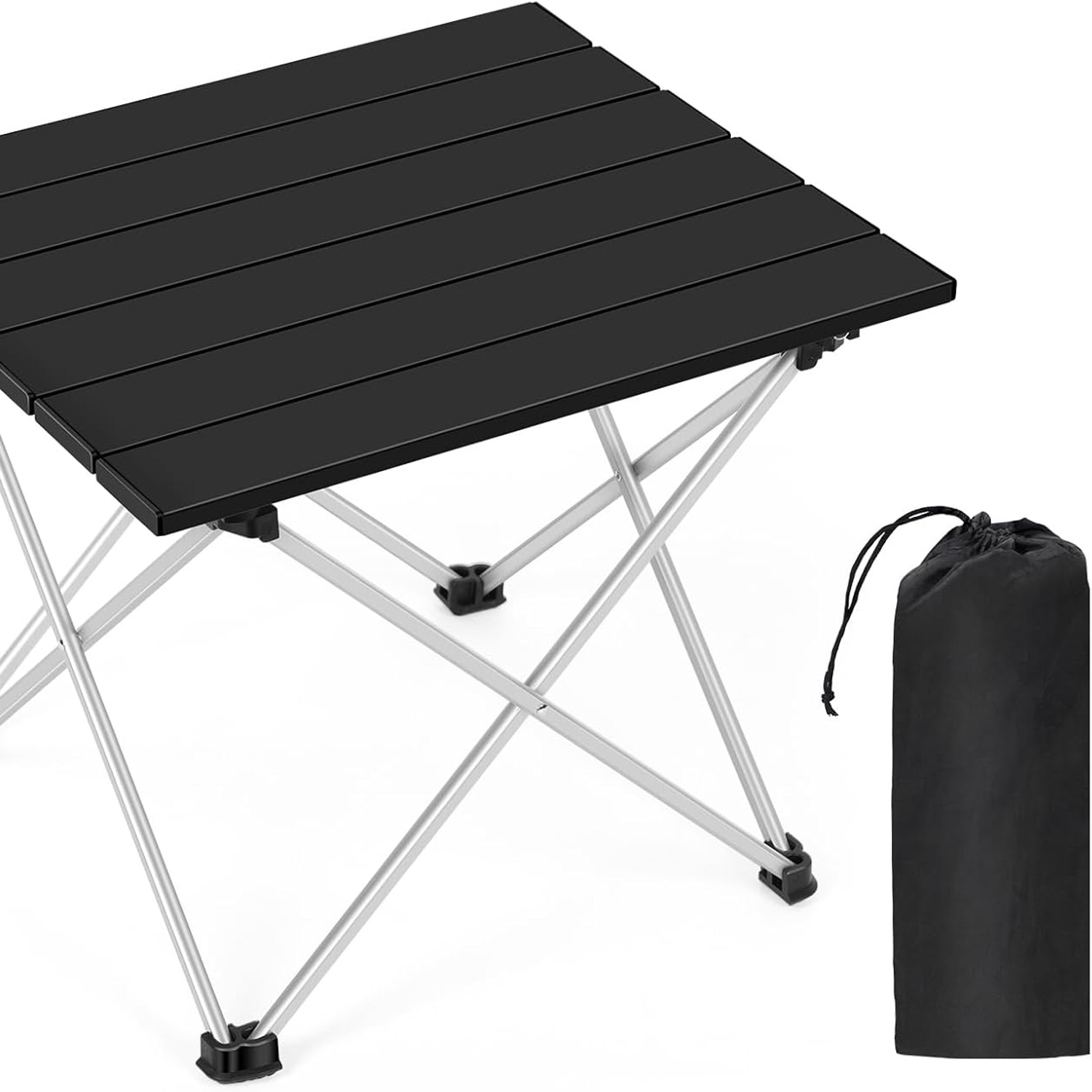
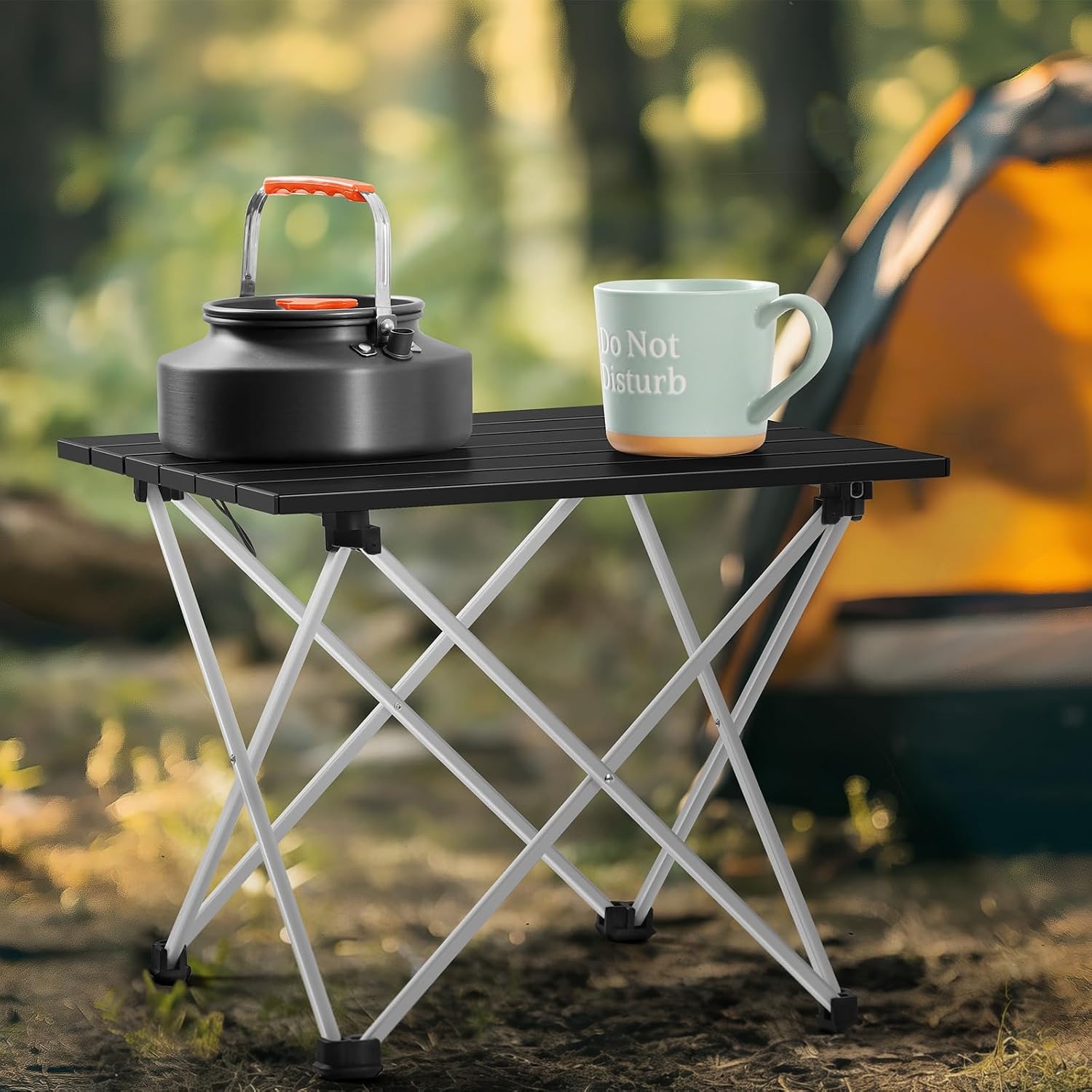
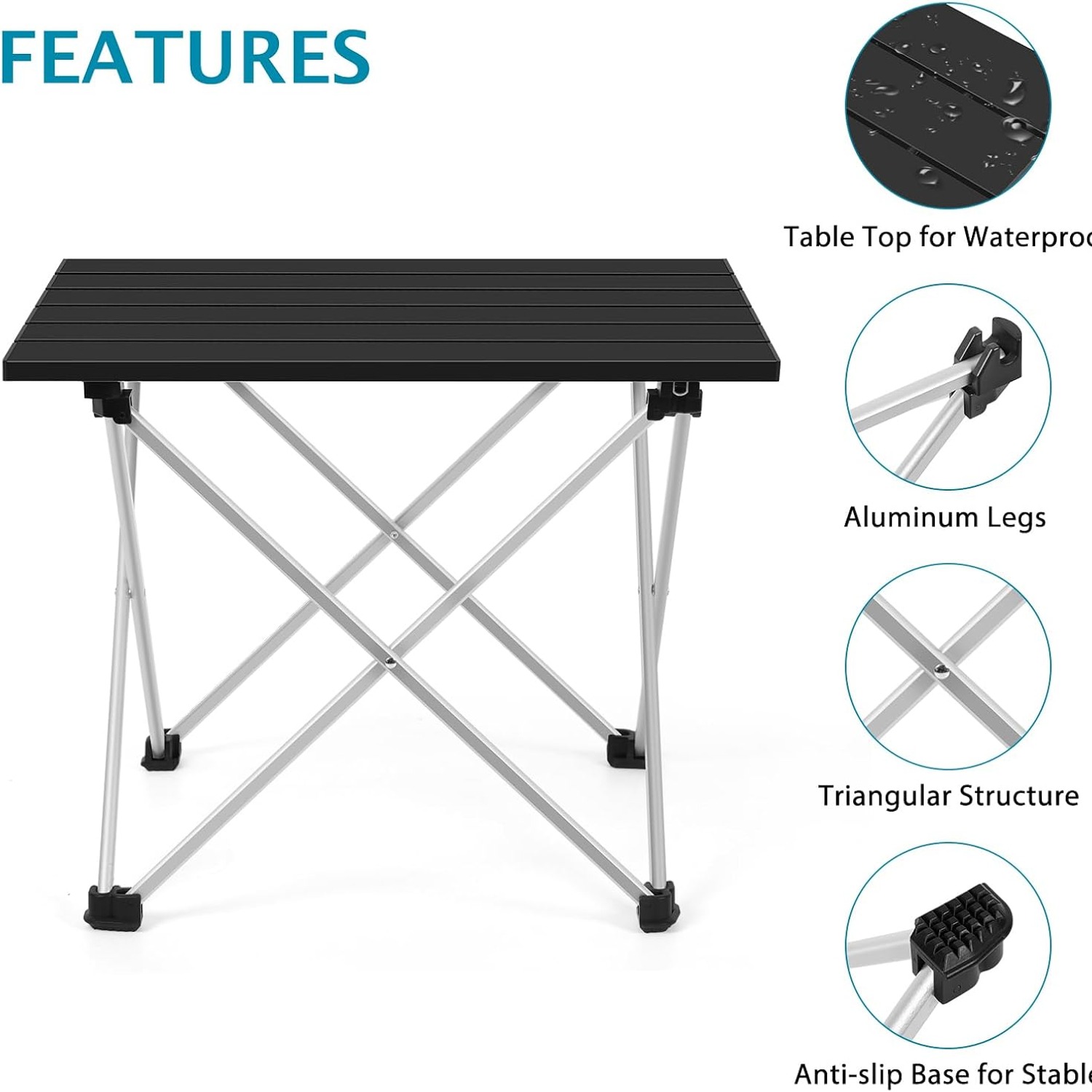
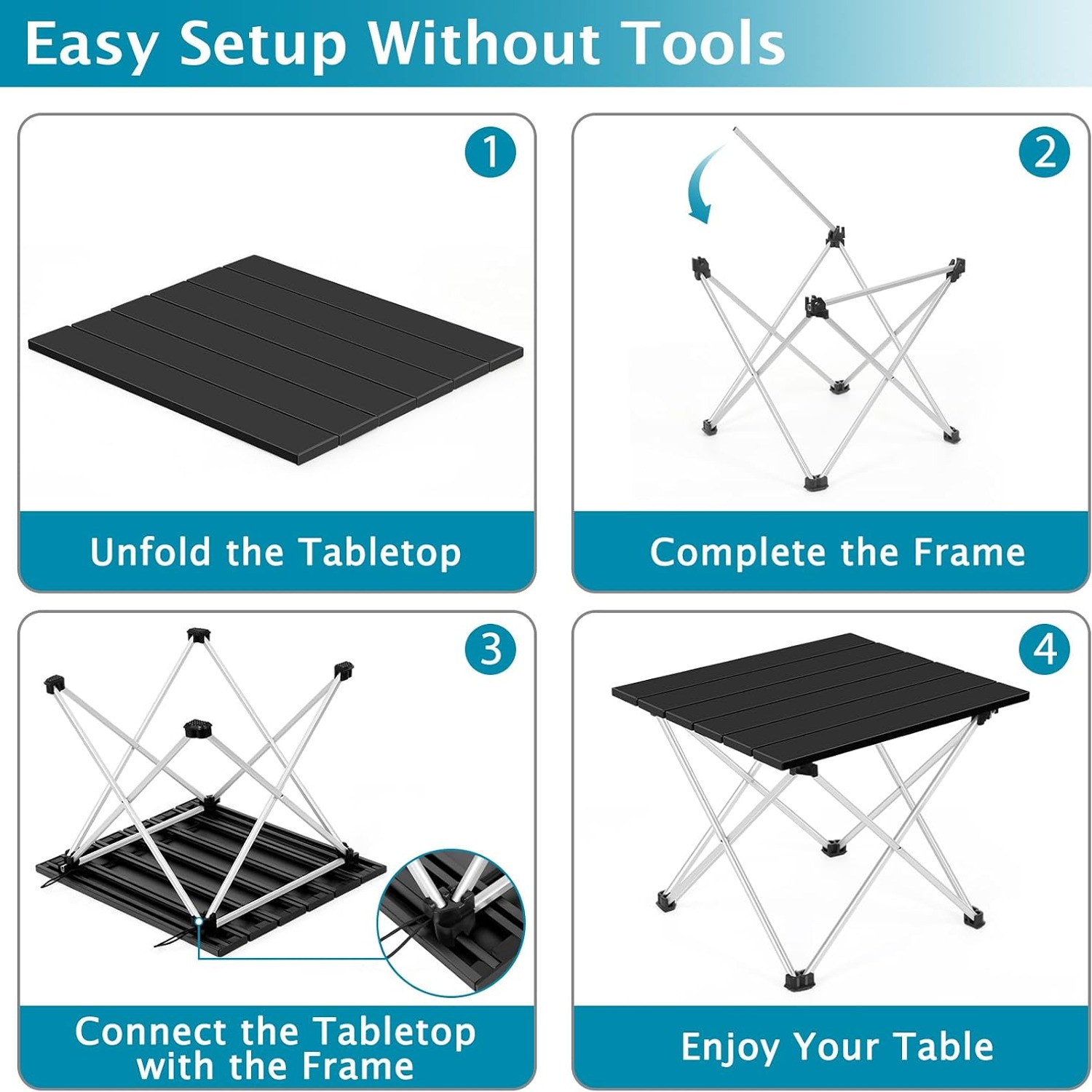
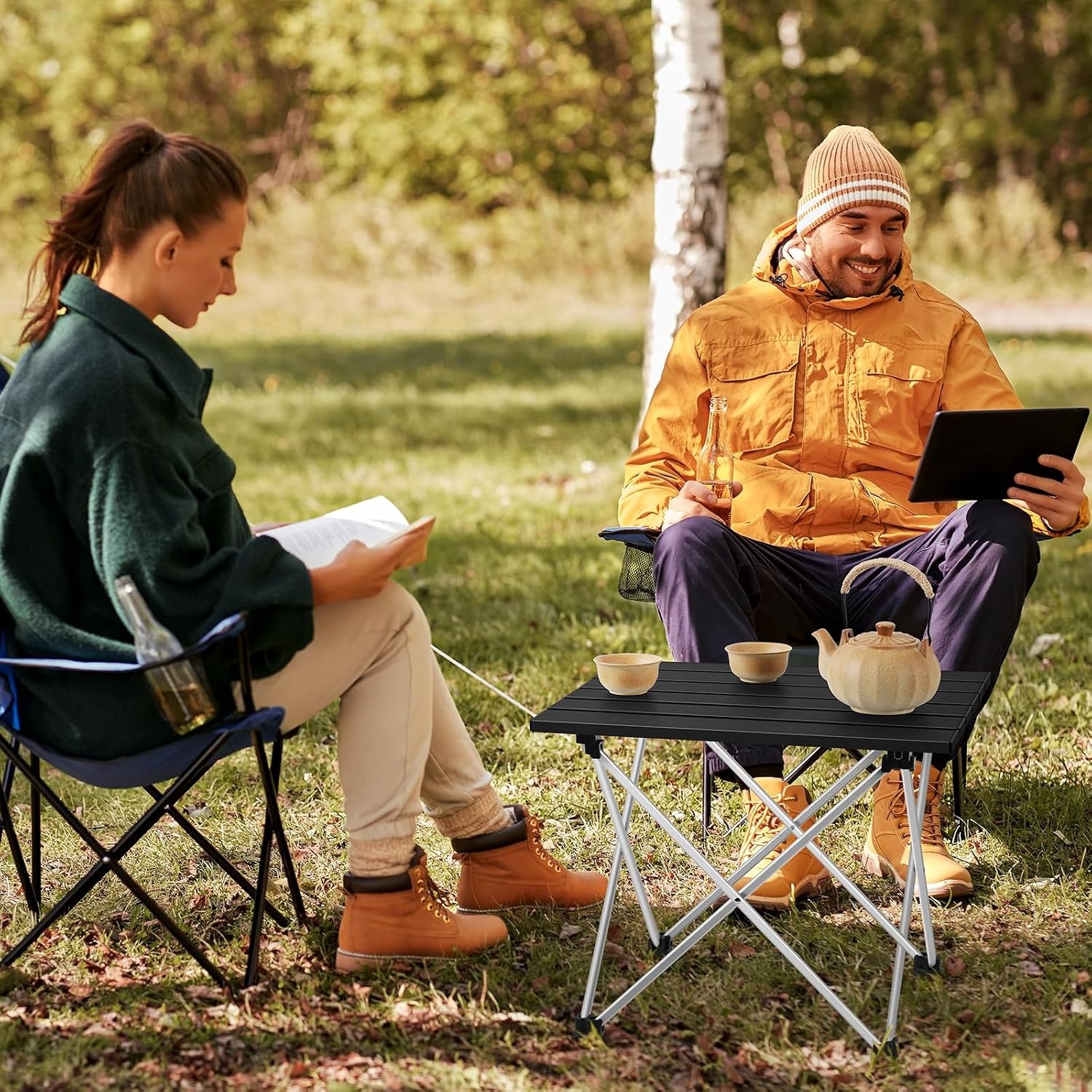
The design here is about as simple as furniture gets. An aluminum frame with straight legs and a cross base provides the structure. The joints are hinges, so the legs swing out and lock into a stable shape. Across the top sits a run of plastic slats that roll out flat.
Because everything pivots rather than unbolts, you do not need tools. The listing confirms assembly is required but no tools are included or needed. An assembly guide comes with the table so you know what goes where the first time. After that, opening and closing it becomes muscle memory.
The slatted top matters more than it sounds. A fabric top stretched over a frame sags under anything with weight, which means mugs tip and plates tilt. Rigid slats stay level. They also let sand and crumbs drop through instead of pooling, which is a quiet advantage on beaches.
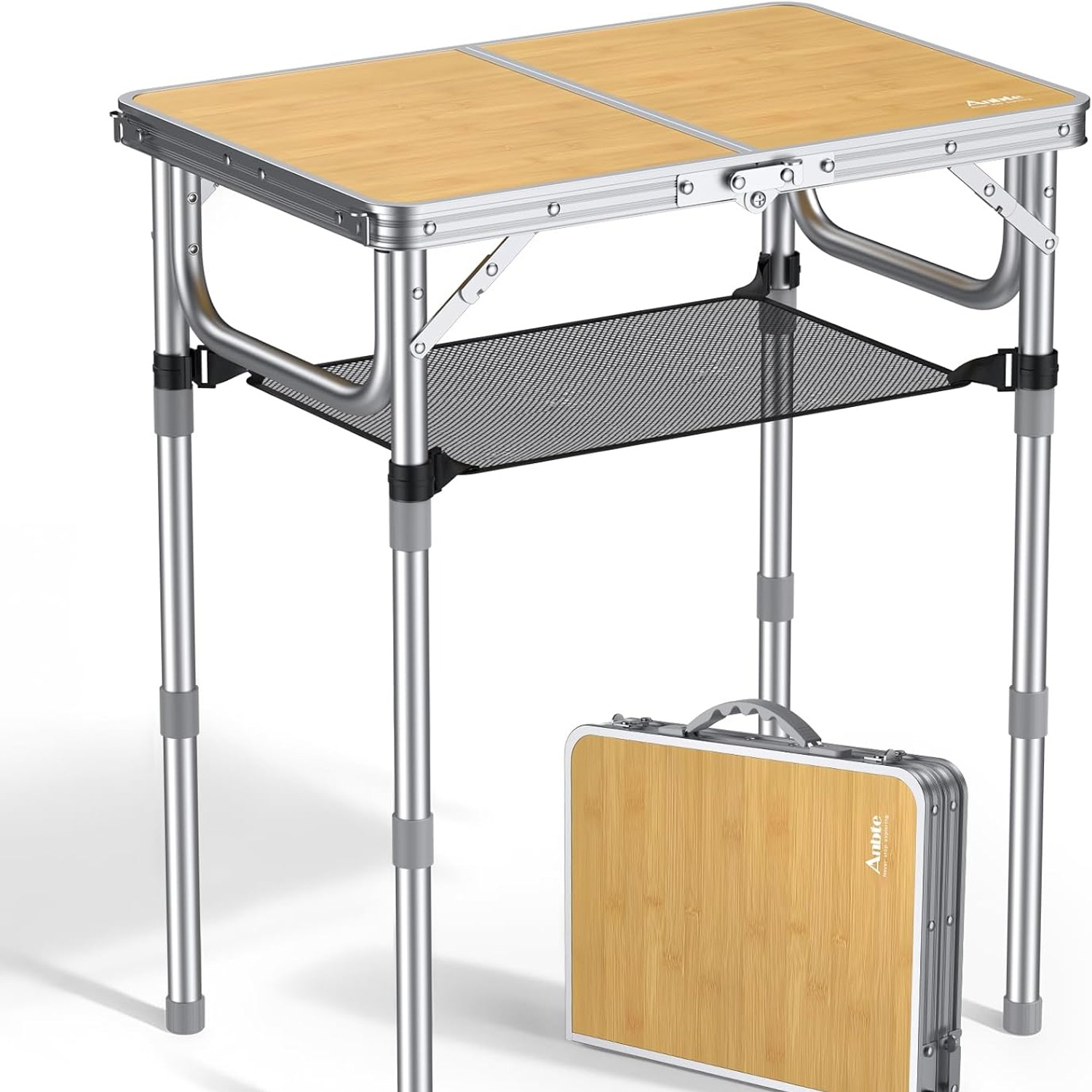
Set up, you get a surface 39.6 cm wide and 34.5 cm deep, standing 32.5 cm high. The maximum load is listed at 22.68 kg.
Who this suits
This is a low table. That single fact decides whether it is right for you.
If you camp with low chairs, sit on a rug, or spend time in a tent or van where headroom is short, a 32.5 cm height is exactly what you want. You reach down to it without stretching. It fits inside a tent vestibule. Kids can use it on the ground.
If you want to stand and chop vegetables, this is not that table. A full height folding table is the better buy for a main camp kitchen bench. Plenty of people own both and use this one as the overflow surface for drinks, plates and gear.
It also suits people with limited storage. Van dwellers, small car owners, and anyone whose camping kit lives in a cupboard rather than a garage will appreciate the 440 mm folded length. If you are hunting for the best compact picnic table that genuinely fits in a small space, the packed size is the number to look at.
Fishing, festivals, beach days and picnics all get listed as intended uses, and they all make sense. So does the less glamorous use of being a spare surface at a car trunk sale or a kids sports match.
How to choose between camp tables
A few things actually separate good small tables from forgettable ones.
Packed size over set up size. Almost every table looks fine when open. The one you will take is the one that disappears into the car. Compare folded dimensions first, then check the open surface is big enough.
Weight you can feel. There is a real difference between 780 g and three kilos when you are carrying gear across a field in two trips. If you walk even a short distance from the car, lighter wins.
Top material. Fabric tops pack smaller but sag. Rigid slats hold shape and clean up faster. This one uses plastic slats listed as stain resistant, which means spilled food wipes off rather than soaking in.
Load rating. A 22.68 kg limit covers a meal for a small group with room to spare. Think about the heaviest thing you would realistically put down, usually a full water container or a loaded cool box.
Setup method. Tools, bolts and loose parts are a headache in the dark or the wind. Hinged frames that open in one motion are worth the preference.
Leg design. A cross base spreads load and resists wobble better than four independent spindly legs on soft ground.
If you weigh those five against each other, the shortlist for the best portable camping table gets short fast.
Getting the most from it in the field
Pick your ground before you open the table. Ten seconds spent finding a flat patch saves a spilled drink. On sand or soft soil, press the feet in slightly so they settle.
Spread weight across the surface rather than loading one edge. Low tables are stable, but any table can be tipped by a heavy item hanging over the side.
Heat is the one thing to respect. The top is plastic, so a burner, a hot pan or a kettle straight off the flame needs a board or a heat mat between it and the slats. This is standard practice with any non-metal camp surface.
Use it indoors too. A low folding table earns its keep as a sofa side table, a kids craft surface or a laptop perch. Many people find the travel folding table they bought for camping ends up in the lounge half the year.
Care and storage
Care is straightforward. Wipe the top with a damp cloth after use. For sticky messes, warm water with a drop of mild detergent clears it. Give the slats a shake to drop out crumbs and grit so nothing works its way into the hinges.
Dry it properly before folding. Trapped moisture is what causes smells and stiff joints, not the rain itself. The aluminum frame will not rust like steel, but salt and damp still do no favours to a powder coated finish.
Store it somewhere dry. Flat under a bed, upright in a cupboard, or in the car if that is where your kit lives. Avoid stacking heavy boxes on top of it in a packed boot, and do not drag it loaded across gravel.
With that routine, a simple hinged aluminum frame should keep working for many seasons. There is not much to go wrong on a table with no electronics, no bolts and no moving parts beyond the hinges.
The short version
This is a small, low, light folding table built for people who got tired of balancing plates. It weighs 780 g, folds to 440 mm, opens without tools and holds up to 22.68 kg. The plastic slat top wipes clean and the aluminum frame keeps the whole thing honest.
It will not replace a tall camp kitchen bench. It is not meant to. What it does is make sure you always have a flat, steady surface within reach, because it is small enough that you will never leave it behind.
If you camp, picnic, fish or just want a spare surface that stores in a cupboard, it is an easy addition to the kit.