

The complete guide
How to Choose a Dome Tent You Will Actually Enjoy Using
The problem with most first tents
The tent you buy in a hurry is usually the tent you end up resenting. It either takes forty minutes to pitch, leaks at the seams on the first wet night, or turns out to be half the size the box promised. None of those things are obvious in a shop. They only show up at nine at night in a car park, in the rain, with a flashlight in your teeth.
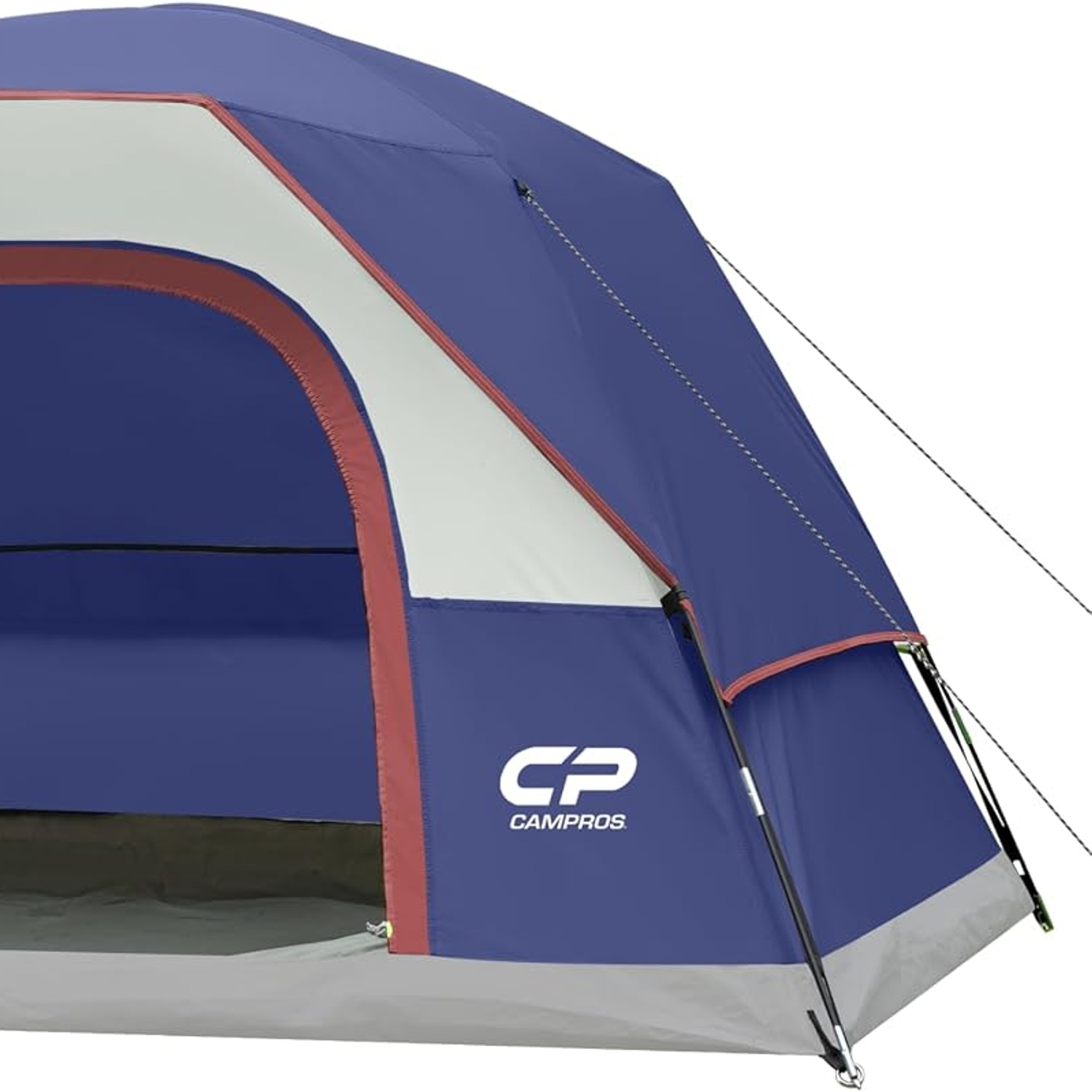
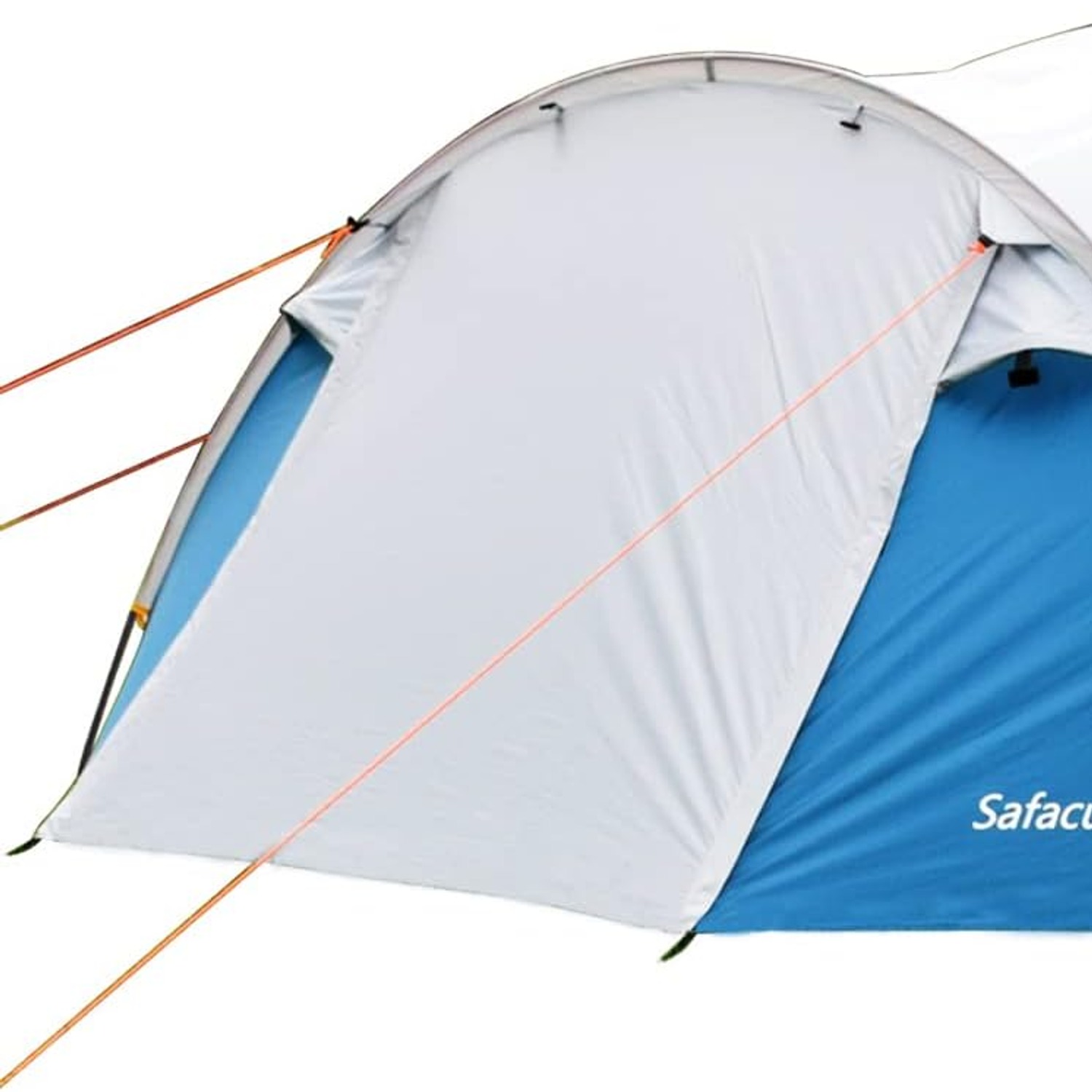
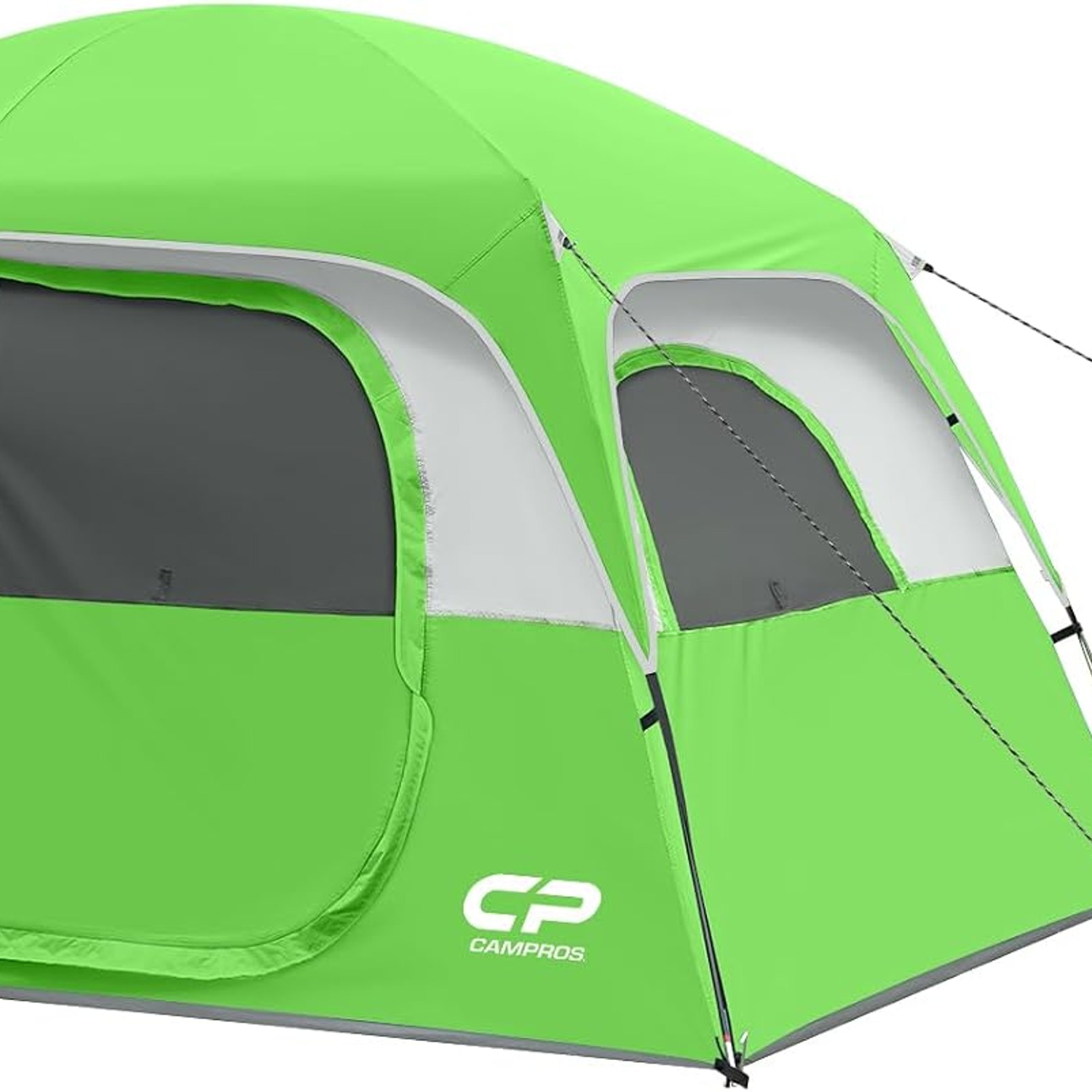
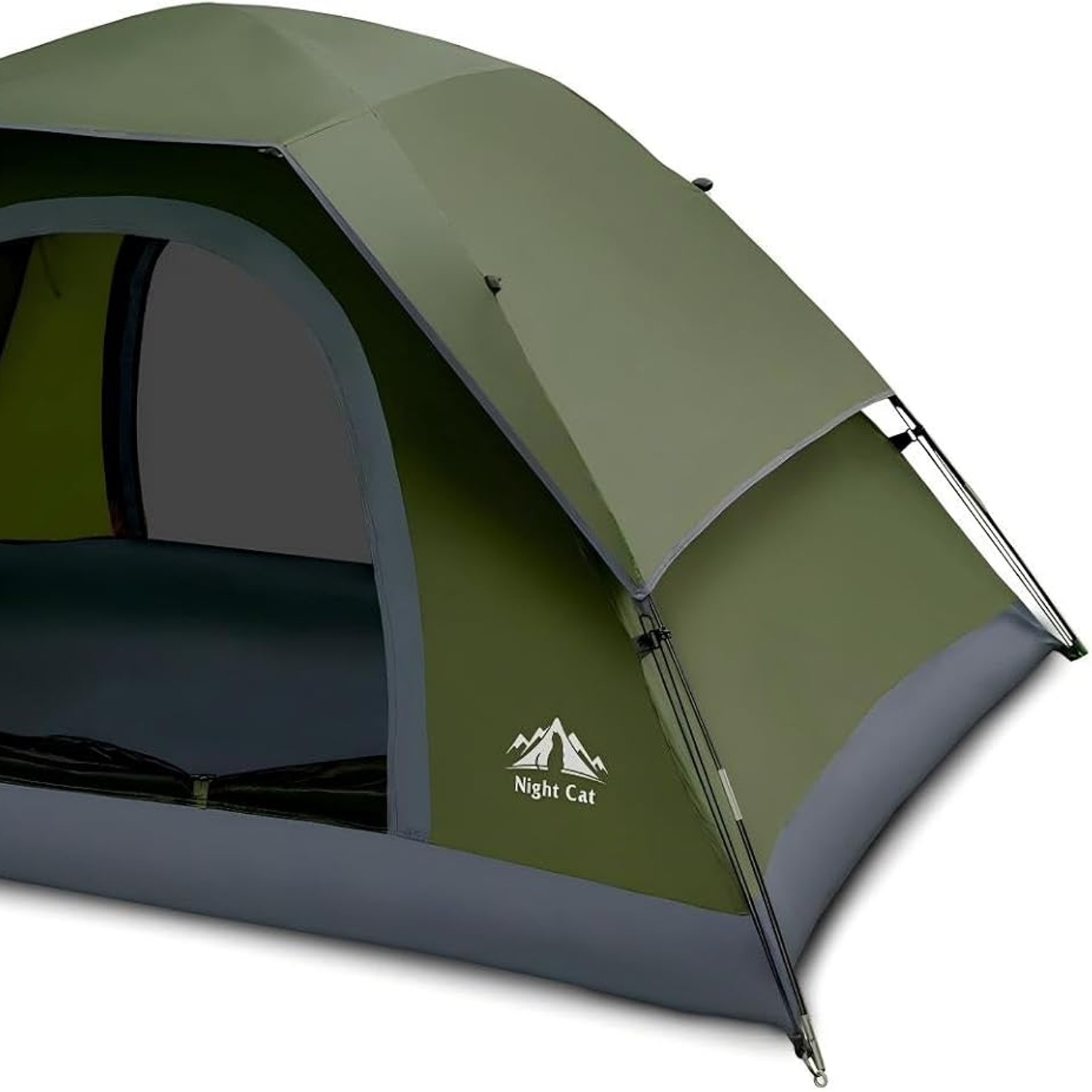
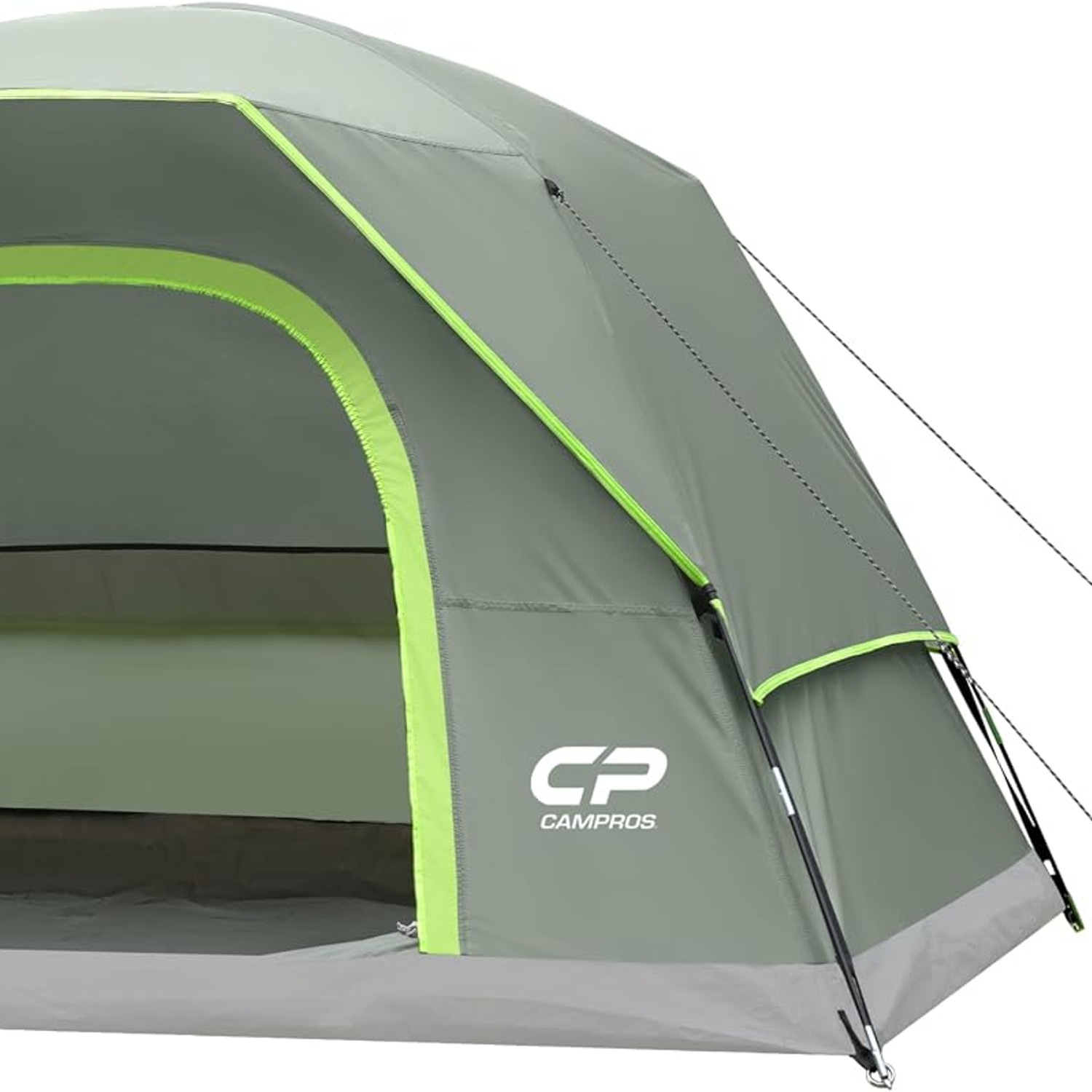
A dome tent like this one is the answer to most of that. The shape is old, simple and proven. Two or more poles cross over the top, the fabric hangs from them, and the whole thing stands up on its own. There is no clever engineering to misunderstand and very little to go wrong.
How a clip-pole dome actually works
Older tents threaded their poles through long fabric sleeves. That works, but it is slow and it means dragging a flexing pole through a tunnel of nylon while it catches on every seam. This tent uses clips instead. You lay the body out, slot the four aluminum poles together, cross them over the top, and snap the plastic clips onto the pole shafts.
Because the frame holds its own shape, you can lift the finished dome and move it to a better patch of ground before you peg anything. That is genuinely useful. You find the rock under the floor after the tent is up, not after you have spent twenty minutes committed to the wrong spot.
The stated setup time is five minutes for two people. That is realistic once you have done it twice. Your first attempt will be slower, which is why pitching it in the garden before your first trip is always worth the effort.
Reading the waterproof rating
The shell carries a PU 1500mm waterproof coating. That number is a hydrostatic head rating, and it describes how tall a column of water the fabric can support before moisture pushes through.
For context, 1000mm is roughly the threshold where a fabric is considered waterproof rather than showerproof. Most recreational and family tents sit between 1500mm and 3000mm. Expedition shelters go much higher. A 1500mm rating will see off steady rain and a soaking overnight shower without drama. It is not built for days of horizontal weather on an exposed ridge, and the three season rating says as much.
Two things matter more than the number. First, peg the rainfly out so it is taut and not touching the inner wall, because contact points wick water through. Second, dig or choose ground that drains, since water pooling under the floor will beat any coating eventually.
Condensation, and why it is not a leak
Most people who think their tent leaked actually met condensation. A sleeping adult puts out a surprising amount of moisture overnight. When that warm damp air hits cold fabric, it turns to water and drips.
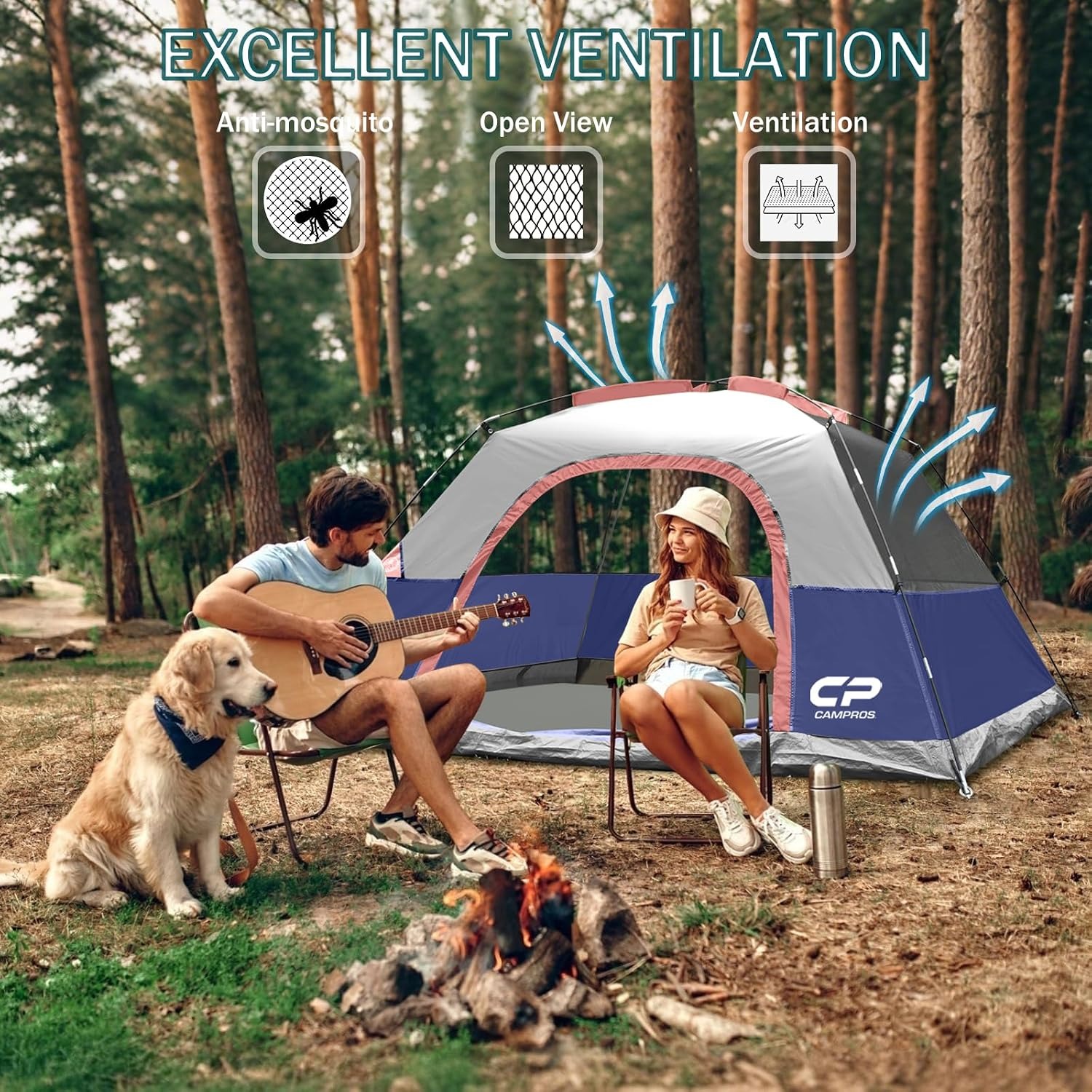
The fix is airflow. This tent has one mesh window plus mesh on the door, and the rainfly is removable. On a dry clear night, take the fly off entirely and the condensation problem mostly disappears. When the fly has to stay on, leave the lower zips cracked open and avoid blocking vents with gear piled against the walls. Cooking or boiling water inside makes it dramatically worse, so do that outside under the vestibule overhang or away from the tent.
Working out the real capacity
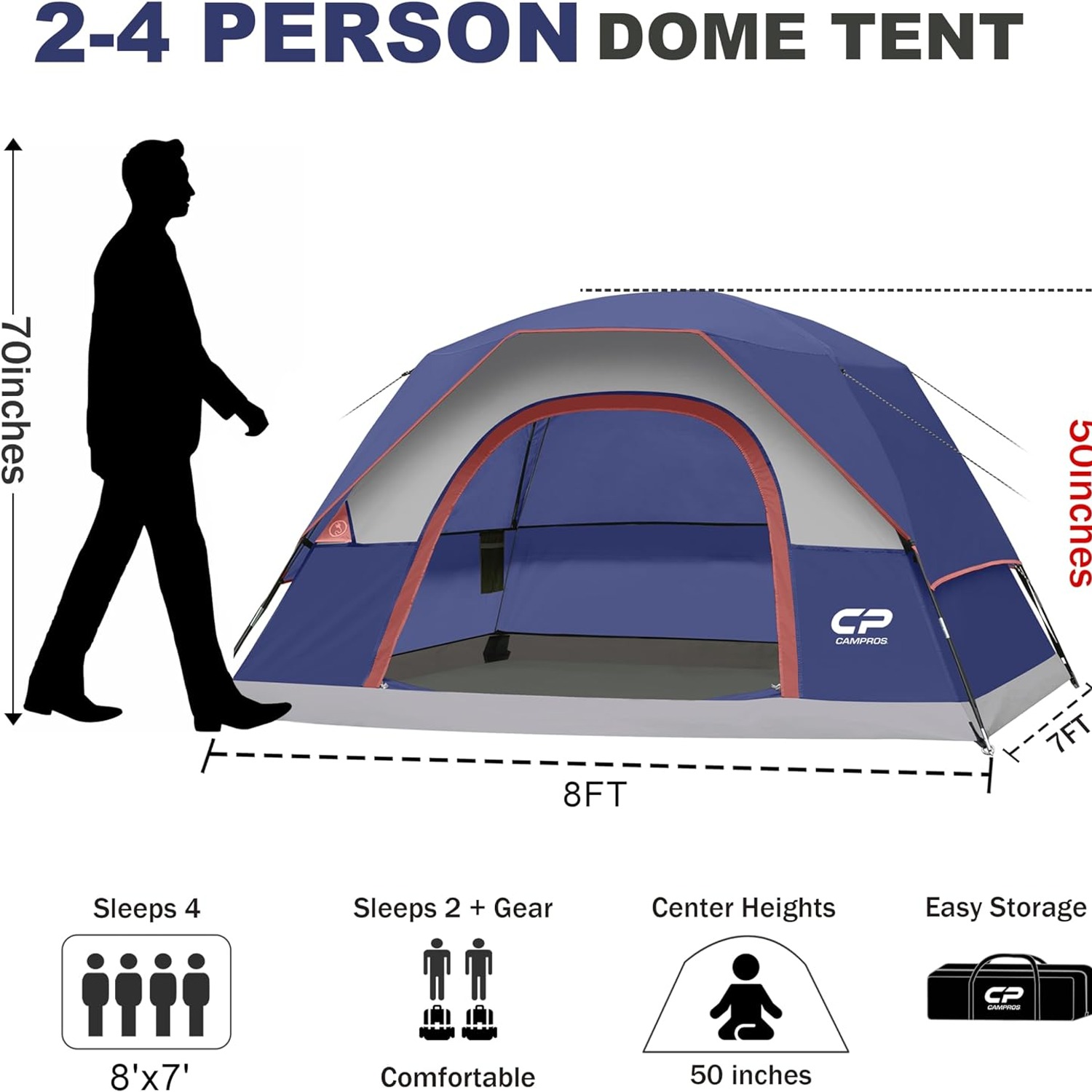
The tent is rated at four person occupancy over roughly 56 square feet, measured at 2.44 m by 2.13 m with a 1.27 m center height.
Tent capacity ratings across the whole industry describe how many adult bodies fit lying flat, touching, with nothing else inside. Nobody camps like that. The honest translation is simple. Take the rated number and subtract one for comfort, or subtract two if you are bringing bulky gear, a dog, or anyone who moves in their sleep.
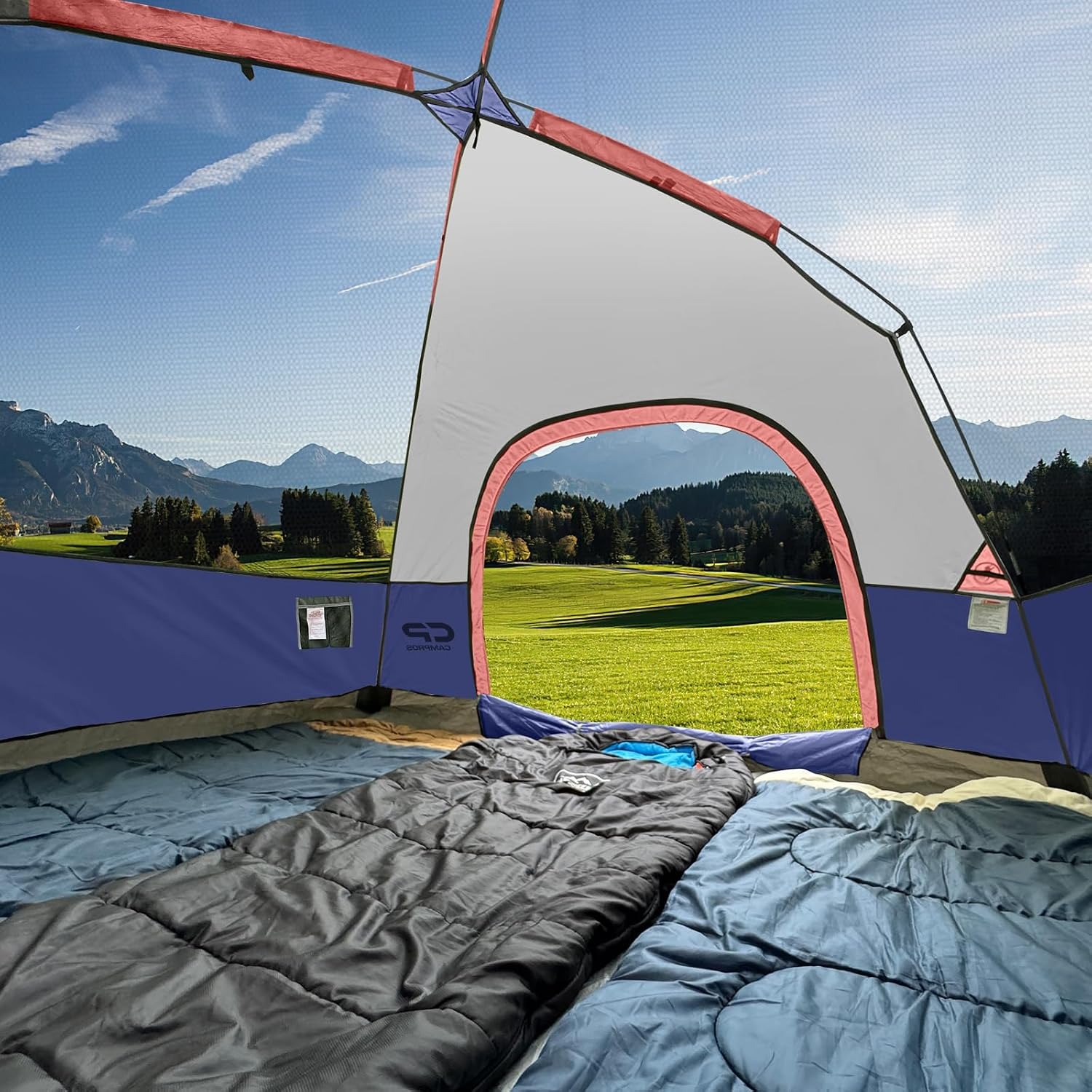
So two adults get a roomy setup with space for packs along one wall. Three adults fit fine for a weekend. Four works for a single night if everybody is traveling light and has their gear in the vestibule or the car. If you are searching for the best tent for two adults with room to spread out, this sits in a good spot.
The 1.27 m peak height means sitting up comfortably and changing clothes on your knees. You cannot stand. That is normal for a dome of this footprint and it is part of the trade for the low packed weight.
Who this suits
Think about the trips you actually take rather than the trip you imagine. This tent fits the realistic ones well.
Weekend campers at established sites will get on with it immediately, because the quick pitch and free-standing frame make arriving late much less stressful. Festival goers get something that goes up fast on tired legs and packs down small enough to carry back across a field. Anglers get a vestibule for muddy boots and a polyethylene floor that shrugs off a damp bank. Walk-in campers get 3.5 kg, which is carryable solo and easy split between two.
It suits people who want a reliable three season shelter without paying for features they will never use. If you are chasing a tent for winter alpine use, sustained storm exposure, or weeks of continuous living, you want a different category of product and a much bigger budget.
What to check before you buy any tent
A few practical questions sort most of it out.
How many people, honestly, including gear? Where will you pitch, and will pegs hold there? A free-standing design matters enormously on decking, gravel and hard-packed ground. How far are you carrying it, and does 3.5 kg sit comfortably with your other kit? And how often will you use it, because a tent used four weekends a year deserves a very different budget from one used forty nights.
Check the included components too. This one ships with the tent body, rainfly, poles, stakes and a carry bag, which is everything you need to pitch it on day one.
Looking after it
Tents mostly die from neglect, not from use. Two habits will double the life of this one.
The first is drying. Never pack a wet tent away for more than a day. Mildew sets into the coating, smells permanent, and breaks the waterproofing down from the inside. If you have to pack wet to get home, pitch it in the garden or drape it over a rail that evening.
The second is cleaning gently. Care instructions are hand wash. Brush dried dirt off, spot clean with cool water and a soft cloth, and keep detergent, bleach and washing machines well away. Those strip the PU coating. Shake grit out of the floor before folding, keep the poles straight rather than bent in storage, and store the packed tent somewhere cool and dry out of sunlight.
Small repairs are worth doing early. A dab of seam sealer on a weeping stitch line, or a patch on a small tear, keeps a minor issue from becoming a ruined trip.
The short version
This is a straightforward three season dome tent that does the basics well. Four aluminum poles clip on for a five minute pitch, the polyester shell has a PU 1500mm waterproof coating, the floor is polyethylene, and the rainfly comes off when you want the stars. You get one door, one mesh window, one vestibule and two interior pockets across roughly 56 square feet of floor.
Rated at four people, best enjoyed by two or three. Packs to 3.5 kg with its own bag. If your camping involves campgrounds, festivals, fishing weekends and the occasional walk-in site, this covers it without fuss.