
The complete guide
How To Choose A 6 Person Family Tent That Actually Fits Your Family
The problem with "sleeps six"
Tent capacity numbers are not promises about comfort. They describe how many adult sleeping mats can be laid flat, edge to edge, on the floor with no gaps. There is no allowance for bags, boots, a cooler, a toddler who sleeps sideways, or anyone who wants to sit up and read.
That is why so many families end up disappointed on night one. A four person tent for a family of four looks right on paper and feels wrong in reality. The usual fix is to buy a tent rated two people above your actual group. A 6 person family tent for four campers gives you sleeping space plus a gear zone, and that single change removes most of the friction from a weekend trip.
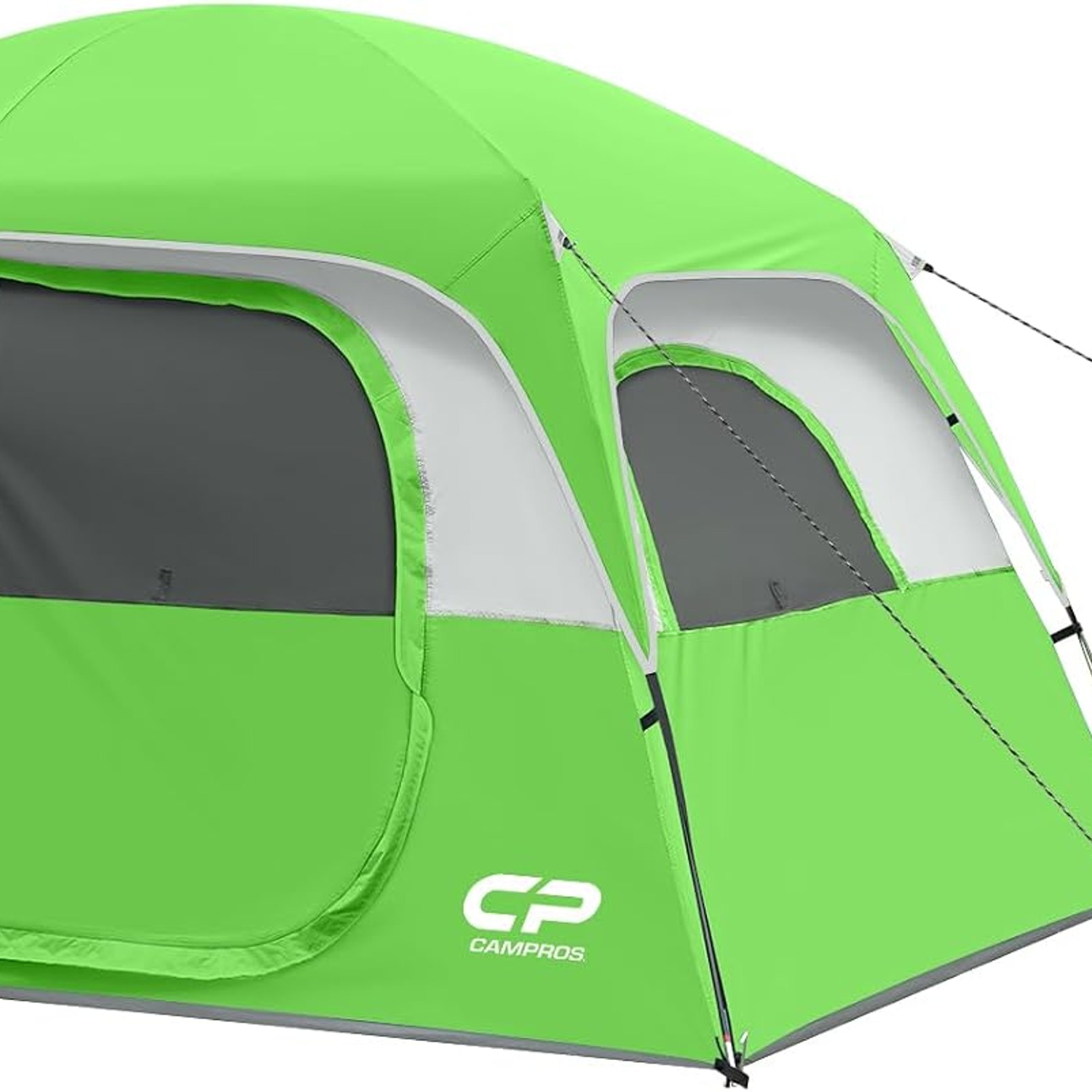
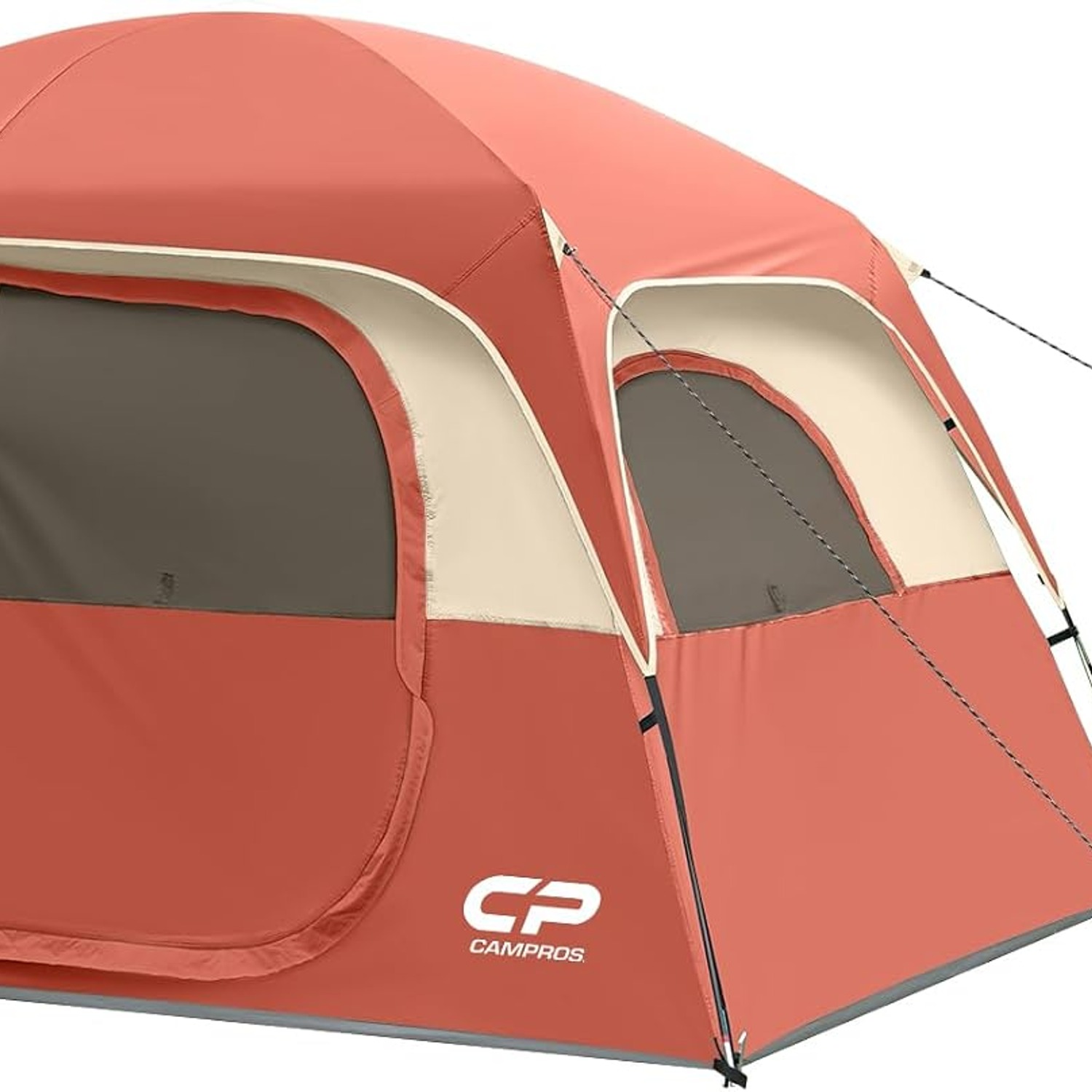
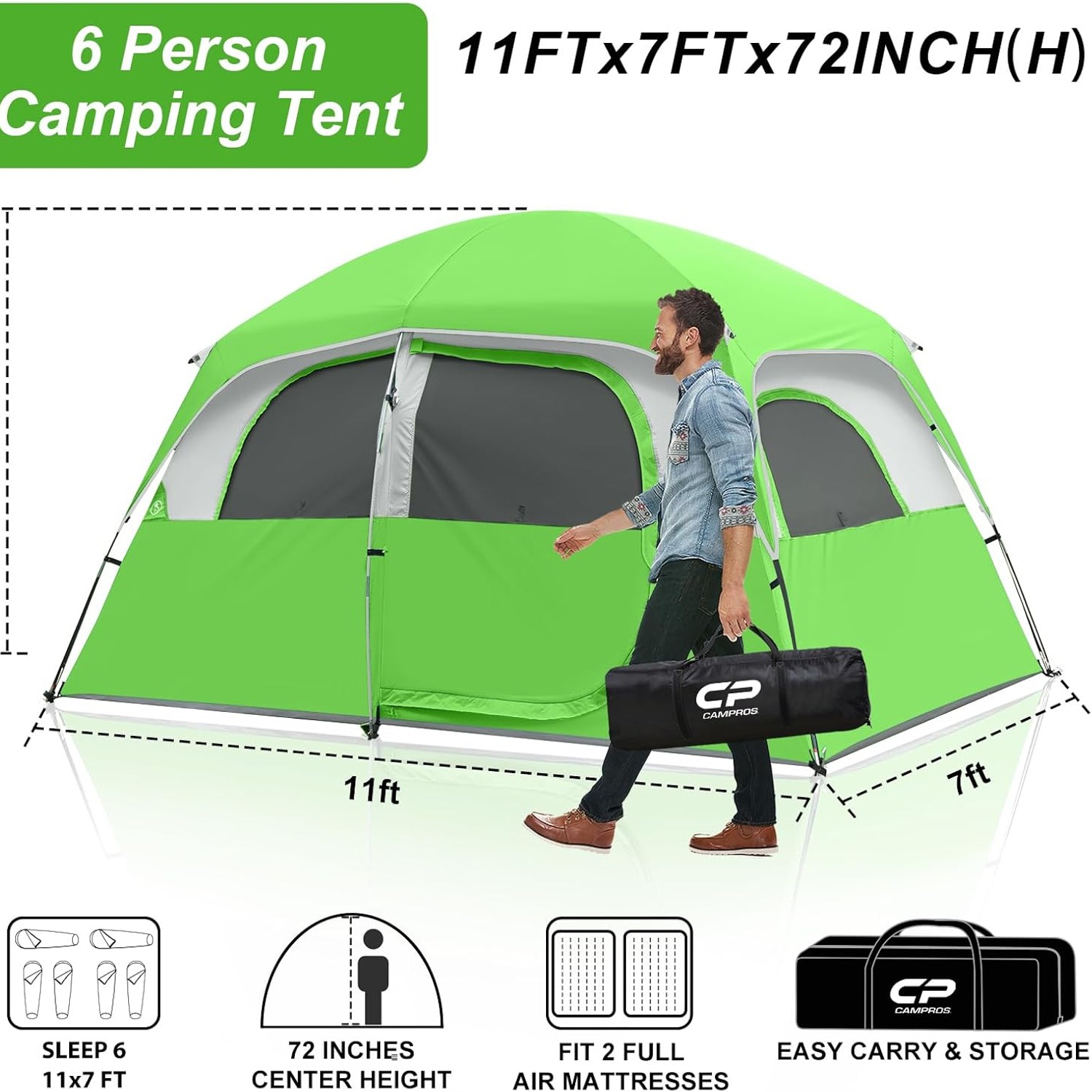
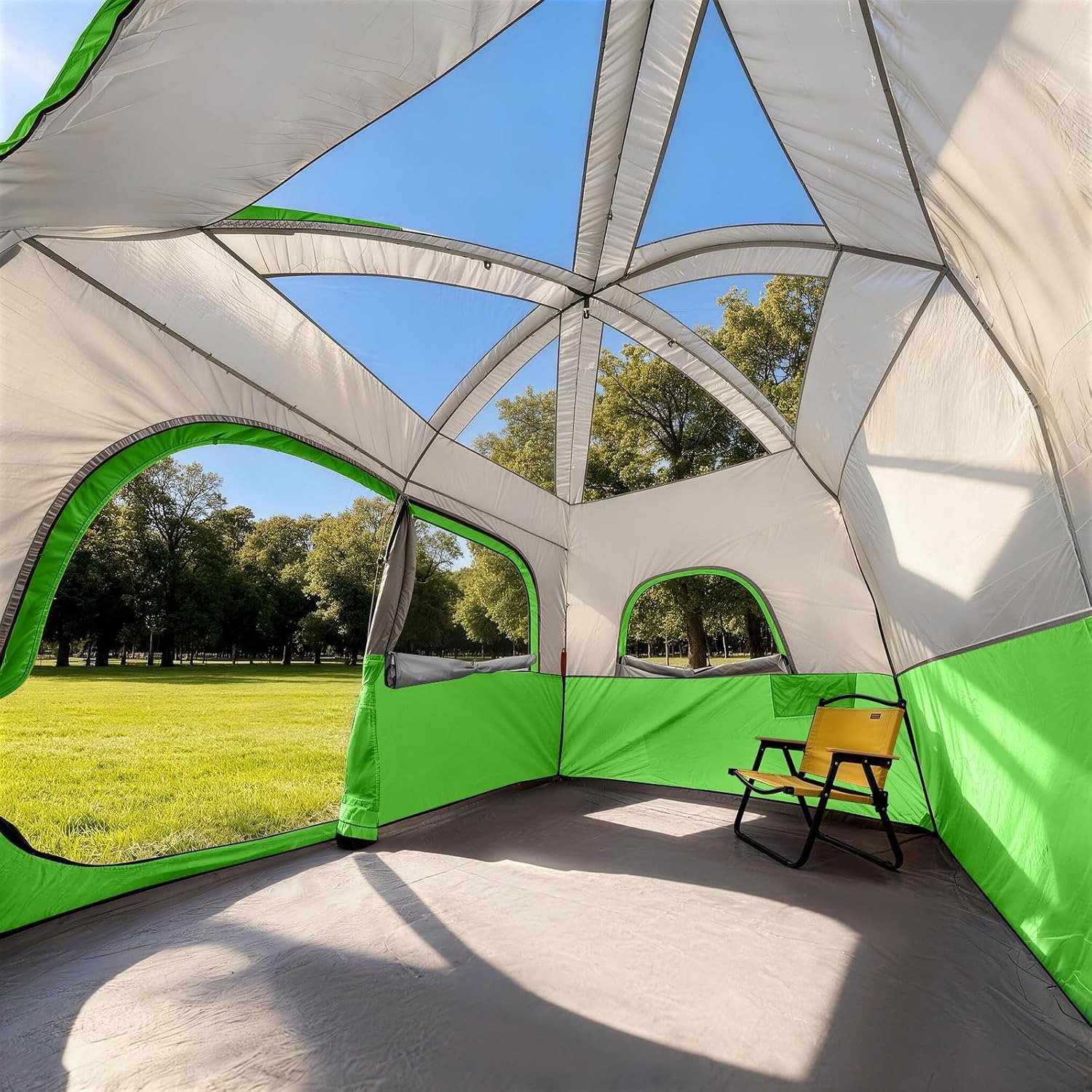
This CAMPROS CP tent gives you 3.35m by 2.13m of floor, which is about 77 square feet. Picture a space a bit wider than a queen bed and roughly a meter longer. That is the honest footprint you are working with.
Why cabin shape matters more than you think
Tents come in two broad shapes for family camping. Domes curve inward from the floor, so the usable space shrinks fast as you move away from the center pole. Cabins keep the walls closer to vertical, so the floor area you paid for is closer to the floor area you can actually use.
This one is listed as a rectangular cabin with a maximum height of 1.83m. For most adults, that means standing upright near the middle to pull on a jumper or wrangle a sleeping bag. It sounds like a small thing. After two nights of crouching in a low tent, it stops sounding small.
The trade-off is wind. Straight walls catch more of it than a low curved shell. That is manageable with good pegging and a sensible pitch, and it is covered further down.
How the structure works
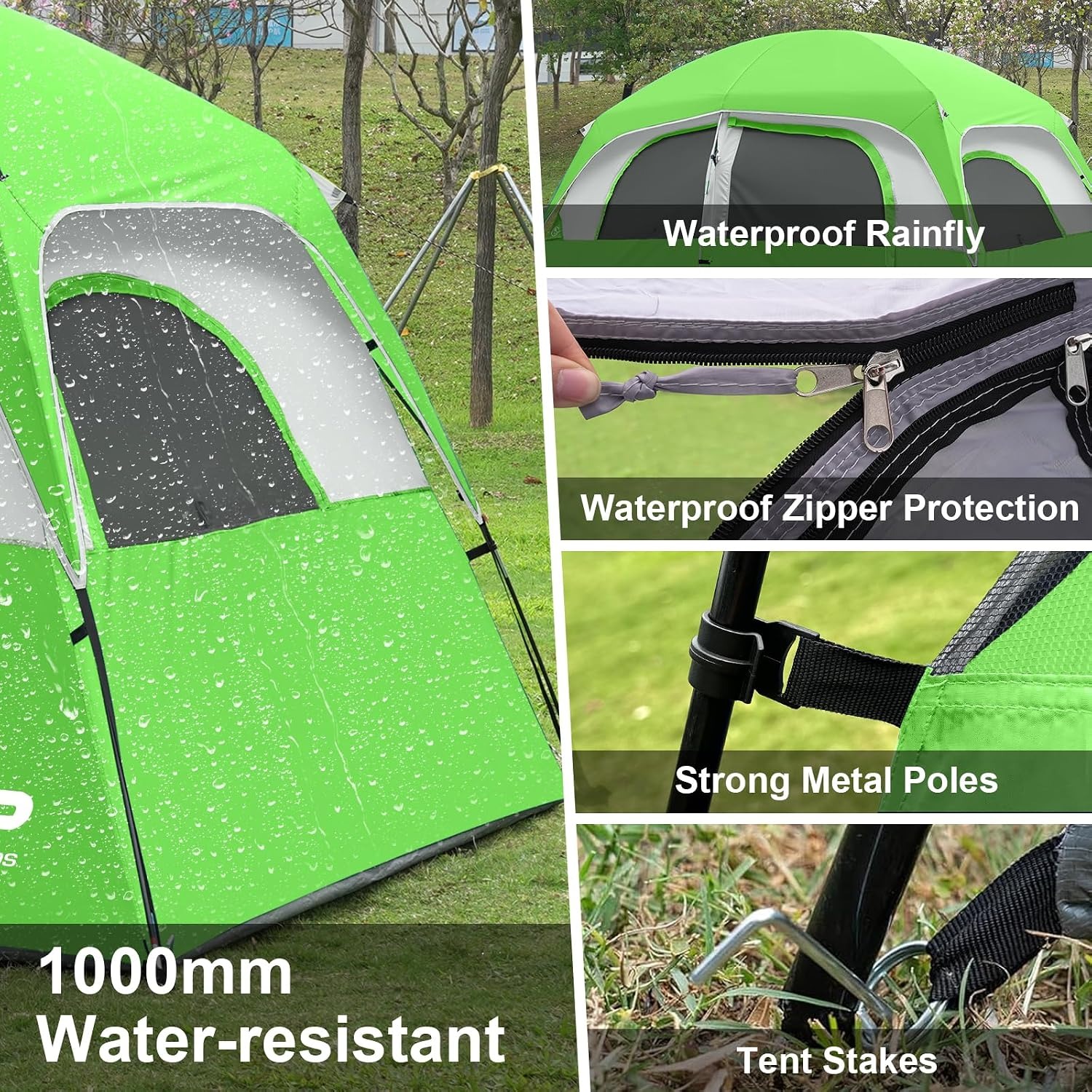
The frame uses four alloy steel poles that slide through sleeves sewn onto the tent body. Sleeves take a little longer than clips, but they spread load along the pole rather than at a few points, which helps the tent hold its shape once it is tensioned.
The tent is free standing. Raise the frame and it keeps its form before a single peg goes in. That is genuinely useful. You can pitch it on the grass, realize the ground slopes the wrong way, pick the whole thing up and rotate it, then stake it down. It also makes packing up easier, because you can lift and shake the floor clean.
Four metal stakes and four guylines come in the bag. Use all of them, every time, even on a still evening. Weather changes at 3am more often than it changes at 6pm.
Weather, water and the 1000mm number
The listed water resistance rating is 1000mm. That figure comes from a lab test measuring how tall a column of water the fabric holds before it leaks. Higher numbers handle heavier, longer rain. A 1000mm rating is a reasonable showers-and-passing-weather level, not a storm-chasing spec.
The removable rainfly is the main defense. Keep it tensioned so it sits slightly off the tent body, because a fly touching the inner wall will wick water through at the contact point. Guylines do this job, which is another reason to peg them out properly.
Two practical habits help more than any spec. Pitch on ground that drains instead of in a dip, and never let the floor sit in a puddle. Grass over gentle slope beats flat mud every time.
Airflow and condensation
Four windows plus the door keep air circulating. That matters because the moisture inside a tent mostly comes from the people in it. Six adults breathing overnight put out a surprising amount of water vapor, and if it has nowhere to go, it condenses on the inside of the fly and drips.
On a warm clear night, open the windows and leave the fly off or partly rolled back. The mesh keeps insects out while air moves. On a wet night, you will be more closed in, so crack whatever vents you can and expect some dampness on the inner surfaces by morning. That is physics, not a fault.
Who this tent suits
Families with two to four kids who drive to a campground will get the most from it. So will couples who want a queen air mattress and somewhere dry to leave gear. Groups of mates heading to a festival or a riverside weekend will appreciate the floor area and the fast pitch.
It is less suited to anyone carrying their shelter on their back. At 6.1kg packed, it is a boot-and-trolley tent, not a trekking one. It is also a single-room design, so there is no separate bedroom partition if you want privacy between adults and kids.
If your camping is mostly drive-in, this sits comfortably in the territory people search when they look for the best family camping tent in this size bracket.
How to pitch it well
Clear the ground first. Sticks and stones are the main enemy of any polyester floor. Lay a footprint or tarp slightly smaller than the tent base, so rain does not collect between the two layers.
Orient the door away from the prevailing wind. Thread the poles, raise the frame, then peg the four corners square before you tension anything else. A square base makes the rest of the pitch easy. A twisted base makes every zipper stick.
Add the rainfly, then run the guylines out at roughly 45 degrees and tension them evenly. If the ground is soft or sandy, angle pegs away from the tent and consider burying them sideways under a rock. Spare pegs cost very little and save a lot of swearing.
Caring for it so it lasts
Hand wash only. Cool water, a soft cloth, no detergent harsher than mild soap. Machine washing, bleach and hot water all attack the coating that keeps the fabric water resistant.
Dry it fully before it goes in the bag. This is the single biggest factor in how long a tent lasts. A tent packed damp will come out smelling of mildew, and mildew stains do not come out. If you have to pack wet to get home, set it up again in the backyard or over a line as soon as you arrive.
Keep zippers clean. Sand and grit in a zipper track will wreck it faster than UV will wreck the fabric. A quick brush and an occasional rub with a zipper lubricant keeps things running.
Store the tent somewhere cool and dark, with the stakes in a separate pouch so sharp ends are not pressing into the fabric for months.
The short version
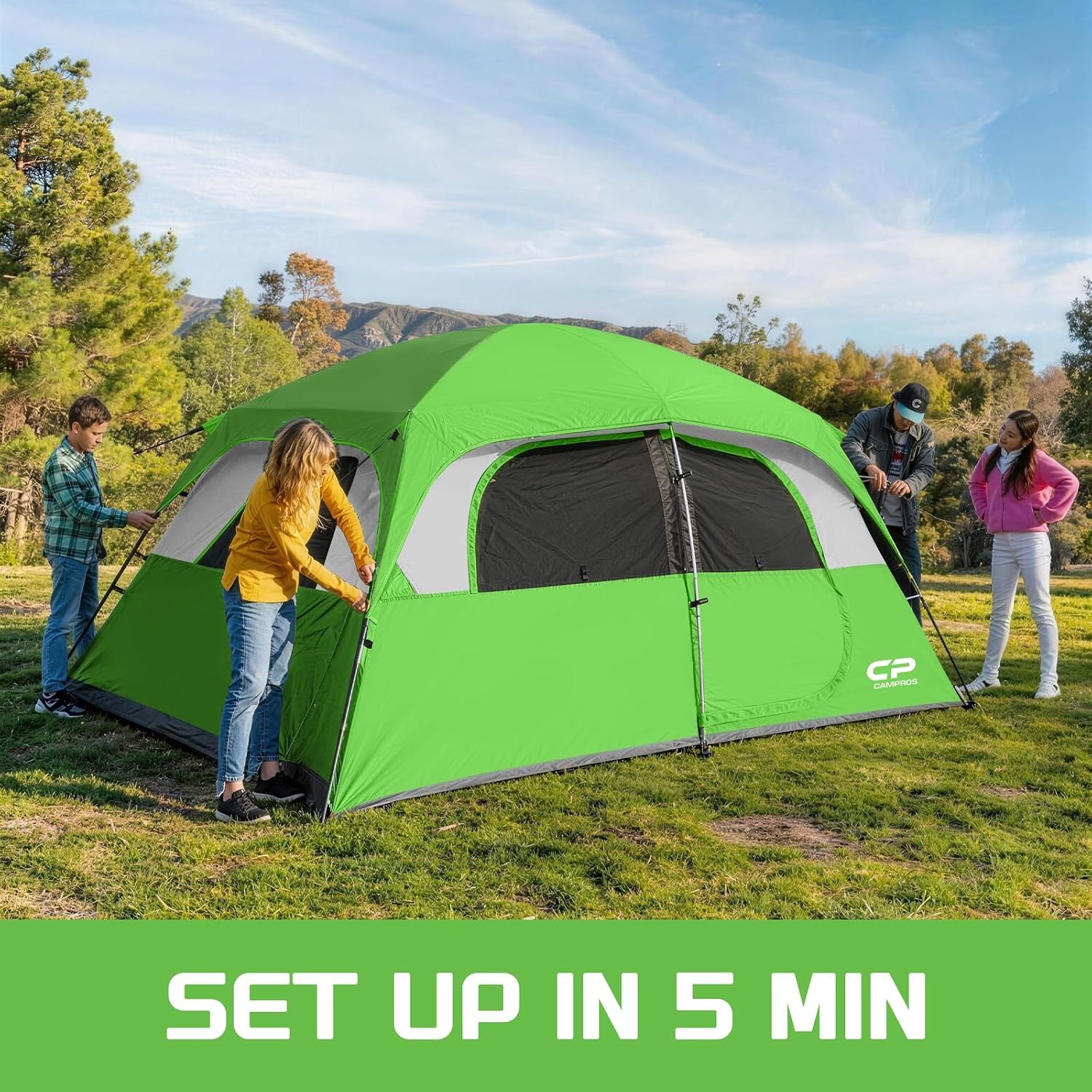
You are getting a green cabin-style tent with a 3.35m by 2.13m floor, 1.83m of standing height, four windows, one zippered door and a removable 185T polyester rainfly. It packs to 6.1kg with a carry bag, rainfly and stakes, and the frame is free standing with four alloy steel poles through sleeves. Listed setup is around 10 minutes.
Buy it if you drive to your campsite, want room for a family plus gear, and value being able to stand up inside. Look elsewhere if you need a separate bedroom, a backpacking weight, or a shelter built for heavy sustained storms.
For most weekend family trips, the extra floor space is the upgrade people notice first and appreciate longest.