
The complete guide
How To Choose A Rechargeable Camping Lantern
The problem with camp lighting
Most people arrive at camping with a flashlight and nothing else. It works for about ten minutes. Then you are holding it in your teeth while you peg out the fly, or propping it against a mug so it bounces light off the tent wall, or waving it around the table so nobody can see their food properly. A flashlight is a tool for looking at one thing. Camp life needs light for everyone at once.
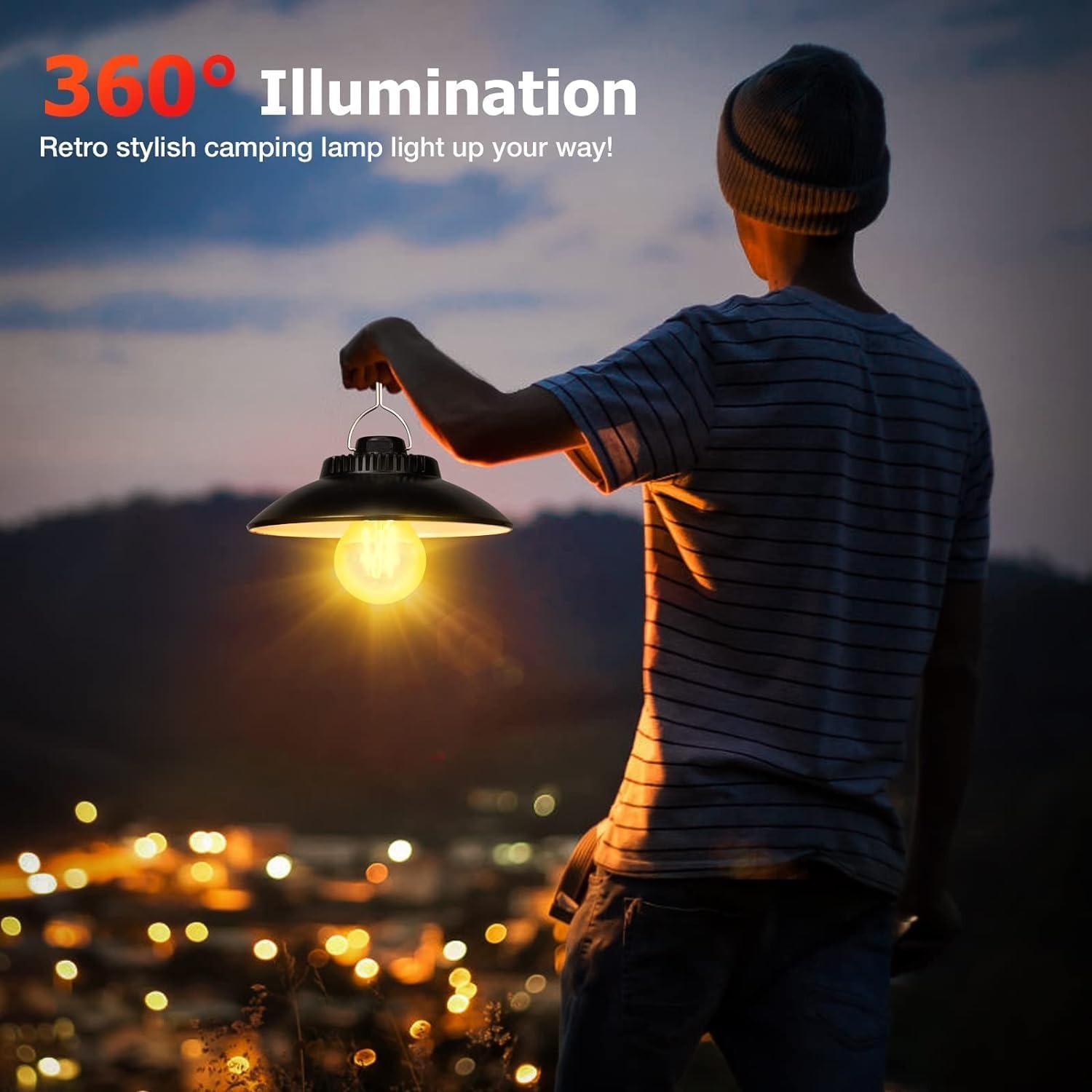
That is what a lantern does differently. The light source sits in the middle and throws light in every direction, so it lands on the table, the chairs, the faces and the tent floor at the same time. Nobody has to aim anything. You hang it or stand it, and the space is lit.
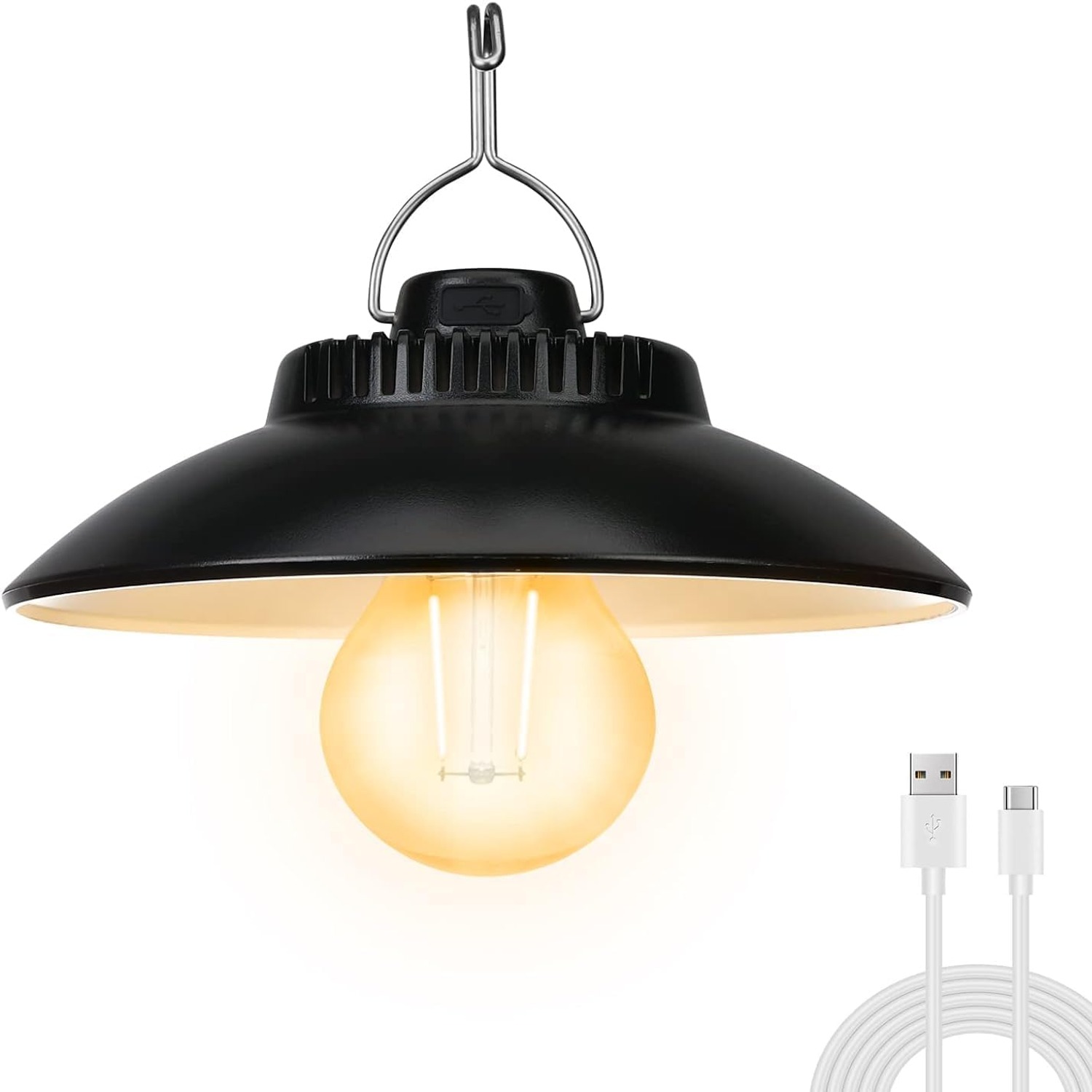
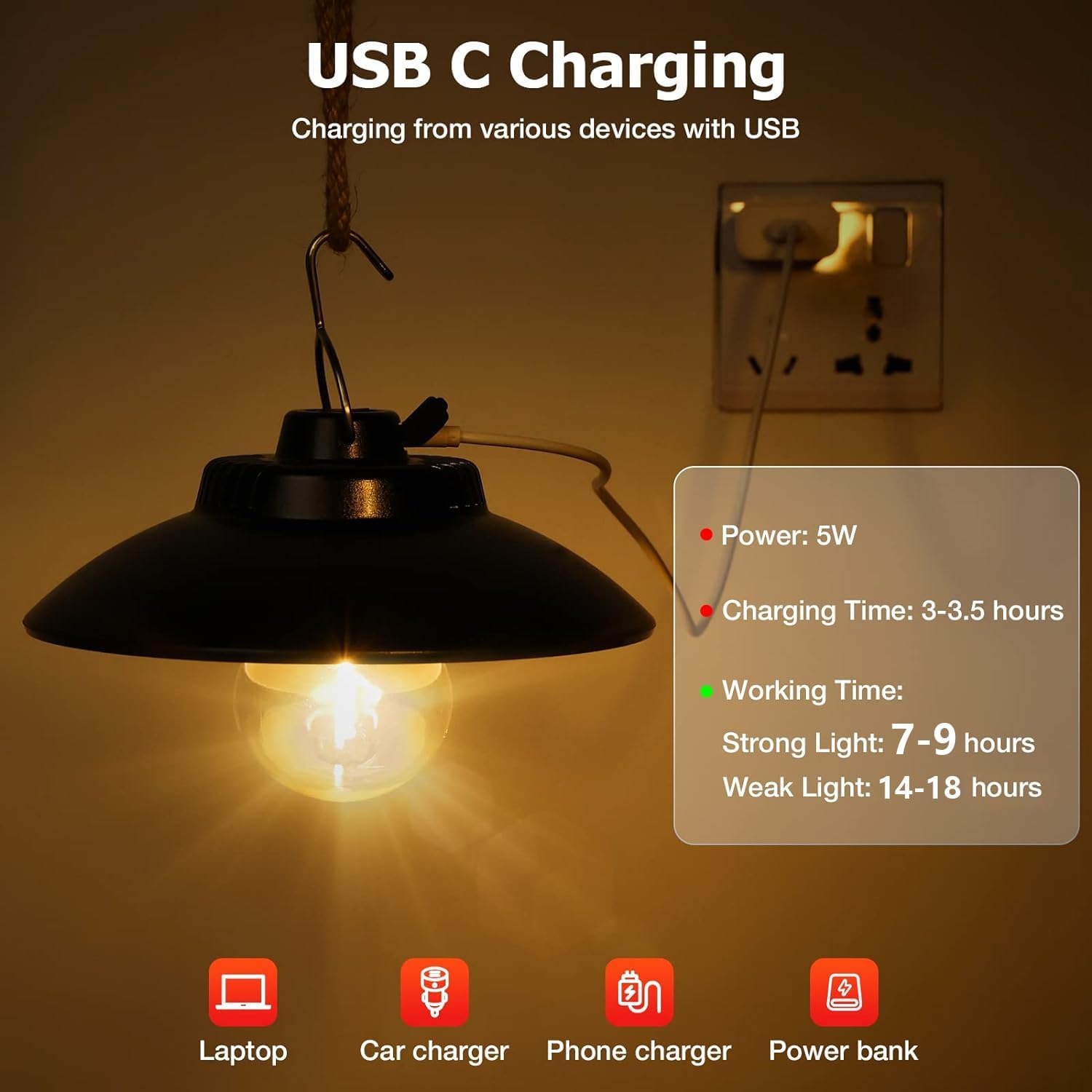
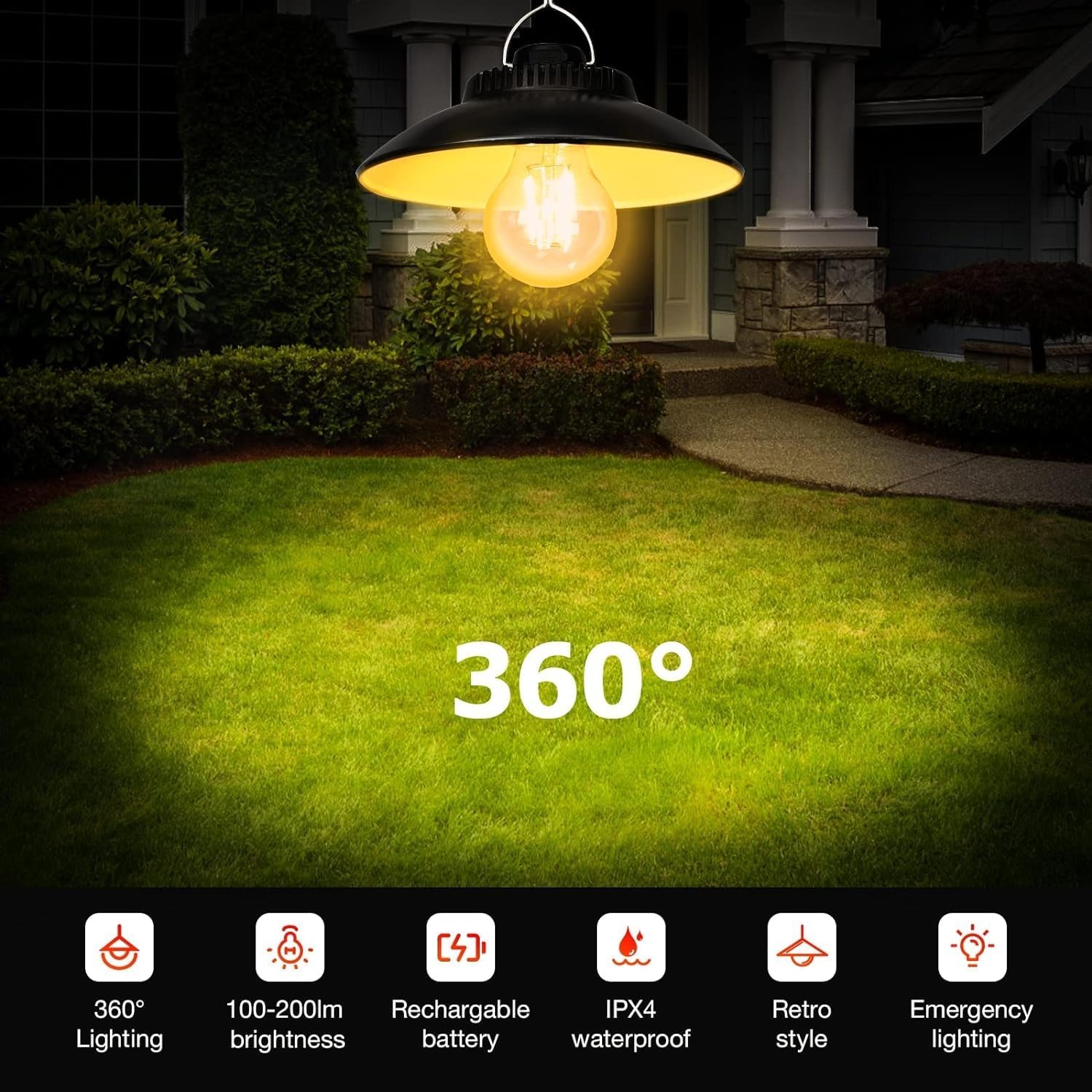
This retro camping lantern takes that idea and strips out the two things that used to make lanterns annoying. There is no fuel, no mantle and no flame, and there are no disposable batteries to buy and bin. It charges over USB-C from a built-in 2600 mAh lithium battery, the same way your phone does.
How this one works
Inside the housing is a single LED rated at 5 W, with a 360 degree beam angle. That beam angle is the number that matters most. It is the difference between a light you sit under and a light you point at things.
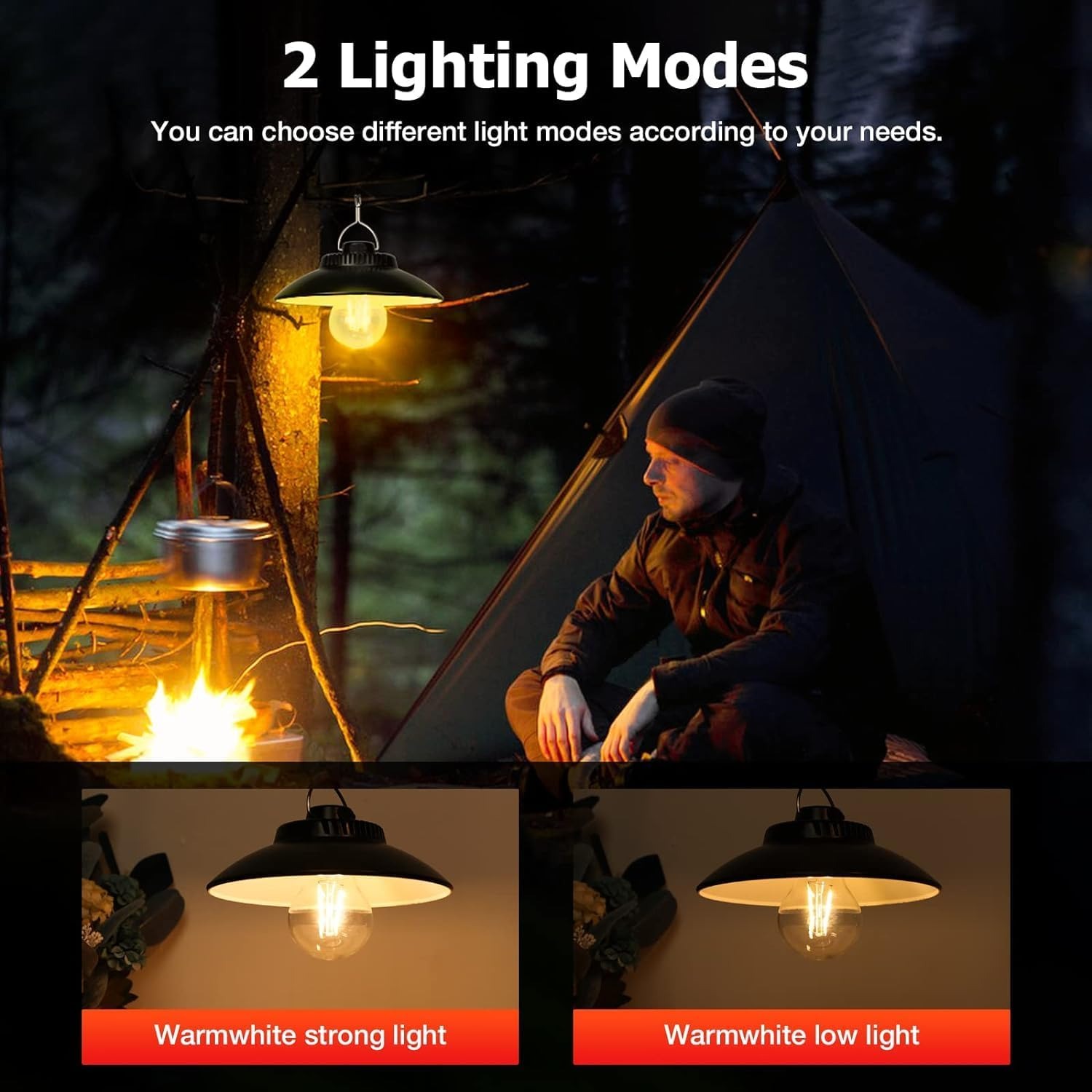
You control it with two brightness levels. Full output is what you want when you are pitching a tent in the dark, sorting the cool box or cooking. Lower output is the setting most people leave it on once camp is set up. It is gentler on the eyes, it keeps the mood right for sitting around talking, and it uses less of the battery.
The listed battery life for this model is 7.75 hours. In practice, how long a charge lasts depends almost entirely on which mode you use and how often you switch up to full. Running on the lower setting is the usual way people get a lantern through a long weekend without a recharge.
Charging runs through a USB-C port at 5 V and 1 A. There is nothing exotic about that, which is the point. The cable in your bag already fits it. A car USB socket will charge it on the drive to the site. A pocket power bank will top it up on the third night of a trip with no power.
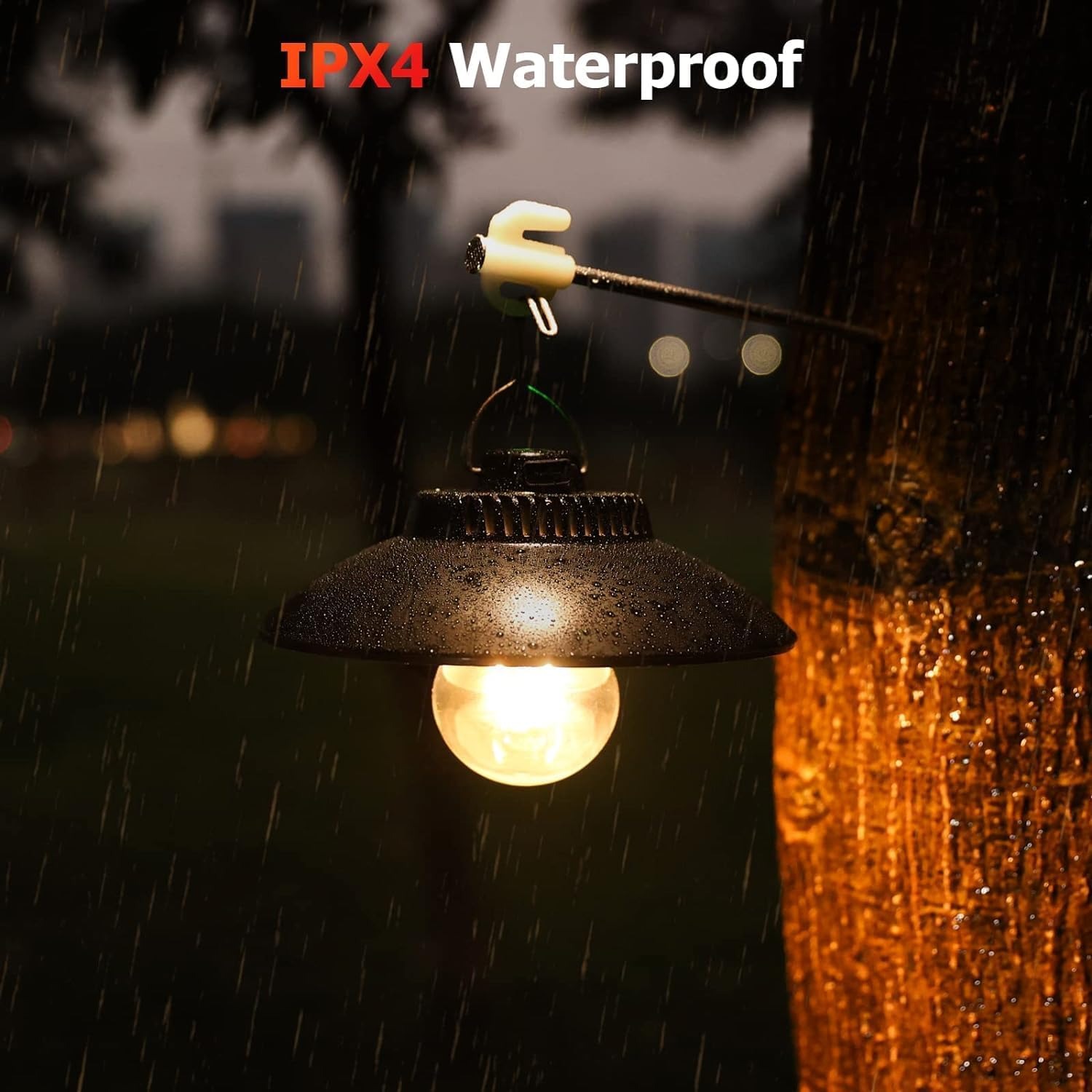
The body is ABS with a powder coated finish, in black, measuring 14.5 by 11 by 18.5 centimeters. It stands on a table, and a hook on the top lets you hang it from a tent loop, an awning rail, a branch or a hook on a wall. It is rated water resistant, which covers dew, splashes and light rain, but not submersion.
Who it suits
Tent campers get the most obvious benefit. Hanging a lantern from the ceiling loop of a dome tent lights the whole inside evenly, which makes getting changed, finding socks and reading before bed far less fiddly than a flashlight on the floor.
Caravan and camper van owners like it for a different reason. It runs on its own battery, so it does not pull from the house battery, and it can be recharged from a 12 V USB socket while driving. It is also handy to carry outside to the awning without rigging anything up.
Then there is home use, which is where a lot of these end up living. A charged lantern in a hall cupboard is a far better blackout plan than a phone flashlight. One lantern lights a kitchen enough to cook, find candles or help a child through a scary half hour. People searching for the best lantern for blackouts usually want exactly this, a rechargeable unit with an even spread of light and no fuel.
It also suits balconies, garden tables, sheds, garages and festival tents. The retro shape helps here. It does not look like camping equipment, so it is not out of place sitting on an outdoor table all summer.
How to choose
Start with where the light needs to go. If you want to read in a tent, light a dinner table or see across a caravan, a 360 degree lantern is right. If you need to walk a dark track or spot something fifty meters away, you need a flashlight or headlamp instead. Many people carry both, and they do not overlap.
Next, look at how it is powered. There are three common types. Disposable battery lanterns are cheap but you keep buying cells, and they always die at the wrong time. Gas lanterns are bright but involve fuel, flame and heat, which rules them out inside a tent. USB rechargeable lanterns like this one sit in the middle, no running cost, no flame, and they recharge from gear you already own.
Then think about brightness control. A lantern with only one setting is either too bright for a tent or too dim for cooking. Two settings covers both jobs and, just as useful, lets you choose between light now and light later. Running the lower mode is the simplest way to stretch a battery across a weekend.
Mounting matters more than people expect. A lantern that only stands on a table is limited, because camp tables are rarely where you want the light. A hook turns it into a ceiling light, a porch light or a tree light depending on the night. Check that the hook folds away too, otherwise it snags on everything in your pack.
Finally, be honest about the conditions. Water resistant is the right level for camping in normal weather, for dewy mornings and for a quick shower while you pack. It is not a level that survives being dropped in a creek. If you fish from a boat or kayak, look for a higher sealed rating.
Size and weight come last for most people. At 14.5 by 11 by 18.5 centimeters, this one is a car-camping and caravan size rather than an ultralight hiking size. If every gram counts on a multi-day walk, a smaller collapsible light is a better match. For everything else, this size gives you a usable amount of light for the space it takes.
Looking after it
Camping gear fails from neglect far more often than from use. A few habits make a big difference.
Charge it before you store it, not after it goes flat. Lithium cells sit happiest with charge in them. If the lantern lives in a cupboard between trips, plug it in every few months.
Keep the charging port clean and dry. Grit in a USB-C socket is the most common reason a light stops charging. Give it a blow or a gentle wipe before you plug in, and never charge it while the outside is still wet.
Wipe the housing with a soft, slightly damp cloth and dry it off. Skip solvents and scouring pads, which will dull the powder coated finish over time.
Store it somewhere cool and dry. A hot car trunk through summer or a damp shed through winter is hard on batteries and on plastic. A drawer in the house is better, and it means the lantern is where you can find it when the power goes out.
The short version
A flashlight points. A lantern fills a space. For tents, tables, caravans and blackouts, filling the space is what you actually need.
This one does it with a single 5 W LED spreading light through 360 degrees, a built-in 2600 mAh lithium battery that charges over USB-C, two brightness levels and a hook so you can hang it instead of balancing it. It is water resistant, it is made from ABS with a powder coated finish, and at 14.5 by 11 by 18.5 centimeters it packs without taking over a bag.
Buy it for a camping trip. Expect it to end up as the light you reach for whenever the power drops or dinner moves outside.