
Camping Company
Company
Shop By Category
T&Cs
Shop Online
  • Clear materials and product specifications
  • Free tracked USA-wide delivery over $150
  • 14-day returns

Heavy Duty Tent Pegs | Steel Tent Stakes | Camping Ground Pegs

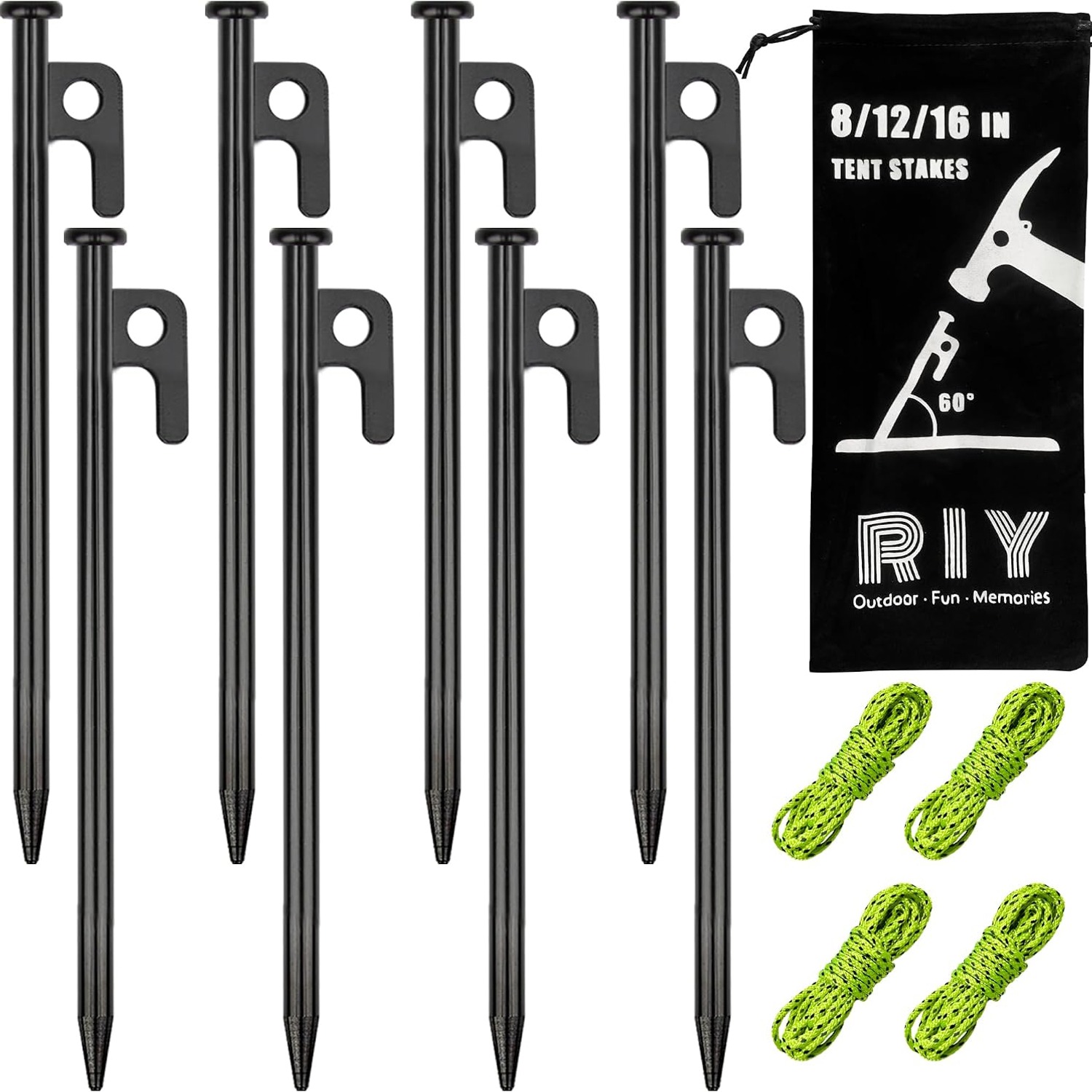
Heavy Duty Forged Steel Tent Pegs (8 Pack)

$51.99 $61.99 Save $10
  • Forged Steel Build
  • Sharp Driving Tip
  • Wide Strike Head
  • Eight In The Set

Price: $51.99 $61.99

  • Free tracked USA-wide delivery on orders $150+, otherwise a flat $20
  • Pay by card or PayPal, handled by the payment provider
  • 14 days to change your mind, plus your statutory rights
Product specifications
BrandRIY
ManufacturerRIY
Model NumberRIY-20cm-DD16
Manufacturer Part NumberRIY-20cm-DD16
StyleTent Stake
MaterialForged steel
ColorBlack
Peg Length20.3 cm (8 inches)
Peg Width1.5 cm
Number Of Pieces8
Unit Count8 count
Set Weight762 g
Special FeatureHeavy duty
Recommended UsesTent stakes, landscape fabric, plant support
Weight762 g
Shipping & returns

Tracked delivery anywhere in the USA. It is free on orders of $150 or more, and a flat $20 below that.

If it is not right for you, send it back within 14 days of delivery in resaleable condition and we refund the price you paid, including standard delivery. That is a voluntary policy we offer on top of your legal rights. You cover the cost of returning it unless the item is faulty.

If it arrives faulty, damaged or not as described, we put it right at no cost to you under the consumer protection law of your state and the Federal Trade Commission Act, return postage included.

Shipping details · Refunds and returns

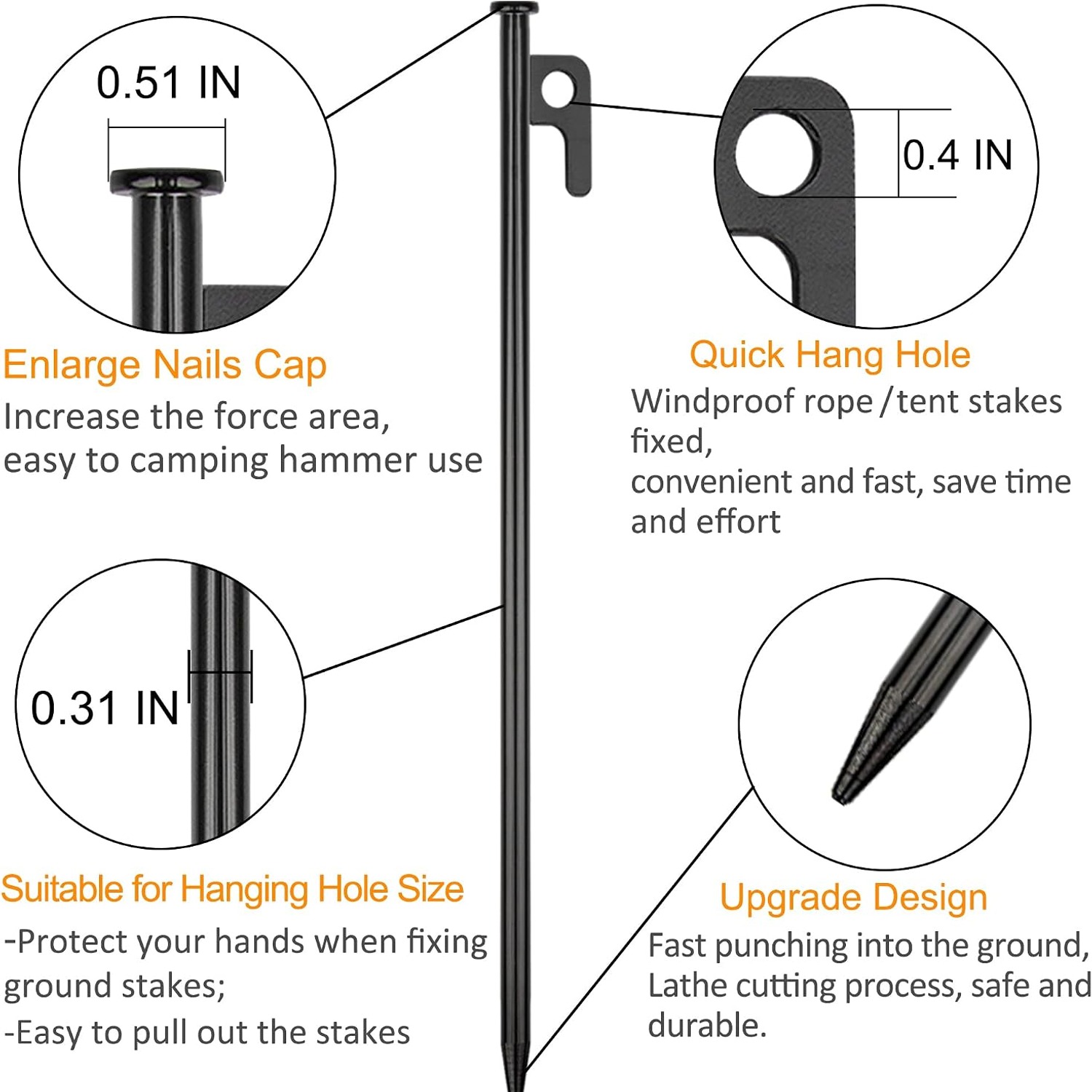
Forged Steel BuildMade from forged steel rather than thin wire, so the shaft keeps its shape.
Sharp Driving TipThe pointed end bites into packed dirt, gravel and rocky ground.
Wide Strike HeadA broad head gives the mallet a bigger target and holds guy lines down.
Eight In The SetEight 20.3 cm pegs, enough for a small tent, a tarp or a canopy corner set.

Pitch with confidence on rocky, dry or windswept ground using heavy duty tent pegs built from forged steel.

Eight 20.3 cm forged steel stakes with a sharp driving tip and a wide head, ready for tents, tarps, canopies, garden fabric and outdoor decorations.

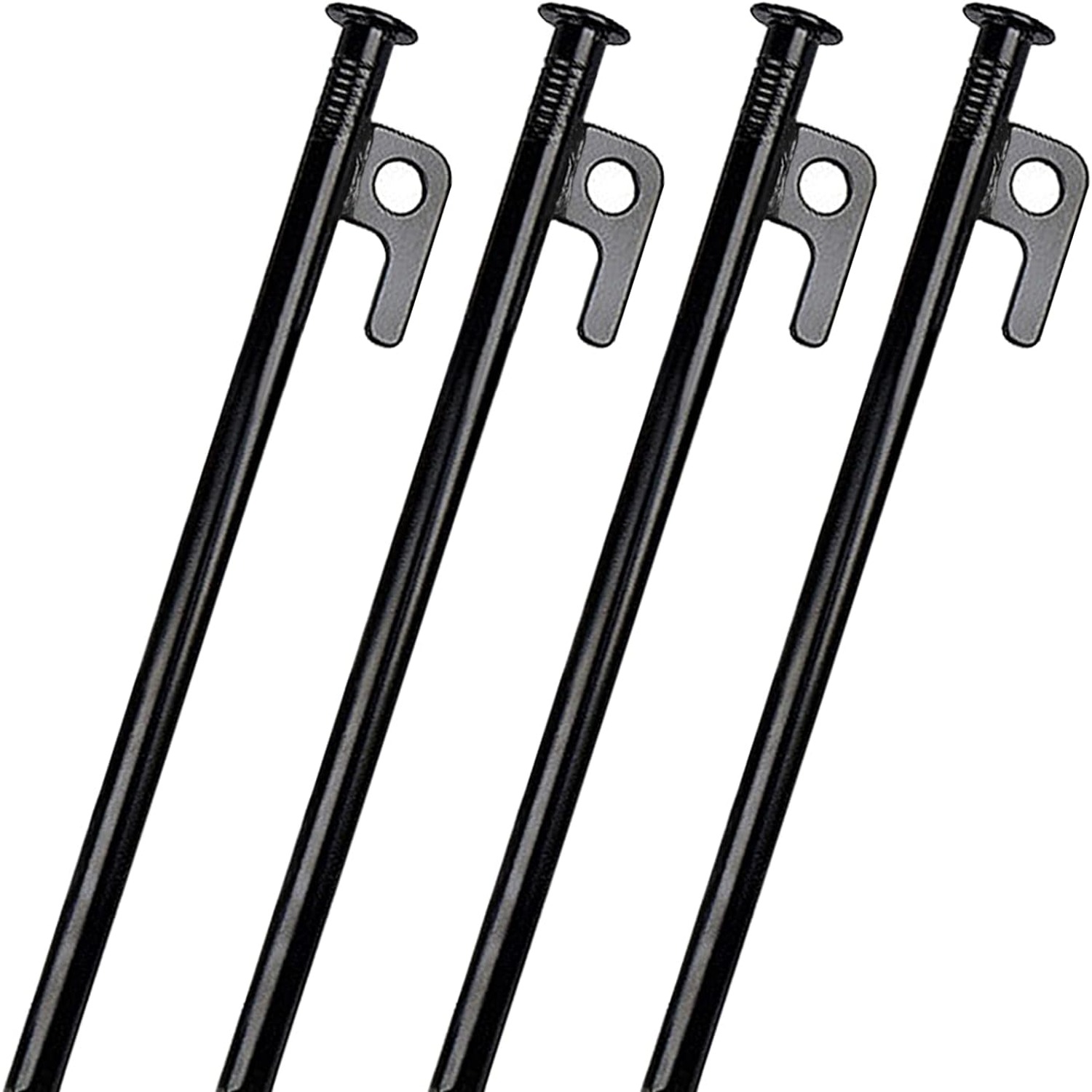
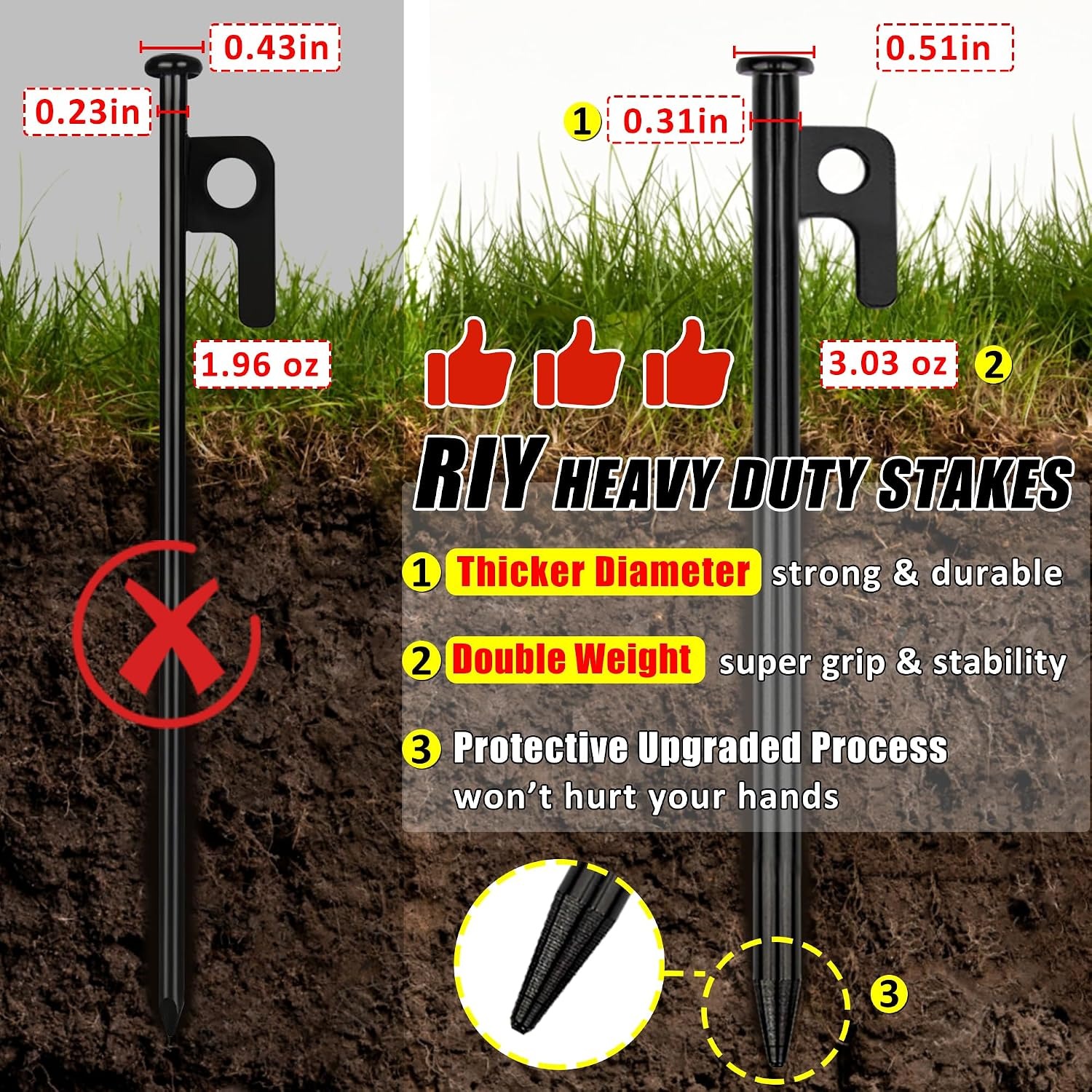
Eight forged steel tent pegs, each 20.3 cm long and 1.5 cm across the widest point, finished in black.

The sharpened tip is made to push into hard, dry or stony ground where moulded plastic pegs give up.

A wide head gives you a clear target for the mallet and keeps guy lines and fabric from slipping off.

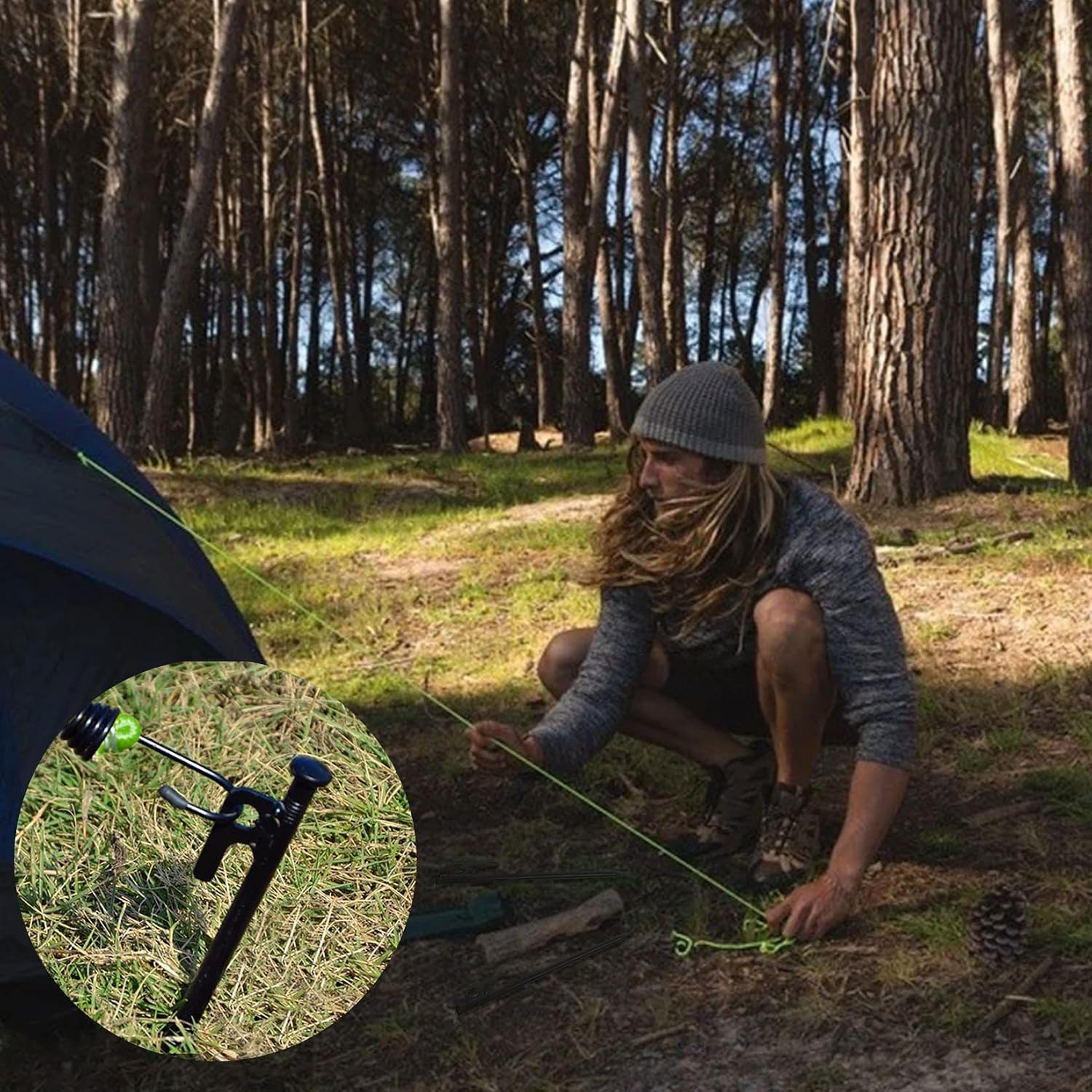
Useful well beyond camping, including tarps, canopies, shade sails, landscape fabric and garden decorations.

Supplied as a set of eight weighing 762 g in total, so they are easy to keep in a peg bag or the trunk of the car.

Heavy Duty Forged Steel Tent Pegs (8 Pack)

Most tents are sold with pegs that only work on soft, even ground. The moment you camp somewhere with clay, gravel, tree roots or baked summer dirt, those thin pegs bend on the second or third hit. This set takes the opposite approach. Each stake is forged steel, 20.3 cm long and 1.5 cm wide, and the shaft is solid rather than a bent length of wire. You can hit it properly with a mallet and keep going.

Heavy Duty Forged Steel Tent Pegs (8 Pack)

The shape is simple for a reason. A sharp point at the bottom concentrates the force of each strike into a small area, which is what lets the peg work its way past small stones instead of skidding off them. The head at the top is wide, so you are less likely to miss with the mallet and more likely to keep a guy line or tarp eyelet pinned down once the peg is seated. There is nothing clever to break or jam.

Heavy Duty Forged Steel Tent Pegs (8 Pack)

Eight pegs is a practical number. It covers the four corners and two guy lines of a small dome tent, the full perimeter of a tarp, or the legs of a pop-up canopy with a couple spare. Plenty of people buy a set for camping and end up using half of them in the garden, pinning weed matting, holding down the edge of a pond liner, or steadying a young tree stake. Nothing about these stakes limits them to a campsite.

Heavy Duty Forged Steel Tent Pegs (8 Pack)

At 762 g for the full set, they are heavier than the aluminum pegs that come with a lightweight hiking tent. That weight is the point. These are for car camping, caravan awnings, festival shelters, market stalls and backyard setups, where a little extra mass in the peg bag is a fair trade for pegs that survive the trip home. If you walk in your gear over long distances, keep your light pegs for that and bring these for everything else.

Heavy Duty Forged Steel Tent Pegs (8 Pack)

Looking after them is straightforward. Knock off the dirt, let them dry before they go back in the bag, and pull them straight up with a peg puller or the hook of another stake rather than bending them sideways out of the ground. Treated that way, a set like this tends to outlast several tents.

Not sure yet? That is fine.

Camping gear has to suit your trip and your climate, and you cannot always judge that from a photograph. If it is not right for you, send it back within 14 days of delivery in resaleable condition and we refund the price you paid, including standard delivery. That is a voluntary policy we offer on top of your legal rights.

If it turns up faulty, damaged or not as described, that is on us. The consumer protection law of your state covers you, and we pay the return postage. Read the full detail on our refunds and returns page, or ask us anything before you order.

Frequently Asked Questions

What exactly is in the pack?

You get eight forged steel tent pegs, each 20.3 cm long and 1.5 cm at the widest point. They are finished in black and the set weighs 762 g in total. No mallet, bag or guy line is included.

How long is each peg?

Each peg measures 20.3 cm, which is 8 inches. That is a common mid length that works for most tents, tarps and canopies without being so long that it is awkward to carry or remove.

What material are they made from?

The pegs are forged steel. Forged steel is denser and holds its shape better under repeated mallet strikes than thin bent wire or moulded plastic.

Will these work in rocky ground?

The sharp tip is designed to push past small stones and into compacted ground, which is where most light pegs fail. In genuinely solid rock there is nothing a peg can do, so in that case use rock bags, sandbags or tie off to a natural anchor instead.

Are they any good in sand or soft soil?

They will hold in firm soil easily. In loose dry sand, any short peg can pull out, so angle them back from the load, bury them sideways as a deadman anchor, or use dedicated sand pegs for that surface.

Can I use them for a tarp as well as a tent?

Yes. They are a popular choice as tarp pegs because the wide head keeps eyelets and ridge lines from riding up. The same eight pegs can cover a standard tarp perimeter.

Will they hold a pop-up gazebo?

They suit gazebo legs and canopy anchor points on normal ground. For a larger gazebo in windy weather, add weights to the legs as well, since no single peg is a substitute for ballast in strong gusts.

Do they bend when you hit them?

Forged steel is far more resistant to bending than the thin pegs bundled with most tents. Striking squarely with a mallet rather than glancing blows will give the best result.

What should I use to drive them in?

A rubber or steel camping mallet is ideal. Avoid using a rock, as an uneven strike can deform the head and sends the peg in crooked.

How do I get them back out of hard ground?

Hook the head with a peg puller, the claw of a mallet, or the hook of a second peg, and pull straight up with a slight rocking motion. Avoid levering sideways, which puts a bend in the shaft.

Is eight pegs enough for a tent?

It covers a small two person dome tent with corners and a couple of guy lines. Larger family tents usually need twelve to twenty, so many people buy two sets.

Can I buy more than one pack?

Yes, order the quantity you need at checkout. Buying two sets is common for family tents, caravan awnings or a full tarp setup with extra guy points.

Are these the best heavy duty tent pegs for car camping?

They are a strong fit for car camping, where a 762 g peg set is not an issue and durability matters more than grams. For long distance hiking, lighter aluminum pegs make more sense.

What color are they?

Black. Keep in mind that dark pegs are harder to spot in grass, so tie a short strip of bright cord or tape to the head if you tend to lose them at pack-up.

Will they rust?

Steel pegs last longest when you knock off wet soil and let them dry before storage. Leaving them damp in a sealed bag is what shortens the life of any metal peg.

Can I use them in the garden?

Yes. The manufacturer lists landscape fabric and plant support among the recommended uses, so they work as landscape fabric pegs, for pinning weed matting, or for steadying stakes and netting.

Do they work for holding down a pond liner or ground sheet?

They do, as long as the edge material can take a peg through or over it. The wide head sits on top of the fabric and spreads the holding pressure rather than tearing through.

Are they safe around children and pets?

Driven flush and angled correctly, the head sits low to the ground. Even so, pegs and guy lines are a trip hazard, so mark lines with bright tape and walk the site once you finish pitching.

How deep should I drive them?

Drive until the head is close to the ground, leaving just enough to hook the line or the puller. A peg half out of the ground loses most of its holding power.

What angle should I set them at?

Around 45 to 60 degrees, with the head leaning away from the direction of pull. That lets the shaft work against the soil rather than sliding straight out.

Are these suitable for market stalls or event shelters?

They are used that way often. Check the ground conditions and any venue rules first, since many paved or turf-protected sites do not allow pegs at all and require weights.

How much does the set weigh?

The full eight pack weighs 762 g. That is noticeable in a hiking pack but barely registers in a car trunk or a caravan locker.

Can I use them for shade sails?

For temporary shade sails pegged to ground anchors, yes. Permanent shade sails need proper fixed anchor points rated for the load, not ground pegs.

Do they come with a carry bag?

No bag is included. A small canvas or mesh pouch is worth adding so the pegs are not loose in your kit, as loose steel pegs can scuff tent fabric.

Is a warranty included?

No warranty is stated for this product in our record. Your standard statutory consumer rights still apply to the purchase.

Where are they made?

The country of origin is not specified in this record. The brand is RIY and the model number is RIY-20cm-DD16.

How are they packed and shipped?

The pegs ship as a set of eight in protective packaging and are dispatched to your delivery address once your order is confirmed. Delivery timing depends on your location.

What are your delivery and returns terms?

Delivery times and return windows are listed on our shipping and returns pages, which apply to this item. Keep the packaging until you have checked the set over.

Would these make a decent gift?

They are a genuinely useful gift for anyone who camps, runs a market stall, or keeps a tarp in the shed. Pairing the set with a camping mallet makes it a more complete present.

What if they are not right for me?

If the pegs do not suit your ground or your setup, contact us within the return window listed on our returns page and we will walk you through the process. Return them unused and in their original packaging where possible, and tell us what went wrong, as it often helps us point you to a better option such as sand pegs, screw-in anchors or a longer stake.

How To Choose Tent Pegs That Actually Hold

6 min read Camping Company

The problem with the pegs in the bag

Almost every tent sold comes with pegs, and almost nobody keeps them for long. They are usually thin wire hooks or hollow plastic, chosen because they cost the maker a few cents and weigh next to nothing. On a soft grassy pitch in still weather they are fine. On a gravel site, a clay paddock in late summer, or anywhere with tree roots under the surface, they fold on the second hit. You end up hammering harder, bending them straighter with your boot, and hoping the tent holds overnight.

That is the gap heavy duty tent pegs fill. A forged steel stake does not need coaxing. You put the point where you want it, hit it square, and it goes in. The trade is weight: this set of eight comes to 762 g, where a set of flimsy wire pegs might be a third of that. If you are carrying your tent on your back for days, that matters. For everyone else, it does not.

What makes a peg hold

Holding power comes from three things, and the peg is only one of them.

The first is depth. A peg driven two thirds of the way in has far more soil working against it than one left sticking up halfway. These stakes are 20.3 cm, so when they are properly seated you have a decent length of steel buried. Drive until the head is almost touching the ground.

The second is angle. The classic mistake is driving straight down. A peg set vertically can slide out under load because the line pulls along the shaft. Lean the peg back from the direction of pull, roughly 45 to 60 degrees, so the load tries to drag the steel sideways through packed soil. That is a much harder job for the wind.

The third is the soil itself. Firm loam and compacted dirt grip well. Gravel grips better than people expect, as long as the peg can get past the top layer, which is where a sharp tip earns its keep. Loose sand and waterlogged ground grip poorly no matter what you use, and that is when you switch tactics rather than switch pegs.

Where the sharp tip and wide head matter

The two ends of a peg do different jobs. The pointed end is about getting in. It concentrates every mallet strike into a tiny area, which is what lets steel work past small stones instead of glancing off them and curling over. Blunt pegs skid. Sharp pegs bite.

The head is about staying put and staying findable. A wide head gives you a bigger target with the mallet, which sounds like a small thing until you are pitching in fading light. It also stops guy lines and tarp eyelets from riding up the shaft when the fabric flaps. If you have ever watched a line work its way off a hooked wire peg during the night, you know why a proper head is worth having.

One small practical tip. These stakes are black, which looks tidy and hides dirt but makes them easy to lose in long grass. A loop of bright cord through or around the head takes thirty seconds and saves you crawling around at pack-up.

Who this set suits

Car campers get the most out of a set like this. You are not counting grams, you pitch on whatever ground the site gives you, and you want pegs that survive more than one season. Caravan and camper owners are in the same boat, especially for awnings, which catch a lot of wind for their size.

Anyone running a pop-up canopy at markets, sports days or school fetes will find steel tent stakes far less frustrating than the pressed metal ones supplied in the canopy bag. Just remember that pegs anchor a canopy, they do not weigh it down. On a gusty day you want leg weights as well.

Then there is the garden crowd, who often buy camping ground pegs and never take them camping. Pinning landscape fabric, holding down the edge of weed matting, securing netting over a vegetable bed, staking a wind-caught seedling, steadying a temporary fence: all of it is the same job. The manufacturer lists landscape fabric and plant support among the recommended uses for exactly this reason.

The one group that should think twice is long distance hikers. If every gram counts, keep your titanium or aluminum pegs for the trail and keep these for the car.

Working out how many you need

Start by counting anchor points, not guesses. A small dome tent typically needs four corners plus two to four guy lines, so six to eight pegs covers it. A three or four person tent often wants ten to fourteen once you include the vestibule and storm lines. A big family tunnel tent can run past twenty.

Tarps are simpler. A rectangular tarp pitched as a lean-to needs four, pitched as an A-frame with side pull-outs it needs six to eight. Canopies need one per leg at minimum and ideally two per leg on an exposed site.

Whatever the number, add two spares. Pegs get lost in grass, dropped in the dark, and occasionally left in the ground. An eight pack is a sensible unit to buy in, and plenty of people keep two sets so they never have to ration.

Driving and pulling without damaging anything

Use a mallet. A rubber mallet is kind to the head and to your hands, a steel one drives faster in hard ground. What you want to avoid is hitting steel with a rock, because an off-centre strike mushrooms the head and bends the shaft at the same time.

Hold the peg near the ground for the first tap or two, then let go and strike properly. Keep your blows square. Glancing hits are what put a curve in a shaft that would otherwise have gone in straight.

Getting them out matters just as much. Hook the head with a peg puller, the claw on your mallet, or the head of a second peg, and lift straight up while rocking slightly. Do not lever sideways against the soil. That is how a perfectly good stake ends up with a permanent bend that stops it sitting flat in the bag.

Keeping them in good shape

Steel pegs are low maintenance but not no maintenance. The main enemy is trapped moisture. Scrape the mud off before they go away, give them a minute to dry, and store them somewhere that is not permanently damp. A pouch is better than loose in a tub, and loose pegs rattling around inside a tent bag can scuff the fabric.

If the point gets rounded off after a lot of stony ground, a few strokes with a flat file will restore it. That one minute of work makes the next pitch noticeably easier. Check the heads occasionally too; a badly mushroomed head is worth retiring rather than fighting with.

The short version

Thin pegs fail on hard ground, and hard ground is most ground. Forged steel at 20.3 cm gives you enough length to get real holding power and enough strength to take a mallet without folding. The sharp tip gets past stones, the wide head keeps lines where you put them, and eight in a pack covers a small tent, a tarp or a canopy.

Drive them at an angle, drive them deep, pull them straight, and dry them before they go away. Do that and a set like this will quietly outlast the tent it came out to support.

Browse the shop

Not sure how many you need?

Count your tent's corners and guy points, add two spares, and round up to the nearest pack of eight.

Ask us a question

Page summary

This is an eight pack of heavy duty forged steel tent pegs from RIY, model RIY-20cm-DD16. Each peg measures 20.3 cm long by 1.5 cm wide and is finished in black. The full set weighs 762 g. The stakes have a sharpened tip for driving into hard, dry or rocky ground and a wide head for mallet strikes and for holding guy lines or fabric in place. Recommended uses listed by the manufacturer include tent stakes, landscape fabric and plant support, and they also suit tarps, canopies and awnings. Country of origin, GTIN and a formal warranty are not specified in this record. The item is new and in stock.