
The complete guide
How To Choose A Folding Camping Chair That You Will Actually Carry
The problem with camping seating
Most people discover the chair problem the same way. You get to the campsite, pitch the tent, and then realize there is nowhere comfortable to sit. A log is damp and the wrong height. The esky is too low. The ground is cold. So you stand, or you perch awkwardly, and after half an hour the evening you were looking forward to is less fun than it should be.
The other version of this problem is the opposite. You own a big padded chair with arms and cup holders, and it is genuinely comfortable, but it weighs a lot and takes up a third of the boot. One of them is fine. Four of them means somebody's bag gets left at home.
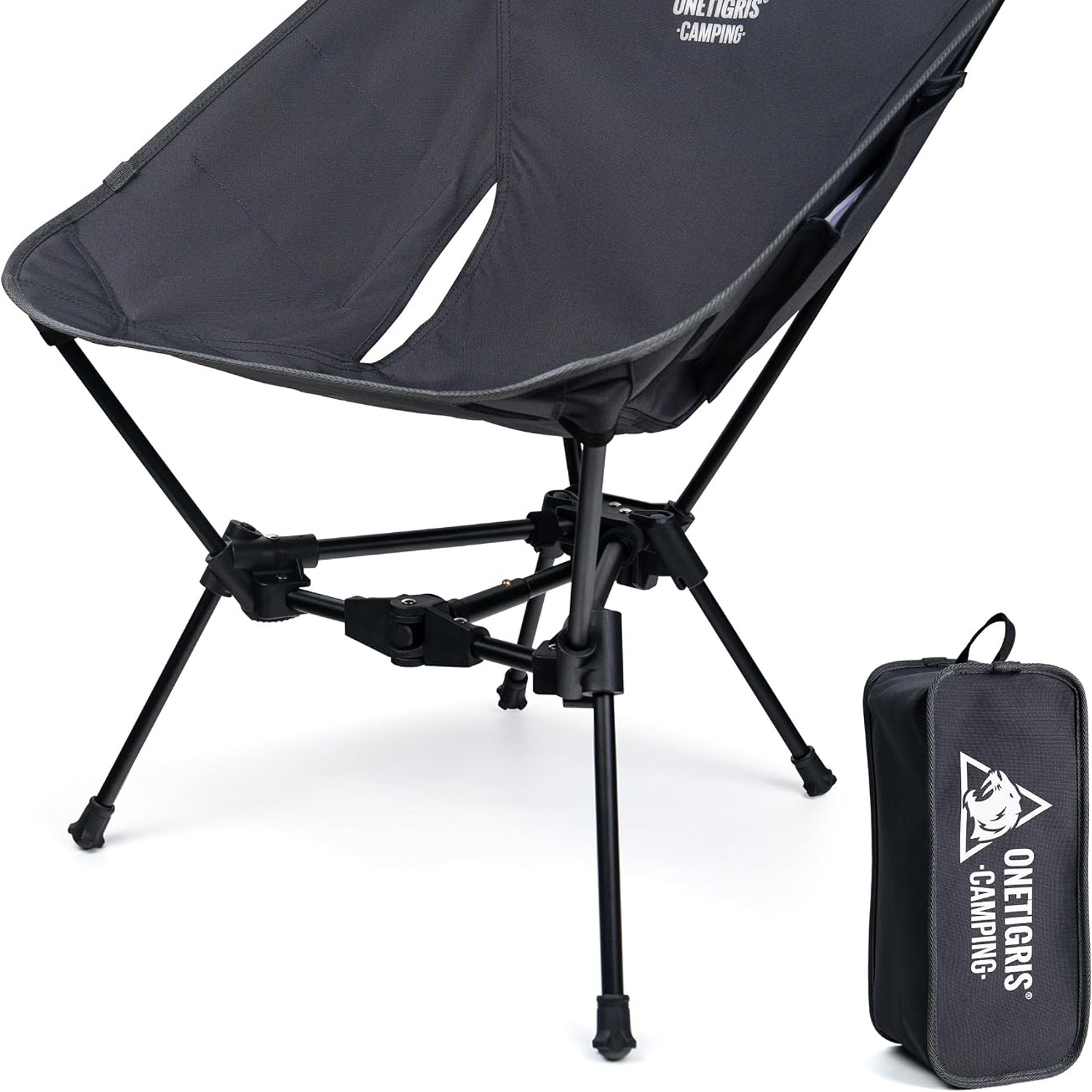
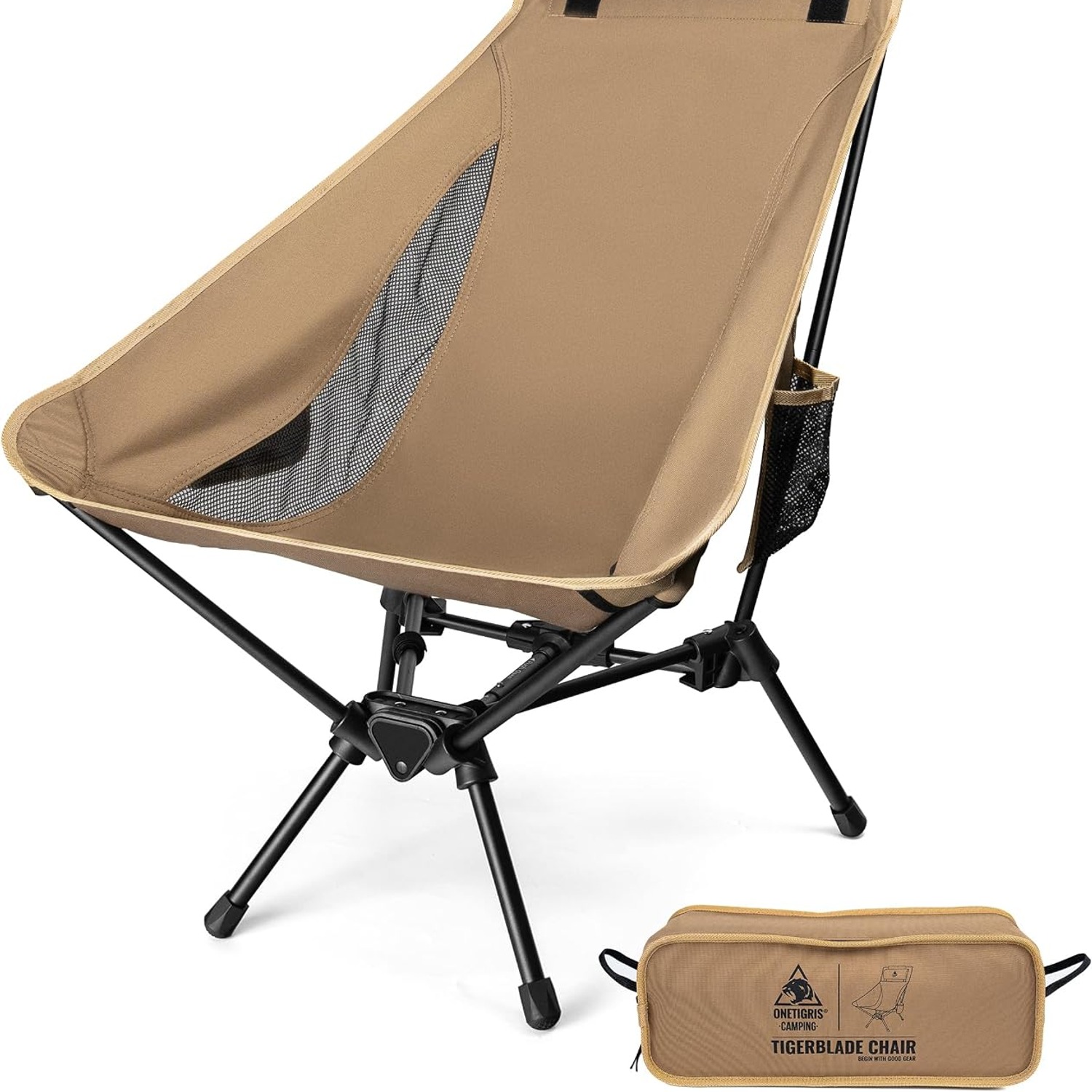
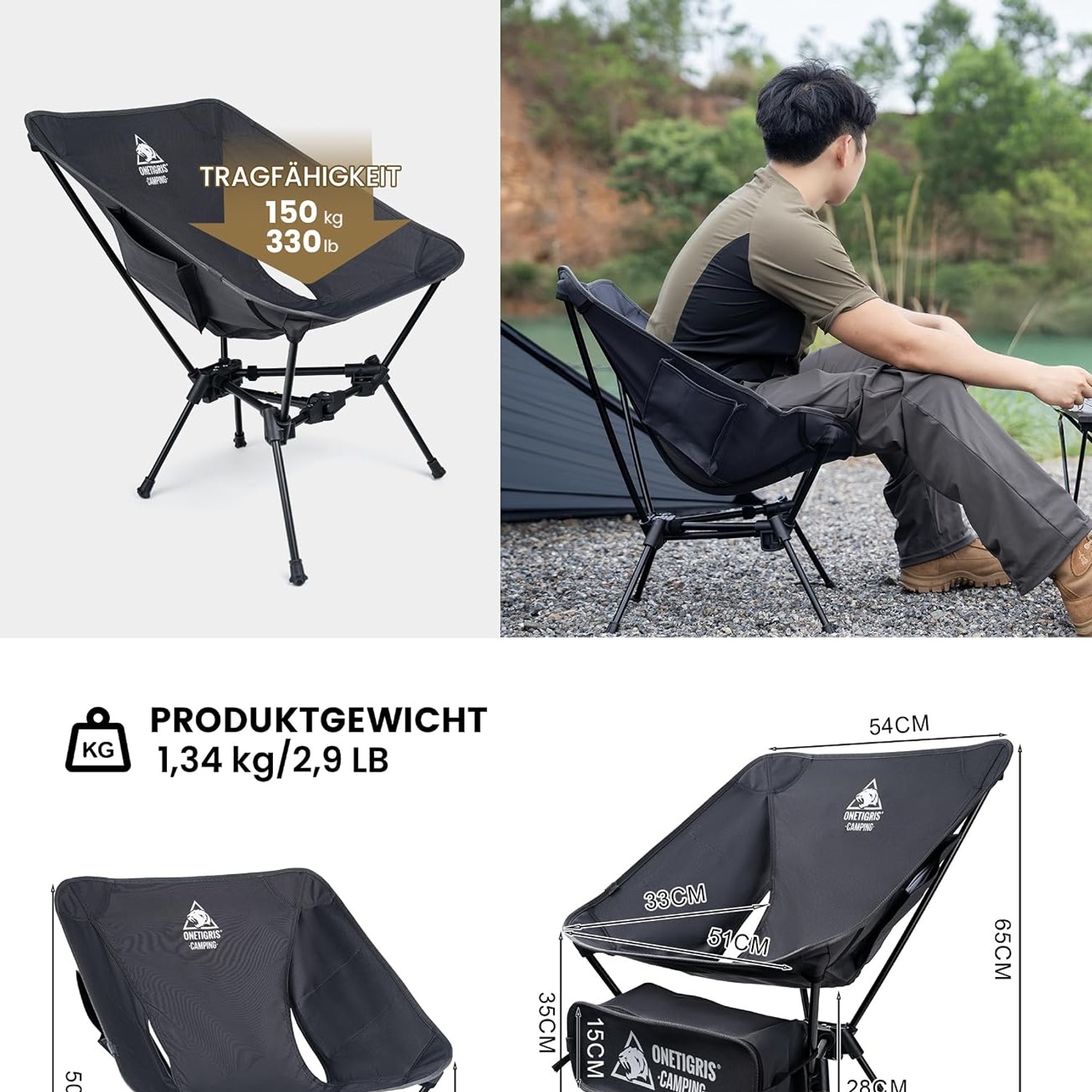
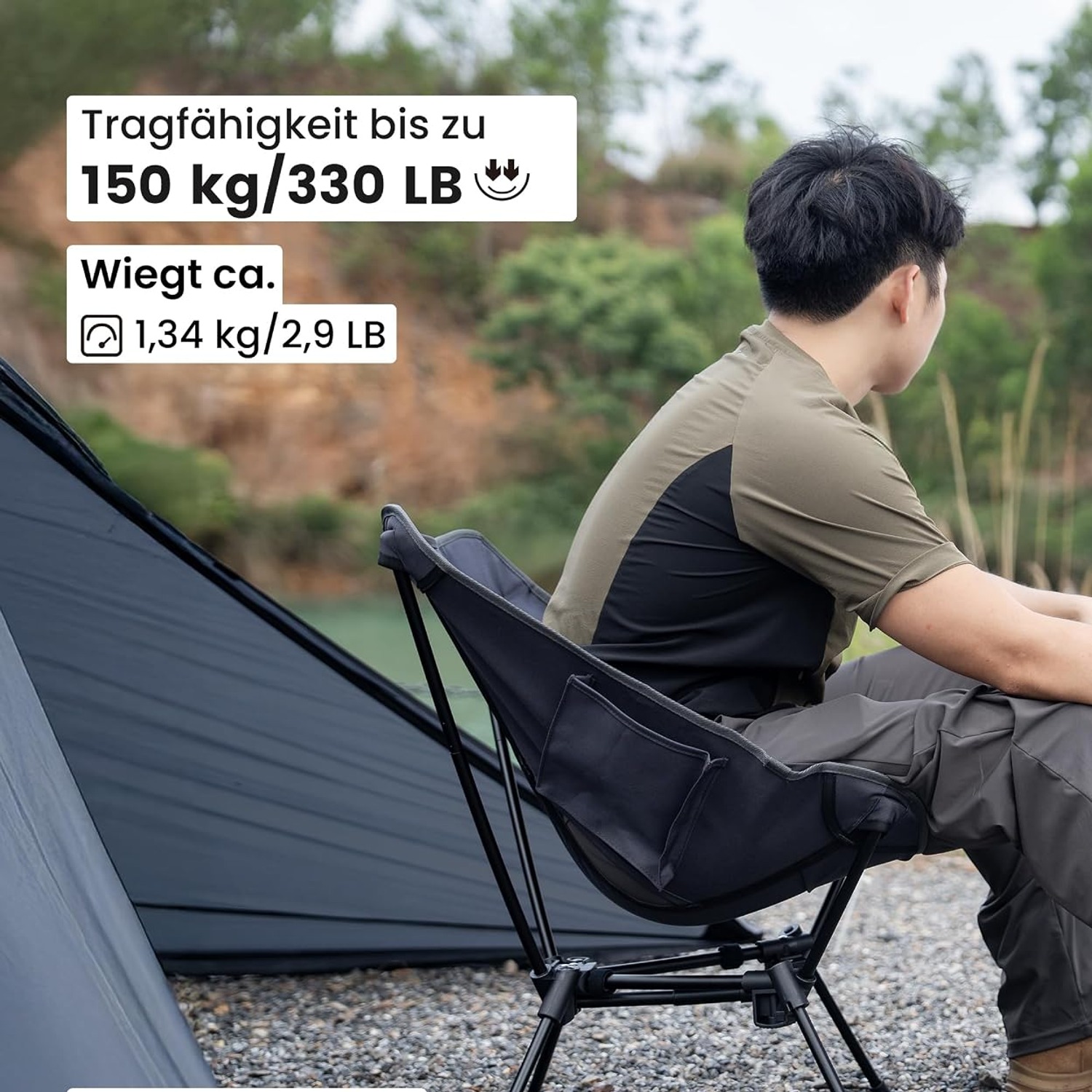
A folding camping chair like this one sits between those two extremes. It gives you a seat with a back at a sensible height, and it does it at 1.4 kg with a storage bag included. That weight is the whole point. A chair you leave in the garage because it is a hassle to pack is worth nothing. A chair you actually bring is worth a lot.
How a lightweight camp chair works
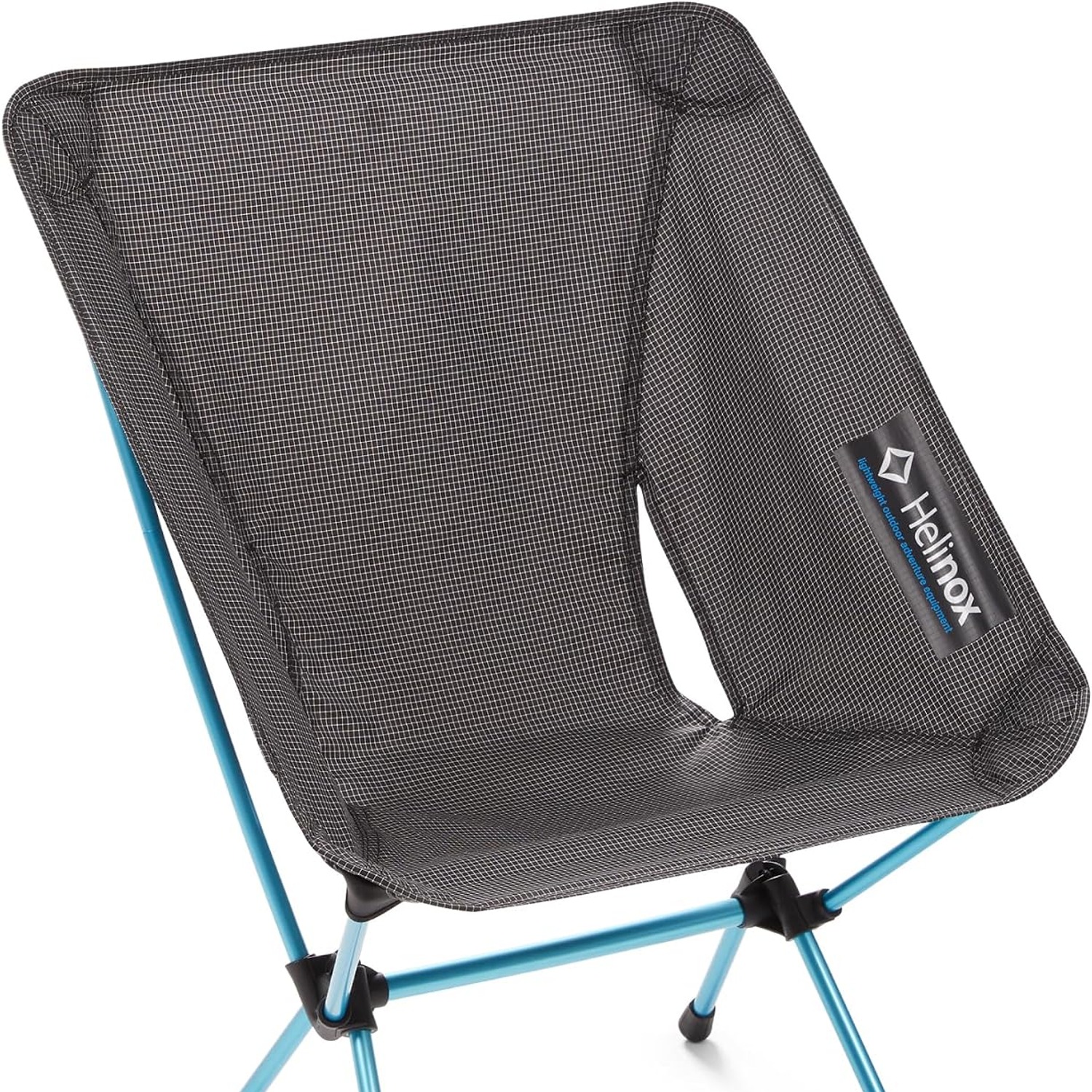
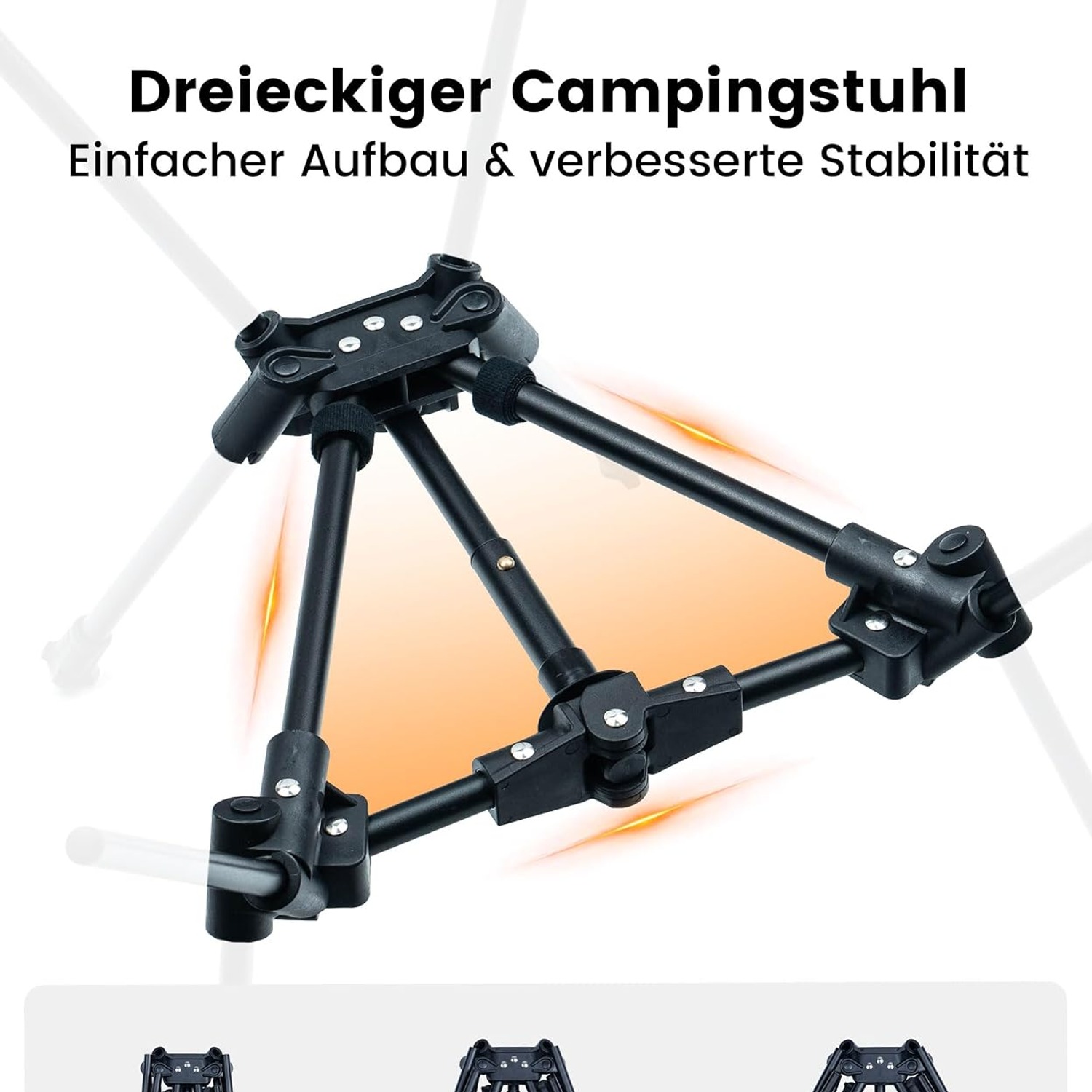
The idea is simple. Instead of a rigid welded frame, you get a set of aluminum poles that connect together, and a fabric seat that stretches across them. When you sit, your weight pulls the fabric tight and the tension pushes outward against the frame. The whole thing becomes rigid because you are sitting in it, not in spite of it.
That is why assembly is required. The product details confirm it: you connect the frame, slide the polyester seat over it, and the chair becomes a chair. Taking it down reverses the process. The first time feels fiddly. By the third time it is muscle memory and takes moments.
This design is also why the chair can be so light. There is no heavy steel tube doing the work on its own. The aluminum frame and the polyester fabric share the load, which is how you end up with a 150 kg maximum recommended weight rating on something that weighs 1.4 kg.
The legs are flattened rather than round. On grass, sand and soft dirt, a flat profile spreads the load over a slightly larger area, so the chair does not sink in as fast as it would on narrow round tips.
Who this chair suits
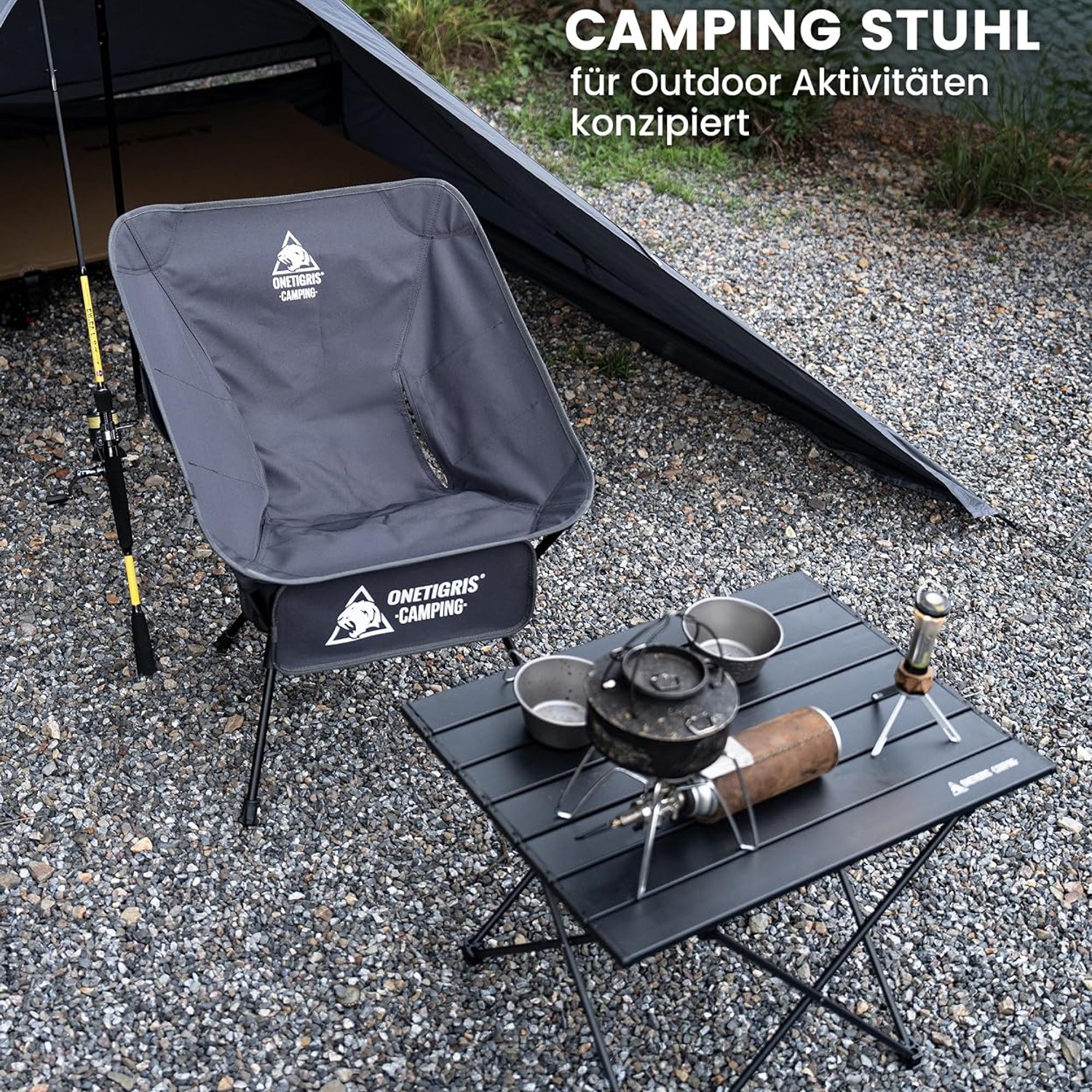
Car campers get the most obvious benefit. You can fit several of these in a boot that would only swallow one or two padded chairs, which matters when there are four of you and a week's food.
Hikers and cyclists are the other group. If you have ever done an overnight trip and sat on your sleeping mat because there was nothing else, you know the appeal. At 1.4 kg it is not an ultralight item, but for people who want the best packable camp seat they can carry rather than the absolute lightest, it is a reasonable trade.
Anglers like the side pockets and the narrow profile on a bank or a jetty. Parents watching weekend sport like that it goes in the car and comes out in under a minute. Festival-goers like that it is easy to carry across a field. Gardeners keep one by the shed for podding beans or taking a break in the sun.
Who it suits less well: anyone who wants arms to push up from, anyone who wants to recline flat, and anyone who needs a seat above the 150 kg rating. The chair has a single reclining position and no armrests, and those are fixed facts rather than things that vary by use.
What to look at when you compare chairs
Weight versus comfort. Every gram you remove usually comes out of padding, frame thickness or seat width. This chair lands on the light side of the scale, with a 51 cm width and a solid back. If you want deep padding and a headrest, you are shopping for a different category and a different weight.
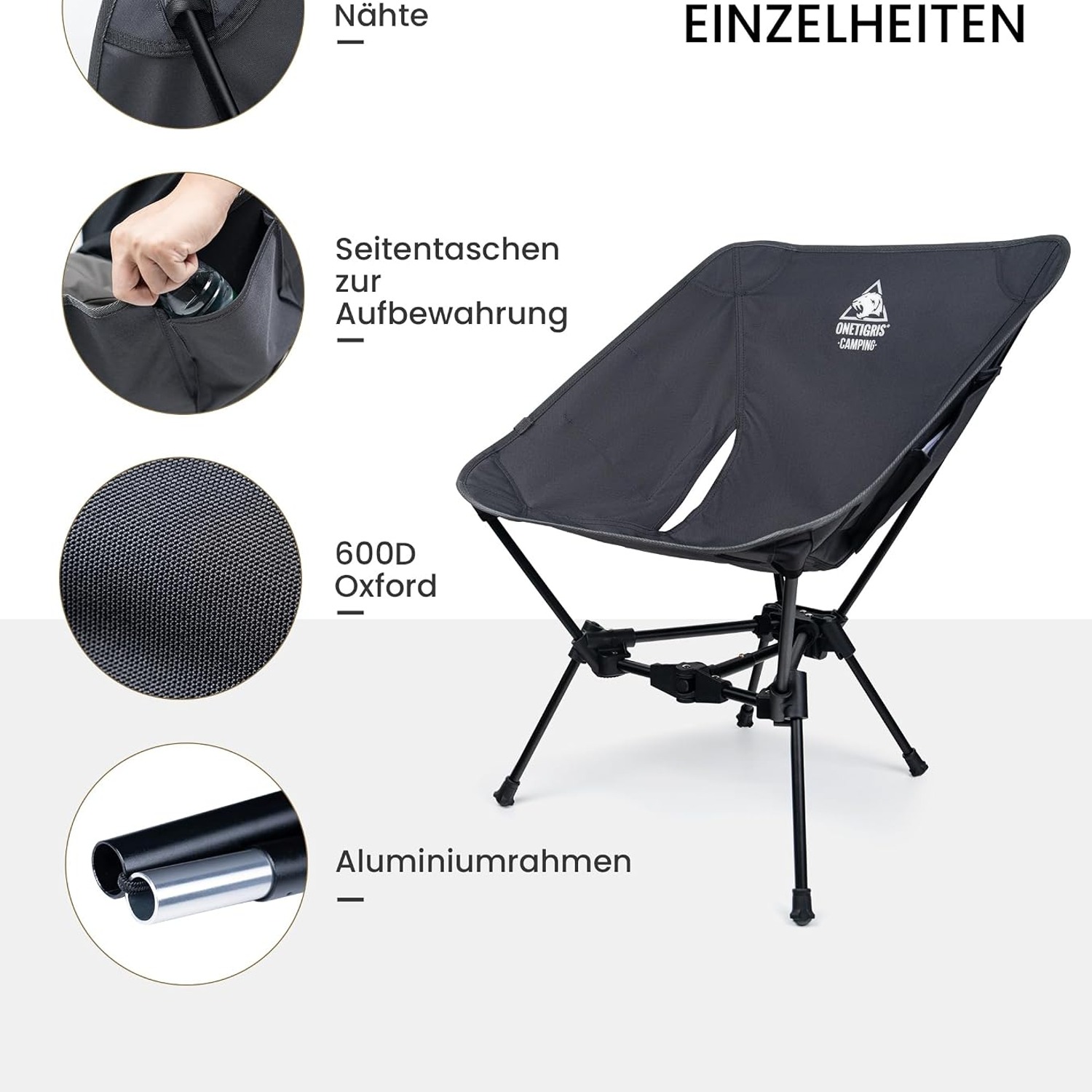
Frame material. Aluminum is the standard for the best aluminum camp chair designs because it is light and does not rust the way untreated steel can. Steel frames cost less and handle rough treatment, but you will feel the difference every time you carry one.
Fabric. Polyester is used here for the seat, the back and the fill. It wipes clean, dries reasonably fast and does not stretch much over time. It is a sensible, unglamorous choice.
Height. At 65 cm overall, this is a mid-height chair. That generally means you can eat off your lap, reach a camp table and get out of it without a struggle. Very low chairs are more relaxing but harder to stand up from, which matters more as you get older or if your knees have opinions.
Pack size and bag. A chair without a bag ends up loose in the trunk, snagging on things. This one ships with a storage bag, so the frame stays together and the fabric stays clean between trips.
Rating. Check the maximum recommended weight before you buy. Here it is 150 kg. That is a design limit, not a dare, and treating it as a ceiling rather than a target gives the frame a longer life.
Setting it up well
Pick your ground before you pick up the chair. Clear stones, pine cones and sticks, because a chair leg on a sharp rock is unstable and a chair leg on a stick will slide. Slightly firm ground beats very soft ground, though the flattened legs help on sand.
Connect the frame fully before putting any weight on it. The common mistake with every chair of this type is leaving one joint not quite seated, then sitting down and finding out. A quick press on each connection takes two seconds.
Sit down the way you would into any chair, bottom first rather than dropping in. The fabric and frame are doing a balanced job, and sudden impact is what strains them.
If you are on a slope, face the chair across it rather than down it. You will feel much more settled.
Looking after it
Care is not complicated. Wipe the polyester with a damp cloth and a little mild soap when it gets dirty, then leave it out until it is completely dry. Do not put it in the washing machine or the dryer, and skip the bleach.
Grit is the real enemy. Sand and dust work their way into frame joints and make assembly stiff over time. A quick shake and a brush along the poles before you pack up solves it.
Store the chair dry, folded, in its bag, somewhere out of direct sunlight. Sun fades and weakens fabric over months of exposure, so a chair that lives in a cupboard between trips will outlast one left on a deck all summer.
Before each trip, give the fabric sleeves and the joints a quick look. Small tears are easy to repair early and annoying to deal with once they spread.
The short version
This is a 1.4 kg folding camping chair with an aluminum frame, a polyester seat with a solid back, two side pockets and a 150 kg maximum recommended weight. It measures 33 by 51 by 65 cm set up, folds into the included storage bag, and needs assembling each time you use it.
It is armless and has one seating position, so it is not a recliner. What it is instead is a proper seat you will genuinely bring along, which is the difference between standing around at camp and actually enjoying the evening.
If you camp, fish, hike, watch sport from the sidelines or just want decent spare seating for the garden, this is a straightforward, light answer to a problem most people put up with for far too long.